Bishop of Derby urges caution over response to recent violence in Middle East

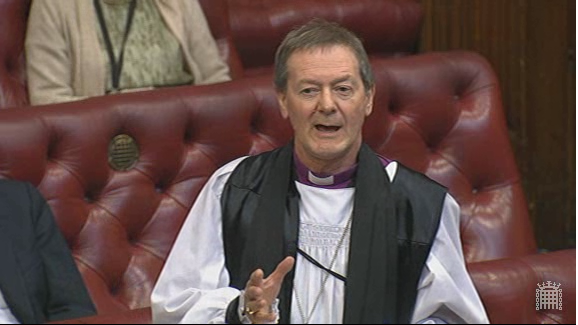
On 1st July 2014, the Baroness Warsi made a statement on the Middle East Peace Process. The Bishop of Derby, the Rt Revd Alastair Redfern, asked a question about what the government is doing to promote a measured response to the recent events in the Holy Land.

DerbyThe Lord Bishop of Derby: On behalf of these Benches, we associate ourselves with the condolences to the families and the widespread grief on all sides. We welcome the statement by the unity Government but an inevitable reaction to grief, especially with the death of the young, is anger. Yet grief is something that is never handled by anger; it requires time for reflection, engagement and a deeper kind of approach to the issue at stake. Can the Minister assure us that, in our work to seek peace, we will do everything we can to mitigate the knee-jerk reaction of anger and invite people to think more deeply about the human content of grief and how to deal with it?

Baroness Warsi: We will of course do that. The right reverend Prelate makes important points, but I think he would also say—and on a very personal basis, I acknowledge this as a mother—that it must be incredibly difficult to reach that second phase when you have just lost your children.

(via Parliament.uk)

Bishop of Derby promotes community-based strategy to tackle radicalisation

“I tell noble Lords from my own experience that if we are too heavy-handed we risk further radicalising families and communities at the grass roots, if some of their young are treated without any notion of a trial or evidence—all those British things that we try to stand for. We must handle this matter very carefully” – Bishop of Derby, 19/6/14

On 19th June 2014, Lord Dykes led a debate to ask Her Majesty’s Government what is their assessment of the threat from the spread of militant aggressive jihadism in the Middle East. The Bishop of Derby, the Rt Revd Alastair Redfern, took part in the debate, speaking of the challenges associated with tackling transnational groups, and the need for close international co-operation in dealing with them. He also spoke of the need for strong community-based work in the UK, to help tackle and reduce instances of British citizens fighting in the Middle East. He endorsed the strong heritage of European Islam and of the need to engage its voice in a sophisticated debate.

DerbyThe Lord Bishop of Derby: My Lords, I, too, congratulate the noble Lord, Lord Dykes, on securing this timely debate. I want to look at the Motion as it is set out. It concerns,

“the assessment of the threat from the spread of militant aggressive jihadism in the Middle East”.

Continue reading “Bishop of Derby promotes community-based strategy to tackle radicalisation”

The Bishop of Wakefield speaks in debate on situation in Syria and the Middle East

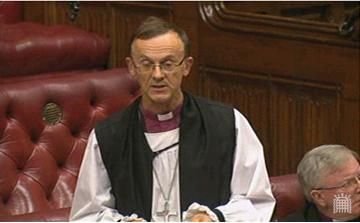
The Bishop of Wakefield spoke during the debate on Syria and the Middle East, highlighting the increasing complexity of the conflict in Syria, the difficulties facing outside countries such as the UK in responding appropriately and effectively, the huge displacement of the Syrian population, and the need to invest significant resources in the region to facilitate a peaceful solution to the conflict. He asked the Government to support efforts to bring about reconciliation between two key actors in the conflict – Iran and Saudi Arabia, and called for support of civil society within the refugee populations, particularly in Lebanon and Jordan.

The Lord Bishop of Wakefield: My Lords, I thank the Minister for her characteristically clear introduction to this debate and for setting the context so succinctly.
In December 2002, I was called to 10 Downing Street for a clandestine meeting with the Prime Minister’s appointments secretary to talk about the possibility of my going to the See of Wakefield. When I arrived, I was terrified that my cover might be blown, since television cameras surrounded us and, indeed, I followed Andrew Marr through the security gate. The cameras were, of course, not for us but for President Assad, who was paying an official visit to the then Prime Minister, Tony Blair. Indeed, there was even talk at the time of persuading the Queen to confer a knighthood on the Syrian leader. Continue reading “The Bishop of Wakefield speaks in debate on situation in Syria and the Middle East”

Bishop of Worcester speaks in debate on Middle East Peace Process

“I would describe myself as a pro-Palestinian Zionist, wholeheartedly committed to the right of Israel to exist securely, and equally committed to the right of the Palestinian people to a viable state in which they can flourish. Reaching that is crucial to a wider Middle East peace settlement.” – The Bishop of Worcester

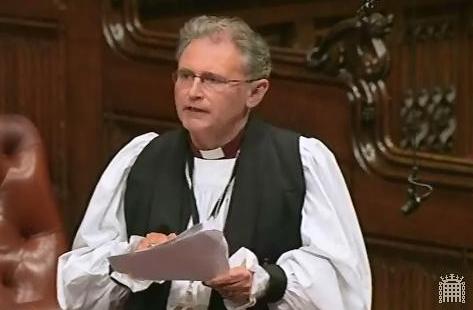
WorcesterOn 14th January 2014, the Bishop of Worcester took part in a debate on what role the European Union is currently playing in efforts to reach a wider Middle East peace settlement. He focused his comments on new EU guidelines on Israeli settlements in East Jerusalem and the West Bank. Continue reading “Bishop of Worcester speaks in debate on Middle East Peace Process”

Israel and Palestine: West Bank – Written Questions

On 2nd December 2013, the Bishop of Worcester received answers to three written questions related to the situation in the West Bank.

The Lord Bishop of Worcester: To ask Her Majesty’s Government what steps they are taking to Worcesteraddress impediments to the delivery of humanitarian assistance in the West Bank such as the confiscation of humanitarian aid and the prevention of access to communities in need of emergency assistance.

Baroness Northover: We are concerned at reports that the Israeli military authorities have blocked the delivery of humanitarian assistance to Palestinian communities in Area C of the West Bank. Where humanitarian aid is needed, Israel is obliged under international humanitarian law to facilitate the work of humanitarian relief schemes. Our Embassy in Tel Aviv has raised this issue with the Israeli National Security Adviser and the Israeli Ministry of Foreign Affairs.

Continue reading “Israel and Palestine: West Bank – Written Questions”

Bishop of Coventry leads debate on humanitarian crisis in Syria

“Even with a political solution, the scars of this conflict will take many generations to heal. It will require the continued generosity of the international community in a sustained and strategic humanitarian commitment. I hope that Her Majesty’s Government will continue to take a courageous lead and make this not the last business of a long day but the priority of every morning until the holy land of Syria is healed.”

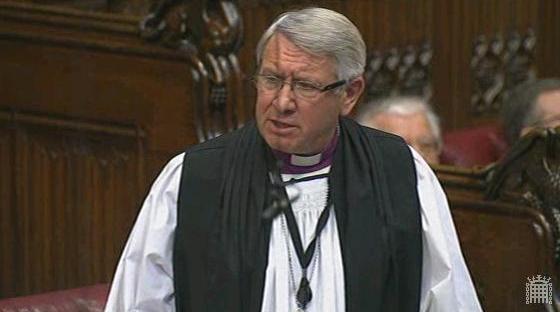
On 30th October 2013, the Bishop of Coventry, the Rt Revd Christopher Cocksworth, led a short debate in the House of Lords, to ask Her Majesty’s Government what steps they are taking to address the humanitarian crisis caused by the ongoing conflict in Syria. In his opening speech, the Bishop commended the Government for its response to the humanitarian crisis in Syria, but called for all pledged humanitarian assistance to be supplied as quickly as possible. He called on the Goverment to look into the resettling of Syrian refugees and noted the negative impact that the humanitarian crisis was having on the broader region. 

13.10 Bishop of CoventryThe Lord Bishop of Coventry: My Lords, despite the admirable diplomatic activity of recent weeks, the humanitarian costs of the ongoing conflict in Syria show no sign of abatement. As violence expands exponentially and cruelty abounds, no one can fail to be moved by the scale of the crisis, which is nothing short of a catastrophe.

This debate seeks neither to underestimate the efforts of Her Majesty’s Government to rise to the challenge of humanitarian support, nor to question their resolve to work towards a political resolution of the civil war. Rather, I hope that it will give an opportunity for your Lordships’ House to focus its expert attention on the humanitarian costs of the conflict and the humanitarian imperative of bringing the conflict to an end, and, in so doing, of checking that every stone is being turned in the cause of compassion and the pursuit of peace. Continue reading “Bishop of Coventry leads debate on humanitarian crisis in Syria”

Bishop of Wakefield leads debate on religious freedom in the Middle East and North Africa

“States need to feel comfortable and confident enough in their own skins, as one might put it, to uphold their core values for all citizens regardless of religious or non-religious background. Even in our own nation, it can sometimes appear to be a fragile commodity but we have the comfort of two centuries’ experience of relative tolerance. If freedom of religion is in many ways the fundamental right upon which all other rights turn, it is important for our and other Governments to remain actively engaged over the long term, pressing for the rights of all religious minority communities.”

On 29th October 2013, the Bishop of Wakefield, the Rt Revd Stephen Platten, led a debate in the House of Lords to ask Her Majesty’s Government what is their assessment of the situation of religious minorities in the Middle East and North Africa after the events of the Arab Spring. He noted that the Arab Spring and resulting events were about issues of identity, political organisation and rights, all of which impact on the place of religious minorities. He urged wisdom and patience from the international community and urged for governments based on consent to be established throughout the region. He noted in particular the persecution of Christians in the region, including many groups historically amongst the earliest Christian communities. He commended the work of the Government in prioritising the freedom of religion but called for there to be consideration around the appointment of an Ambassador-at-Large for Religious Freedom. 

Bishop of Wakefield PlattenThe Lord Bishop of Wakefield: My Lords, I am very grateful for this opportunity to speak about the situation of religious minorities in the Middle East and north Africa since the Arab spring. The debate will, I hope, provide the opportunity to take a more detached view on developments over the past few years and to look at the underlying dynamics affecting religious minorities in the region.

Events in the Middle East since the start of the Arab spring have been a challenge not only to those living in the region but to all of us. Many, myself included, have viewed the series of uprisings which started in Tunisia through the lense of our experience of the Cold War. We wrongly assumed then that the fall of the Berlin Wall would usher in an era of tolerance and political pluralism throughout Europe. The reality was very different. Released from the uniformity of authoritarian rule, the former states of the USSR struggled with weak Governments to meet the diverse and competing aspirations of all their people. Often, as in the case of Balkans, those struggles turned horribly violent, with religion politicised as a marker of identity. Of course, the lessons of our own European history are seminal when trying to understand the transformations shaping the Middle East today. Revolutions are never simple and straightforward affairs. The Reign of Terror and the Vendée in France at the end of the 18th century were perhaps the beginning in our own modern era. Continue reading “Bishop of Wakefield leads debate on religious freedom in the Middle East and North Africa”

Bishop of Worcester puts questions to Government on Israeli settlements (Written Answers)

On 24th October 2013, the Bishop of Worcester, the Rt Revd John Inge, received answers to three written questions regarding Israeli settlement-based entities, activities and products.

Worcester

The Lord Bishop of Worcester: To ask Her Majesty’s Government what steps they intend to take to implement the new European Commission guidelines of July 2013 on the funding of Israeli settlement-based entities and activities.

The Senior Minister of State, Department for Communities and Local Government & Foreign and Commonwealth Office (Baroness Warsi) (Con): The EU guidelines on the eligibility of Israeli entities and their activities in the territories occupied by Israel since June 1967 for grants, prizes and financial instruments, were prepared to implement the commitment made by EU Foreign Ministers in December 2012 to make a distinction in relevant EU programmes and agreements between the State of Israel and Israeli settlements in the Occupied Territories. The guidelines themselves apply to EU, rather than individual Member State programmes, and will be implemented by the European Commission. The guidelines are due to be implemented in January 2014.

Continue reading “Bishop of Worcester puts questions to Government on Israeli settlements (Written Answers)”

Bishop of Leicester asks question on peaceful settlement of Syrian conflict

On 15th October 2013, Lord Truscott asked Her Majesty’s Government whether they consider that the recent Russian-led Syrian peace initiative provides a model for defusing other international crises, for example relating to Iran. The Bishop of Leicester, the Rt Revd Tim Stevens, asked a supplementary question:

LeicesterThe Lord Bishop of Leicester: My Lords, does the Minister agree that this shift in fortunes in Syria is very largely due to the relationship of trust that the United States Secretary of State and the Russian Foreign Minister have developed in recent months, and that similar levels of trust will be vital to resolving other pressing international crises, not least with Iran?

Lord Wallace of Saltaire: My Lords, I agree. I should also say that the British Foreign Secretary has worked extremely hard over the past nine months and more to come to terms with the Russians and to develop a relationship with the Russian Foreign Minister. The European Union high representative, the noble Baroness, Lady Ashton, has also done a great deal of work with the Russians on Syria and as part of the E3+3 on Iran.

(via Parliament.uk)

Bishop of Coventry – Camp Ashraf and child detention in Israel and Palestine (Written Answers)

On 10th October 2014, the Bishop of Coventry, the Rt Revd Christopher Cox, received answers to two written questions, on the subjects of Camp Ashraf and the detention of children in Israel and Palestine.

13.10 Bishop of Coventry

Iraq: Camp Ashraf

The Lord Bishop of Coventry: To ask Her Majesty’s Government what response they have received from the government of Iraq to their representation requesting an investigation into the violence at Camp Ashraf on 1 September.

The Senior Minister of State, Department for Communities and Local Government & Foreign and Commonwealth Office (Baroness Warsi): The Government of Iraq has told our Embassy in Baghdad that a committee will conduct a full and open investigation into the attack on Camp Ashraf on 1 September, and that its findings will be made public.

(via Parliament.uk) Continue reading “Bishop of Coventry – Camp Ashraf and child detention in Israel and Palestine (Written Answers)”