Crime and Policing Bill: Bishop of Manchester supports amendments on combatting child trafficking and improving safeguarding regulations

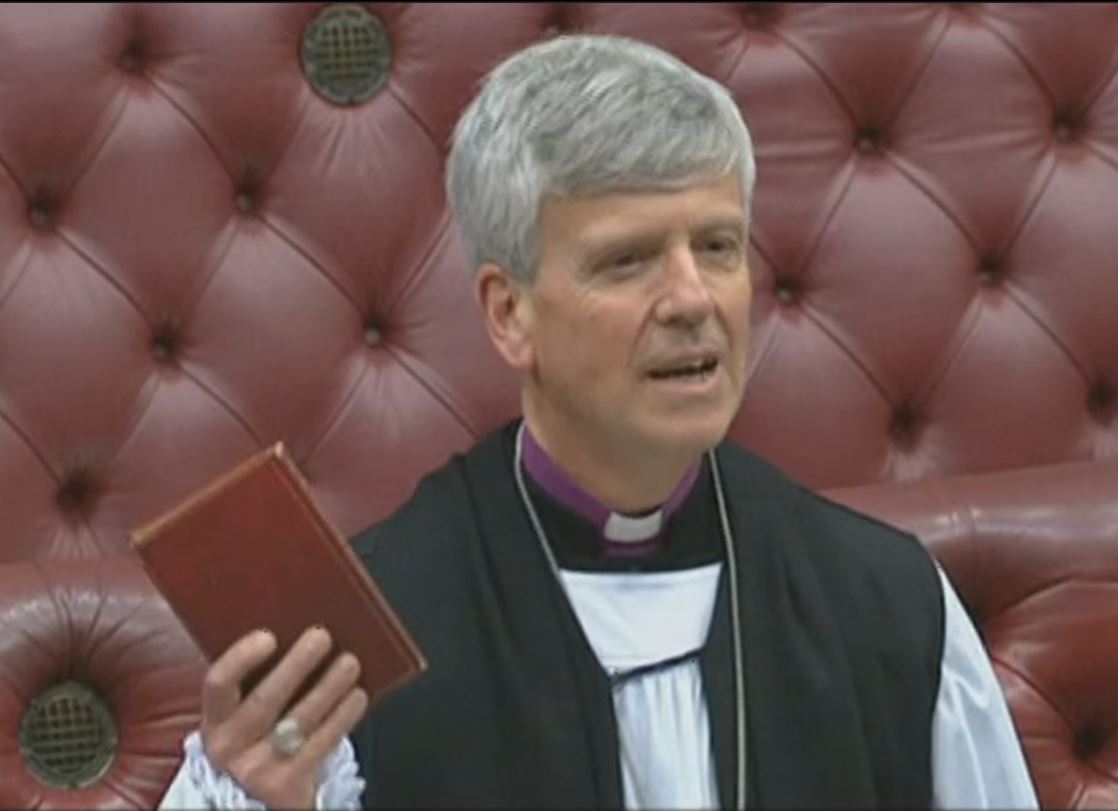
On 27th November 2025, the Bishop of Manchester spoke in support of an amendment to the Crime and Policing Bill which would expand the definition of exploitation under the Modern Slavery Act 2015 to include children who have been recruited into residential care institutions that engage in orphanage trafficking:

The Lord Bishop of Manchester: My Lords, I too support this amendment in the name of the noble Lord, Lord Randall of Uxbridge. It is my privilege, as I travel around the world visiting Anglican provinces, often to visit orphanages and see some of the work they do. As noble Lords have already said, many of these children still have a living parent somewhere, but that parent, for whatever reason, no longer feels able or wishes to look after them, particularly if the mother has died in childbirth.

Continue reading “Crime and Policing Bill: Bishop of Manchester supports amendments on combatting child trafficking and improving safeguarding regulations”

Church Commissioners Written Questions: Human Trafficking & Slavery, Additional Curates Society – Finance, Church of England – Land

On 11th June 2025, Marsha De Cordova MP, representing the Church Commissioners, gave the following written answers to questions from MPs:

Human Trafficking and Slavery

Jim Shannon MP (DUP, Strangford): To ask the hon. Member for Battersea, representing the Church Commissioners, if she will make an assessment of the effectiveness of the steps the Church is taking to help tackle (a) modern slavery and (b) human trafficking.

Continue reading “Church Commissioners Written Questions: Human Trafficking & Slavery, Additional Curates Society – Finance, Church of England – Land”

Bishop of Bristol asks about human trafficking of women and girls

The Bishop of Bristol received the following written answers on 7th May 2025:

The Lord Bishop of Bristol asked His Majesty’s Government whether their forthcoming Violence Against Women and Girls Strategy will consider victims of sexual exploitation in the light of recent data from the International Organization for Migration showing that fewer women and girls are being supported through the National Referral Mechanism.

Continue reading “Bishop of Bristol asks about human trafficking of women and girls”

Bishop of Bristol calls for improved accountability in business to combat modern slavery

The Bishop of Bristol took part in a debate on a report from the Modern Slavery Act 2015 Committee on 28th March 2025, advocating for improvements to corporate accountability in supply chains:

The Lord Bishop of Bristol: My Lords, I, too, speak as a member of the review committee on the Modern Slavery Act in this 10th anniversary week. It was world-leading legislation, as we have heard. I also rise in the week that the Church commemorates Harriet Monsell, founder of the Anglican Community of St John Baptist, Clewer, a community which, from its 19th century inception, had as a core vocation the care of female victims of human trafficking. That community has for several years funded training of community groups across the United Kingdom to notice the trafficked people—women, men and children—hiding in plain sight in their midst and to act on their behalf. Clewer has also produced apps, notably for car washes and nail bars, giving assurance on their labour practices and suppliers. In today’s debate, that is where I would like to focus my remarks.

I draw attention to Section 54 of the Modern Slavery Act, which imposes a duty on companies supplying goods or services that have a turnover of at least £36 million to

“prepare a slavery and human trafficking statement”

every financial year. The statement should set out the steps that the business is taking to address and prevent the rise of modern slavery in its operations and supply chains. I know that some take that commitment very seriously.

Continue reading “Bishop of Bristol calls for improved accountability in business to combat modern slavery”

Votes: Great British Energy Bill

On 11th February, the House of Lords debated the Great British Energy Bill in the report stage. Votes were held on amendments to the bill, in which Bishops took part:

Continue reading “Votes: Great British Energy Bill”

Bishop of Guildford highlights issues of modern slavery and repression in China

On 19th December 2024, the Bishop of Guildford spoke in a debate on human rights in China, highlighting the situation of the Uighur Muslims and urging the government to introduce safeguards to combat modern slavery in the supply chain:

The Lord Bishop of Guildford: My Lords, as the grandson of former medical missionaries in south-west China, I take great interest in this debate. As others have expressed, I am really grateful to the noble Lord, Lord Alton, for his remarkable and indefatigable commitment to human rights and freedom of religion or belief all around the world. I am grateful to the noble Lord, Lord Ahmad—it is a privilege to speak after him—for his huge commitment in this area over many years.

I share with my forebears a deep respect for the Chinese people, their culture, their discipline and their character, but I have been horrified by stories of the oppression and maltreatment of religious minorities and critics of the regime over very many years. I have paid several illuminating visits to China to witness that for myself. This afternoon, like others, I wish to highlight the desperate situation of Uighur Muslims in the north-western region of Xinjiang, whom the other place has declared as being subject to genocide. Specifically, I urge His Majesty’s Government to ensure that the screening of goods made in forced labour camps—everything from solar panels to tomatoes—prevents them being imported into this country.

Continue reading “Bishop of Guildford highlights issues of modern slavery and repression in China”

Bishop of St Albans asks about issue of forced labour in consumer goods market

The Bishop of St Albans received the following written answer on 11th September 2024:

The Lord Bishop of St Albans asked His Majesty’s Government whether they intend to take steps to prevent UK consumers from purchasing goods produced by forced labour; and what assessment they have made of (1) the decision by the government of the United States to add aluminium to its list of priority sectors for the enforcement of the Uyghur Forced Labour Prevention Act, and (2) European Commission plans to publish an online database of regions and sectors where forced labour is a risk.

Continue reading “Bishop of St Albans asks about issue of forced labour in consumer goods market”

King’s Speech Debate: Bishop of Bristol encourages efforts to combat modern slavery

The Bishop of Bristol gave a speech on the topic of modern slavery during the King’s Speech debate on 22nd July 2024, emphasising the need to combat the growth in worker exploitation and applauding the government’s commitment to strengthening workers’ rights:

The Lord Bishop of Bristol: My Lords, it is a great pleasure to follow the noble Lords, Lord Howarth and Lord O’Neill, and to welcome and congratulate the noble Lord, Lord Vallance, and greet him as the granddaughter of a Cornish man and a Scilly woman, as my father rather cheekily determined it.

I preface my remarks by welcoming, in an adjunct to the gracious Speech, the Government’s proposal to renew the Lords Spiritual (Women) Act, and I should declare my interest as I am a Member who benefits from its current provisions. But it is on modern slavery that I wish to focus my remarks this evening as, in the labour exploitation that we have seen increasingly in the areas of agriculture, domestic work and social care, there is growth that we should not seek and indeed need to guard against. As your Lordships know, modern slavery is a crime which affects every community in the UK. It is not a niche issue. It is estimated that 130,000 people are held in modern slavery in our country today, and we are used to hearing about day-to-day transactions where there is exploitation in car washes, manicurists or, increasingly, in accessing social care.

Continue reading “King’s Speech Debate: Bishop of Bristol encourages efforts to combat modern slavery”

Church Commissioners Written Questions: Modern Slavery

On 23rd May 2024, Andrew Selous MP, representing the Church Commissioners, gave the following written answer to questions from an MP:

Slavery

Caroline Ansell MP (Con, Eastbourne): To ask the Member for South West Bedfordshire, representing the Church Commissioners:

  • whether the Church of England has had discussions with the Clewer Initiative on tackling modern slavery in the last 12 months.
  • whether the Church of England has had discussions with the Clewer Initiative on the impact of its funding on its work; and whether the Church is taking steps to support the Clewer Initiative.
Continue reading “Church Commissioners Written Questions: Modern Slavery”

Bishop of Bristol asks about waiting times for identifying victims of modern slavery

On 13th may 2024, the Bishop of Bristol tabled a question on waiting times for decisions under the National Referral Mechanism for modern slavery:

The Lord Bishop of Bristol: To ask His Majesty’s Government what steps they are taking to reduce waiting times for ‘conclusive grounds’ decisions under the National Referral Mechanism for modern slavery.

Lord Sharpe of Epsom (Con, Home Office): My Lords, the Government remain committed to ensuring that victims are identified promptly. We have taken steps to shorten the timelines for making decisions in the national referral mechanism, including new guidance for making reasonable grounds decisions, changes to the online referral form and setting timescales for information to be provided to the competent authorities. We have also significantly increased staffing for the competent authorities and are seeing the results through increased output of decisions.

Continue reading “Bishop of Bristol asks about waiting times for identifying victims of modern slavery”