Bishop of Southwark takes part in debate marking International Women’s’ day

The Bishop of Southwark gave a speech during a debate to mark international women’s day on 8th March 2024, paying tribute to the women of the Bishops Benches and raising the impact of poverty on women in the UK and overseas:
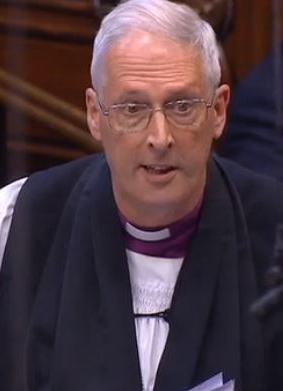
The Lord Bishop of Southwark: My Lords, I thank the noble Baroness, Lady Barran, for securing this important debate on International Women’s Day. I look forward to the maiden speech of the noble Baroness, Lady Casey of Blackstock.

It is my belief that the kingdom of God is a place of radical inclusion in which all are welcome and all shall flourish. I speak as the duty bishop today, but I am mindful of the determined advocates on this Bench, which include the right reverend Prelate the Bishop of Gloucester, who is attending the 68th session of the Commission on the Status of Women at the United Nations headquarters in New York.

Continue reading “Bishop of Southwark takes part in debate marking International Women’s’ day”
Bishop of Durham asks about methods to tackle poverty

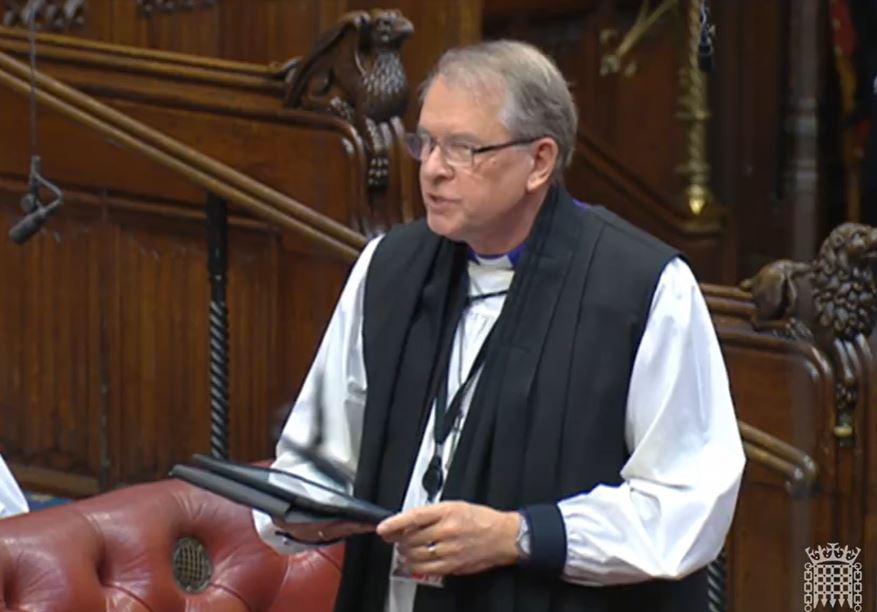
The Bishop of Durham asked a question on local development to tackle poverty on 15th January 2024, during a discussion on government plans to promote the end of absolute poverty through global development aid:

The Lord Bishop of Durham: My Lords, very helpfully, in the White Paper there was an emphasis on the importance of locally designed and led development for tackling absolute poverty, and there was a promise of a strategy for reaching that. What stage is it at, and when will that strategy be seen?

Continue reading “Bishop of Durham asks about methods to tackle poverty”

Bishop of Leeds asks about effect of cuts to overseas aid on Sudan

On 14th September 2023, the Bishop of Leeds asked a question about the affect of cuts in overseas development aid on UK partnership with Sudan, in light of the ongoing conflict there:

The Lord Bishop of Leeds: My Lords, I have a particular concern about Sudan. The conflict there has now fallen off the media headlines. The cuts in overseas development aid have made a big impact there. What will partnership look like in the light of those cuts? We hope that they will one day be restored. Secondly, how are the UK’s diplomatic efforts in Sudan being reinforced at a time of greatest need?

Continue reading “Bishop of Leeds asks about effect of cuts to overseas aid on Sudan”

Bishop of London asks about effects of cutting overseas development aid

On 5th September 2023, the Bishop of London asked a question on maternal mortality rates following cuts to overseas development aid:

The Lord Bishop of London: My Lords, the impacts of cuts in aid have been and will continue to be significant. The equality impact assessment published by the International Development Committee revealed some of the effects, particularly on women. For example, the number of maternal deaths that will be averted by the women’s integrated sexual health programme will fall by more than half. In Afghanistan, the maternal mortality rate will worsen. How will the Government look to mitigate the impact of these cuts, particularly on women and girls?

Continue reading “Bishop of London asks about effects of cutting overseas development aid”

Bishop of St Albans stresses importance of Overseas Development Aid

The Bishop of St Albans spoke in a debate on Overseas Development Aid (ODA) on 15th December 2022, with particular reference to famine in the Horn of Africa, urging the government against cutting back on aid:

The Lord Bishop of St Albans: My Lords, I too thank the noble Lord, Lord Bruce of Bennachie, for his excellent introduction, which was informed and passionate. I would also like to highlight and underline my deep regret at His Majesty’s Government’s cuts to official development assistance spending.

I find myself in touch weekly with some of the poverty here in our own country as I visit food banks, debt advice centres, or the clubs that some of our churches now run to give breakfast to schoolchildren. I am acutely aware that we have real need here in our own country, but it is of a completely different order compared with what many other countries in the world face. I agree with the noble Lord, Lord Hannan, that we need to spend our aid carefully. It is actually quite difficult to spend large amounts of money. We sometimes find it difficult in this country and sometimes people do not spend it well. Of course we need to work at that, but the answer is not to cut our aid but to make sure that we are using it in the most effective way.

Continue reading “Bishop of St Albans stresses importance of Overseas Development Aid”

Bishop of Bristol speaks on importance of maintaining overseas aid

The Bishop of Bristol spoke in a debate on the Overseas Development Aid Budget on 27th October 2021, emphasising the importance of overseas aid in helping countries manage crises, climate initiatives, and public health measures:

The Lord Bishop of Bristol: My Lords, I am grateful to the noble Baroness, Lady Ritchie of Downpatrick, for initiating this short debate. Cuts to overseas aid continue to be of great concern to the Churches, which set the target of 0.7% at a meeting of the World Council of Churches in 1958. The target was then taken up by the United Nations in 1970.

The Government have now walked away from their own manifesto commitment to the 0.7% target and there are considerable concerns, as we have heard, that it may never be regained, despite the Chancellor’s announcement in today’s Budget. Meanwhile, as we have also heard, there are increasing needs for aid, not least because of Covid and climate change. As the most reverend Primate the Archbishop of Canterbury said in response to recent cuts:

“Reducing our overseas aid commitment at this critical time is morally wrong, politically foolish and an act of national self-harm.”

Continue reading “Bishop of Bristol speaks on importance of maintaining overseas aid”

Bishop of Worcester asks about cuts to overseas development aid

The Bishop of Worcester asked a question on cuts to the UK’s overseas development aid, with particular regard to the impact on recipients of aid and on our leadership in international development, on 14th July 2021:

The Lord Bishop of Worcester: My Lords, the Chancellor’s Statement published on Monday finally outlined the meaning of the much-repeated but undefined government line that 0.7% aid spending would be restored when the fiscal situation allows. Will the Minister accept that to many working in the field of international development, these criteria point to a permanent rather than a temporary cut in overseas development, which in any case was due to change and has changed because it is a percentage of gross national income? Does the Minister recognise that this decision represents a terrible sentence, probably of death, for thousands of children and risks doing untold reputational damage to Britain’s leadership in international development?

Continue reading “Bishop of Worcester asks about cuts to overseas development aid”

Bishop of Worcester speaks in debate on official development assistance

The Bishop of Worcester took part in a debate on the UK Government’s decision to reduce spending on official development assistance on 24th June 2021, pointing out the high number of doctors and healthcare professionals from overseas working in the UK, in effect taking from countries to which the UK provides aid:

The Lord Bishop of Worcester: My Lords, I echo the thanks expressed to the noble Lord, Lord Campbell, for this debate. There are many reasons for honouring the manifesto commitment to 0.7% aid, of which the Conservative Party can be proud. I will focus on just one.

Our National Health Service has done a fantastic job during the pandemic and been rightly lauded for doing so. One of the reasons for its success is its superb workforce, no fewer than 170,000 of whom are foreign, the vast majority from poorer countries which are struggling in the face of the pandemic. Figures show that Indians make up the largest number of foreign staff members at 27,000, followed by Filipinos at 23,000. Ghana provides over 3,000, Zimbabwe 4,500 and Pakistan 4,400. The fact is that we are taking more out of developing countries, when we poach their doctors, nurses and other skilled professionals, than we are putting in through aid.

Continue reading “Bishop of Worcester speaks in debate on official development assistance”

Bishop of Worcester asks about cuts to international development aid

On 10th June 2021, the Bishop of Worcester spoke in a discussion on Overseas Development Aid, expressing disappointment at the recent cuts to the programme and calling for the matter to be debated in Parliament:

The Lord Bishop of Worcester: My Lords, I salute the commitment of the Minister to development, which is much appreciated. However, I was disappointed to hear him say again that we remain among the largest givers in the G7. Surely, that is not the point. The point is that a manifesto commitment of which the Conservative Party could be proud has been broken. The argument marshalled for breaking that promise is the fiscal situation, but it is surely a matter of priorities. Eye-watering amounts of money have been spent on other things; this is a relatively small part of UK expenditure. Furthermore, is that spending not in our own interests? Jesus tells us to love our neighbour as ourself. The implication is that by loving our neighbours we will actually love ourselves better. At the moment, we need to commit more to overseas aid and fighting this terrible pandemic, which, as we all know, is global and not confined just to this country. Other countries are suffering much worse. Surely this matter should be debated by Parliament soon.

Continue reading “Bishop of Worcester asks about cuts to international development aid”

Bishop of Southwark questions limiting of resources put into overseas development aid

The Bishop of Southwark spoke in a debate on cuts to overseas development aid on 28th April 2021, pointing out the conflicts between this and the UK’s professed desire to expand engagement overseas:

The Lord Bishop of Southwark: My Lords, like other speakers, I share the ambition of the noble Lord, Lord Alton, to see these cuts reversed. I want to tease out from Her Majesty’s Government what is the scope of their ambition. In his foreword to the review, the Prime Minister writes of our deepening engagement in trade, security and mutual values in the Indo-Pacific. The noble Lord, Lord Hastings of Scarisbrick, spoke of the UK carrier fleet, including HMS “Queen Elizabeth”, which will be heading to the Indo-Pacific next month. I note that it will include Dutch and US vessels, emphasising precisely the sort of partnerships that the Government espouse. However, as a frequent visitor to Zimbabwe and the Middle East, I would like to hear from the Minister, in the light of the unprecedented cuts in aid, how Britain will make a positive impact in these areas as well increasing our economic and security presence east of Suez. How do we project ourselves with greater effect around the globe if we cut aid, have a historically numerically small military force, have a reduced diplomatic presence, and operate one of the most expensive immigration and nationality systems in the world?

Continue reading “Bishop of Southwark questions limiting of resources put into overseas development aid”