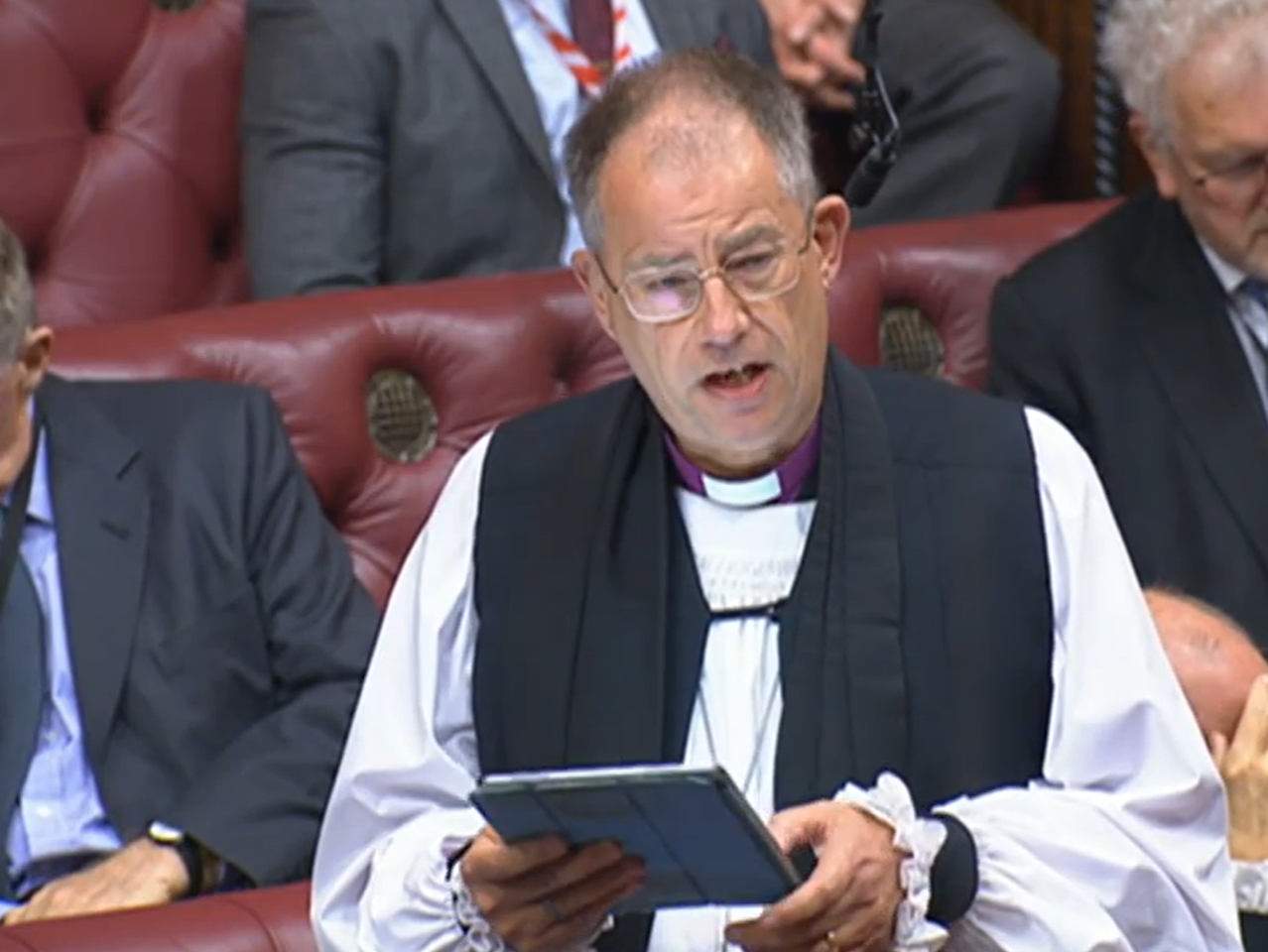
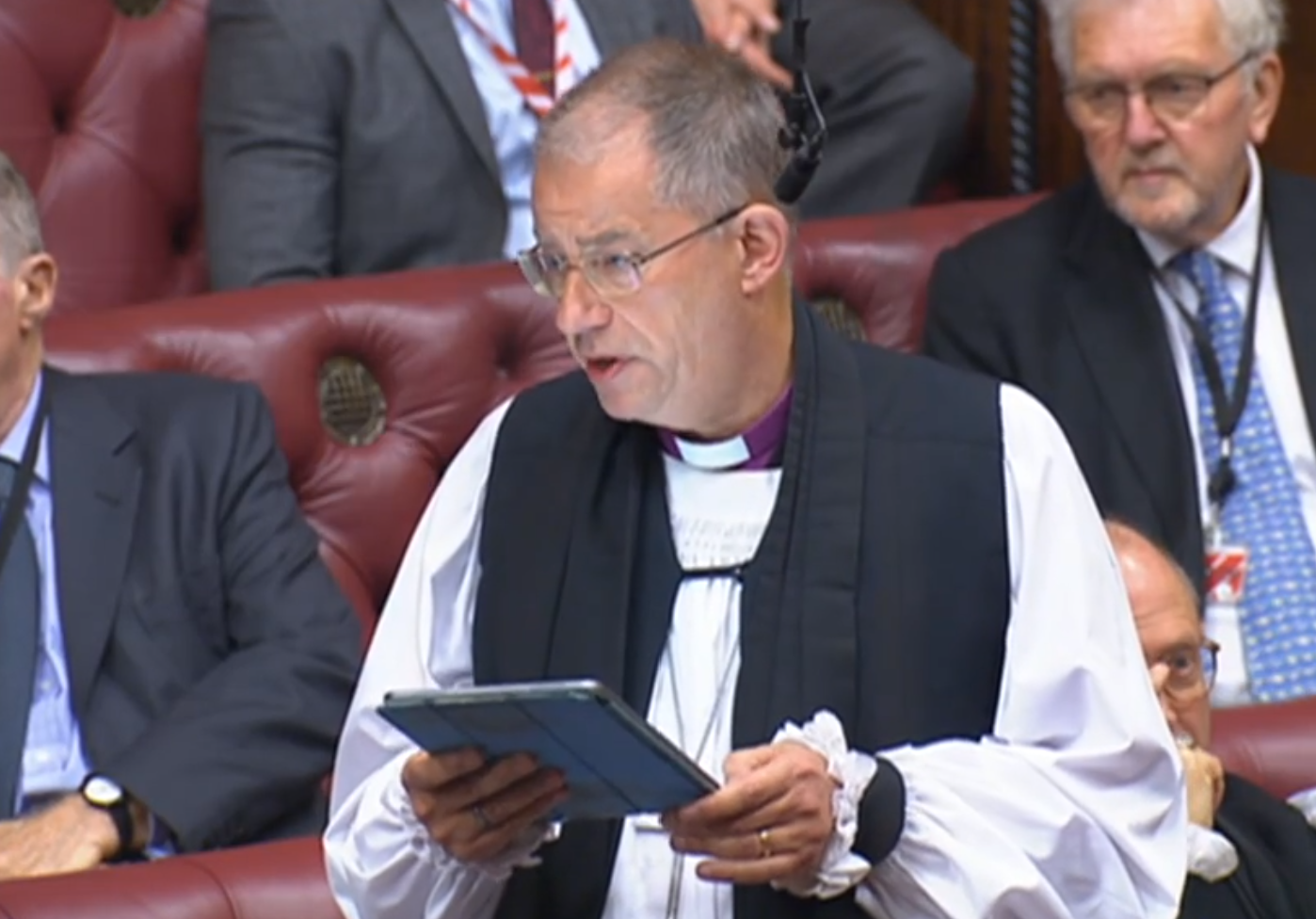
Tobacco and Vapes Bill: Bishop of Oxford supports legislation at second reading

The Bishop of Oxford spoke at the second reading of the Tobacco and Vapes Bill on 23rd April 2025, welcoming the bill and affirming the need for action on health inequalities and the reduction of smoking:

The Lord Bishop of Oxford: My Lords, it is a pleasure to follow the noble Lord, Lord Stevens. I rise to support this important Bill and to express the support of the right reverend Prelate the Bishop of London, who sends her apologies that she cannot be here today. I thank the Minister for her very clear introduction, and other noble Lords for their principled and non-partisan support.

This is an extremely important and effective public health measure that prioritises preventive health at a time when demands on acute services are so significant. Stark inequalities in health remain one of the most persistent and negative health outcomes of modern times. Smoking falls clearly along this line of inequality. Action on Smoking and Health goes so far as to say that smoking is the leading cause of

“the gap in healthy life expectancy”.

Continue reading “Tobacco and Vapes Bill: Bishop of Oxford supports legislation at second reading”

Bishop of Oxford asks about carbon emissions caused by AI data centres

The Bishop of Oxford tabled a question on carbon emissions associated with AI data centres on 23rd April 2025:

The Lord Bishop of Oxford:  To ask His Majesty’s Government what plans they have to measure the emissions associated with artificial intelligence in relation to the United Kingdom’s net zero target.

Continue reading “Bishop of Oxford asks about carbon emissions caused by AI data centres”

Bishop of Oxford asks about accommodation for refugees and asylum seekers

The Bishop of Oxford asked a question on identifying suitable accommodation for asylum seekers and refugees on Tuesday 22nd April 2025, during a discussion on the costs of temporary accommodation provided by local authorities:

The Lord Bishop of Oxford: My Lords, I declare an interest as patron of Asylum Welcome, which works with asylum seekers and refugees in Oxford and Oxfordshire. What proportion of temporary accommodation provided by local authorities is used to house refugees who are assessed as priority need after having been granted refugee status? What steps are being taken to identify more suitable long-term accommodation for this cohort?

Continue reading “Bishop of Oxford asks about accommodation for refugees and asylum seekers”

Bishop of Oxford asks about improving public trust in artificial intelligence

The Bishop of Oxford asked a question on improving and building public trust in AI, during a discussion on introducing legislation for regulation of artificial intelligence on 10th February 2025:

The Lord Bishop of Oxford: My Lords, according to the Government’s own recent survey, 43% of the public trust that the impact of AI will be positive, but 33% believe it will be negative. Given this very narrow gap and the critical importance of building trust in embracing new technologies, what specific steps are the Government planning to take to improve that public trust as they embed AI in the nation’s most trusted institutions, not least in the NHS?

Continue reading “Bishop of Oxford asks about improving public trust in artificial intelligence”

Bishop of Oxford supports ban on smartphones in schools

The Bishop of Oxford spoke in a debate on proposals to ban the use of smartphones in schools on 28th November 2024, raising examples of the impact of phone use in schools on behaviour, concentration and mental health:

The Lord Bishop of Oxford: My Lords, it is an honour to take part in this debate. I congratulate the noble Baroness, Lady Kidron, on her excellent introduction. I too look forward to the maiden speech of the noble Baroness, Lady Cass.

The diocese of Oxford, where I serve, has 285 church schools. We share in the education of over 60,000 children through these schools and the network of multi-academy trusts. There is a broad consensus on the importance of this issue and in favour of smartphone-free schools. However, there is not yet a final consensus on the next steps to be taken to bring this about. The consensus arises from our commitment to follow the Christian values of wisdom, respect, community and hope in all our schools.

Continue reading “Bishop of Oxford supports ban on smartphones in schools”

Bishop of Oxford urges government to commit to accelerating transition to electric vehicles

On 16th October 2024, the Bishop of Oxford took part in a debate on a report from the Environment and Climate Change Committee EV strategy: rapid recharge needed, urging the government to work to accelerate the transition to electric vehicles and to ensure parity and fairness in the emerging sector:

The Lord Bishop of Oxford: My Lords, I too warmly welcome this debate as a member of the committee that produced the report. I pay tribute to the noble Baroness, Lady Parminter, for her introduction to the debate and her very careful, wise and gracious—and patient—leadership of the committee in its first three years.

My experience of serving on the ECC Committee across the three years was that each of the challenges we addressed proved to be both more significant and more complex than we first appreciated. It was a tremendous learning curve. Each issue had multiple questions and problems associated with it and needed complex solutions. That was clearly the case with the EV report before the House today.

Some very good work has been done by the previous Government, manufacturers and local authorities, but much more needs to be done—and urgently—to keep this transition on track. I would highlight that need for urgency in the transition. As the noble Baroness, Lady Jones, has just said, the effects of climate change across the world are accelerating, as all of us in this Chamber recognise, often affecting those who have least, who are least resilient and whose emissions in the present and in the past have been lowest across the world.

Continue reading “Bishop of Oxford urges government to commit to accelerating transition to electric vehicles”

Bishop of Oxford urges government to tackle issues in social care

The Bishop of Oxford spoke in a debate on social care strategy on 10th October 2024, referencing the work of the Archbishops’ Commission on Reimagining Care and the need for a social care renewal:

The Lord Bishop of Oxford: My Lords, I too welcome this debate. I particularly appreciated the initial appeal by the noble Baroness, Lady Tyler, for a reframing of a broader conversation. Like others across this House, I pay tribute to the many unpaid carers and those who work in social care, who invest their lives in the well-being of others. As has been said, in this debate we acknowledge together that our social care system is in urgent need of reform and that this is a key moment. I share the hope that the Government will take the first steps in that reform in the very near future. Social care impacts us all, in terms of our responsibilities and needs. It brings the most vulnerable in our society from the margins to the centre of our attention and our love.

Last year, the Archbishops’ Commission on Reimagining Care published its excellent report, Care and Support Reimagined. The commission was chaired by Dr Anna Dixon MBE and the right reverend James Newcombe, then Lord Bishop of Carlisle. The report commends the development of a national care covenant. The biblical notion of covenant is based not around commercial contract but around a wider societal promise and mutual expectation, and is focused on relationships, mutuality and partnership. It demands a shared vision across society and common values.

Continue reading “Bishop of Oxford urges government to tackle issues in social care”

Bishop of Oxford asks about community cohesion

The Bishop of Oxford asked a question on government efforts to encourage community cohesion on 8th October 2024, following a statement marking the anniversary of the October 7th attacks in Israel and the ongoing conflict in the Middle East:

The Lord Bishop of Oxford: My Lords, I thank the Minister for her very compassionate and clear Statement and the tone in which it was delivered. I also thank other noble Lords who have spoken and no doubt those who will speak about these terrible, terrible events and the effect they are having on our own communities.

Continue reading “Bishop of Oxford asks about community cohesion”

King’s Speech Debate: Bishop of Oxford raises potential risks of new technologies

On 19th July 2024, the Bishop of Oxford spoke on developments in science and technology during the debate on the King’s Speech, encouraging the government to consider the potential risks of certain new technologies, particularly to children and security:

The Lord Bishop of Oxford: My Lords, it is a privilege to contribute to this debate. I congratulate the new Ministers and express appreciation to the noble Baroness, Lady Barran, and to the noble Baroness, Lady Jolly, for her valedictory speech. There is much to commend in the gracious Speech.

A few weeks ago, Pope Francis addressed the leaders of the G7 on the risks and opportunities of artificial intelligence. Francis spoke of the way in which AI arises from God-given human potential. He spoke of the excitement at the possibilities that these powerful tools bring, of the risks of greater inequalities and impersonation, and of the need for deep and humane wisdom and ethics and the right political leadership. I encourage noble Lords to read his address but also, if they have a moment, to watch the 10 minutes before his address. Pope Francis demonstrated a deep humanity, not only in his words but in the way he went right around the room, embracing each of the G7 leaders and lightening for a moment the heavy burdens that each carried.

Continue reading “King’s Speech Debate: Bishop of Oxford raises potential risks of new technologies”

Bishop of Oxford asks about use of data in education

The Bishop of Oxford received the following written answers on 23rd April 2024:

The Lord Bishop of Oxford asked His Majesty’s Government whether they give third parties access to national pupil data or learner records, and whether they charge a fee for any such access.

Baroness Barran (Con, DfE): The department will only share pupil, or learner, level data with others where it is lawful, secure and ethical to do so. Where these conditions are met and data is shared, the department do not charge any fee.

Continue reading “Bishop of Oxford asks about use of data in education”