On 16th March 2022, the House of Lords debated the Health and Care Bill in its report stage. Votes were held on several amendments to the bill, in which Bishops took part.

On 16th March 2022, the House of Lords debated the Health and Care Bill in its report stage. Votes were held on several amendments to the bill, in which Bishops took part.
“search engines free of advertising, social networking freed from the blind pursuit of profit, messaging services which do not mine our data—and all protecting the rights of the child? Perhaps the Government might be willing to explore this kind of radical intervention—social media in public service—in this vital area”
On 10th December 2021 the Bishop of Oxford spoke in a House of Lords debate led by the Archbishop of Canterbury on contemporary challenges to freedom of speech and the role of the public, private and third sectors in upholding it:
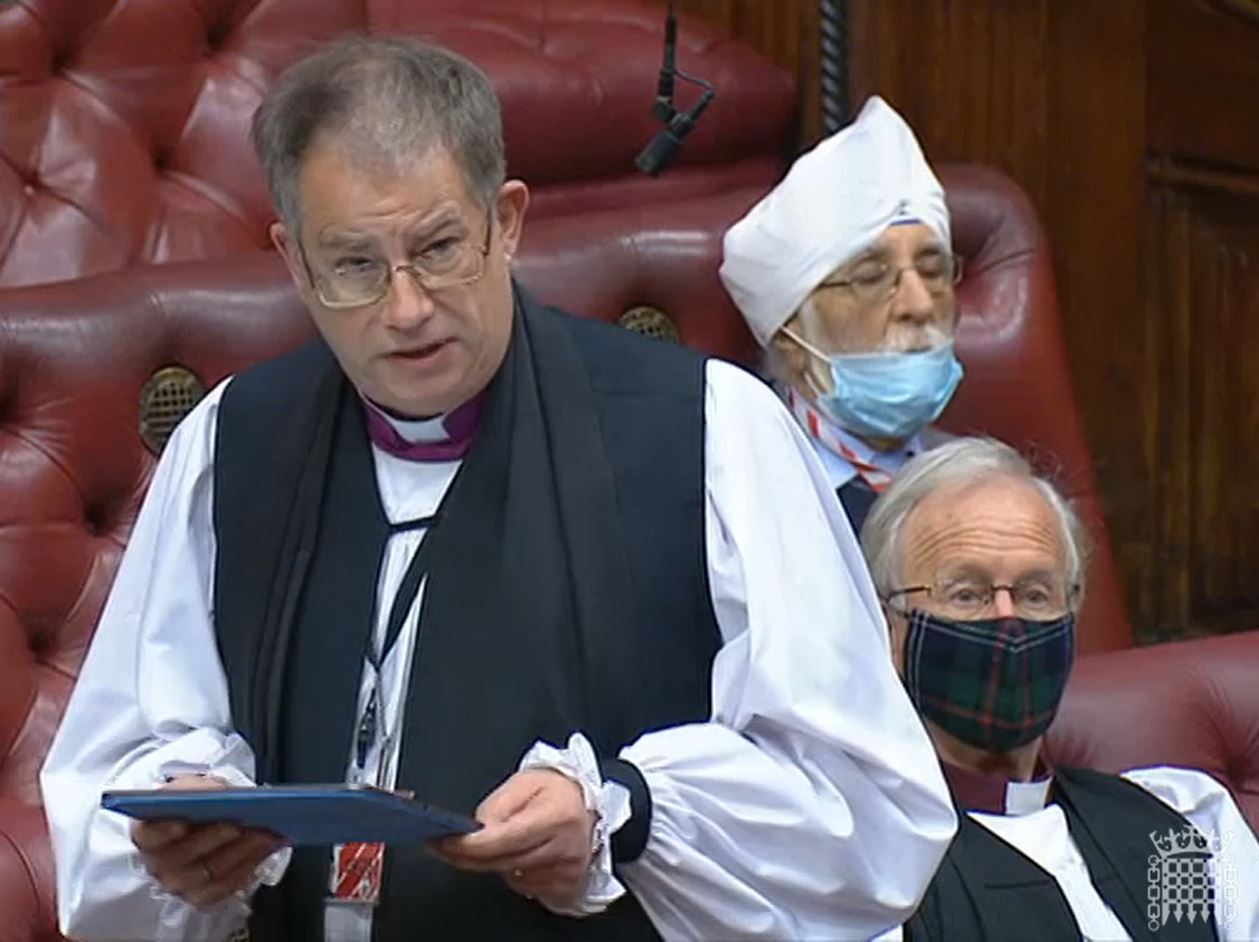
The Lord Bishop of Oxford: My Lords, it is a great privilege and honour, as always, to follow the noble and right reverend Lord, Lord Harries, one of my distinguished predecessors. I am grateful for this timely debate and to the most reverend Primate for his very comprehensive introduction. In a few days’ time, as we have heard, the scrutiny committee of both Houses will publish its report on the online safety legislation: a potentially vital web of provisions to prevent harm to individuals and, I hope, to society.
Continue reading “Bishop of Oxford on freedom of speech and online safety”On 19th November 2021, the House of Lords debated the Age Assurance (Minimum Standards) Bill in its second reading. The Bill, tabled by Baroness Kidron, would require Ofcom to produce a code of conduct setting out minimum standards for any system of age assurance, with the aim of protecting children from exploitation and harmful online content. The Bishop of Oxford spoke in support of the bill:

The Lord Bishop of Oxford: My Lords, it is a real pleasure to follow the noble Lord, Lord Russell, and indeed every other noble Lord who has spoken in this debate. It has been extraordinary and very moving. I join other noble Lords in congratulating the noble Baroness, Lady Kidron, on securing this Second Reading and on her passionate and brilliant opening speech. With others, I thank and commend her for her tireless commitment to protecting children online. That she does so with such consistent grace and good humour, against the backdrop of glacially slow progress and revelations about both the variety and scale of harms to children, is no small achievement in itself.
Continue reading “Bishop of Oxford supports Age Assurance (Minimum Standards) Bill”The Bishop of Oxford spoke in a debate on social care on 14th October 2021, raising issues of the need for community care and the risks posed by high vacancies in the care sector:
The Lord Bishop of Oxford: My Lords, it is an honour to contribute to this key debate. Like others, I am grateful to the noble Baroness, Lady Pitkeathley, for her excellent introduction. I welcome the Minister to his new responsibilities. It is a privilege to follow the noble Baroness, Lady Finlay.
One of the key texts on which so much of our human civilisation is based contains these lines:
“Honour your father and mother, so that your days may be long in the land that the Lord your God is giving you.”
The care offered by one generation to another is fundamental to human flourishing and a good society. As we have heard, that care is offered in families generously and unstintingly, but it needs to be supported by the wider community, through creative partnerships with the third sector, and by the state. These principles have led to our current system of social care, which now stands in urgent need of fresh vision and reform.
Continue reading “Bishop of Oxford speaks on community care and gaps in the social care sector”On 12th October 2021, the House of Lords debated the Skills and Post-16 Education Bill in the report stage. Votes were held on amendments to the bill, in which a Bishop took part:
On 12th October 2021, the House of Lords debated the Skills and Post-16 Education Bill in the first day of the report stage. On behalf of the Bishop of Durham, the Bishop of Oxford spoke to three amendments to the bill aimed at improving provision of higher and further education to people with special educational needs and disabilities:
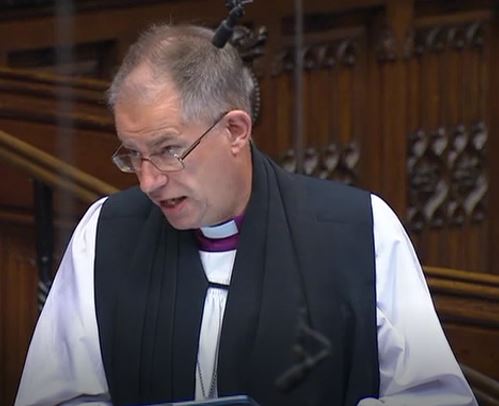
The Lord Bishop of Oxford: My Lords, I shall speak to Amendments 13, 16 and 19, tabled by the right reverend Prelate the Bishop of Durham, who is unable to be present because of his other engagements. Along with others, I welcome the Minister to her new role and join others in offering appreciation to her predecessor, the noble Baroness, Lady Berridge. I should also say, as a member of your Lordships’ Select Committee on the Environment and Climate Change, how much I welcome government Amendment 6, and I add my support to Amendment 64.
The context of my remarks is a general welcome for the Bill and recognition of its role in helping to meet the Government’s ambition on FE and skills. However, there is almost no specific reference to SEND provision in the Bill, despite the significant role that FE plays in provision for students with additional needs or disabilities. Noble Lords will know that around 202,000 students have special educational needs in further education, of whom 90% attend general FE colleges and make up almost one in six of all enrolments. Within those, almost a quarter of students are aged 16 to 18. In contrast to the school sector, there is a small number of specialist institutions. That situation makes a profound difference to the scale and range of support needed in general FE and sixth-form colleges.
Continue reading “Skills and Post-16 Education Bill: Bishop of Oxford speaks to Bishop of Durham’s amendments on improving SEND provision in higher education”The Bishop of Oxford asked a question on whether protection for low-income households would be included in the government roadmap to net-zero on 11th October 2021:
The Lord Bishop of Oxford: My Lords, in order to avoid a disruptive transformation from our current carbon-intensive society, we need the Government to include fiscal measures to protect the poorest and most vulnerable households. Can the Minister confirm that the full Government road map to net zero will include a carbon fee and dividend element to cushion the blow for low-income households, as already successfully trialled in several Canadian provinces, Alaska and elsewhere?
Continue reading “Bishop of Oxford advocates for protection for low income households during transistion to net-zero”On 10th September 2021, the House of Lords debated the Education (Assemblies) Bill at its second reading. The Bishop of Oxford spoke in response to the bill, welcoming the debate on the topic, but opposing the proposed removal of the requirement for collective worship in schools:
The Lord Bishop of Oxford: My Lords, I warmly welcome this debate. As others have said, it is very timely that it is raised. I thank the noble Baroness, Lady Burt, for her careful introduction, and other noble Lords and noble Baronesses who have spoken, particularly my distinguished predecessor but one, the noble and right reverend Lord, Lord Harries, with whom I think I am about to disagree.
Worship and spirituality are a vital part of what it means to be human, and it is absolutely right, for all the reasons that have been given, that it be carefully reviewed and, possibly, that some changes should be introduced. But my reason for in conscience finding this Bill difficult goes back to my experience of leading assemblies as a local parish priest many years ago in Halifax. I put a great deal of time and energy into rehearsing the parable of the good Samaritan and the stories of Joseph and Moses, only for the otherwise extremely good and gifted head teacher of the school to reinterpret my assembly with the phrase, “Of course, what the vicar really means is don’t run in the corridors, and pick up the litter in the playground.” It is the reduction, without a serious faith tradition, of the fantastic values that are being articulated, to simple practical motifs which I fear is the danger of a Bill like this.
Continue reading “Education (Assemblies) Bill: Bishop of Oxford urges against removal of collective worship in schools”On 9th September 2021, the Bishop of Oxford spoke in a debate on ethics and standards in public life, emphasising the need for support, education and training in order to for those in public life to meet standards:
The Lord Bishop of Oxford: My Lords, it is a great privilege to take part in this debate and to follow the noble Lords who have spoken. I thank the noble Lord, Lord Blunkett, for his leadership and introduction. I learned a great deal from the noble Lord while Bishop of Sheffield.
I suggest that improving standards in public life is a three-cornered stool. One leg of that stool is being neglected in the public conversation. It is right that we have the highest possible principles and standards. The Nolan principles have stood the test of time and I support their application to people and their extension to areas of technology. They are the first important leg. The second leg is the way in which we hold one another to account on those principles, which is where I guess that the majority of this debate will be focused. Others are better qualified to speak on this than me. Those ways need to be thorough and consistent with the Nolan principles.
There is an important third leg to this stool, which I want to call formation and support. How do we intentionally grow a community of diverse public servants who are ethically formed and equipped, and have the inner capacity to be honest, open, objective, accountable and selfless? How do we form boards and cultures which are able to work in those ways? They do not simply happen. How do we offer ongoing support and learning to those who exercise high public office and have to cope with greater and greater complexity, pressure and temptation?
Continue reading “Bishop of Oxford speaks in debate on ethics and standards in public life”The Bishop of Oxford asked a question on the government’s planned timeline for introducing support and information for those working to help buildings meet net-zero targets on 9th September 2021:
The Lord Bishop of Oxford: My Lords, I thank the Minister for his Answer. As your Lordships may be aware, the Church of England has declared a climate emergency and is aiming for net zero by 2030. In the diocese of Oxford, we are stewards of 470 parsonages and many other buildings. We have a lot of work to do, and a lot of investment is required to bring those buildings to net zero. Two things are preventing us making progress; we clearly need to spread the work over a decade. The first is knowing the Government’s plans for home heating and the second is the help and support that will be available from government for those changes. The system needs to be simple and sustainable and to carry confidence. When will we know the way forward?
Continue reading “Bishop of Oxford asks about timeline for government support and information on net-zero building” The Church of England in Parliament
You must be logged in to post a comment.