
On 9th September 2021, the Bishop of Oxford spoke in a debate on ethics and standards in public life, emphasising the need for support, education and training in order to for those in public life to meet standards:
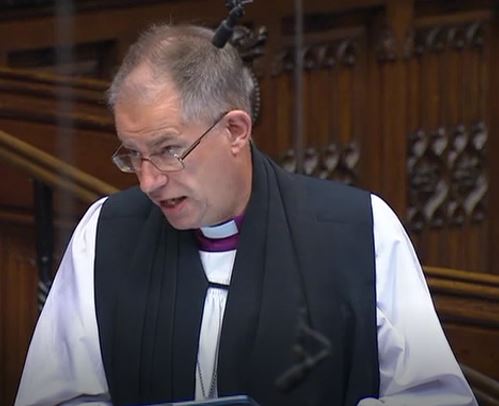
The Lord Bishop of Oxford: My Lords, it is a great privilege to take part in this debate and to follow the noble Lords who have spoken. I thank the noble Lord, Lord Blunkett, for his leadership and introduction. I learned a great deal from the noble Lord while Bishop of Sheffield.
I suggest that improving standards in public life is a three-cornered stool. One leg of that stool is being neglected in the public conversation. It is right that we have the highest possible principles and standards. The Nolan principles have stood the test of time and I support their application to people and their extension to areas of technology. They are the first important leg. The second leg is the way in which we hold one another to account on those principles, which is where I guess that the majority of this debate will be focused. Others are better qualified to speak on this than me. Those ways need to be thorough and consistent with the Nolan principles.
There is an important third leg to this stool, which I want to call formation and support. How do we intentionally grow a community of diverse public servants who are ethically formed and equipped, and have the inner capacity to be honest, open, objective, accountable and selfless? How do we form boards and cultures which are able to work in those ways? They do not simply happen. How do we offer ongoing support and learning to those who exercise high public office and have to cope with greater and greater complexity, pressure and temptation?
According to the great biblical tradition, there is one central insight on leadership in communities which is foundational and counter to much contemporary teaching on leadership. It is that the exercise of leadership in communities is very, very, difficult. The greater the power and authority we are given, the more our character is tested. Part of our humanity is that we are fallible; politicians fall short and so do churches and Church leaders. Being honest about our fallibility creates a much better climate for public discourse. Remember the biblical stories of Abraham and Sarah, of David, Ahab and Jezebel and of Peter. Last Friday the Church remembered Gregory the Great, a Pope in the 7th century. Gregory’s Pastoral Rule, his legacy to all the centuries, is a masterpiece on the complexity of leadership and the need to balance the inner and outer life. For centuries, translated by King Alfred, it was the foundation of good government in Europe.
So, what are the ways in which this Government and Parliament can recognise the need for this formation and support and develop it? First, is it possible to make a similar investment in training and support in the Nolan principles as the recent welcome investment in relationships and conduct in the workplace? Secondly, is it possible to ensure confidential networks of support across government departments, especially for those in senior roles, given the stresses and strains they carry? We need to nurture and look after our leaders. Thirdly, is it possible to build formation and training on ethical principles into every team and board so that, year by year, we tend to and grow this aspect of our common life?
Extracts from the speeches that followed:
Lord Puttnam (Lab): My Lords, it is a pleasure to follow the right reverend Prelate the Bishop of Oxford, although in all honesty I would have preferred to have been book-ended by Conservative Peers, as it is to members of their party that most of my remarks, rather like those of the noble Lord, Lord Blunkett, are necessarily addressed. I find it deeply regrettable that so few Conservative voices have chosen to contribute to the subject which, as a young man, I thought was synonymous with everything the party stood for.
I hope the Minister will offer the House some form of explanation as to when the subject of standards in public life became so far removed from his Government’s concerns. I also hope he will acknowledge that his party, many of whom over the past quarter of a century I have had the opportunity to befriend, listen to and respect, have found themselves at a point where their Government gets “nil points” in all seven categories of the Nolan principles.
It was to address a self-inflicted parliamentary crisis that Sir John Major, a man for whom I have nothing but respect, helped encode what most believed to be a self-evident set of standards to be followed by those pursuing careers in political and public life. It was not a particularly complicated set of standards, and, with our traditional sense of complacency, most of us believed that, with the odd tilt of the tiller, we could retain, or gain, the sense of self-respect that we had always believed ourselves to enjoy. We were horribly wrong. How often have I heard wiser voices than mine in this House warn against the dangers of the slippery slope? Where standards in public life are concerned, the present Government have taken us careening down the Cresta Run.
Baroness Stowell of Beeston (Con): As my main point today, I want to make a positive case for why any of us as public servants should, just as the code requires of us under the heading of “Leadership”, uphold standards and promote them. The simple reason is that these standards help promote behaviours and social norms which bond us together as a society. Behaviour which we associate with good character is particularly important for us to see among those who obtain or are given the power to lead or to make decisions which affect everyone else—that was mentioned earlier by the right reverend Prelate. It helps stimulate the confidence necessary for us to comply with and follow what is asked or requested.
In a complex world where people are increasingly angry and distrustful, and asked to take on trust complex solutions, we look for simple motives. But we can judge people’s motives only through the actions that we see on display. Leaders need to promote the importance of common standards of behaviour and social norms for us to tackle some of our biggest and most difficult problems, because that is the only way we can bind everybody in. What we must not do if we are to be successful in meeting that challenge is weaponise or politicise the standards in public life that people have every right to expect of us. We must uphold and promote by example those standards to make sure that, together, we meet people’s expectations and serve them better.
Lord True (Con, Cabinet Office): I will try to address the main points that have been made, but before I move on, I give the noble Lord, Lord Blunkett, the fundamental assurance he asked for: these matters are constantly under review. The voices that your Lordships have raised today will be part of that review and consideration, and a number have been referred to in the debate.
I agreed with the remarks of my noble friend Lord Young of Cookham and others, notably the right reverend Prelate, about the need for proportionality. That informed this debate: the need to admit our own fallibility. It is certainly my personal credo that one is imperfect and must seek to do better day by day. We must all strive for the highest ethical standards, and I agreed with the point made in the thoughtful speech made by the noble Lord, Lord Brooke of Alverthorpe: it is about not just the processes of central or local government, but ourselves in this House. Yes, we need to examine ourselves and the way we do things and, in the old language of this House, as I said, to seek to stand on honour.


You must be logged in to post a comment.