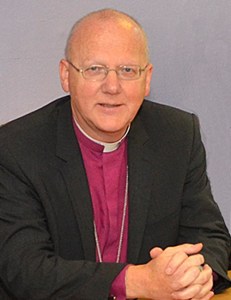
Bishop of St Albans advocates for needs of rural communities in development planning for high streets and town centres

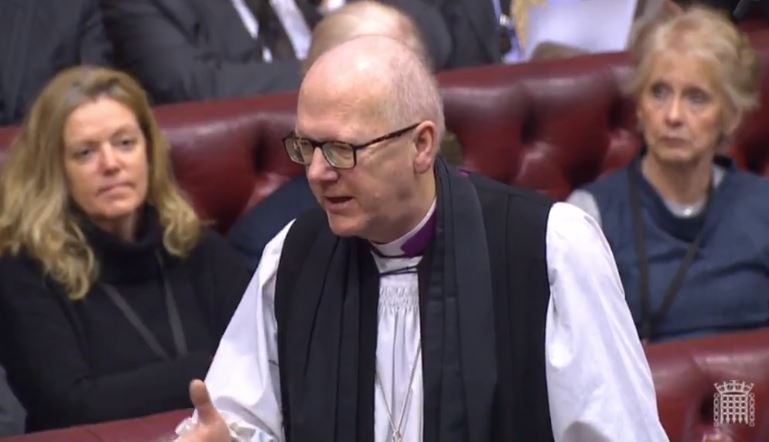
The Bishop of St Albans spoke in a debate on a report from the Built Environment Committee: High Streets: Life Beyond Retail? in grand committee on 13th May 2025, highlighting the needs of rural communities, the importance of an imaginative approach to developing town centres, and the benefits of finding everyday use for buildings:

The Lord Bishop of St Albans: My Lords, I thank the noble Lord, Lord Gascoigne, for securing this debate, for taking over as chair of the Built Environment Committee and for his excellent opening speech. I declare my interest as a vice-president of the LGA.

I saw the impact of a can-do council appointing a town centre development officer when I became archdeacon of Stoke some 30 years ago. He would not take no for an answer. When you saw him coming, you got out your tin hat and tried to hide, because he was absolutely determined to develop what became the cultural centre of Hanley. It was an extraordinary transformation. I left some 25 years ago, and I am sure that they need to continue to develop for whatever is required now, but I saw just what the impact of that kind of appointment could be. It was an impressive piece of work.

This report is timely and educational. It is so easy when talking about the decline of the high street to hark back to some golden past, because that is probably what we all remember from years ago. But we must not expect a prosperous high street in 20 years’ time to look the same as it did 20 years ago, and we must not try to revive some version of the high street as we used to know it. The day of the retail-dominated high street, as this report demonstrates, is at least partially over, with reportedly more than 13,000 high street stores having closed in 2024. We need to be creative, innovative and imaginative in our approach to the high streets of the future, as we pivot towards a greater mix of leisure activities, restaurants and public services in our high street offer.

Continue reading “Bishop of St Albans advocates for needs of rural communities in development planning for high streets and town centres”

Bishop of St Albans asks about renewable energy planning

The Bishop of St Albans received the following written answer on 20th July 2023:

The Lord Bishop of St Albans asked His Majesty’s Government whether they have any plans to simplify the planning process for renewables.

Baroness Scott of Bybrook (Con): Our National Planning Policy Framework is clear that when determining planning applications for renewable and low carbon development, local planning authorities should approve the application if its impacts are (or can be made) acceptable.

In addition, powers in our Levelling Up and Regeneration Bill will enable us to create a more consistent, streamlined and digitally enabled approach to planning applications. When utilised with existing powers, this will enable us to create an end-to-end system which is faster and more accessible to communities.

Hansard

Levelling Up & Regeneration Bill: Bishop of Exeter supports amendments prioritising emergency services in infrastructure planning

On 3rd May 2023, the House of Lords debated the Levelling Up & Regeneration Bill in committee. The Bishop of Exeter spoke in support of amendments to the bill tabled by Lord Greenhalgh, seeking to ensure that emergency services are considered during planning and reform:

The Lord Bishop of Exeter: My Lords, I rise in support Amendments 324, 329, 342, 346, 347, 351, 352 and 360 in the name of the noble Lord, Lord Greenhalgh, and to which I have added my name. They concern planning reform and the emergency services.

A robust and effective planning process is essential for the flourishing of our communities. A key aspect of this is to ensure the adequate provision of emergency services. I welcome the fact that the Bill has included emergency services in the definition of infrastructure under Schedule 11, but, historically, this has not always been the case. It remains the fact that local authorities are not obliged to take into account the views and concerns of the emergency services.

Continue reading “Levelling Up & Regeneration Bill: Bishop of Exeter supports amendments prioritising emergency services in infrastructure planning”

Levelling Up & Regeneration Bill: Bishop of St Edmundsbury and Ipswich supports development of housing for older people

On 18th April 2023, the Bishop of St Edmundsbury and Ipswich spoke in support of amendments to the Levelling Up and Regeneration Bill regarding the importance of housing for older people:

The Lord Bishop of St Edmundsbury and Ipswich: I shall speak very briefly in support of the group of amendments, on none of which would I dare wish to claim to be an agnostic. I particularly support Amendment 207 proposed by the noble Lord, Lord Best, to which my colleague the right reverend Prelate the Bishop of Chelmsford has added her name. The amendment addresses the important role of local authorities to consider older groups’ housing needs when developing local plans. Together with Amendment 221 from the noble Lord, Lord Best, these changes to the Bill would deliver a more effective response to the shortfall in appropriate housing for older people at all levels of government.

Continue reading “Levelling Up & Regeneration Bill: Bishop of St Edmundsbury and Ipswich supports development of housing for older people”

Extreme Risk Management: Bishop of Leicester highlights benefits of including faith groups in planning for response to crises

On 12th January 2022, the House of Lords debated a motion to take note of a report from the Risk Assessment and Risk Planning Committee: Preparing for Extreme Risks: Building a Resilient Society (Session 2021–22, HL Paper 110). The Bishop of Leicester spoke in the debate, advocating for greater inclusion of faith groups in emergency planning:

The Lord Bishop of Leicester: My Lords, I, too, am grateful for the Select Committee’s work in tackling such an important subject and, in particular, I concur with the authors’ recognition that,

“the UK must move away from a risk management strategy which … often ignores or fails to appreciate the interconnected nature of our society”,

and that we must instead,

“produce a risk management system that ties all sectors of society together.”

Interdependence is a fundamental part of human nature and policies that follow the grain of that nature are far more likely to succeed.

I was disappointed, therefore, that although the report advocated for a whole-society approach, no reference was made to the role of faith groups in emergency planning and response. Faith groups and leaders across the country were an integral part of the response to Covid-19. A 2020 report by the All-Party Parliamentary Group on Faith and Society, based on research with local authorities, found that faith communities were instrumental in local responses by offering buildings, running food banks, information-sharing, befriending, collecting, cooking and delivering food, and providing volunteers for local authority programmes. Accordingly, the APPG found that local authorities developed a new-found appreciation for the agility, flexibility and professionalism of faith-based organisations, and that local authorities were keen to continue and build on those relationships in the future.

Continue reading “Extreme Risk Management: Bishop of Leicester highlights benefits of including faith groups in planning for response to crises”

Votes: Town and Country Planning (General Permitted Development etc.) (England) (Amendment) Order 2021

On 10th June 2021, the House of Lords voted on two deferred motions relating to an amendment to the Town and Country Planning Order. A Bishop took part in both votes:

Continue reading “Votes: Town and Country Planning (General Permitted Development etc.) (England) (Amendment) Order 2021”

Queen’s Speech – Bishop of St Albans on planning, building safety and accessibility

On 17th May 2021 the Bishop of St Albans spoke in the third day of debates on the Queen’s Speech in the House of Lords, focusing on the continuing issues of leaseholders facing costs for replacing dangerous cladding, and the new planning Bill.

“My Lords, I too look forward to hearing the maiden speeches of the noble Lords, Lord Coaker and Lord Morse, but I want to start by congratulating the Minister on introducing the leasehold reform Bill.

“Ending ground rents—or, as one person called it recently, the serfdom charge—in new developments is an important and positive reform, and I will welcome this opportunity to be mostly congruent with the Minister, after been being on opposing sides of the Fire Safety Bill. While this is a great victory for future leaseholders, existing leaseholders, particularly those in developments affected by the building and fire safety scandal, nervously await their fate.

Continue reading “Queen’s Speech – Bishop of St Albans on planning, building safety and accessibility”

Bishop of St Albans asks about housing market

On 16th November the Bishop of St Albans received a written answer in response to a question on house prices, sales and diversification:

The Lord Bishop of St Albans: To ask Her Majesty’s Government, further to the Written Answers by Lord Greenhalgh on 1 October (HL8296), 6 October (HL8828), and 28 October (HL9442), what assessment they have made of the impact of (1) fears of negative equity on existing house purchases, and (2) house prices rising faster than wage increases, on the effectiveness of diversification. [HL9871] Continue reading “Bishop of St Albans asks about housing market”
Bishop of St Albans asks about targets for disabled-access homes

On 4th November 2020 Baroness Greengross asked the  Government “what steps they are taking to ensure that changes to the planning system will deliver more homes that are accessible for people with disabilities.” The Bishop of St Albans asked a further question:

The Lord Bishop of St Albans [V]: My Lords, with regions such as the north-west, the north-east and Yorkshire hosting less than one disabled-access home ​for every 100 homes, and regions such as the West Midlands hosting just over one disabled-access home for every 300 homes, given that 15.2% of the population is elderly and 18% of the population is disabled, is it now time that the Government mandated targets for disabled-access homes rather than simply relying on local authorities? Continue reading “Bishop of St Albans asks about targets for disabled-access homes”

Bishop of St Albans asks Government about land banking

On 28th October the Bishop of St Albans received a written answer to a question on housing construction:

The Lord Bishop of St Albans: To ask Her Majesty’s Government, further to the Written Answers by Lord Greenhalgh on 1 October (HL8296) and on 19 October (HL8828), what assessment they have made of the impact of tackling the practices of ‘land banking’ and ‘intentional delay’ on the market absorption rates in the housing market. [HL9442] Continue reading “Bishop of St Albans asks Government about land banking”