Online Safety Bill: Bishop of Oxford supports amendments to protect children from online pornography

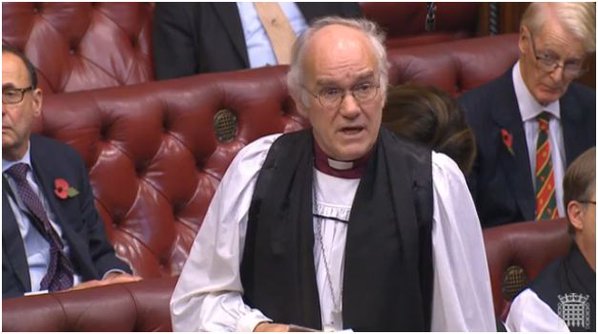
On 23rd May 2023, the House of Lords debated amendments to the Online Safety Bill in committee. The Bishop of Oxford spoke in support of amendments tabled by himself, Lord Bethell, and Baroness Kidron, which would institute greater protections for children to prevent them from accessing online pornography:
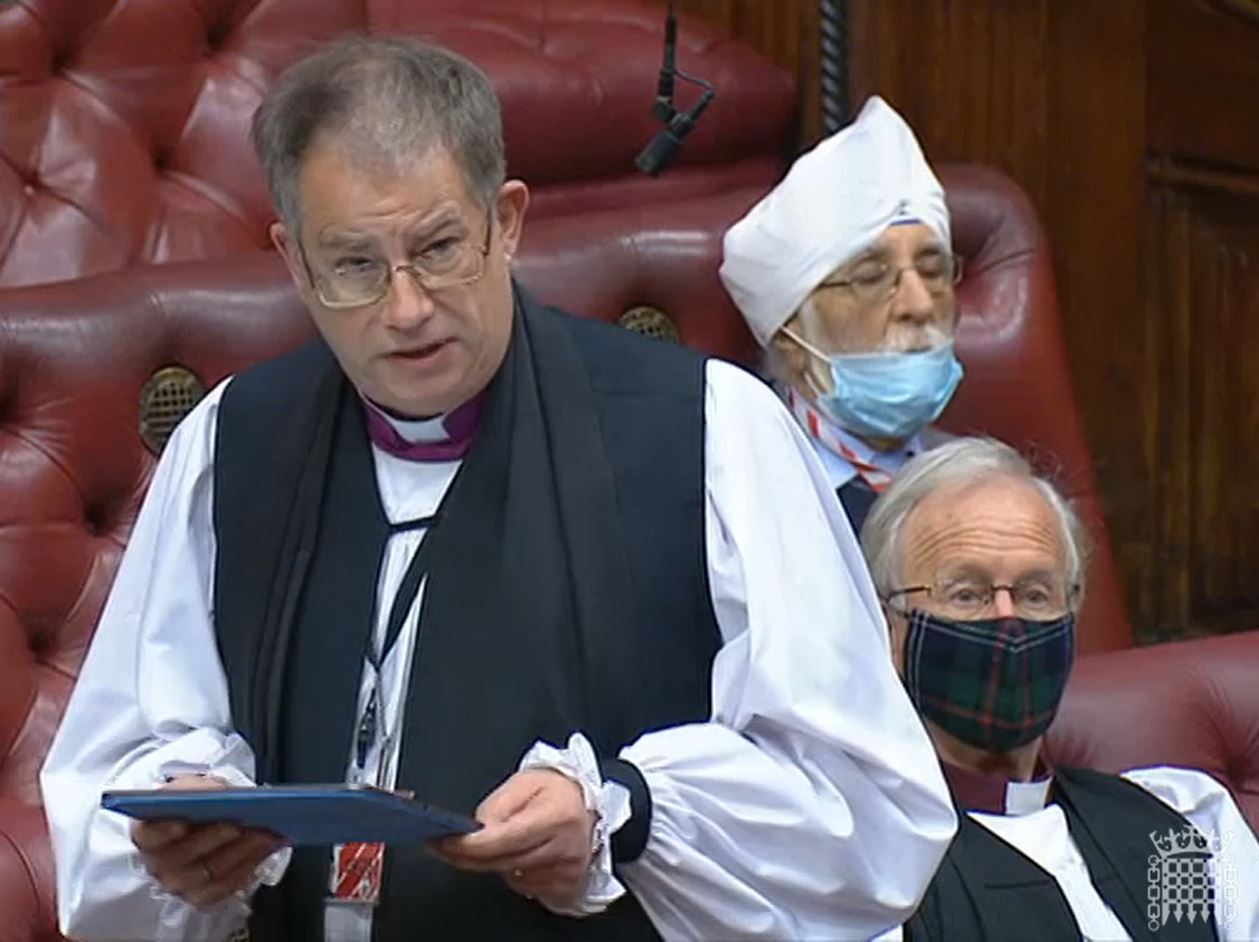
The Lord Bishop of Oxford: My Lords, it is such a privilege to follow the noble Baroness, Lady Benjamin. I pay tribute to her years of campaigning on this issue and the passion with which she spoke today. It is also a privilege to follow the noble Baroness, Lady Kidron, and the noble Lord, Lord Bethell, in supporting all the amendments in this group. They are vital to this Bill, as all sides of this Committee agree. They all have my full support.

When I was a child, my grandparents’ home, like most homes, was heated by a coal fire. One of the most vital pieces of furniture in any house where there were children in those days was the fireguard. It was there to prevent children getting too near to the flame and the smoke, either by accident or by design. It needed to be robust, well secured and always in position, to prevent serious physical harm. You might have had to cut corners on various pieces of equipment for your house, but no sensible family would live without the best possible fireguard they could find.

Continue reading “Online Safety Bill: Bishop of Oxford supports amendments to protect children from online pornography”
Online Safety Bill: Bishop of Guildford supports amendments to prevent children from accessing pornography online

The Bishop of Guildford spoke in support of amendments aiming to prevent children from accessing online pornography during a debate on the Online Safety Bill on 25th April 2023:

The Lord Bishop of Guildford: My Lords, one of our clergy in the diocese of Guildford has been campaigning for more than a decade, as have others in this Committee, on children’s access to online pornography. With her, I support the amendments in the names of the noble Baronesses, Lady Kidron and Lady Harding.

Her concerns eventually made their way to the floor of the General Synod of the Church of England in a powerful debate in July last year. The synod voted overwhelmingly in favour of a motion, which said that we

“acknowledge that our children and young people are suffering grave harm from free access to online pornography”

and urged us to

“have in place age verification systems to prevent children from having access to those sites”.

Continue reading “Online Safety Bill: Bishop of Guildford supports amendments to prevent children from accessing pornography online”

Bishop of Oxford supports Age Assurance (Minimum Standards) Bill

On 19th November 2021, the House of Lords debated the Age Assurance (Minimum Standards) Bill in its second reading. The Bill, tabled by Baroness Kidron, would require Ofcom to produce a code of conduct setting out minimum standards for any system of age assurance, with the aim of protecting children from exploitation and harmful online content. The Bishop of Oxford spoke in support of the bill:

The Lord Bishop of Oxford: My Lords, it is a real pleasure to follow the noble Lord, Lord Russell, and indeed every other noble Lord who has spoken in this debate. It has been extraordinary and very moving. I join other noble Lords in congratulating the noble Baroness, Lady Kidron, on securing this Second Reading and on her passionate and brilliant opening speech. With others, I thank and commend her for her tireless commitment to protecting children online. That she does so with such consistent grace and good humour, against the backdrop of glacially slow progress and revelations about both the variety and scale of harms to children, is no small achievement in itself.

Continue reading “Bishop of Oxford supports Age Assurance (Minimum Standards) Bill”

Queen’s Speech – Bishop of Oxford welcomes online safety bill plans

On 18th May 2021 the Bishop of Oxford spoke during the fourth day of debate in the House of Lords on the Queen’s Speech, focusing on proposals to legislate for online safety.


My Lords, it is a privilege to take part in this debate, to follow the noble Baroness, Lady Chakrabarti, and to welcome the noble Baroness, Lady Fullbrook—I thank her for her maiden speech. I warmly welcome the online safety Bill, referenced in the most gracious Address. I declare my interest as a board member for the Centre for Data Ethics and Innovation.

It is my view that the online safety Bill represents a major step forward in preventing harm to children, vulnerable adults and our wider society. The Bill places a robust duty of care on content-sharing platforms and creates a major new regulator by extending the remit of Ofcom. Those designing the Bill have listened carefully and have risen to the challenge of scoping a regulatory framework for new and rapidly changing technologies. The internet is used by over 90% of adults in the United Kingdom. There are many benefits to that use, as we have seen during the pandemic, but also great potential for harm. As the memorandum from DCMS indicates very clearly, this landmark regulation will end the era of self-regulation. The Bill is likely to prove a key benchmark, not only for the United Kingdom, but for governments around the world.

Continue reading “Queen’s Speech – Bishop of Oxford welcomes online safety bill plans”

Votes: Domestic Abuse Bill

On 17th March 2021, the House of Lords debated the Domestic Abuse Bill. Votes were held on amendments to the bill, in which Bishops took part.

Continue reading “Votes: Domestic Abuse Bill”

Bishop of Derby calls for age verification for pornography online

On 11th June 2020 Lord Clement-Jones asked Her Majesty’s Government “what assessment they have made of the research by the British Board of Film Classification on the extent of exposure of children and teens to harmful or upsetting content while in lockdown, published on 4 May.” The Bishop of Derby, Rt Revd Libby Lane, asked a follow-up question:

The Lord Bishop of Derby: My Lords, I echo the concern about the Government’s lack of progress in introducing the measures outlined in their online harms White Paper. The BBFC report found that children are increasingly using pornography as an educational tool, which appears to be normalising such access in childhood. That means that, particularly during the lockdown, there is an increased risk of children being exposed to harmful content. Continue reading “Bishop of Derby calls for age verification for pornography online”
Bishop of Chester questions strength of protections of new online pornography regulations

On 11th December 2018 the House of Lords considered a motion to approve the Online Pornography (Commercial Basis) Regulations 2018. During the debate the Bishop of Chester, Rt Revd Peter Forster, spoke:

The Lord Bishop of Chester: My Lords, I am pleased to speak in general support of the regulations and guidance. They relate to matters which I and others raised during the passage of the Digital Economy Bill in 2017 and, more broadly, to issues debated by the House a couple of years ago in a balloted debate that I introduced. The subject of that debate was the impact of pornography on our society. While there was some disagreement over the impact of pornography on adults, there was virtual unanimity that children needed to be protected from pornography—as far as this could reasonably be achieved. I seem somehow, by default, to have become the episcopal expert on pornography. I am trying to live that down. It is just the way it has fallen—although I often find myself talking from these Benches about things I have not had much experience of. Continue reading “Bishop of Chester questions strength of protections of new online pornography regulations”

Digital Economy Bill: Bishops argue against relaxation of blocking powers on online pornography

On the 20th March 2017, the House of Lords debated a Government amendment to the Digital Economy Bill at its Report Stage, on access to online pornography. Original Government proposals were that the threshold of censorship and prohibition should be as consistent as possible for material distributed online and offline. In a new amendment the Government offered a revised approach, with a higher threshold for prohibiting material online alongside a focus on age verification measures. The Bishop of Leeds, the Rt Revd Nick Baines, and the Bishop of Chester, the Rt Revd Peter Forster, spoke against the amendment, arguing to keep the original approach. The amendment was however agreed without a vote. The Bishops’ speeches are below, with an extract of the Minister’s reply. The full text of the debate on the amendments can be read in Hansard, here.


leeds-20117-bLord Bishop of Leeds: My Lords, it seems odd in a society such as ours that we are even thinking about how to give access to violent pornography or trying to mitigate it in some way. It seems clear to me is that most of us sitting in this House probably have less idea of how online digital communications work than a five year-old. Children—my grandchildren’s generation—are very adept and almost intuit how to do this stuff. Continue reading “Digital Economy Bill: Bishops argue against relaxation of blocking powers on online pornography”

Votes: Digital Economy Bill

On 13th March 2017 several votes took place on amendments to the Government’s Digital Economy Bill. The Bishop of Leeds took part in two of the divisions.

Lords No Division Lobby
House of Lords Division Lobby

Baroness Butler-Sloss moved amendment 25YD, after clause 22, to insert the new clause “Extreme pornographic material: review and repeal”.

Contents: 46| Not Contents: 176| Result: Government Win

The Bishop of Leeds voted Content.

Continue reading “Votes: Digital Economy Bill”

Digital Economy Bill: Bishop of Chester on proposed age verification measures for adult content

On 13th December 2016 the Government’s Digital Economy Bill was debated at its Second Reading in the House of Lords. The Bishop of Chester, the Rt Rev’d Peter Forster, contributed to the debate, focusing on issues in Part 3 of the Bill relating to online pornography and social media.