
On 24th May 2016 the Bishop of Rochester, Rt Revd James Langstaff spoke during the third day of debate on the Queen’s Speech. In his capacity as lead bishop for prisons, the Bishop welcomed the proposals outlined by Government for prison reform.
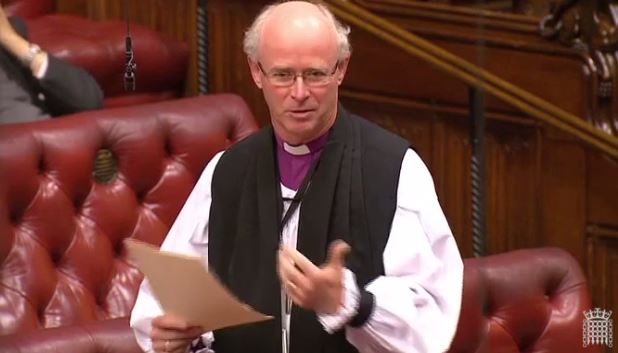 The Lord Bishop of Rochester: My Lords, I don my hat as bishop to Her Majesty’s prisons and will therefore limit my contribution to the debate on the gracious Speech to those matters which were about prisons and to the proposed prisons and court reform Bill. Like many other noble Lords, I welcome much that appears to be there and the seriousness of the ambition for change, and what I detect to be the quite marked change in the tone and language which is being used.
As for language, the Secretary of State is fond of quoting a Mr Osborne—perhaps not that Mr Osborne, because they seem to be on opposite sides of various debates, but the words of a Mr Osborne who, in 1914, was the warden of Sing Sing prison in New York. He is quoted as expressing his aspiration to turn it from a scrapheap to a repair shop. That quotation carries quite a lot, but in rather different language, the Roman Catholic Church in this country said something similar in a document in 2004 when it spoke of prisons having the potential to be places of redemption. Speaking from these Benches, I find it interesting that the Secretary of State uses quite freely what we would recognise as theological language of redemption and restoration when expressing his aspirations for what will happen in prisons. If he is serious about that, and about redemption and restoration being at the heart of the prison system, my interest is certainly piqued and my support is lurking there waiting to be given.
Continue reading “Queen’s Speech: Bishop of Rochester welcomes prison reform plans”
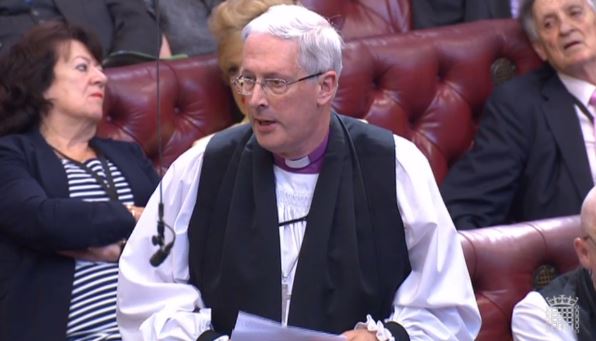
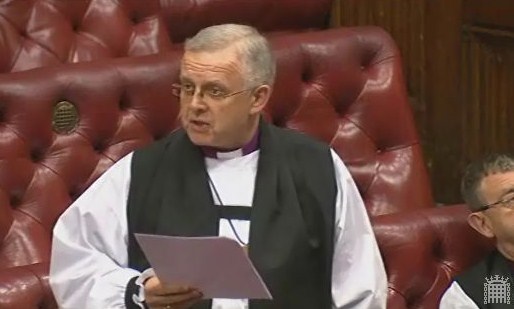

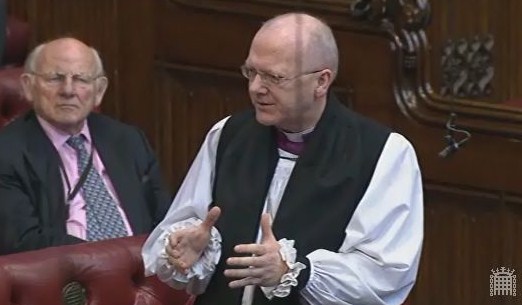
 The Lord Bishop of Peterborough: My Lords, I, too, am grateful for this debate. I also note with great pleasure a number of changes made to policy and practice in this area by Mr Gove since he became Secretary of State. I gladly thank him and the Government, particularly for allowing prisoners greater and easier access to books. But if educational standards in prisons are to be improved, as they desperately need to be, we still need much more joined-up thinking. I will give two examples.
  The Lord Bishop of Derby: My Lords, I, too, thank the noble Lord, Lord Hanningfield, for his introduction to the debate, especially for linking education with vocation for people in prison. As the noble Lord, Lord Addington, said, it is a very complex territory with very deep needs. A lot of research shows that the prison population represents people with multiple needs. Therefore, the task of education and vocation will be challenging. I see the importance of formal education for literacy and numeracy to help people to get jobs. I am all in favour of that, but I want to look behind that at the informal fashioning of vocation and the development of character and confidence, which allows people to enter formal learning. I will draw on my own experience of going into prisons.
  The Lord Bishop of Worcester: My Lords, does the Minister accept that, whatever the statistics regarding effectiveness, for those who participate in it restorative justice is a profoundly affecting experience? I have witnessed the restorative justice programme in HM Prison Hewell in my diocese, and for all concerned—particularly for members of the community—it is a deeply affecting experience which is profoundly for the common good.

 The Church of England in Parliament
You must be logged in to post a comment.