Police, Crime, Sentencing and Courts Bill: Bishop of Manchester speaks on violence reduction and on regulations on noise from protests

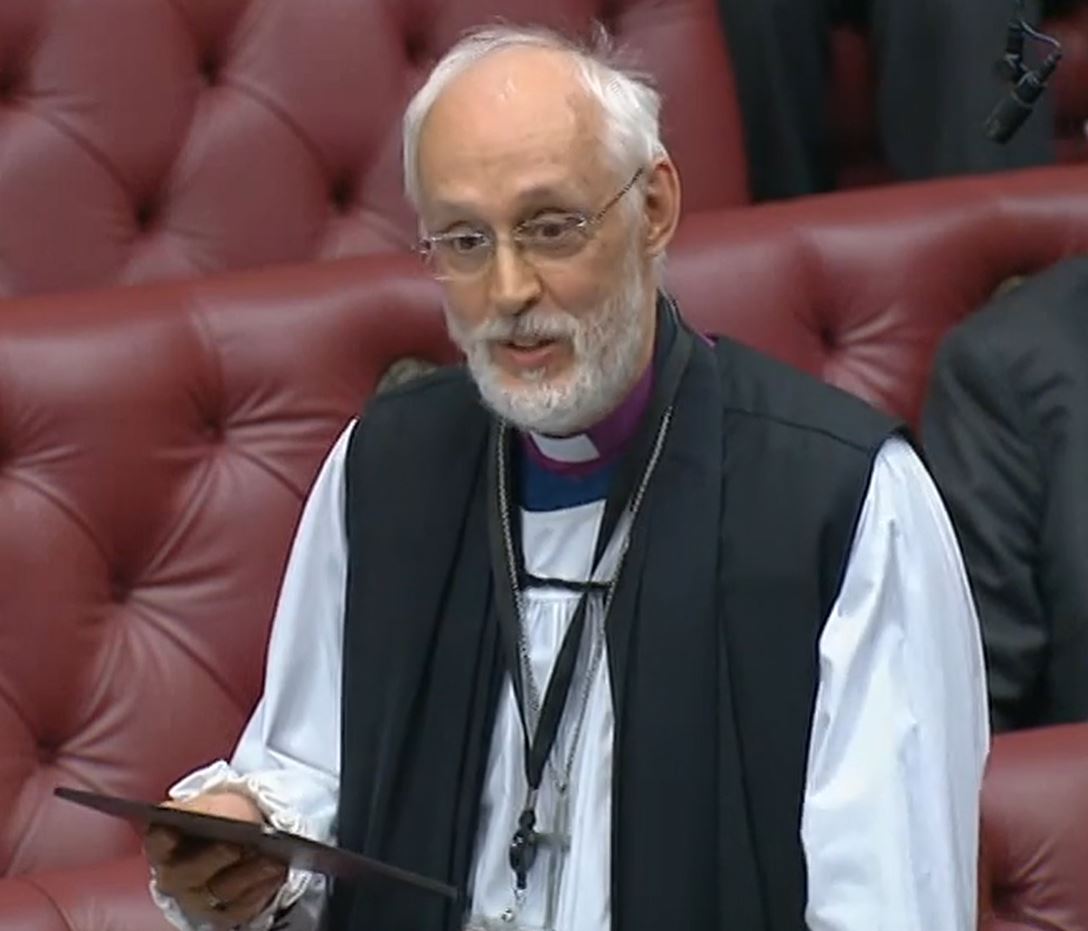
On 22nd March 2022, the House of Lords debated Commons amendments to the Police, Crime, Sentencing and Courts Bill. The Bishop of Manchester spoke twice in the debate, first voicing his concerns regarding serious violence reduction orders:

My Lords, I echo the thoughts that the noble Lord, Lord Young, has just shared. I declare my interest as chair of the Manchester Homelessness Partnership board and as co-chair of the national police ethics committee, because I also wish to speak to the Motion regarding serious violence reduction orders.

I support the Vagrancy Act repeal, as I know my right reverend and most reverend friends on these Benches do, and have sought to see that included in previous Bills. I am grateful that it is now on track and I look forward to working with Ministers and others to ensure that we avoid any unintended consequences and do not simply recreate the old Act in more modern language.

Continue reading “Police, Crime, Sentencing and Courts Bill: Bishop of Manchester speaks on violence reduction and on regulations on noise from protests”

Police, Crime, Sentencing and Courts Bill: Bishop of Bristol supports necessity of right to protest

During a debate on the Police, Crime, Sentencing and Courts Bill on 17th January 2022, the Bishop of Gloucester voiced concerns regarding provisions in the bill that would restrict noise in protests:

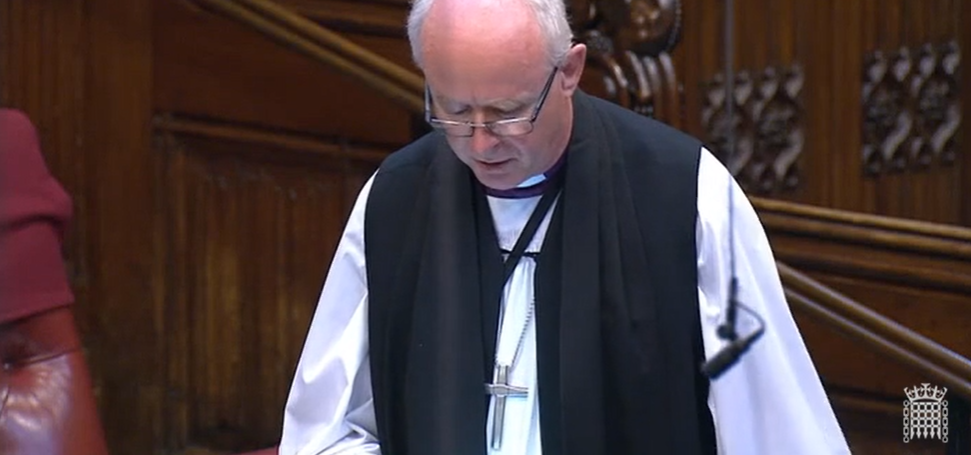
The Lord Bishop of Bristol: The city of Bristol is a city of activists and protesters, and it has been so for a very long time, particularly at the time of the Great Reform Bill. Many protests nowadays focus on College Green, in the shadow of the cathedral; as a result, I am well aware of the passion and commitment of Bristol activists, and the very real hurt and trauma when protests are mishandled.

Often protests can be annoying, and often they are disruptive—but that is the point. Public spaces, like College Green in Bristol and Parliament Square, are places which are felt to belong to the public, and which have been places where decision-makers like us are confronted by people’s concerns.

Continue reading “Police, Crime, Sentencing and Courts Bill: Bishop of Bristol supports necessity of right to protest”

Police, Crime, Sentencing and Courts Bill: Bishop of Leeds questions definition of “significant” disruption

On 17th January 2022, during a debate on the Police, Crime, Sentencing, and Courts Bill, the Bishop of Leeds spoke in support of amendments to relating to the definition of “significant” disruption caused by protests:

The Lord Bishop of Leeds: My Lords, I have a number of problems with this part of the Bill that are to do with form and content. The fact that these amendments were brought in at the stage they were seems an abuse of parliamentary scrutiny. Some of the debates we are having could have been sorted out had they been addressed in the normal way. That fits into a pattern of intimations about breaking the rule of law and the authoritarian complexion of the way in which some things are being done in, through or around Parliament. That is my problem with form.

Continue reading “Police, Crime, Sentencing and Courts Bill: Bishop of Leeds questions definition of “significant” disruption”

Votes: Police, Crime, Sentencing and Courts Bill

On 17th January 2022, the House of Lords debated the Police, Crime Sentencing and Courts Bill in its report stage. Votes were held on amendments to the bill, in which Bishops took part:

Continue reading “Votes: Police, Crime, Sentencing and Courts Bill”

Bishop of Rochester asks about treatment of human rights activists in Zimbabwe

The Bishop of Rochester asked a question on the treatment of human rights activists in Zimbabwe on 28th April 2021, during a discussion on the current political situation in the country:

The Lord Bishop of Rochester: My Lords, my diocese has a close and long-standing friendship with the diocese of Harare. When I asked friends there about this subject, they spoke of those human rights activists and others who allege mistreatment when taken into custody, and then nothing is done to address their allegations. Is the Minister able to suggest how we might better underline and, indeed, demonstrate that allowing dissent is good for the health of a society, to be encouraged rather than met with suppression or even violence? This is something that, of course, has a wider application than just to Zimbabwe.

Continue reading “Bishop of Rochester asks about treatment of human rights activists in Zimbabwe”

Bishop of Ripon and Leeds speaks in favour of amendment to reduce noise disturbance around Westminster Abbey

Westminster-abbeyOn 20th January 2014, the Bishop of Ripon and Leeds spoke in favour of an amendment to the Anti-social Behaviour, Crime and Policing Bill, during the Bill’s Report Stage. The amendment, proposed by Lord Deben and co-sponsored by the Bishop of Newcastle, related to the use of amplified noise equipment in vicinity of the Palace of Westminster, and the Bishop spoke of the impact that such equipment has on worship in Westminster Abbey and St Margaret’s Church. 

Continue reading “Bishop of Ripon and Leeds speaks in favour of amendment to reduce noise disturbance around Westminster Abbey”