Nationality and Borders Bill: Bishop of Chelmsford supports right to work for asylum seekers

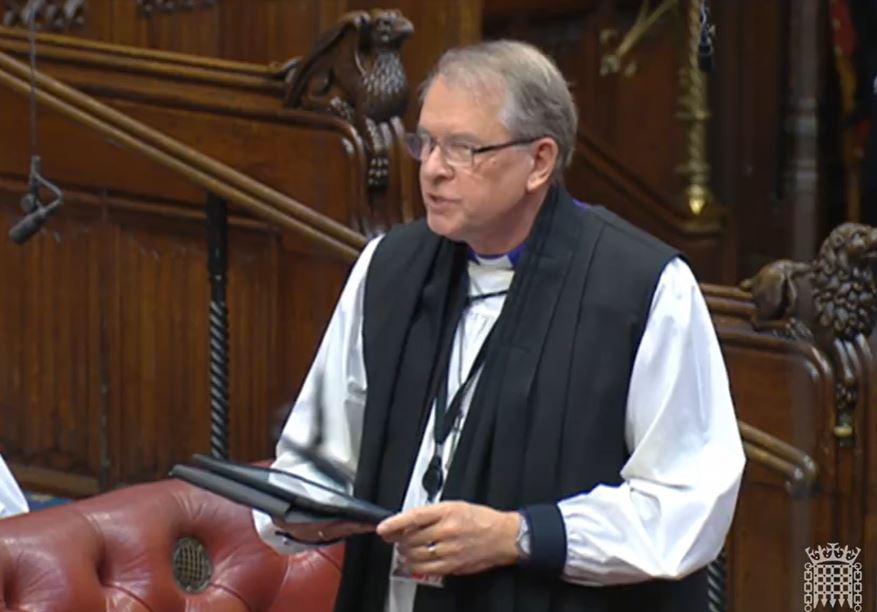
During a debate on the Nationality and Borders Bill in the first day of the report stage, on 28th February 2022, the Bishop of Chelmsford spoke in support of an amendment tabled by Baroness Stroud that would allow for the right to work for people seeking asylum who had been resident in the UK for six months:
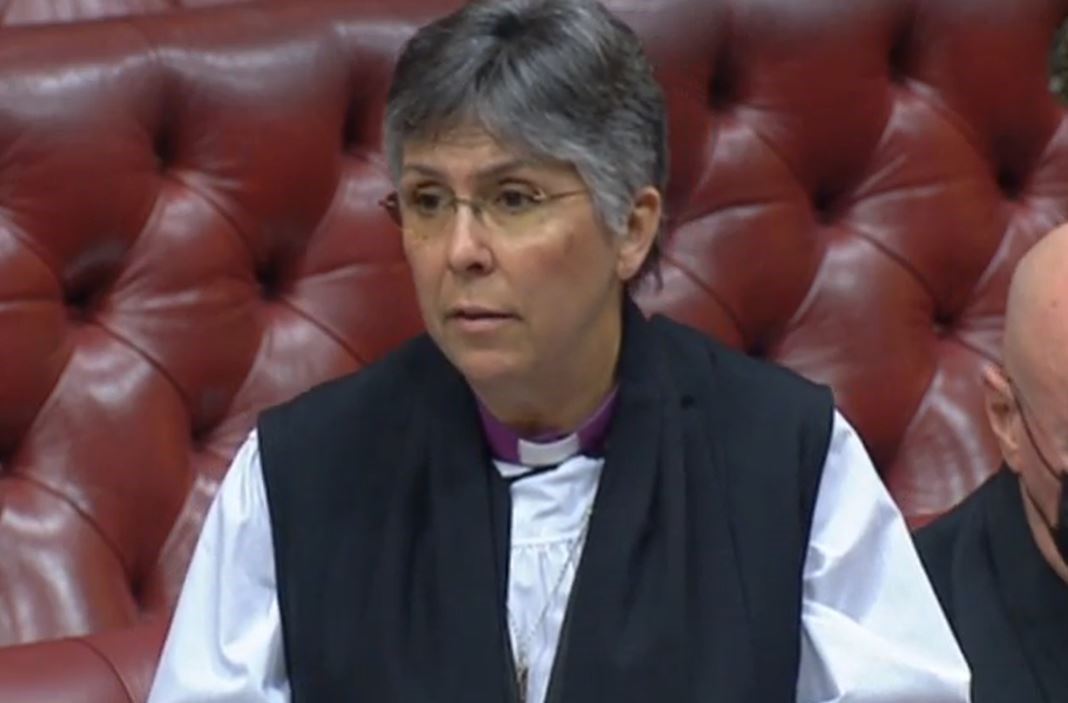
The Lord Bishop of Chelmsford: My Lords, I give my strong support to Amendment 30 in the name of the noble Baroness, Lady Stroud. She has eloquently made the case for this amendment, so I do not intend to take a great deal of the House’s time, but I wish to add a few brief remarks in support.

At Second Reading, I raised the question of how different our migration policy might be if we stopped looking at asylum seekers as either victims without agency or criminals seeking to exploit us and instead as future citizens and neighbours. In this light, the right to work for asylum seekers who have waited six months or more for a decision represents an excellent opportunity. It would be good for asylum seekers and for the soul of this nation. Such people are often left without agency or dignity. Their identity becomes limited to a sort of victim status. Being unable to work leaves them dependent on the state or at risk of falling in with illegal labour exportation.

Continue reading “Nationality and Borders Bill: Bishop of Chelmsford supports right to work for asylum seekers”
Nationality and Borders Bill: Bishop of Durham opposes differential treatment of refugees

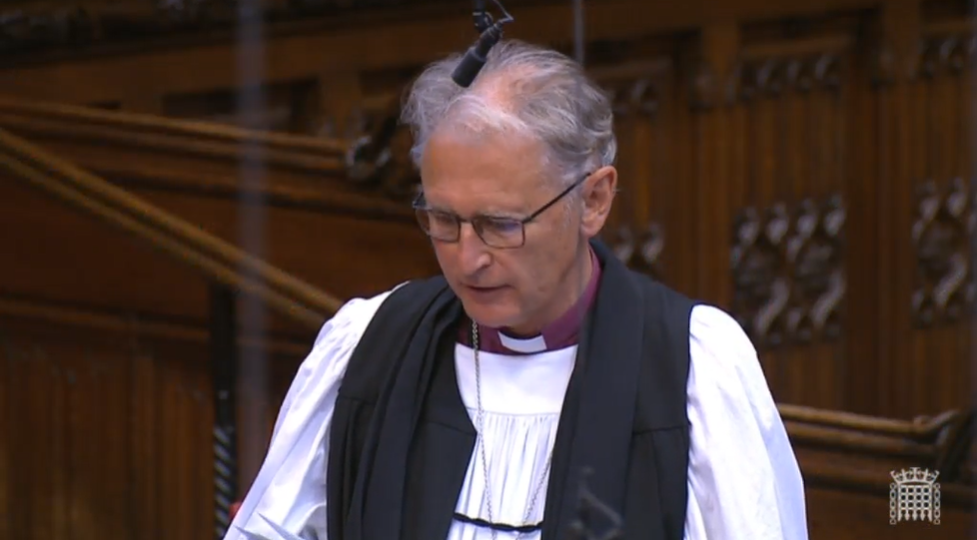
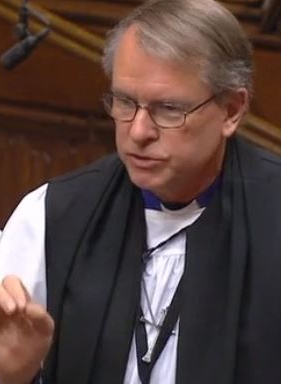
On 28th February 2022, during a debate on the Nationality and Borders Bill, the Bishop of Durham spoke in support of an amendment to clause 11 of the bill tabled by Lord Kerr of Kinlochard, to remove the differentiation of refugees within the clause. The Bishop further expressed opposition to clause 11 in its entirety:

The Lord Bishop of Durham: My Lords, if the names had not been filled on Amendment 28 then I would have added my name to it. I remind the House of my interests as set out in the register, both in RAMP and Reset.

In Committee I laid out the understanding of the two groupings proposed and argued that almost no one will actually qualify as being in group 1. I had no repudiation offered to that argument. As the noble Lord, Lord Kerr, said, Ukraine is currently illustrating the problem precisely. I was also concerned in the response to the debate in Committee by some of the language of discretion within the two groupings.

We need a simpler, more efficient asylum system, and I continue to be convinced that what is proposed will provide a more complex, slower process. Fundamentally, I am with all those who oppose the two-group system, as it creates a fundamental injustice for fair treatment of all refugees, regardless of how they arrive.

Today, a letter signed by over 1,000 leaders from all the major faith communities of this country was delivered to the Prime Minister. I quote from that letter:

Continue reading “Nationality and Borders Bill: Bishop of Durham opposes differential treatment of refugees”

Bishop of Durham asks about support for Ukrainian refugees

On 28th February 2022, the Bishop of Durham asked a question about the UK’s plans to support Ukrainian refugees fleeing conflict, and to assist other European countries in providing that support:

The Lord Bishop of Durham: My Lords, I have every sympathy for the Minister trying to defend the indefensible. He has to do that; that is his job. However, what are we going to say to Poland and Moldova and all the other neighbouring countries about how we will take our share of those who will arrive in the first instance into their country but who they cannot support entirely on their own because they will need the support of other countries to the west, including ourselves?

Lord Sharpe of Epsom (Con): I thank the right reverend Prelate for his sympathy. I do not know, unfortunately, what conversations will be had with those neighbouring countries, but they must, by definition, be ongoing.

Hansard

Bishop of Durham asks about government’s interpretation of the refugee convention

The Bishop of Durham asked a question regarding alternative interpretations of the Refugee Convention on 28th February 2022, in response to a debate on the government’s policy on migration and asylum:

The Lord Bishop of Durham: Can the noble Baroness offer us any other examples of alternative interpretations of the refugee convention worldwide? If not, on what basis does she believe the Government are entitled to do so in reference to Clause 11 of the Bill we will discuss later?

Continue reading “Bishop of Durham asks about government’s interpretation of the refugee convention”

Bishop of Coventry echoes calls for peace following Russian invasion of Ukraine

The Bishop of Coventry echoed calls from the Pope and Archbishop of Canterbury to pray for peace, and highlighted the need to coordinate in support of refugees, following a government statement on Russia’s invasion of Ukraine on 24th February 2022:

The Lord Bishop of Coventry: My Lords, while weapons of war reduce people and property to ash, will the Leader join me in commending the Pope on calling for a day of prayer and fasting for peace next Wednesday, which is Ash Wednesday, and in commending the most reverend Primate the Archbishop of Canterbury on calling us all to join in that world movement of prayer and calling all churches of this land to set aside Sunday as a day of prayer for peace? Also, would she care to expand on her answer to the noble Baroness, Lady Smith, on the humanitarian response, especially in terms of how we are co-ordinating our response with European partners to the predicted refugee crisis? The Leader may be glad to know that Coventry City Council has assured me that it stands ready to do its part should that be needed, as it has been in the past.

Continue reading “Bishop of Coventry echoes calls for peace following Russian invasion of Ukraine”

Bishop of Durham asks about humanitarian crisis in Afghanistan

The Bishop of Durham asked a question on refugees fleeing the country during a debate on the ongoing humanitarian situation in Afghanistan on 9th February 2022:

The Lord Bishop of Durham: My Lords, it is very good how much is being given. Operation Herrick cost us at least £22 billion and we managed to find that, so I hope we can release more generous aid rapidly. There is also a humanitarian issue for Afghans who have been freed and are now here but whose families are still in hiding for fear in Afghanistan. Can the Minister update us on how those people are going to be got out of Afghanistan?

Continue reading “Bishop of Durham asks about humanitarian crisis in Afghanistan”

Nationality and Borders Bill: Bishop of Gloucester supports amendment on women’s safety and human trafficking

On 8th February 2022, the House of Lords debated the Nationality and Borders Bill in the fourth day of the Committee stage. The Bishop of Gloucester spoke in favour of amendment 105, tabled by Baroness Lister, which would remove restrictive wording in clause 32 of the bill, especially with regards to victims of trafficking:

“The amendment would remove the narrow restrictive and requirement in Clause 32 that, in order to qualify under the “particular social group” grounds of persecution for recognition as a refugee under the convention, two conditions must be met. The amendment would replace this with an either/or condition.” Hansard

The Lord Bishop of Gloucester: My Lords, I have added my name to Amendment 105 and the intention to oppose Clause 31 standing part of the Bill. I too am grateful to Women for Refugee Women and others for their briefings and support.

In the New Plan for Immigration and the briefings for the Bill, the Government have argued repeatedly that the existing asylum and refugee system is weighted against vulnerable women. The Home Secretary has repeatedly made the point that the large majority of channel crossings are by men aged under 40, for example. Given this, there might be some expectation that the Bill would contain some good news or ambitions on the part of the Government for better reaching and helping the women and girls who make up 50% of the world’s refugees and displaced people. Unfortunately, I do not see any such commitments. As a sting in the tail, in Clauses 31 and 32 we find proposals that seem to significantly disadvantage women further.

Continue reading “Nationality and Borders Bill: Bishop of Gloucester supports amendment on women’s safety and human trafficking”

Nationality and Borders Bill: Bishop of London tables amendment in support of domestic abuse survivors

During a debate on amendments to the Nationality and Borders Bill on 8th February 2022, The Bishop of London tabled amendment 140, which would provide for safer usage of personal data to protect migrant survivors of domestic abuse:

The Lord Bishop of London: My Lords, Amendment 140 in my name and those of the noble Baroness, Lady Meacher, and the noble Lords, Lord Rosser and Lord Paddick, asks the Committee to consider again the debates that we had during the passage of the Domestic Abuse Bill. Indeed, this amendment was passed in your Lordships’ House last year, only to be rejected by the Commons.

In short, the issue is that immigration enforcement and the sharing of data too often serve as a significant barrier, preventing survivors of domestic abuse coming forward and receiving the help they need. Research from the Latin American Women’s Rights Service, to which I am grateful for its support and briefings, has repeatedly shown that in cases of domestic abuse and other forms of violence against women and girls, victims with insecure immigration status are unlikely to approach the police because they believe that the police will prioritise their lack of legal status instead of protecting them as victims of a serious crime. As many as 50% of domestic abuse victims never report the crimes committed against them.

Continue reading “Nationality and Borders Bill: Bishop of London tables amendment in support of domestic abuse survivors”

Nationality and Borders Bill: Bishop of Durham supports amendments around family reunion

During a debate on amendments to the Nationality and Borders Bill in its fourth day of the Committee stage, on 8th February 2022, the Bishop of Durham spoke in support of amendments targeted towards ensuring family reunion for migrants, particularly refugees and unaccompanied minors:

The Lord Bishop of Durham: My Lords, I specifically support Amendment 117, to which I have added my name, but I support all these amendments around family reunion. I declare my interests in the register around RAMP and Reset as before.

Acknowledging that when people are forcibly displaced they end up in different places, often having lost family members, UNHCR research has shown that families often set out together but become separated along the way. Reconnecting those families, or, where some family members are lost, reconnecting people with other relatives, really matters. In seeking protection, those seeking asylum want to do so alongside the family that they have. This is better for individuals—their well-being and their future prospects—and for the community as a whole. It is therefore also better for social integration.

Continue reading “Nationality and Borders Bill: Bishop of Durham supports amendments around family reunion”

Nationality and Borders Bill: Bishop of Durham speaks in support of amendments on offshoring of asylum seekers

On 8th February 2022, the House of Lords debated the Nationality and Borders Bill in its fourth day of the Committee stage. The Bishop of Durham spoke in support of amendments 100 and 101, tabled by Lord Kirkhope of Harrogate, that would remove the powers in the bill to “offshore” asylum seekers before the consideration of their claims:

The Lord Bishop of Durham: My Lords, in rising to support Amendments 100 and 101, to which I have added my name, I declare my interests in relation to both the RAMP project and Reset, as set out in the register.

When people arrive on our shores seeking protection, we have a responsibility to treat them as we would wish to be treated if we had to flee for our lives. It is right that we have a process to determine who meets the criteria for refugee status, but while we determine this, we are responsible for people’s safety, welfare and care. If we move them to other countries for the processing of their asylum claims, I fear a blind eye will be turned to their treatment. How will we be sure that they are being treated humanely and fairly, and would our Government even give this much concern once they had left our shores? If we look to the experience of Australia and the refugees accommodated in Nauru, as the noble Lord, Lord Kirkhope, has just mentioned, we hear deeply shocking accounts of abuse, inhumane treatment and mental and physical ill-health.

As mentioned in relation to an earlier amendment, I visited Napier barracks last week to see improvements that have been made since the exposure of the disgraceful conditions at the beginning of last year. If what we have seen at Napier is permitted to happen in the UK, what can we expect overseas, where accountability and monitoring will be so much harder? The monitoring of asylum accommodation contractors in the UK is poor, which gives us some idea about the level of monitoring we could expect of offshore processing.

Continue reading “Nationality and Borders Bill: Bishop of Durham speaks in support of amendments on offshoring of asylum seekers”