
Bishop of Rochester asks about updates to war memorials

The Bishop of Rochester asked a question on the inclusion of names of fallen soldiers from the former British Empire on war memorials, following a government statement on the Commonwealth War Graves Commission: Historical Inequalities Report:
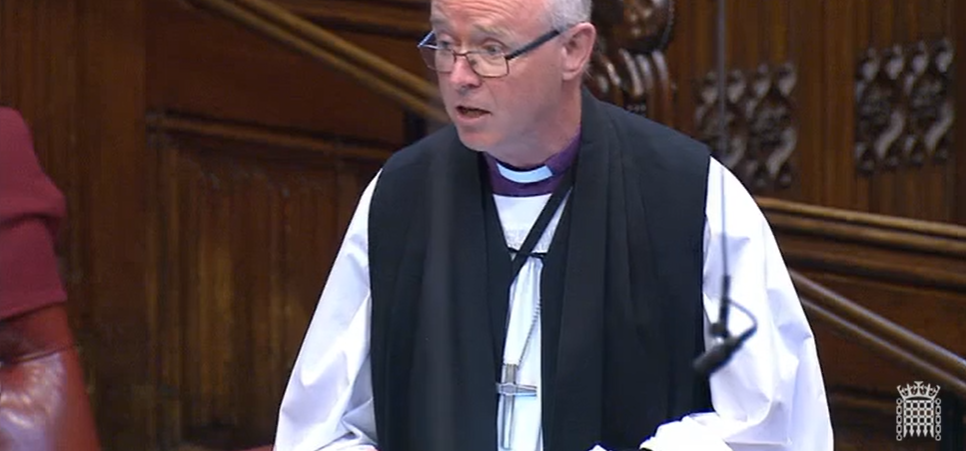
The Lord Bishop of Rochester: My Lords, I associate myself with the comments just made by the noble Lord, Lord Singh. Like many others, I have stood in places such as the Menin Gate and been overawed by the reading of the names there. In seeing the names of the fallen from many parts of the then Empire, I had assumed that all such were indeed properly commemorated. I know now of course that I and many others were wrong in that assumption. I have present and past diocesan connections with Papua New Guinea, Zimbabwe and Tanzania. I have also visited memorials and cemeteries in those places where I have seen the names of some local nationals. I am now asking myself how many names were not there when I visited those places. Is the Minister able to give me confidence to assure my colleagues in those places that their fallen compatriots will be as fully commemorated as possible, as soon as possible? Is there anything they can do to help this process?

Continue reading “Bishop of Rochester asks about updates to war memorials”
Bishop of Rochester asks about role of local authorities in implementation of new local structures

The Bishop of Rochester asked a question on the government’s plans to implement new local structures on 26th April 2021, during a discussion on the annual report from the Industrial Strategy Council:

The Lord Bishop of Rochester: My Lords, although I was once a voluntary sector member of a regional assembly, I do not hanker after a return to that particular bit of structure. However, are Her Majesty’s Government contemplating any new local structures as part of the response to the questions raised, or do they trust local authorities, executive mayors and existing bodies, such as the LEPs, to deliver on this agenda? I notice that the Minister did not mention local authorities in his original response.

Continue reading “Bishop of Rochester asks about role of local authorities in implementation of new local structures”

Bishop of Rochester speaks in debate on UK-EU trade and cooperation agreement

On 8th January 2021, the Bishop of Rochester took part in a debate on the EU-UK Trade and Cooperation Agreement, raising the difficulties faced by multinational families:

The Lord Bishop of Rochester: My Lords, I wish to address an issue which, despite all that is covered by the agreement, remains, at least in part, unresolved. It concerns the position of UK nationals living and/or working in the EU. I declare a personal interest which will become clear. I am indebted to the Bishop in Europe for briefing me on a range of situations which have a serious impact on UK nationals living in his diocese, which covers 25 out of 27 EU states plus the EEA and Switzerland.

Continue reading “Bishop of Rochester speaks in debate on UK-EU trade and cooperation agreement”

Bishop of Rochester asks about engagement by faith communities in COVID-19 Pandemic response

The Bishop of Rochester asked a question on how faith communities might continue to address the needs of communities in the wake of the COVID-19 Pandemic on 7th January 2021, and spoke in a debate on the Health Protection (Coronavirus, Restrictions) (Self-Isolation and Linked Households) (England) Regulations 2020:

The Lord Bishop of Rochester: My Lords, if any may have doubted the seriousness of the current situation, they had only to watch last night’s BBC report from University College Hospital, or to note that we are once again seeing multiple deaths in care home settings. Along with the Prime Minister’s Statement, it was announced that places of worship in England may remain open. I know that that has been welcomed by some faith communities, although others have already gone largely online. However, all such communities continue to engage with energy in acts of pastoral and community service. In the light of this, would the Leader of the House care to suggest what she and her colleagues would most wish to ask of our faith communities? What further might we offer? I believe that the noble Lord, Lord Boateng, may already have provided part of an answer.

Continue reading “Bishop of Rochester asks about engagement by faith communities in COVID-19 Pandemic response”

Votes: Trade Bill

On 6th January 2021, the House of Lords debated the Trade Bill. Votes were held on amendments to the bill, in which Bishops took part:

Continue reading “Votes: Trade Bill”

Bishop of Rochester asks about support for charities working in local communities

The Bishop of Rochester asked a question on support for smaller charities on 6th January 2021, during a discussion on financial support for religious groups during the COVID-19 pandemic:

The Lord Bishop of Rochester: I am grateful to the noble Lord, Lord McCrea, as his Question enables me to acknowledge with thanks to the support which has been received by religious groups and charities, not least through the furlough arrangements, which have been a considerable help for many of them. However, in looking to the future, I join others in urging Her Majesty’s Government to keep particularly in mind the needs of smaller charities, which are often religious, community and locally based in character, whose work with young people, the homeless, those in debt, the elderly and other groups has been growing in this time, while their voluntary income has often been diminishing. Perhaps I can tempt the Minister by suggesting that Her Majesty’s Government might consider using their new-found freedoms to exchange the current scheme, whereby VAT is reimbursed on works relating to listed places of worship, for one where it is not charged in the first place.

Continue reading “Bishop of Rochester asks about support for charities working in local communities”

Votes: UK Internal Market Bill

On 9th November 2020 the House of Lords debated and voted on the Government’s UK Internal Market Bill during its Committee stage. A cross-party group of Peers, including the Bishop of Leeds, had tabled motions that all the clauses of Part 5 of the Bill, which covered Northern Ireland, international law, and executive powers,  should not remain in the Bill. These successfully passed by large majorities across two votes. Nine bishops took part in the votes. Continue reading “Votes: UK Internal Market Bill”

Bishop of Rochester welcomes Government plans for breathing space for those with problem debt

On 6th October 2020 the House of Lords approved the Government’s Debt Respite Scheme (Breathing Space Moratorium and Mental Health Crisis Moratorium) (England and Wales) Regulations 2020. The Bishop of Rochester spoke in the debate, in support of the aim of the Regulations:

The Lord Bishop of Rochester: My Lords, I welcome the opportunity to speak in this debate, and I broadly and warmly welcome the provisions in these regulations. While the effects of the pandemic certainly give increased importance to these provisions, the issues are, of course, of very much longer standing. I pay tribute to organisations, including the Children’s Society, which have long campaigned on these matters, as well as to the honourable Member for Rochester and Strood, Kelly Tolhurst, my own Member of Parliament, who, before she was made a Minister, proposed a Private Member’s Bill in the other place to address some of these issues. Continue reading “Bishop of Rochester welcomes Government plans for breathing space for those with problem debt”
Bishop of Rochester voices concern about effect of covid ‘rule of six’ on family life

On 6th October the House of Lords approved the Government’s Health Protection (Coronavirus, Restrictions) (No. 2) (England) (Amendment) (No. 4) Regulations 2020. A further motion to ‘regret’ the Regulations was put by Lord Lamont of Lerwick on grounds of “the failure of Her Majesty’s Government adequately to consult the public in the preparation of the Regulations and the impracticality of enforcing the measures”. The Bishop of Rochester spoke in the debate on both Motions:

The Lord Bishop of Rochester: My Lords, like others, I tend to think that carrots are more effective than sticks. It is, therefore, vital, if people are to behave as the Government might wish, that they understand and assent to the reasons for particular restrictions.
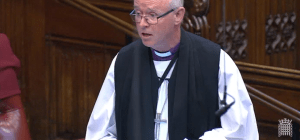
My understanding of the rationale for the rule of six is that is about restricting the mixing of households. I understand that, and I seek, in my role and personally, to abide by that principle. But what the Minister has said notwithstanding, the anomalies do not help to gain that consent. If I have understood things correctly, I may, in a given period, be a part of more than one group of six, and thereby, I am multiplying the households with which I have contact. Yet, as many have observed—and there are other examples—a couple with three children cannot meet with two grandparents at the same time, even though that would only be two households in most instances. Continue reading “Bishop of Rochester voices concern about effect of covid ‘rule of six’ on family life”

Bishop of Rochester asks Government to engage with faith communities on future climate goals

On 6th October 2020 Baroness Boycott asked the Government “what progress they have made towards identifying sponsors for COP 26; and what criteria are used in the appointment of any such sponsors.” The Bishop of Rochester asked a further question:

The Lord Bishop of Rochester: My Lords, while I understand that the focus of formal sponsorship is on businesses, is the Minister able to confirm that Her Majesty’s Government are also keen to engage in similarly deliberate ways with other bodies, including faith communities? These communities are highly motivated—indeed mandated—to care for God’s creation, locally and globally, and many, including the Church of England’s General Synod, have already committed to challenging targets for carbon reduction. Continue reading “Bishop of Rochester asks Government to engage with faith communities on future climate goals”