Bishop of Norwich calls for RE to be included in the English Baccalaureate

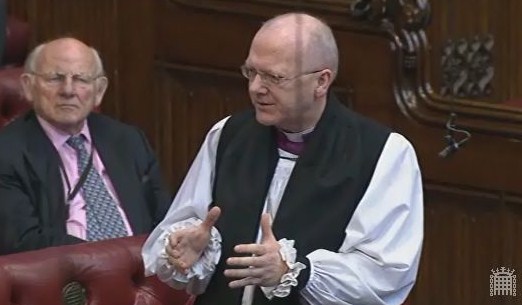
On 4th February 2016 the House of Lords debated a motion from the Earl of Clancarty, “To ask Her Majesty’s Government what steps they are taking to ensure that children receive a balanced and rounded education in schools; and what effect the English baccalaureate requirements will have in that regard.” The Bishop of Norwich spoke in the debate, highlighting the need for RE to be considered in the English Baccalaureate and the importance of overseas visits in providing rounded education.

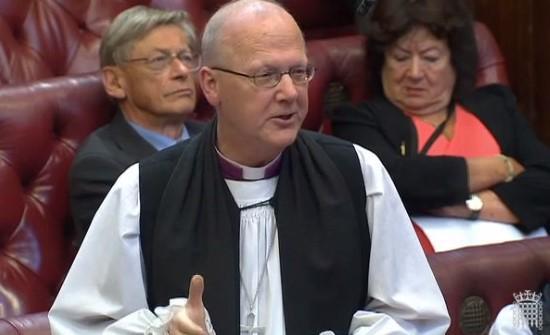
14.06.12 Bishop of NorwichThe Lord Bishop of Norwich: My Lords, like others, I am very grateful to the noble Earl for securing this short debate. The importance of this subject is out of all proportion to the length of our discussion.

I agree with so much that has been said but I shall concentrate on two specific issues. The first, noble Lords will not be surprised to hear, concerns the omission of religious education from the English baccalaureate. I realise that it is not the only omission—I would rather like art, music and much else to be there, too—but I believe that it is a serious mistake that is going to be deleterious to a rounded education. Continue reading “Bishop of Norwich calls for RE to be included in the English Baccalaureate”

Education and Adoption Bill – Bishop of Ely welcomes Government assurances on church school ethos and academy conversion

On 16th December 2015 the House of Lords considered the Government’s Education and Adoption Bill at Report Stage. Ther Bishop of Ely, Rt Revd Stephen Conway, spoke during debate on amendments to clause 7 of the Bill on the Secretary of State’s duty to make Academy orders where a school is judged to be failing. The Bishop supported the Government’s position.

14.10.16 Bishop of Ely 2The Lord Bishop of Ely: My Lords, I am very keen to support the idea of effective communication with our parents, not least about the ethos and character of schools, given that they have a deep effect. We see in the good key stage 2 results this last year the impact of character and ethos on effective academic results. Our parents are really keen to ensure that in any change of school, its ethos and character are maintained and that that is effectively communicated to them by any academy proprietor.

I had submitted my own amendment, which I have now withdrawn because I am content, following conversation with the Minister, that he agrees that ethos and character can be maintained and should be safeguarded effectively. I understand that parents around the country want, of course, to have even more say in what happens, but consider that church schools, in particular, have something significant to offer in relation not only to academic performance and ethos but future guarantees of religious literacy in the way in which our country is served. Continue reading “Education and Adoption Bill – Bishop of Ely welcomes Government assurances on church school ethos and academy conversion”

Bishop of Carlisle calls for broadband access in rural schools

On 25th February 2015, Lord Holmes of Richmond asked Her Majesty’s Government what assessment they have made of broadband speeds, capacity and coverage in rural areas of the United Kingdom and in city technology hubs such as the Old Street roundabout. The Bishop of Carlisle, the Rt Revd James Newcome, asked a supplementary question:

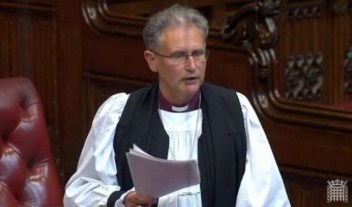
14.06.09 Bishop of CarlisleThe Lord Bishop of Carlisle: My Lords, many small rural schools, for instance in Cumbria, where I come from, struggle to access a high-quality broadband connection. That results in pupils missing out on educational opportunities through not having a good internet-based information supply. Can the Minister tell us what assessment the Government have made of this situation and how they intend to address it?

Lord Ashton of Hyde: My Lords, the right reverend Prelate makes a very good point. We are obviously concerned that schools have the benefit of superfast broadband, which is important if schools are to take advantage of the opportunities offered by learning technology. However, not every school is the same. Schools have the autonomy to buy a connection that meets their needs. Schools’ connectivity needs will vary depending on the size and type of school. The Government’s £780 million investment programme in broadband infrastructure will increase the broadband options available to schools, including to rural schools.

(via Parliament.uk)

Bishop of St Albans supports stronger relationship between credit unions and schools

On 3rd February 2015, Lord Kennedy of Southwark asked Her Majesty’s Government when they plan further reform of the law regarding Credit Unions. The Bishop of St Albans, the Rt Revd Alan Smith, asked a supplementary question:

Bishop of St AlbansThe Lord Bishop of St Albans: My Lords, I imagine many of us are concerned about the culture of debt that seems to be normative in many parts of our society. In the light of this, can the Minister tell us whether the Government have any plans, first, to encourage all schools to consider working closely with credit unions, as in the case of the credit union in St. Albans, where I come from and, secondly, to further roll out and encourage payroll savings schemes as part of a wider initiative to encourage saving and financial responsibility across society?

Lord Newby: My Lords, the Government support both those concepts. The right reverend Prelate will be aware that the Government have been working with the Archbishop of Canterbury’s task force on affordable credit and savings to institute the LifeSavers project, under which primary schools are working with credit unions to encourage young children into good savings habits and raise awareness of credit unions.

(via Parliament.uk)

Lords Debate on Religion and Belief in British Public Life

A full transcript of the House of Lords debate on Religion and Belief in British Public Life, which took place on 27th November 2014, is below.
A video of the debate can also be watched on the UK Parliament website, here.
The speeches made by the Bishops of Norwich and Birmingham are also available on this website, here and here.
Motion to Take Note
11.53 am
Moved by Lord Harries of Pentregarth
That this House takes note of the role of religion and belief in British public life.

Red Benches

Continue reading “Lords Debate on Religion and Belief in British Public Life”

Minister congratulates CofE on new free schools in response to question from Bishop of Peterborough

On 21st October 2014, Baroness Massey of Darwen asked Her Majesty’s Government “what steps they are taking to ensure a fair admissions policy in schools.” The Bishop of Peterborough, Rt Rev Donald Allister, asked a supplementary question:

14.02 PeterboroughThe Lord Bishop of Peterborough: Will the Minister join me in congratulating the four latest Church of England free schools to be announced, which between them offer nearly 2,500 places to young people of all faiths and none, especially in areas of severe shortage? Continue reading “Minister congratulates CofE on new free schools in response to question from Bishop of Peterborough”

Bishop of Birmingham responds to Government statement on ‘Trojan Horse’

On 22nd July 2014, a Government statement on Birmingham Schools was repeated in the House of Lords by the Parliamentary Under-Secretary of State for Schools, Lord Nash. The Bishop of Birmingham, the Rt Revd David Urquhart, responded to the statement. He called for Government support of the Kershaw Report, asked for clarity on responsibility and accountability in the education system, and argued that the incident highlighted the need for greater understanding of faith and religion throughout civil society.

T01.04.14 Bishop of Birminghamhe Lord Bishop of Birmingham: My Lords, I am grateful to the Minister for bringing the Secretary of State’s Statement to the House and for the publication of Peter Clarke’s report. As he mentioned, this goes alongside Ian Kershaw’s report, which was published on Friday, about Birmingham City Council and it has the support of the Birmingham Trojan horse review group, of which I am a member. That group has published its own, wider recommendations in this complex and troubling period. Does the Minister agree that both reports are thorough and hard-hitting, and that there is much in common in their findings? Continue reading “Bishop of Birmingham responds to Government statement on ‘Trojan Horse’”

Bishop of Oxford calls for more intentional support for the rural economy and rural schools

“I very much hope that the Department for Education will not resort to a philosophy of “the weakest to the wall” with these small schools because small rural schools are so often worth their weight in gold, as the heart and hub of our rural communities. The Church of England will publish a report very soon on how to support our rural schools effectively” – Bishop of Oxford, 3/7/14.

On 3rd July, the Bishop of Oxford, the Rt Revd John Pritchard, took part in a debate on the rural economy, lead by the Earl of Shrewsbury. The Bishop spoke about the need for intentional support for the many micro-businesses that make up the rural economy, and also for greater personal investment in rural schools, particularly through an increase in the number of foundation govenors supporting rural schools.

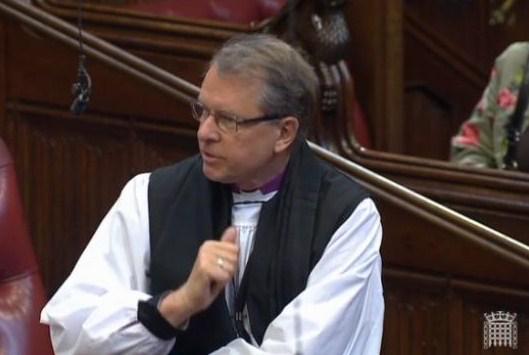
Bishop of OxfordThe Lord Bishop of Oxford: My Lords, I, too, am grateful to the noble Earl, Lord Shrewsbury, for giving us this opportunity to debate this matter. We all approach this important subject from different angles. I want to emphasise one that is economic and the other that is personal in the sense of our own personal investment and commitment. I serve a diocese which is largely rural although it has large centres of population such as Oxford, Reading, Milton Keynes and Slough. However, the rural expanses of Oxfordshire, Buckinghamshire and Berkshire are considerable, with 815 churches and 650 clergy, all of whom are strongly connected to the all-round flourishing of our diverse communities. Continue reading “Bishop of Oxford calls for more intentional support for the rural economy and rural schools”

MPs questions to Church Commissioners’: Stephen Sutton, school chaplains, persecuted Christians, church repairs, credit unions, biblical literacy

Church Commissioners’ Questions: 12th June 2014

Rt Hon Sir Tony Baldry MP, representing the Church Commissioners, was asked questions in the House of Commons on 12th June, on the service of remembrance for Stephen Sutton, school chaplains, persecuted Christians overseas, listed church building repairs, credit unions and biblical literacy amongst children. The transcript is below:

14.01 CCQ Baldry

Stephen Sutton

Michael Fabricant (Lichfield) (Con):If he will visit Lichfield cathedral to discuss the service of remembrance and celebration of the life of Stephen Sutton. [904158]

The Second Church Estates Commissioner (Sir Tony Baldry): I am always happy to visit Lichfield cathedral. The whole country will have celebrated the life and achievements of Stephen Sutton. The recent service of remembrance and celebration at Lichfield cathedral demonstrates the importance of cathedrals as a focus for unity at times of local and national celebration, commemoration and mourning. Continue reading “MPs questions to Church Commissioners’: Stephen Sutton, school chaplains, persecuted Christians, church repairs, credit unions, biblical literacy”

Birmingham schools inspections – Bishop of Norwich on impact of religious education

In the House of Lords on 9th June 2014 the schools minister Lord Nash repeated the Statement made by the Secretary of State for Education on schools in Birmingham. After the Statement, the Bishop of Norwich, Rt Rev Graham James, asked a question of the minister:

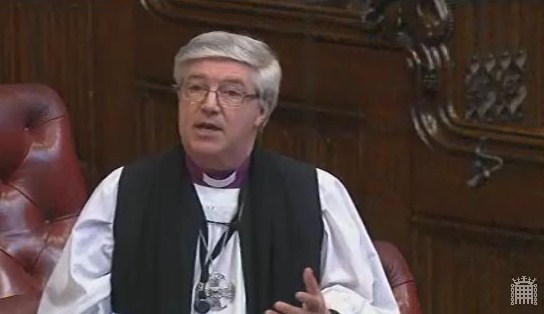
The Lord Bishop of Norwich: My Lords, the Minister may not be aware that earlier this afternoon in his maiden speech, the right reverend Prelate the Bishop of Chelmsford said that good religious education is one of the best ways of countering religious extremism. I would be interested to know whether the Minister agrees. Given that none of the schools subject to these inspections in Birmingham were faith schools—although listening to our discussion, you would have thought otherwise—does it not seem that appropriate, well balanced and enriching religious education may have been an area of neglect? Continue reading “Birmingham schools inspections – Bishop of Norwich on impact of religious education”