On 21st January 2026, the House of Lords voted on amendments to the Children’s Wellbeing and Schools Bill. The Bishop of Manchester and the Bishop of Newcastle took part in votes:

On 21st January 2026, the House of Lords voted on amendments to the Children’s Wellbeing and Schools Bill. The Bishop of Manchester and the Bishop of Newcastle took part in votes:
On 21st January 2026, The Bishop of Manchester spoke in committee debate on an amendment to the Children’s Wellbeing and Schools Bill regarding use of social media by under 18s, pointing out the procedural deficits of rushing to vote on an amendment and the need for the UK to resist pressure from tech companies:
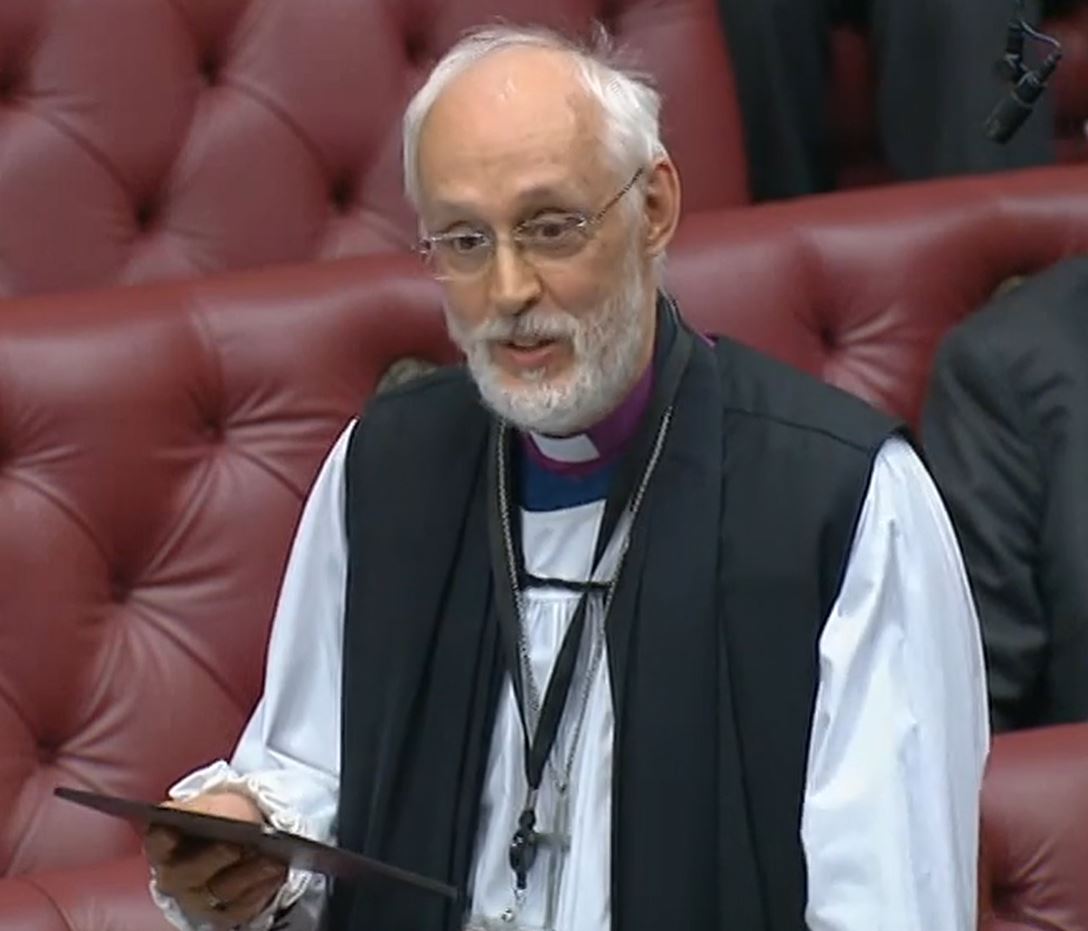
The Lord Bishop of Manchester: My Lords, perhaps I am a simple-minded and naive bishop, but it seems we are getting into a debate we probably should have had in Committee on the different ways of approaching a quite specific issue, and I would rather we did not spend all night doing that. Yet we are where we are.
Continue reading “Children’s Wellbeing and Schools Bill: Bishop of Manchester speaks to amendment on social media use by under 18s”During a debate on misinformation relating to the conflict in Israel and Gaza on 24th October 2023, the Archbishop of York asked a question on the proliferation of disinformation on X, (formerly Twitter):
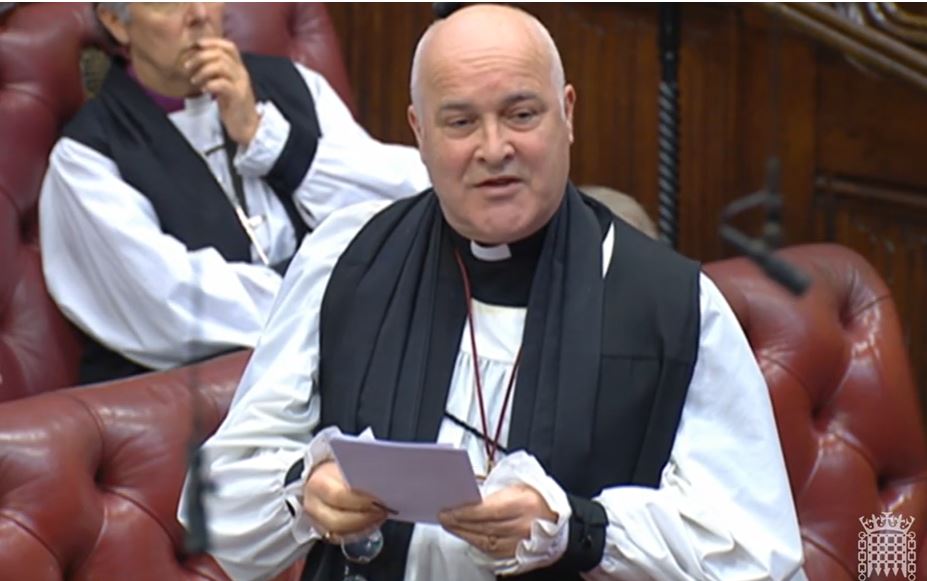
The Lord Archbishop of York: My Lords, it is good to hear that the Government are engaging with the social media platforms on this incredibly serious issue. Twitter has most aptly been renamed X, but without irony: one goes into this area with great caution, as it is distressing and nasty. I am told that X is currently laying off people whose job it is to monitor and remove posts that contain disinformation. Given this, and given that we have made progress in looking at social media platforms, what are we doing to require them to do this other than simply engaging with them?
Continue reading “Bishop of York asks about tackling online disinformation”On 1st February 2023, the House of Lords debated the Online Safety Bill in its second reading. The Bishop of Oxford spoke in the debate , raising the importance of risk assessments of harm to adults, the independence of Ofcom, and the dangers of technology facilitated crime & domestic abuse:
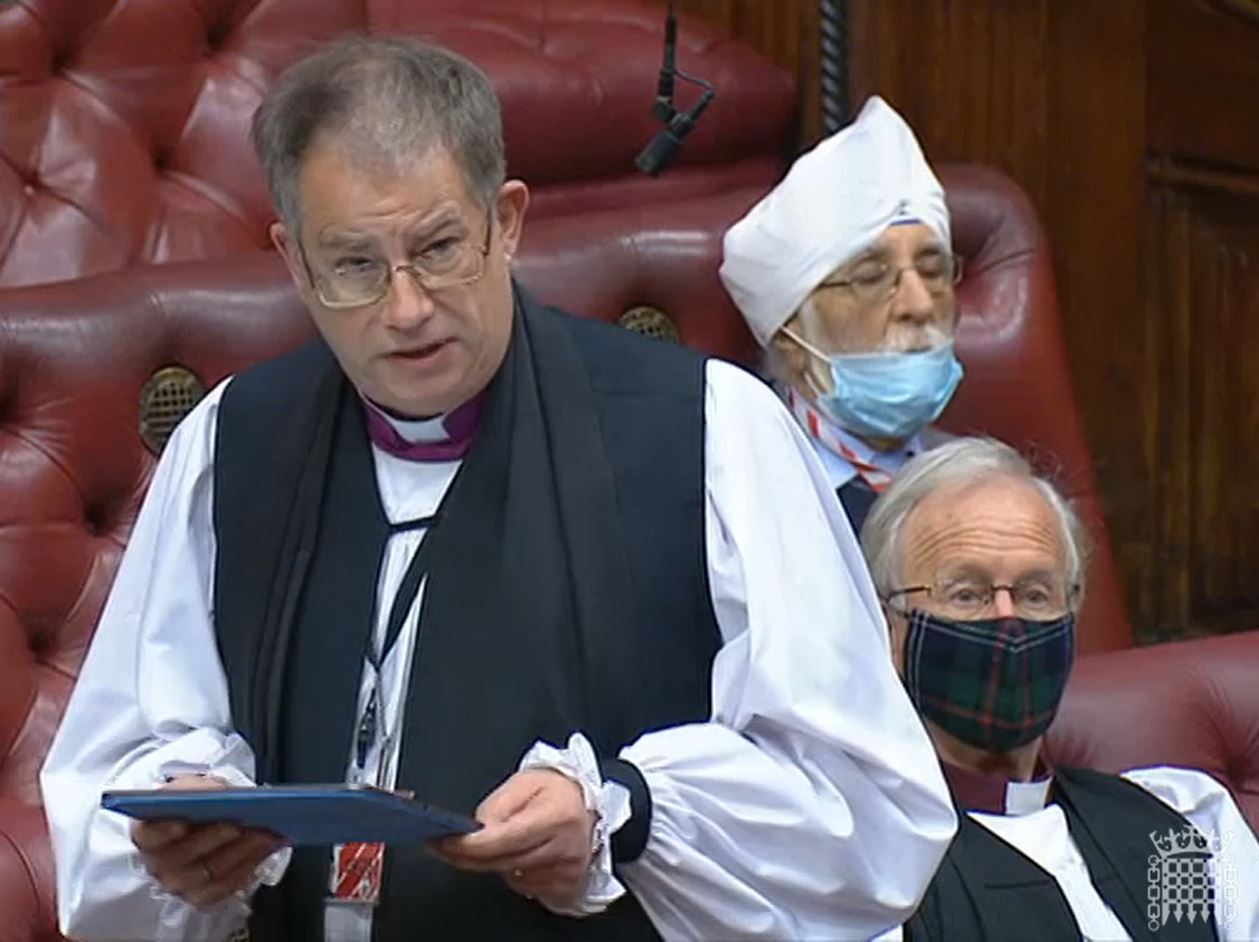
The Lord Bishop of Oxford: My Lords, it is an honour and privilege to follow the noble Baroness, Lady Campbell, and all those who have spoken in this debate. As a member of your Lordships’ Committee on Artificial Intelligence and a founding member of the Centre for Data Ethics and Innovation, I have followed the slow progress of this Bill since the original White Paper. We have seen increasing evidence that many social media platforms are unwilling to acknowledge, let alone prevent, harms of the kind this vital Bill addresses. We know that there is an all too porous frontier between the virtual world and the physical world. The resulting harms damage real lives, real families, and real children, as we have heard.
There is a growing list of priority harms and now there is concern, as well as excitement, over new AIs such as ChatGPT; they demonstrate yet again that technology has no inherent precautionary principles. Without systemic checks and balances, AI in every field develops faster than society can respond. We are and for ever will be catching up with the technology.
The Bill is very welcome, marking as it does a belated but important step towards rebalancing a complex but vital aspect of public life. I pay tribute to the Government and to civil servants for their patient efforts to address a complex set of ethical and practical issues in a proportionate way. But the job is not yet fully done.
Continue reading “Online Safety Bill: Bishop of Oxford speaks on risks to vulnerable adults”The Bishop of St Albans spoke in a debate on the role of social media in children’s deaths on 20th January 2023, drawing attention to the broadness of social factors contributing to children’s deaths:

The Lord Bishop of St Albans: My Lords, I too thank the noble Baroness, Lady Kidron, for securing this most important debate on the contributory role of social media to the deaths of children, and I pay tribute to her persistent campaigning on this subject. It is a timely debate given that only a month ago we received the legislative scrutiny committee’s report on the draft online harms Bill.
I want to focus on the whole question of the extent to which we understand the numbers and the causes of child deaths, not only where social media plays a significant role but in a whole range of other issues. This is a much broader problem than just this topic, although it is a superb example of why we need better research and better recording of data.
In December, your Lordships’ House debated the Second Reading of my Coroners (Determination of Suicide) Bill. It would require coroners to record any relevant contributory factors once a death by suicide has been officially determined. It would not be a finding in law, the results would be anonymised and published anonymously, and it would be akin to the well-established processes that hospitals have for recording comorbidities of death.
Continue reading “Bishop of St Albans takes part in debate on deaths caused by social media”“When people are too scared to express their genuinely held and legally protected beliefs, that is very dangerous for democracy.”
On 10th December 2021 in the House of Lords the Archbishop of Canterbury held a debate on freedom of speech. His opening and closing remarks are below, and the full debate including the contributions of Peers and the Opposition and Government response, can be read in Hansard, here.
Moved by The Archbishop of Canterbury: That this House takes note of contemporary challenges to freedom of speech, and the role of public, private and civil society sectors in upholding freedom of speech.
The Archbishop of Canterbury: My Lords, I am most grateful to the Leader of the House, the usual channels, all noble Lords who have taken the trouble to be here today and, especially, the noble Lord, Lord Parkinson, for answering on behalf of the Government in order that we may have this debate. It is a return to an Advent tradition, interrupted in recent years by elections and pandemics. Should your Lordships worry that I am infectious in some way, I have been tested to the limits of testing. I have my granddaughter’s cold, for which I would like to record my grateful thanks.
We on these Benches have our critics—I have a large number—but for all our present failings you would be hard-pressed to find a more disastrous move by the Lords spiritual than when, in 1831, 21 of them lined up behind the Duke of Wellington and opposed the Great Reform Bill. Had they voted the other way, it would have passed. The people, denied their rights, responded with riots, and bishops were particularly targeted, some with violence. In Bristol, the Bishop’s Palace was burned down. A dead cat was thrown at my predecessor Archbishop Howley, narrowly missing him but striking his chaplain in the face. “Be glad it wasn’t a live one,” Howley is reported to have responded.
I start with this dive into the past because it illustrates a present point. The grey area between, on the one hand, peaceful protest and reasoned criticism and, on the other, incitement to hatred or to violence is one that we are still trying to navigate today. The Church of England knows about that. I must start by suggesting that our society should never follow our historical example of coercion, Test Acts and punishment. There is still a prison at Lambeth Palace at the top of the Lollards’ Tower, with room for eight people. It was used for the Lollards—I have a little list.
Continue reading “Archbishop leads debate on freedom of speech”“search engines free of advertising, social networking freed from the blind pursuit of profit, messaging services which do not mine our data—and all protecting the rights of the child? Perhaps the Government might be willing to explore this kind of radical intervention—social media in public service—in this vital area”
On 10th December 2021 the Bishop of Oxford spoke in a House of Lords debate led by the Archbishop of Canterbury on contemporary challenges to freedom of speech and the role of the public, private and third sectors in upholding it:
The Lord Bishop of Oxford: My Lords, it is a great privilege and honour, as always, to follow the noble and right reverend Lord, Lord Harries, one of my distinguished predecessors. I am grateful for this timely debate and to the most reverend Primate for his very comprehensive introduction. In a few days’ time, as we have heard, the scrutiny committee of both Houses will publish its report on the online safety legislation: a potentially vital web of provisions to prevent harm to individuals and, I hope, to society.
Continue reading “Bishop of Oxford on freedom of speech and online safety”The Bishop of St Albans asked a question on the need for age verification on social media advertisement on 6th December 2021, during a debate on the effects of gambling on young people:

The Lord Bishop of St Albans: My Lords, I declare my interest as a vice-chair of Peers for Gambling Reform. As the noble Lord, Lord Foster, has already mentioned, 60,000-plus young people are diagnosed as suffering from gambling-related harm in this country. What consideration have Her Majesty’s Government given to ensuring, perhaps under the online harms Bill, that social media companies will provide an opt-in age-verification tool so that we can provide additional protections for our young people to protect them from these adverts?
Continue reading “Bishop of St Albans asks about age verification for social media advertisement”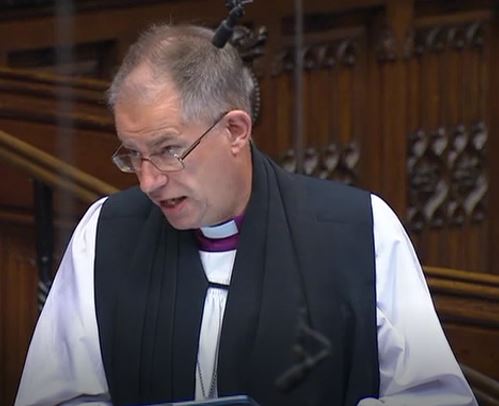
The Bishop of Oxford asked a question on development of a code of practice for tackling offensive online content on 23rd March 2021:
The Lord Bishop of Oxford: My Lords, the requirement to love our neighbours as ourselves makes practical demands of our online behaviour: not only what is posted but also what is endorsed, what is given the oxygen of repetition and what is tolerated. The digital common good is threatened from both sides: by those who post racist and offensive material and by some social media sites that craft algorithms to curate, propagate and perpetuate in order to maximise income. So will the Government give urgent consideration to implementing a code of practice for both hate crime and wider legal harms, perhaps along the lines of the model code that Carnegie UK and a number of other civil society organisations, including my office, recently co-drafted?
Continue reading “Bishop of Oxford asks about tackling offensive material on social media” The Lord Bishop of Oxford [V]: My Lords, I declare my interests, particularly my membership as a board member of the Centre for Data Ethics and Innovation.
Continue reading “Bishop of Oxford welcomes Government plans to tackle online harms”
 The Church of England in Parliament
You must be logged in to post a comment.