Public Authorities (Fraud, Error and Recovery) Bill: Bishop of Lichfield highlights concerns around social security

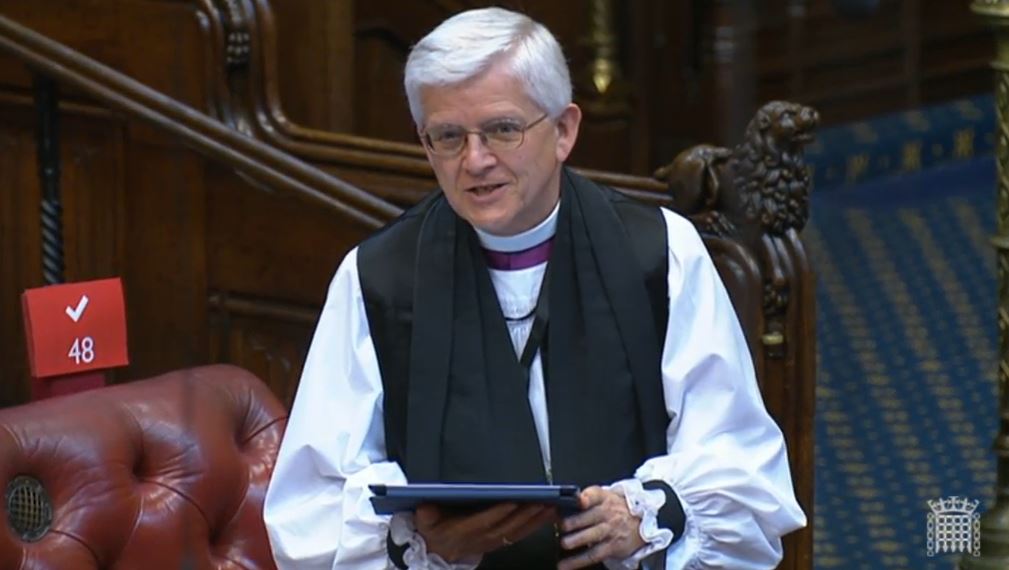
The Bishop of Lichfield spoke at the second reading of the Public Authorities (Fraud, Error and Recovery) Bill on 15th May 2025, raising concerns regarding the impact of the bill on the social security system:

The Lord Bishop of Lichfield: My Lords, I am very glad to see the name of the noble Baroness, Lady Spielman, on the speakers’ list for this debate; I look forward to her maiden speech and her future contributions to this House.

We all need to acknowledge the understandable frustration, felt from government downwards, about waste in public spending and fraud perpetrated at the public’s expense. It is right that expenditure be managed carefully, ensuring that people receive support when they need it, and eliminating fraud and error within the system as far as that is possible.

At the encouragement of my right reverend friend the Bishop of Leicester, who much regrets that he cannot be in his place today, I will focus on the second limb of this Bill, which concerns individual claimants of social security. This is a matter of morality. To support people into work, where they are able; to ensure that people can enjoy an acceptable standard of living when they cannot work or to top up their low income; and to deliver a fair and sustainable social security system now and in the future: these are all moral imperatives. Addressing fraud and error—ensuring that government can recover money when required—is also a morally vital matter of maintaining public consent, which should be a welcome outcome of this proposed legislation. Put simply, our social security system must both be fair and be perceived as fair by the public.

Continue reading “Public Authorities (Fraud, Error and Recovery) Bill: Bishop of Lichfield highlights concerns around social security”

Social Security Benefits Up-rating Order 2025: Bishop of Chelmsford speaks in committee

On 25th February 2025, the Bishop of Chelmsford spoke at a committee debate on the Social Security Benefits Up-rating Order 2025:

The Lord Bishop of Chelmsford: My Lords, it is very good to be here today and I am glad to be able to contribute on this important subject. As we consider a proposed uprating of 1.7%, as compared with 6.8% last year and 10.1% the year before, I am mindful of the different backdrop to this year’s decision. We may no longer be in a period of soaring inflation, but costs remain high in just about every area of life. The discrepancy between the inflation rate from September 2024, by which most means-tested benefits will be uprated, and the current rate of 3% will be felt particularly by those who have not benefited from wage growth this year. This is a timely moment to explore social security as the Government set out their wider agenda in this area.

The manifesto commitments to review universal credit as a means of supporting people into work and addressing poverty and to produce a child poverty strategy could give us a basis on which to improve the lives of millions of people in our country. Indeed, bold action is required in both these areas and, like other noble Lords, I await the outcome of these reviews with keen interest.

Continue reading “Social Security Benefits Up-rating Order 2025: Bishop of Chelmsford speaks in committee”

Bishop of Durham asks about cap on social security benefits

The Bishop of Durham received the following written answers on 16th June 2023:

The Lord Bishop of Durham asked His Majesty’s Government, whether they intend to abolish the benefit cap following their research which found that only five per cent of affected households moved into work as a result of it.

Viscount Younger of Leckie (Con): The benefit cap continues to provide a work incentive and fairness for hard-working taxpaying households, whilst providing a reasonable safety net of support for the most vulnerable. The Government firmly believes that where possible it is in the best interests of children to be in working households and the benefit cap provides a clear incentive to move into work.

Continue reading “Bishop of Durham asks about cap on social security benefits”

Bishop of Blackburn speaks in a debate on social security

On 23rd June, the House of Lords debated the Social Security (Additional Payments) Bill in its first reading. The Bishop of Blackburn asked a question in the debate:

The Lord Bishop of Blackburn: I support the provisions in the Bill that strengthen the right to free speech and the freedom to believe, and the expression of that belief.

Continue reading “Bishop of Blackburn speaks in a debate on social security”

Bishop of Durham asks about social security and universal credit

The Bishop of Durham received the following written answers on 25th April 2022:

The Lord Bishop of Durham asked Her Majesty’s Government whether they applied the Family Test to the Social Security Benefits Up-rating Order 2022.

Continue reading “Bishop of Durham asks about social security and universal credit”

Bishop of St Albans asks about support for those on low incomes

The Bishop of St Albans asked a question about debt and support for those on low incomes on 22nd March 2022, during a debate on social security:

The Lord Bishop of St Albans: My Lords, does the Minister agree with me that we need a wide range of supportive schemes when we are trying to work with those who are coping with the issues caused by low incomes? Have Her Majesty’s Government assessed the Financial Shield pilot scheme which is running at the moment? It brings together health professionals and community organisations, as well as creditors, who are trying to take a long-term supportive approach to working with those who find themselves in debt?

Continue reading “Bishop of St Albans asks about support for those on low incomes”

Social Security (Up-rating of Benefits) Bill: Bishop of Durham calls for further action on benefits issues

On 13th October 2021, the House of Lords debated the Social Security (Up-rating of Benefits) Bill in its second reading. The Bishop of Durham spoke in the debate, urging the government to do more to support those in poverty:

The Lord Bishop of Durham: My Lords, when I read the title of the Bill I thought, “Good: we will have before us a measure that covers the wide issues of the uprating of the wide range of social security benefits we have, most notably pensions, universal credit and perhaps the question of legacy benefits.” So I was very disappointed to discover that, actually, the scope of the content was purely to do with pensions.

In relation to pensions, I have sympathy with the proposals tackling a specific issue that appears to have emerged as something of an anomaly, given our recent experience of the pandemic. I think the triple lock was probably the right move when it was introduced and it has served pensioners well. However, I now have questions as to whether having such a lock in one part of the social security system actually prevents both the Treasury and the Department for Work and Pensions from truly looking at the system and its funding as a rounded whole—although I note with care the comprehensive and careful input of the noble Baroness, Lady Drake, and that of the noble Baroness, Lady Greengross, just now on the double lock. But this is an uprating Bill for the system, it is not about changing the system, so with some reluctance I accept the proposals in the Bill.

However, I now turn to my deep disappointment with the Bill. I join many noble Lords in raising a concern that the Bill does not address the universal credit uplift cut. I recall the debate in this Chamber back in February, in which many Peers expressed their concern that a Bill would not address what is historically one of the most significant cuts to social security benefits. The letter sent by the Minister outlining the content of this Bill began by stating:

Continue reading “Social Security (Up-rating of Benefits) Bill: Bishop of Durham calls for further action on benefits issues”