FGM: Bishop of St Albans asks Government about counselling support

Baroness Prosser asked Her Majesty’s Government what steps they are taking to ensure that government departments work together to identify girls at risk of female genital mutilation and provide them with the necessary support.

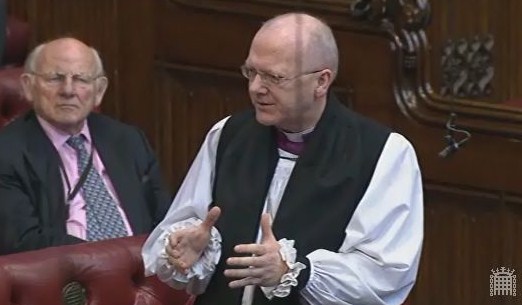
The Bishop of St Albans asked a supplementary question:14.03 Bishop of St Albans

The Lord Bishop of St Albans: My Lords, I welcome the Secretary of State for Education’s commitment to provide the guidelines to schools on protecting children who are at risk of genital mutilation. Will the noble Baroness tell the House what further steps are being taken to provide for and to support properly trained counsellors who really understand the cultural background to this issue so that we are not only protecting children but supporting those who are at risk or may already have been abused?

Baroness Jolly: Work is going on with local communities. A £100,000 grant has been given to set up training so that people could work with NGOs and local schools to pick up exactly the type of issue that the right reverend Prelate has outlined.

(via Parliament.uk)

Bishop of St Albans Raises Impact of Floods on Food Security

The Earl of Shrewsbury asked Her Majesty’s Government what measures they are taking to improve flood defences in agricultural areas.

The Bishop of St Albans asked a supplementary question:

The Lord Bishop of St Albans:

My Lords, the noble Lord will be only too aware of the huge contribution that British agriculture makes to food security. Could he therefore tell us what assessment Her Majesty’s Government have made concerning the risk to food security due to poorly planned flooding amelioration and prevention schemes, which are allowing considerable areas of high-grade agricultural land to be taken out of production due to flooding?

Lord De Mauley:

I am grateful to the right reverend Prelate for coming to see me the other day to talk about these things. There is currently no evidence that flood events such as those experienced in 2007, 2009 or 2012—or, so far, in recent events—represent a threat to food security in the United Kingdom. According to the UK food security assessment, the UK enjoys a high level of food security as a developed, stable economy. I think it is more likely that disruption to transport links could impact access to food supplies, but we are watching this carefully.

(via Parliament.uk)

Immigration Bill: Archbishop of York and Bishop of St Albans Debate Amendments in Committee

The Archbishop of York and the Bishop of St Albans both spoke during the first day of the Committee Stage of the Government’s Immigration Bill on 3rd March. The amendments they debated involved policy relating to immigration removals, holding facilities, use of force, effect on families and children, and the appeals process. Their interventions can be found in full below, with links to the corresponding sections of Hansard on the UK parliament website, where the full exchanges involving other members  of the House can be seen. Continue reading “Immigration Bill: Archbishop of York and Bishop of St Albans Debate Amendments in Committee”

Bishop of St Albans On Relations With Sikh Community

The Bishop of St Albans spoke during Lord Singh of Wimbledon’s debate on relations with the Sikh community following the publication of government documents regarding British involvement in planning the attack on the Golden Temple.

He focussed his remarks on the positive role that the Sikh community has played and continues to play in British society. He welcomed the lack of violent or radical response from the community in light of the publication of the documents, but warned of the danger that it could happen. He called for a wider inquiry into the broader relations between the UK and Indian governments at the time.

The Lord Bishop of St Albans: My Lords, the noble Lord, Lord Singh, has spoken eloquently of the terrible events that took place 30 years ago.

For some seven years in the 1990s, I was privileged to live in Walsall in the West Midlands, in a very multicultural area where I was then working and ministering. I not only counted among my friends a Sikh family living next door to me, but I also paid many visits to the local Guru Nanak temple and received wonderful hospitality there. Even then, some 10 years after the events of Operation Blue Star, Operation Sundown and Operation Woodrose, I was aware of how large these tragedies loomed not just in the imaginations but in the families of my neighbours. Continue reading “Bishop of St Albans On Relations With Sikh Community”

The Bishop of St Albans takes part in debate on the Charity Commission

During a debate on the effectiveness of the Charity Commission, the Bishop of St Albans welcomed the Government’s decision to extend exempted charity status to churches and similar charities by a further seven years but raised concerns about the capacity to register exempted organisations when they reach the registration threshold. He called on the Government to ensure that funding was maintained to ensure the Charity Commission could provide high-quality advice and support to charities and sought a specific assurance from the Minister that the Transparency of Lobbying Act would not affect a church’s ability to host hustings and similar events.

The Lord Bishop of St Albans: My Lords, I will not reiterate what has already been said about the levels of underfunding of the Charity Commission. There is great concern that the vital work that is going on needs proper support if we are going to develop this very important sector in our country. A number of noble Lords have spoken about the need for proper resourcing.

I want to comment briefly on the group of charities that are described by the Charity Commission as excepted charities. These include not just churches and chapels but charities that provide premises for some types of schools and Scout and Guide groups, and charitable service funds of the Armed Forces. It is very significant and helpful that Her Majesty’s Government have decided to extend exception from registration for a further seven years beyond 31 March 2014. It is unclear whether there are any plans afoot for an orderly transition to registration in the lead-up to 2021. Of course, to some extent inflation will reduce the number of excepted organisations and other charities as they reach that £100,000 registration threshold, but unless some queuing system is agreed in advance, at the end of the seven-year extension there is a real possibility of a logjam. Continue reading “The Bishop of St Albans takes part in debate on the Charity Commission”

The Bishop of St Albans calls for greater support for businesses taking on apprentices

Baroness Stedman-Scott asked Her Majesty’s Government what steps they are taking to equip young people with the skills necessary to enter the job market.

The Bishop of St Albans asked a supplementary question:

The Lord Bishop of St Albans: My Lords, there are four times as many 18 to 24 year-olds looking for work at the moment as there are in the 16 to 17 age group. Yet the Government’s policy on apprenticeships for 19 to 24 year-olds is to ask employers to pay half the costs of the learning framework. Many businesses, especially SMEs, will pause before taking on an apprentice because of this. Does the Minister agree that if this requirement were to be removed, it would hugely encourage many more young people to get into apprenticeships as well as giving them much more of a chance to succeed?

Lord Ahmad of Wimbledon: The right reverend Prelate makes an important point, but I am sure many noble Lords are aware that the Government do support local businesses. Indeed, they have made additional funding available to small businesses that are looking to take on both trainees and apprentices.

On the age group that the right reverend Prelate mentioned, particularly 19 to 24 year-olds, in October 2013 the Government announced funding of an additional £20 million to support the expansion of traineeships, which are helping even more young people to get the skills and experience they need to get into full-time work.

(via parliament.uk)

Bishop of St Albans raises concerns about the impact of closing rural schools

Lord Storey asked Her Majesty’s Government what support is given to young people living in rural areas to enable them to travel to school or college.

The Bishop of St Albans asked a supplementary question:

The Lord Bishop of St Albans: My Lords, the Church of England is deeply involved with hundreds of tiny rural schools in sparsely populated areas and is acutely aware of some of the financial difficulties that they face. When such a school has to close, what advice do Her Majesty’s Government give on the educational, financial and environmental issues—to do with sustainability—of transporting these pupils, sometimes very long distances, to the next nearest school?

Baroness Northover: I will write to the right reverend Prelate with details about what happens when these schools are closed. There is a special premium for rural schools of the type that he describes, which have fewer pupils than you might find elsewhere, but I will write with further details.

(via parliament.uk)

Bishop of St Albans presses Government on taking action against payday loan advertising (Written Questions)

The Lord Bishop of St Albans: To ask Her Majesty’s Government, in the light of the Ofcom’s publication Trends in Advertising Activity—Payday Loans, published in December 2013, what assessment they have made of the impact on children between four and 15 years old of the number of payday loan advertisements to which they are exposed.

The Lord Bishop of St Albans: To ask Her Majesty’s Government, in the light of Ofcom’s publication Trends in Advertising Activity—Payday Loans published in December 2013, what assessment they have made of the increase in the number of payday loan advertisements watched by children aged four to 15 years old over the past four years; and whether they have any plans to address the situation.

The Lord Bishop of St Albans: To ask Her Majesty’s Government, in the light of Ofcom’s publication Trends in Advertising Activity—Payday Loans published in December 2013, what assessment they have made of the frequency and impact of payday loan advertising viewed by children on non-children’s television channels.

The Lord Bishop of St Albans: To ask Her Majesty’s Government, in the light of Ofcom’s publication Trends in Advertising Activity—Payday Loans published in December 2013, whether they plan to commission research into the impact of payday loan advertisements on young peoples’ attitudes to the responsible use of money.

The Commercial Secretary to the Treasury (Lord Deighton): Payday loan adverts are subject to the Advertising Standards Authority’s strict content rules. The ASA will not hesitate to ban irresponsible adverts, and has a strong track record of doing so.

The Broadcast Committee of Advertising Practice (BCAP), the body that writes the Broadcast Advertising Code, is considering Ofcom’s research and the extent to which payday loan advertising features on children’s TV, and whether there are any implications for the ASA’s regulation of this sector.

Separately, the Financial Conduct Authority is consulting on new rules for consumer credit adverts, including proposals to introduce mandatory risk warnings and signposting to debt advice. It has powers to ban misleading adverts which breach its rules.

Bishop of St Albans seeks assurances from Government on illegality of sex-selective abortion

Baroness Knight of Collingtree asked Her Majesty’s Government what action they intend to take in the light of recent analysis of the ratio of boys and girls in United Kingdom families suggesting that sex-selective abortion is taking place.

The Bishop of St Albans asked a supplementary question:

The Lord Bishop of St Albans: My Lords, there is an opportunity coming up where this can be underlined. At the moment, the procedures for the approval of independent sector places for the termination of pregnancy are being revised. Will Her Majesty’s Government undertake to ensure that they spell out clearly and unequivocally that termination on grounds of gender alone is illegal and that an appeal on gender alone is insufficient to satisfy the mental health criteria of the Abortion Act?

Earl Howe: My Lords, as I have said, the guidance to abortion providers will be updated and that will include the guidance to independent sector providers. It will be made abundantly clear that gender selection is illegal.

(via parliament.uk)

The Bishop of St Albans speaks in debate on Independent Panel on Forestry report

My Lords, I was eager to participate in this debate and I, too, thank the noble Baroness, Lady Royall, for raising this vital issue, which has touched the nerves of so many people right across the country, in every part of our nation. I want to pick up four details of the Government’s response. They are minor, not major, points but I hope that they will be helpful. The first is to build on the point made by the noble Baroness, Lady Parminter, about the unprecedented levels of flooding that we are having in the UK. Continue reading “The Bishop of St Albans speaks in debate on Independent Panel on Forestry report”