Continue reading “Bishop of Portsmouth leads debate on health consequences of problem gambling”
On 30th of October Lord Griffiths of Burry Port asked the Government whether they will introduce legislation to reduce the maximum bet for fixed-odds betting machines to £2; and if so, when. The Bishop of St Albans, the Rt Revd Alan Smith, asked a follow-up question:
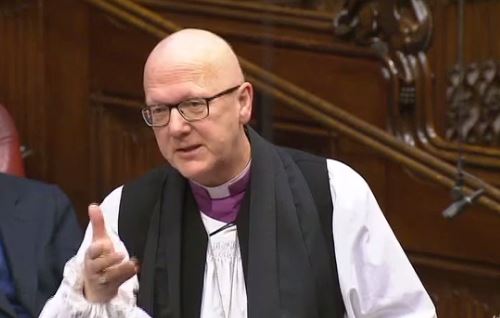
The Lord Bishop of St Albans: Many of us who have been speaking and campaigning on this issue were appalled yesterday to hear about the further time that it will take to implement this. These machines are predominantly found in the poorest areas. The research is quite clear: they cause huge poverty. On top of that, it is estimated that every day between one and two people commit suicide for gambling-related reasons. That is not only a huge social cost; it is a massive financial cost, far more than the £400 million relevant tax revenue that Her Majesty’s Government receive each year. Surely it is time to do this for the sake of everyone in our country. Continue reading “Bishop of St Albans criticises appalling delay in bringing in stake reduction on betting machines”
On 30th October 2018 the Bishop of St Albans, Rt Revd Alan Smith, received a written answer from Government about suicides linked to problem gambling or gambling addiction:
The Lord Bishop of St Albans: To ask Her Majesty’s Government what estimate they have made of the number of suicides that were linked to gambling addiction or problem gambling from 2010 till 2018. Continue reading “Bishop of St Albans asks about link between suicides and gambling addiction”

On 20th June 2018 Lord Cotter asked Her Majesty’s Government “what proportion of mental health treatment is funded by the National Health Service nationally as against local funding.” The Bishop of Lincoln, Rt Revd Christopher Lowson, asked a follow up question:
The Lord Bishop of Lincoln: My Lords, I speak for one of the most rural parts of England. Does the Minister recognise the higher level of suicide in rural areas? In part, this is due to rural isolation and the sparsity of mental health provision. What plans do the Government have to increase local and accessible provision in these areas? Continue reading “Bishop of Lincoln asks Government about mental health provision in rural areas”
On 27th April 2017 the Bishop of St Albans asked the Government what it was doing to support prisoners at risk of suicide or self-harm:
The Lord Bishop of St Albans: To ask Her Majesty’s Government, further to the Written Answer by Lord Keen of Elie on 3 April (HL6247), what are the measures that will be put in
place to help support prisoners who are at risk of selfharm or suicide. [HL6804] Continue reading “Bishop of St Albans asks Government about support for prisoners at risk of suicide or self-harm:”
On 3rd April 2017 the Bishop of St Albans, Rt Revd Alan Smith, received a written answer to a question on prison suicides.
The Lord Bishop of St Albans To ask Her Majesty’s Government, in the light of the increasing annual number of self-inflicted deaths in prisons since 2012, what steps they are taking to reduce the number of such deaths. [HL6247] Continue reading “Bishop of St Albans asks Government about action to reduce prison suicides”
On 8th November 2016 Lord Patel of Bradford asked Her Majesty’s Government “what action they are taking to address reports of increasing levels of violence in prisons.” The Bishop of Salisbury, Rt Revd Nicholas Holtam, asked a follow up question:
The Lord Bishop of Salisbury: My Lords, I have been in and out of prisons quite a lot, usually in support of the excellent multifaith chaplaincies that attest to the importance of the spirit of human beings. In recent years, there has been an alarming rise in the number of suicides, and in self-harm and violence. The recently published strategy for prison safety and reform is very welcome. Does the Minister agree that an imaginative and creative approach to education and the development of people’s spirit is an essential part of prison life for all those who have offended and are being punished? Continue reading “Bishop of Salisbury asks Government about suicide and self-harm in prisons”
On 3rd May 2016 Lord Marks of Henley-on-Thames asked Her Majesty’s Government, “in the light of the latest figures on deaths in custody and prison violence, what plans they have to improve prison safety in the short term.” The Bishop of Peterborough, Rt Revd Donald Allister, asked a follow up question:
The Lord Bishop of Peterborough: My Lords, given the shocking 27% rise in suicides in prisons in the last year, what can the Minister tell us about the provision of psychiatric and psychotherapeutic care for vulnerable prisoners? Continue reading “Bishop of Peterborough asks Government about plans to reduce prison suicides”
On 25th April 2016 the Bishop of St Albans, Rt Revd Alan Smith, received a written answer to a question on support for those at risk of suicide in prison:
The Lord Bishop of St Albans: To ask Her Majesty’s Government what assessment they have made of the recent increases in the number of non-natural deaths in prisons; and what plans they have to improve mental health support for those in prison who are at risk of suicide. [HL7466] Continue reading “Bishop of St Albans asks Government about support for prisoners at risk of suicide”
The Bishop of Lichfield spoke during Lord Eames’ debate on reducing the levels of suicide among young people in the United Kingdom. He focused his remarks on the relationship between low levels of self-worth amongst young people as a factor that contributes to suicidal thoughts. He also raised particular concerns about the risks of bullying or coercion that young people with disabilities face, specifically as debates about assisted suicide become more widespread, and the need to support children who are refugees or asylum seekers and particularly vulnerable due to a lack of adequate mental health care.
The Lord Bishop of Lichfield: My Lords, I, too, thank the noble and right reverend Lord, Lord Eames, for initiating this debate.
The Association for Young People’s Health recently published its key data on adolescence. At present, the statistics show that the levels of self-harm are relatively stable, although for such a sensitive topic there is likely to be low reporting. It is clear that girls are at least three times more likely to self-harm than boys; on the other hand, suicide is much more prevalent among young males, particularly those aged between 20 and 24. This coincides with the evidence from ChildLine. Numbers have fallen fractionally in more recent years but the report questions whether this will continue.
How this correlates with child well-being needs careful consideration. We all remember the United Nations report about the unhappiness of children in this country. ChildLine reports that the number of children contacting it about suicidal feelings has risen for the third year running, including a rise of 33% in the last year. Overall, child well-being in the UK, according to the United Nations, has improved from 21st out of 21 to 16th out of 29 countries. Economic reasons have been stated and there is much correlation with the commentary from the Association for Young People’s Health. Continue reading “Bishop of Lichfield calls for greater support of vulnerable young people in preventing suicide”
You must be logged in to post a comment.