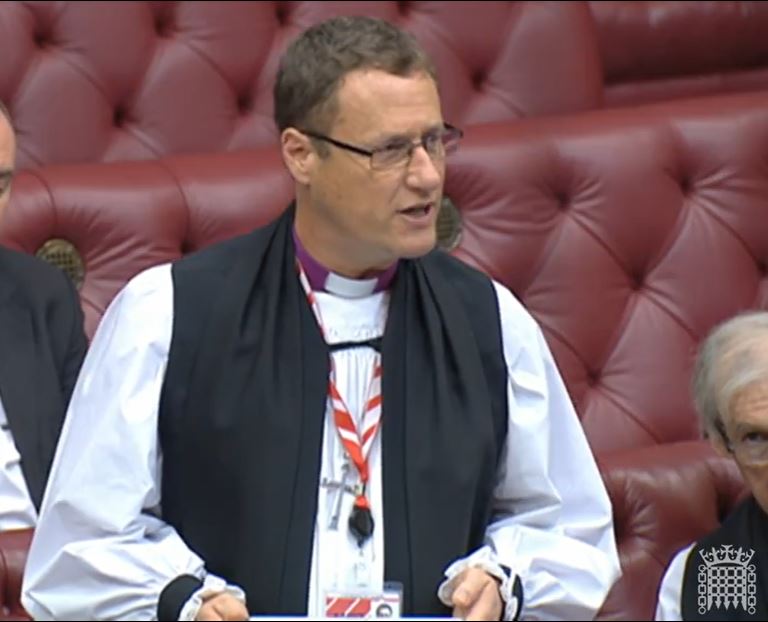
Bishop of Oxford supports ban on smartphones in schools

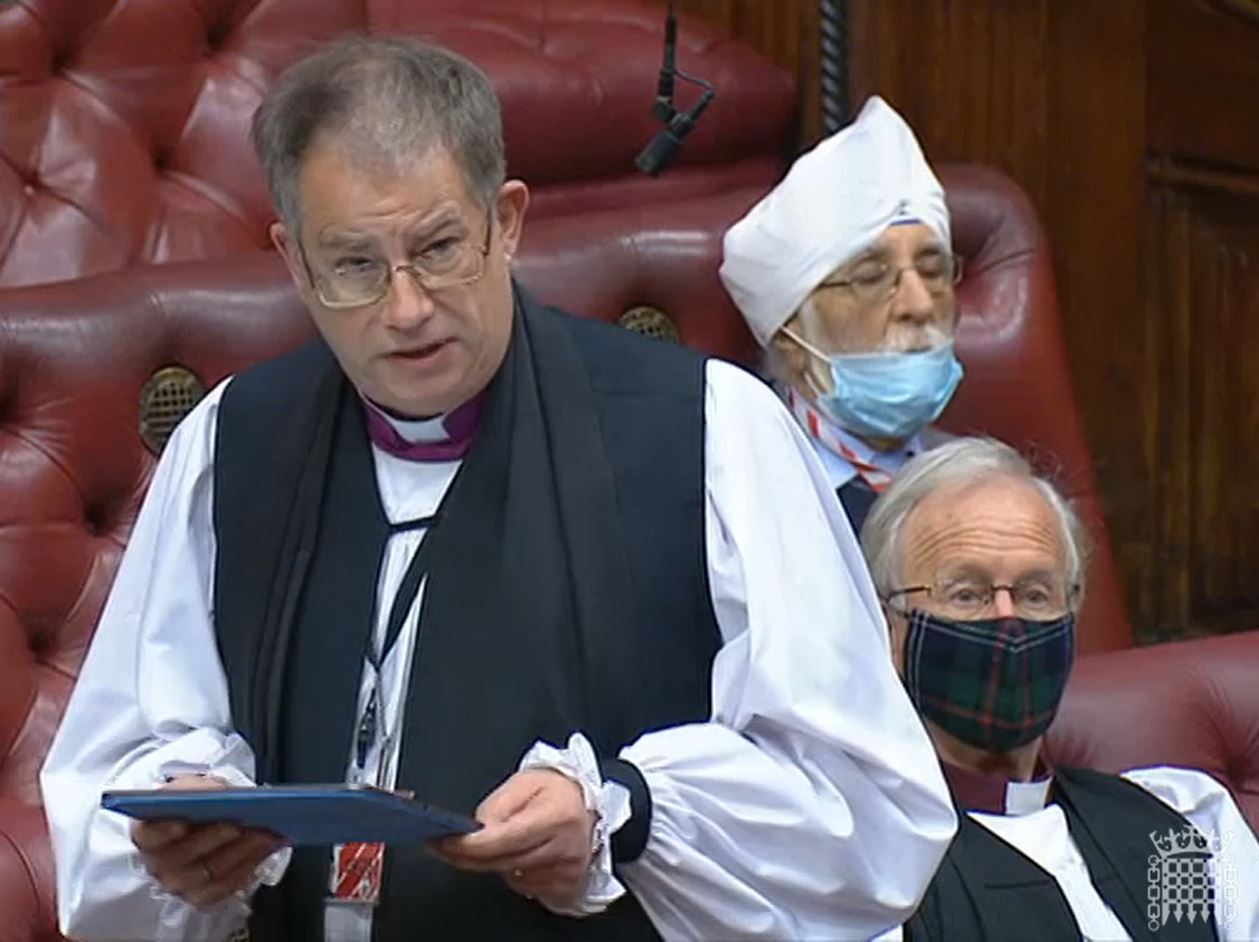
The Bishop of Oxford spoke in a debate on proposals to ban the use of smartphones in schools on 28th November 2024, raising examples of the impact of phone use in schools on behaviour, concentration and mental health:

The Lord Bishop of Oxford: My Lords, it is an honour to take part in this debate. I congratulate the noble Baroness, Lady Kidron, on her excellent introduction. I too look forward to the maiden speech of the noble Baroness, Lady Cass.

The diocese of Oxford, where I serve, has 285 church schools. We share in the education of over 60,000 children through these schools and the network of multi-academy trusts. There is a broad consensus on the importance of this issue and in favour of smartphone-free schools. However, there is not yet a final consensus on the next steps to be taken to bring this about. The consensus arises from our commitment to follow the Christian values of wisdom, respect, community and hope in all our schools.

Continue reading “Bishop of Oxford supports ban on smartphones in schools”

Bishop of St Albans asks about regulation of new technologies

The Bishop of St Albans received the following written answers on 11th October 2024:

The Lord Bishop of St Albans asked His Majesty’s Government, following the finding in the Internet Matters report The new face of digital abuse: Children’s experiences of nude deepfakes, published on 22 October, that nearly half a million children have encountered AI deepfake nudes online, what plans they have to ban apps that create deepfake nudes.

Continue reading “Bishop of St Albans asks about regulation of new technologies”

Bishop of St Albans asks about effects of smartphones on young people’s mental health

The Bishop of St Albans asked a question on the mental health of young people and the potential effects of social media and smartphones, during a discussion on health-related benefits claims on 5th November 2024:

The Lord Bishop of St Albans: My Lords, I pick up the Minister’s reference to mental health. Some estimates suggest that up to two-thirds of those claiming incapacity benefits are doing so on the basis of mental health-related issues. Can the Minister tell us whether a focus on young people, in particular their use of things such as smartphones and social media, is being both researched and fed into the Government’s early intervention strategy?

Continue reading “Bishop of St Albans asks about effects of smartphones on young people’s mental health”

Bishop of Newcastle speaks on growth of the technology sector in the North East of England

The Bishop of Newcastle spoke in a debate on the contribution of science and technology to the UK economy on 31st October 2024, with a focus on the growth of the science and technology sector in the North East of England:

The Lord Bishop of Newcastle: My Lords, I thank the noble Viscount, Lord Stansgate, for bringing this important and timely debate. I look forward to the maiden speech of the noble Baroness, Lady Freeman, and welcome her to your Lordships’ House.

I want to focus my remarks on the north-east region’s rapidly growing science and tech sector as a huge asset to the UK economy, attracting skills and investment from across the world. At the heart of the sector in this region are its five distinguished universities: Durham, Newcastle, Northumbria, Sunderland and Teesside. This month they announced their new partnership, known as Universities for North East England, that will strengthen their collaboration, making a greater contribution to everyone who lives, works, and studies in the north-east and driving regional economic growth.

Continue reading “Bishop of Newcastle speaks on growth of the technology sector in the North East of England”

Bishop of Leicester asks about tackling online abuse and prejudice

On 5th September 2024, during a discussion on the ability of current online safety legislation to regulate abuse, the Bishop of Leicester asked a question on the need to tackle the root causes of prejudice leading to online abuse, and the role communities and faith groups can play in helping to combat it:

The Lord Bishop of Leicester: My Lords, I recognise absolutely the urgency and importance of legislation in this area, but does the Minister agree that equally important is the work of tackling the prejudice that lies behind online abuse, and the important role therefore of intermediate institutions such as community groups and faith groups in tackling prejudice? What are the Government doing to support those groups in that work?

Continue reading “Bishop of Leicester asks about tackling online abuse and prejudice”

King’s Speech Debate: Bishop of Oxford raises potential risks of new technologies

On 19th July 2024, the Bishop of Oxford spoke on developments in science and technology during the debate on the King’s Speech, encouraging the government to consider the potential risks of certain new technologies, particularly to children and security:

The Lord Bishop of Oxford: My Lords, it is a privilege to contribute to this debate. I congratulate the new Ministers and express appreciation to the noble Baroness, Lady Barran, and to the noble Baroness, Lady Jolly, for her valedictory speech. There is much to commend in the gracious Speech.

A few weeks ago, Pope Francis addressed the leaders of the G7 on the risks and opportunities of artificial intelligence. Francis spoke of the way in which AI arises from God-given human potential. He spoke of the excitement at the possibilities that these powerful tools bring, of the risks of greater inequalities and impersonation, and of the need for deep and humane wisdom and ethics and the right political leadership. I encourage noble Lords to read his address but also, if they have a moment, to watch the 10 minutes before his address. Pope Francis demonstrated a deep humanity, not only in his words but in the way he went right around the room, embracing each of the G7 leaders and lightening for a moment the heavy burdens that each carried.

Continue reading “King’s Speech Debate: Bishop of Oxford raises potential risks of new technologies”

Artificial Intelligence (Regulation) Bill: Bishop of Worcester welcomes legislation

On 22nd March 2024, the Bishop of Worcester spoke in a debate on the Artificial Intelligence (Regulation) Bill (a private members bill tabled by Lord Holmes of Richmond), supporting the aims of the bill and calling for robust approach to AI regulation:

The Lord Bishop of Worcester: My Lords, I guarantee that this is not an AI-generated speech. Indeed, Members of the House might decide after five minutes that there is not much intelligence of any kind involved in its creation. Be that as it may, we on these Benches have engaged extensively with the impacts and implications of new technologies for years—from contributions to the Warnock committee in the 1980s through to the passage of the Online Safety Bill through this House last year. I am grateful to the noble Lord, Lord Holmes, for this timely and thoughtful Bill and for his brilliant introduction to it. Innovation must be enthusiastically encouraged, as the noble Baroness, Lady Moyo, has just reminded us. It is a pleasure to follow her.

That said, I will take us back to first principles for a moment: to Christian principles, which I hope all of good will would want to support. From these principles arise two imperatives for regulation and governance, whatever breakthroughs new technologies enable. The first is that a flourishing society depends on respecting human dignity and agency. The more any new tool threatens such innate dignity, the more carefully it should be evaluated and regulated. The second imperative is a duty of government, and all of us, to defend and promote the needs of the nation’s weak and marginalised —those who cannot always help themselves. I am not convinced that the current pro-innovation and “observe first, intervene later” approach to AI get this perennial balance quite right. For that reason, I support the ambitions outlined in the Bill.

Continue reading “Artificial Intelligence (Regulation) Bill: Bishop of Worcester welcomes legislation”

Bishop of Bristol highlights negative impact of lack of digital access for children

On 8th February 2024, the Bishop of Bristol spoke in a debate on a report from the Communications and Digital Committee on digital exclusion, emphasising the impact of lack of digital access on children:

The Lord Bishop of Bristol: My Lords, it is a pleasure to follow the noble Lord, Lord Lipsey, whose speech imaginatively took us into the life and world of Joe Soap. I congratulate the noble Baroness, Lady Stowell, on securing this timely debate—timely in one sense—and I offer my thanks to all members of the Communications and Digital Committee for a thorough and wide-ranging report. I also lament the lack of a government cross-departmental strategy.

Today, I focus my comments on digital inclusion and exclusion in and around schools, about which I have a little knowledge. In 2021, UNICEF produced an excellent report on the effect of digital exclusion on schoolchildren. That report said that

“digital inclusion must be seen as the cornerstone to ensuring social justice and equitable life chances for every child”.

Those words were written while the pandemic was at its peak and the long-term impact on education was still difficult to predict.

Continue reading “Bishop of Bristol highlights negative impact of lack of digital access for children”

Bishop of St Albans asks about digital connectivity in rural areas

The Bishop of St Albans asked a question on digital connectivity in rural communities on 22nd November 2023, following a government statement on the levelling-up agenda:

The Lord Bishop of St Albans: My Lords, I declare my interests as president of the Rural Coalition and a vice-president of the LGA. The 9.6 million people living in rural areas are glad that there is a mention of rural in the opening paragraph, but we cannot quite see how that rolls out. I wonder whether the Minister can help us a little. One of the crucial things about rural sustainability, improving levels of employment and offering healthcare in rural areas is digital connectivity, yet 17% of rural houses are not on superfast broadband, and nor are 30% of rural commercial premises. How does this relate to the need across the country to roll out a much higher level of rural connectivity? It has been done with a fantastic project in Cornwall and a lot was done in Shropshire at one stage, so it can be done. How do we get that sort of rural levelling up in digital connectivity?

Continue reading “Bishop of St Albans asks about digital connectivity in rural areas”

Investigatory Powers (Amendment) Bill: Bishop of St Albans raises ethical concerns over data access and developing technologies

On 20th November 2023, the Bishop of St Albans spoke in a debate on the Investigatory Powers (Amendment) Bill [HL] at the bill’s second reading, raising concerns regarding the expanded powers the bill would give to the intelligence services to access personal data, and the ethical considerations of developing technology:

The Lord Bishop of St Albans: My Lords, I too thank the noble Lord, Lord Anderson of Ipswich, for his very helpful and excellent work in his area. With the rapid acceleration of technology and technological capacity, I recognise the need for this Bill to be updated. In this context, I welcome the Government’s sense of urgency in addressing the changing landscape in this area, and seeking to close those gaps that potentially endanger both the security and the safety of our nation. My right reverend friend the Bishop of Leeds had hoped to be here today, as he has taken a particular interest in this area, but he is detained elsewhere. We would both like to express two concerns that we believe must be addressed as this Bill is debated in your Lordships’ House.

Continue reading “Investigatory Powers (Amendment) Bill: Bishop of St Albans raises ethical concerns over data access and developing technologies”