Railways: High Speed 2

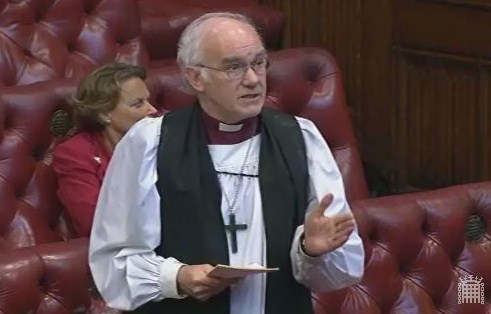
A Government statement on the High Speed Two rail project was repeated in the House of Lords on 24th March 2014 by Transport Minister Barioness Kramer. The Bishop of Chester asked a question:

The Lord Bishop of Chester: My Lords, the spirit of the Statement is in for a penny, in for pound—a lot of pounds, of course—but if it is to be done, it should be done well and quicker. 14.03 Bishop of ChesterI particularly welcome the extension to Crewe, which is in my diocese, so much sooner; I am sure that the people of Crewe, that noble old railway city, will welcome that warmly. I notice in the Statement, though, that direct trains will be able to run off HS2 to serve north Wales. I have always assumed that the trains on the high-speed rail link will be electric. Does this mean that the Government are announcing plans to electrify the railways beyond Crewe to Chester and into north Wales? If so, when is that going to happen?

Continue reading “Railways: High Speed 2”

Bishop of St Albans raises concerns about the impact of closing rural schools

Lord Storey asked Her Majesty’s Government what support is given to young people living in rural areas to enable them to travel to school or college.

The Bishop of St Albans asked a supplementary question:

The Lord Bishop of St Albans: My Lords, the Church of England is deeply involved with hundreds of tiny rural schools in sparsely populated areas and is acutely aware of some of the financial difficulties that they face. When such a school has to close, what advice do Her Majesty’s Government give on the educational, financial and environmental issues—to do with sustainability—of transporting these pupils, sometimes very long distances, to the next nearest school?

Baroness Northover: I will write to the right reverend Prelate with details about what happens when these schools are closed. There is a special premium for rural schools of the type that he describes, which have fewer pupils than you might find elsewhere, but I will write with further details.

(via parliament.uk)

Bishop of Wakefield raises concerns about impact of lack of free parking on local businesses

Baroness Williams of Trafford asked Her Majesty’s Government what assessment they have made of town-centre parking policies and their impact on local businesses.

The Bishop of Wakefield asked a supplementary question:

The Lord Bishop of Wakefield: My Lords, I want to focus particularly on the impact on small towns, which may not necessarily have trains and buses bringing people into them. Where there are not just large-scale out-of-town developments but also small-scale shopping centres, where it is easy to park for nothing, the impact on the high street is significant. In Mirfield, in the diocese from which I come, free parking has had a very good impact. In Berwick-upon-Tweed, another town I know very well, there is no free parking and that is seriously affecting local businesses. Can we be assured that Her Majesty’s Government will encourage local authorities to look at ways of finding more parking spaces in small towns?

Baroness Stowell of Beeston: The right reverend Prelate is right to raise the issue of more free parking. In a recent report published by Deloitte, more free parking was the single biggest issue raised by people who responded. In examining some options, we are trying to ensure that local people have a greater say in the parking arrangements of their local areas—and, clearly, access to free parking should be one of those things.

(via parliament.uk)