Queen’s Speech 2016: Bishop of Durham responds on welfare, children and life chances

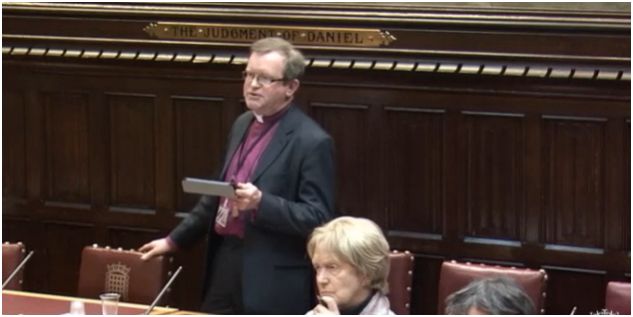
On 19th May 2016 the Bishop of Durham, Rt Revd Paul Butler, spoke in the first day of debate on the Queen’s Speech. He focused his response on the Government’s life chances agenda, including poverty, children and welfare reform.
Bp Durham June 2015 bThe Lord Bishop of Durham: My Lords, the gracious Speech makes several commitments to improving life chances for the most disadvantaged. There is also a renewed commitment,

“to support the development of a Northern Powerhouse”.

It is in welcoming these that I shall make most of my remarks.

Children need the best possible start in life. They need to be loved and cared for above all else. Where this is best found in an adoptive family, seeing this established as well and as quickly as possible is important, so I welcome the proposed measures here and look forward to the details. For some, care ends up as the best loving option. We need to ensure that life chances for those in residential or foster care are as good as for all other children. When the time comes to leave care, it is often traumatic. A move to provide care leavers with a personal adviser until they are 25 is therefore a very welcome proposal. Continue reading “Queen’s Speech 2016: Bishop of Durham responds on welfare, children and life chances”
Bishop of Peterborough supports move to find fairer mobility assessment criteria for disability benefit claimants

14.02 PeterboroughOn 4th May 2016 Baroness Thomas of Winchester put a Motion to the House of Lords: “That this House calls on Her Majesty’s Government to hold urgent talks with Disability Rights UK and the Disability Benefits Consortium to identify a mobility criterion in the Personal Independence Payment “moving around” assessment which is fairer than the current 20 metre distance, in the light of the impact on reassessed disabled claimants and the resulting large number of successful appeals.” The Bishop of Peterborough, Rt Revd Donald Allister, spoke in support of the Motion, which was subsequently passed by the House.

The Lord Bishop of Peterborough: My Lords, I support the noble Baroness, Lady Thomas of Winchester, and thank her for bringing this Motion before the House. I have a simple point to make.

The tick-box approach is rarely the right one. People are individuals and wherever possible should be treated as such. While it is clear that the 20-metre rule is too restrictive, setting a replacement figure, whether the old one of 50 metres or some other, is still arbitrary and a matter of ticking boxes instead of treating people as people. The high number of successful appeals, whatever the reasons, shows that the 20-metre rule simply does not work. Continue reading “Bishop of Peterborough supports move to find fairer mobility assessment criteria for disability benefit claimants”

Budget debate: Bishop of Portsmouth calls on Government to ‘set economic course with a stronger moral compass’

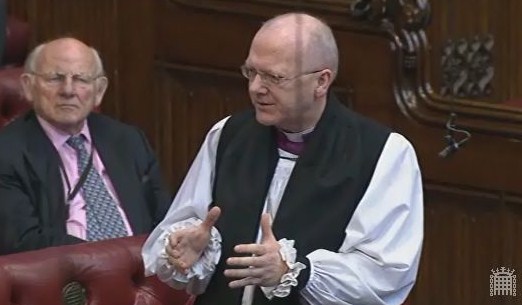
On 23rd March 2016 the House of Lords debated the 2016 Budget statement. The Bishop of Portsmouth, Rt Revd Christopher Foster, spoke in the debate:

Portsmouth budget 2The Lord Bishop of Portsmouth: My Lords, in contributing to this debate and responding to the Chancellor of the Exchequer’s Budget Statement last week, to the subsequent events and to the debate in the other place, I welcome some proposals, express some surprise, and register disappointment—indeed, shock—at some of the measures announced. First, it is good to congratulate the Chancellor and Government on the intention to raise the tax free personal allowance to £11,500 this time next year. Lifting about 1.3 million people out of income tax is, of itself, welcome, although there are some potential drawbacks to which I will return a little later. Continue reading “Budget debate: Bishop of Portsmouth calls on Government to ‘set economic course with a stronger moral compass’”

Bishop of St Albans asks Government about disability living allowance appeals

Bishop of St AlbansOn 22nd March the Bishop of St Albans received two written answers to questions on Disability Living Allowance appeals.

The Lord Bishop of St Albans: To ask Her Majesty’s Government how many individuals who previously claimed a motability allowance under the Disability Living Allowance have (1) lost that allowance after being reassessed for Personal Independence Payments, and (2) kept that allowance after being reassessed for Personal Independence Payments. [HL6794] Continue reading “Bishop of St Albans asks Government about disability living allowance appeals”

Welfare Reform Bill – Bishop of Durham raises child poverty concerns

On 17th November 2015 the House of Lords debated at Second Reading the Government’s Welfare Reform and Work Bill. The Bishop of Durham, Rt Revd Paul Butler, raised concerns about the impact on child poverty of proposed changes, including the two-child limit. The Bishop of St Albans also spoke in the debate.


Durham171115The Lord Bishop of Durham: My Lords, I support many of the principles underlying this Bill: the importance of personal, as well as collective, responsibility; the value of decent work, not just financially, but for human dignity; the role of the welfare system in encouraging positive behaviours; the recognition that poverty is not simply about lack of income; and the desire for fairness for those who receive from and contribute to the system, including the vast majority of us who do both at different points in our lives. None of these is completely new, but the Government’s approach to welfare reform has certainly reinvigorated the debate about poverty, helping to challenge implicit assumptions and some very tired thinking. Governments naturally want to distinguish themselves, but in seeking to introduce a fresh perspective on old problems, there is always a danger of going too far or of throwing out the good with the bad. That is my concern about some of the measures being discussed today.
Continue reading “Welfare Reform Bill – Bishop of Durham raises child poverty concerns”

Welfare Reform Bill – Bishop of St Albans raises support for vulnerable adults

On 17th November 2015 the House of Lords debated at Second Reading the Government’s Welfare Reform and Work Bill. The Bishop of St Albans, Rt Revd Alan Smith, raised concerns about potential impact on vulnerable adults, both in the proposals for supported housing and for those receiving the Employment Support Allowance. The Bishop of Durham also spoke in the debate.


StAlbans171115

The Lord Bishop of St Albans: My Lords, I will pick up on some of the themes that have been raised by some of my noble friends who have spoken today, particularly on the area of vulnerable adults and those who are disabled. I invite the Government to think about two issues in particular. The first relates to the clause in the Bill legislating for a mandatory 1% annual reduction in social housing rents over the next four years. I, like other noble Lords, understand that the Government have their reasons for introducing this mandatory reduction, not least the considerable savings on housing benefits that such a rate reduction would deliver. I welcome the discretionary power that the Secretary of State will have to waive the requirement for rent reductions. This will go some way to protecting those housing associations which find themselves financially exposed due to circumstances outside their control. Continue reading “Welfare Reform Bill – Bishop of St Albans raises support for vulnerable adults”

Bishop of St Albans asks about rural exceptions from the under-occupancy charge

On 3rd November 2015 Baroness Quin asked Her Majesty’s Government “whether they have plans to undertake a regional study of the effects of the under-occupancy charge.” The Bishop of St Albans, Rt Revd Alan Smith, asked about exemptions for those in social housing in rural areas.


Bishop of St AlbansThe Lord Bishop of St Albans: My Lords, back in 2013 the Environment, Food and Rural Affairs Committee urged that social housing in rural areas should be excluded from the underoccupancy charge, because of the near impossibility of finding alternative accommodation in many rural areas, where it is simply is not available for people to downsize. Already people in rural areas have higher social and housing costs, and there is some evidence that the underoccupancy charge is pushing some families further into debt. Will the Minister tell the House whether Her Majesty’s Government would be willing to undertake a reconsideration of their policy and exclude social housing in rural areas from this measure? Continue reading “Bishop of St Albans asks about rural exceptions from the under-occupancy charge”

Bishop of St Albans asks about two-child limit for new Universal Credit claimants

On 2nd November 2015 the Bishop of St Albans asked the Government about the impact of the proposed two-child limit for new Universal Credit claimants.


Bishop of St AlbansLord Bishop of St Albans: To ask Her Majesty’s Government how many families with three or more children born before 6 April 2017 they estimated would be affected by the proposed two-child limit for new claimants for Universal Credit in the calculations of the Budget policy costings for (1) 2017–18, (2) 2018–19, and (3) 2019–20.


Lord Freud: The information requested is not available for publication.


(via Parliament.uk)

Divisions – Tax Credit Regulations

On 26th October 2015 the House of Lords debated a motion to approve the Government’s Tax Credits (Income Thresholds and Determination of Rates) (Amendment) Regulations 2015.

House of Lords Division Lobby

Alongside the motion to approve the House also considered four amendments to the motion, from Liberal Democrat, Crossbench and Labour Peers and one from the Bishop of Portsmouth, Rt Rev Christopher Foster. Continue reading “Divisions – Tax Credit Regulations”

Archbishop of York speaks against Government proposals on tax credits

Employers who have already adopted a living wage policy have lifted thousands of people out of working poverty. They are not claiming tax credits because they have been lifted out. The Exchequer could gain up to £4.2 billion a year in increased tax revenues and reduced expenditure on tax credits. That is a much neater way of doing it.“- Archbishop of York, 26/10/15

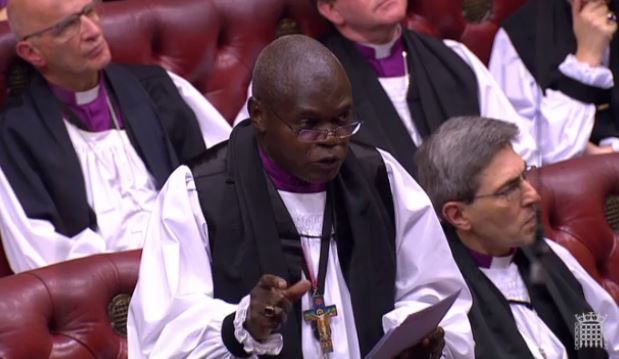
ABYtaxcreditsdebateOn 26th October 2015 the House of Lords debated a motion to approve the Government’s Tax Credits (Income Thresholds and Determination of Rates) (Amendment) Regulations 2015.

Alongside the motion to approve the House also debated four amendments to the motion, from Liberal Democrat, Crossbench and Labour Peers and one from the Bishop of Portsmouth, Rt Rev Christopher Foster. Continue reading “Archbishop of York speaks against Government proposals on tax credits”