Bishop of Southwell and Nottingham speaks in debate on current situation in Ukraine

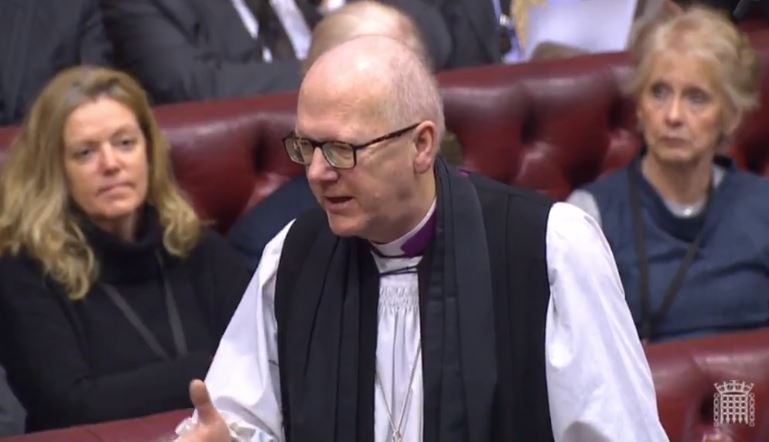
On 9th February 2023, the House of Lords debated a motion to take note of the current situation in Ukraine, following Ukrainian president Zelensky’s vist to the UK. The Bishop of Southwell and Nottingham spoke in the debate, urging that efforts remain focused on supporting Ukrainians in the UK and supporting Ukraine’s own defence, while pressing for clarity on the government’s expectations of the future of the conflict:
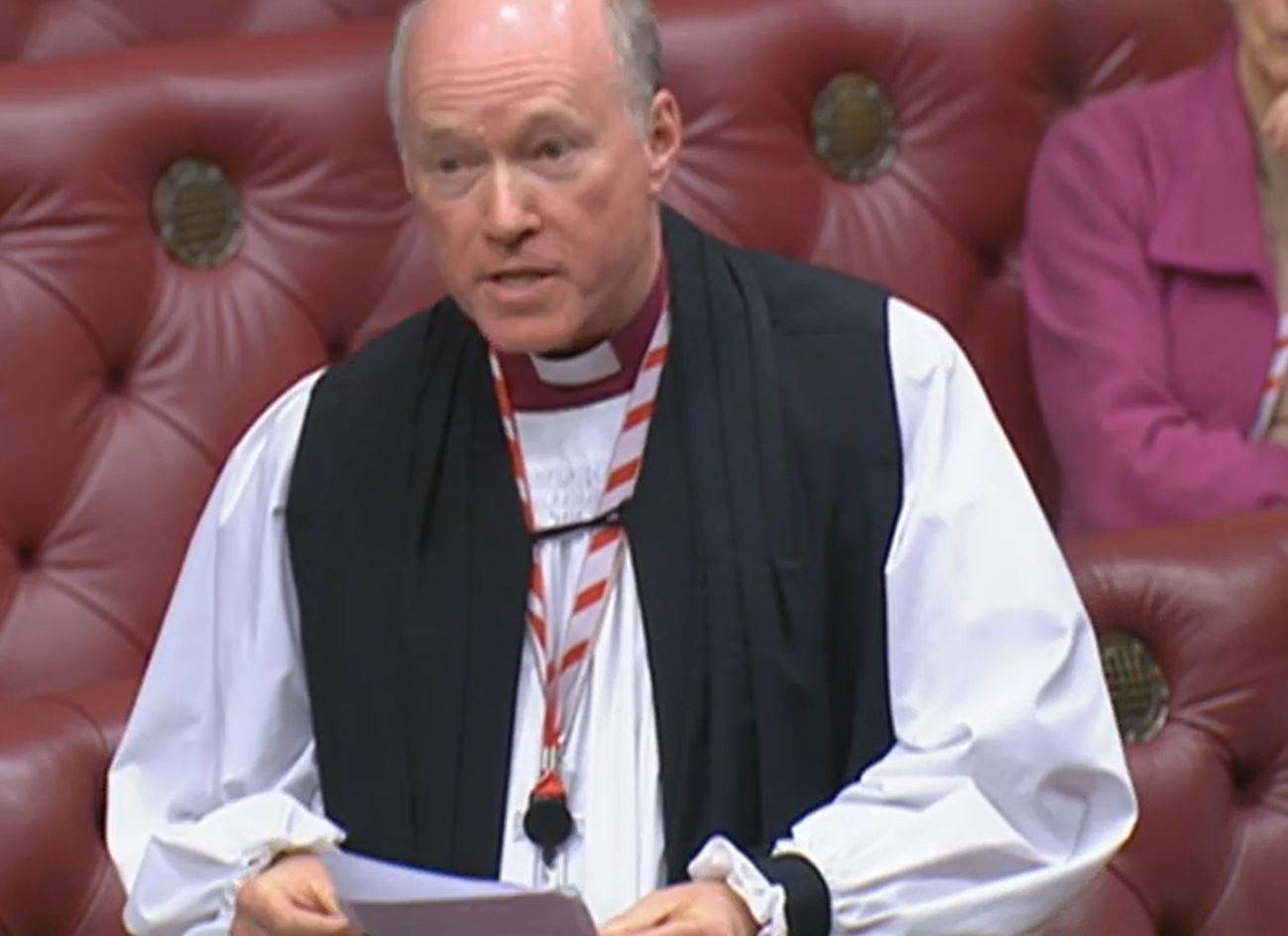
The Lord Bishop of Southwell and Nottingham: My Lords, like others in this House I thank the noble Baroness, Lady Goldie, for tabling this debate. I wish to convey the apologies of my most reverend friend the Archbishop of Canterbury, who, having recently travelled to Kyiv, wished to take part in this debate but is detained by the business of the General Synod. He will follow the deliberations closely in Hansard. My most reverend friend and several others from these Benches took time away from the General Synod yesterday and were delighted to join Members of both Houses to hear the President of Ukraine address us.

I count it a privilege and not a little daunting to precede the maiden speech of the noble Lord, Lord Soames, whose insight and wisdom on the matters before us are truly formidable. On behalf of the Lords Spiritual, I look forward to listening to and learning from his contributions to the work of the House in the coming days.

Continue reading “Bishop of Southwell and Nottingham speaks in debate on current situation in Ukraine”
Bishop of St Albans asks about dual British-Iranian citizens

The Bishop of St Albans received the following written answer on 9th February 2023:

The Lord Bishop of St Albans asked His Majesty’s Government how many people have dual British-Iranian citizenship; and of those, what estimate they have made of the number currently residing in Iran.

Lord Murray of Blidworth (Con): Under UK law, there is no restriction on holding other passports so only the ‘relevant’ nationality to a case is generally captured in a analysable form.

Continue reading “Bishop of St Albans asks about dual British-Iranian citizens”

Bishop of St Albans asks about access to phones and broadband in rural areas

The Bishop of St Albans received the following written answer on 9th Febraury 2023:

The Lord Bishop of St Albans asked His Majesty’s Government what estimate they have made of how many people in rural areas do not have access to (1) landline phones, (2) mobile telephone coverage, (3) wireless coverage, (4) broadband, and (5) satellite internet.

Lord Parkinson of Whitley Bay (Con): Ofcom collects coverage as part of its reporting requirements, most recently in its Connected Nations Report, with data for the period to September 2022.

Ofcom reports that 96% of rural premises have indoor 4G coverage from at least one operator, rising to 99% for outdoor coverage. This equates to c.195,000 rural premises not having 4G indoor coverage, with c.26,500 not having outdoor 4G coverage.

Continue reading “Bishop of St Albans asks about access to phones and broadband in rural areas”

Second Estates Commissioner to Synod – not the job of Parliament to decide Church of England doctrine

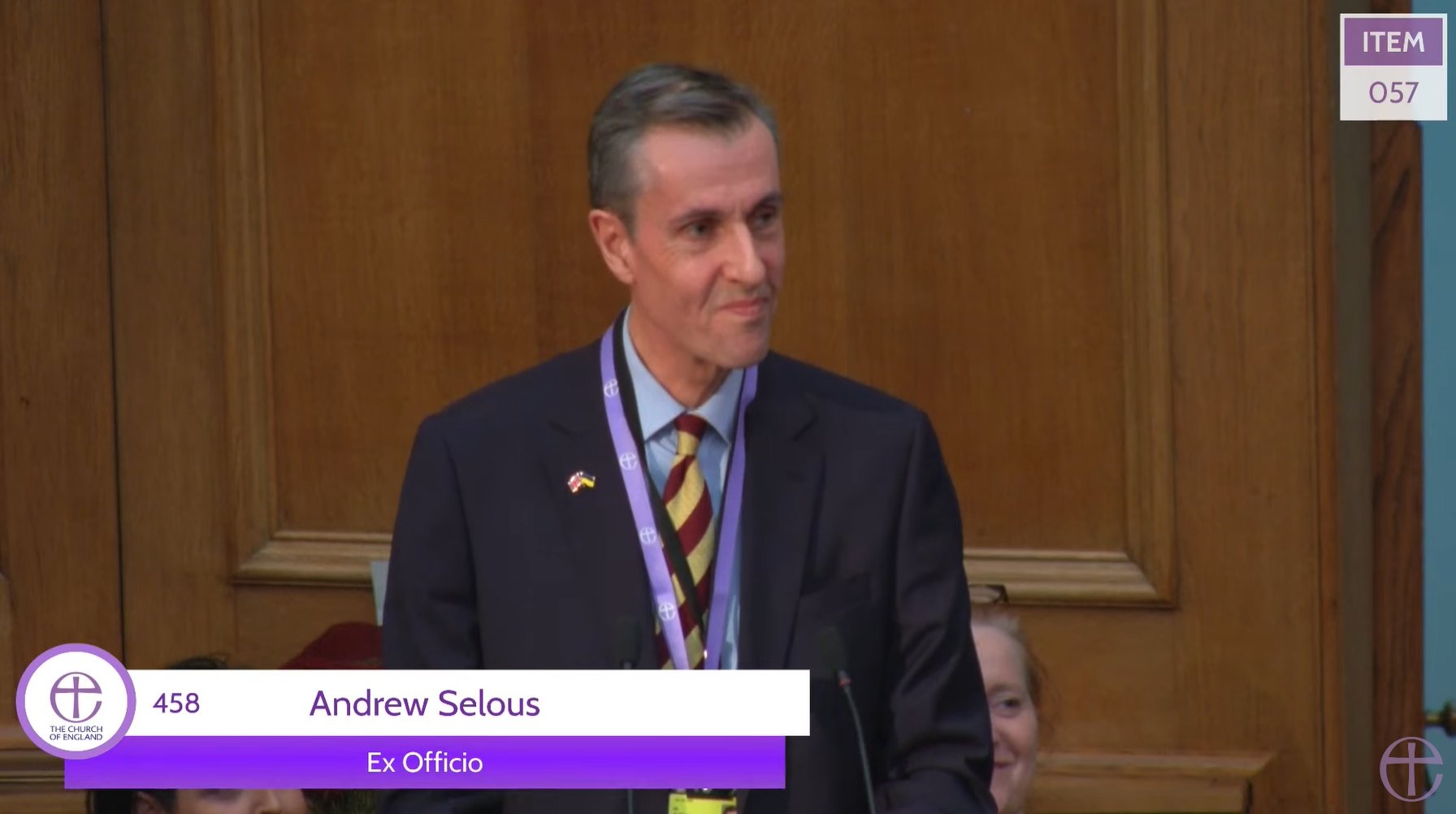
On 8th February 2023 the Church of England General Synod debated a motion on same-sex marriage and the response of the College of Bishops to the Church’s Living in Love and Faith process. The Second Church Estates Commissioner addressed the Synod:

Andrew Selous MP, Second Church Estates Commissioner. Ex-officio 458:

I was called to answer an urgent question on this issue in the House of Commons on 24th January. I was amused to be told the urgent question would not be repeated in the House of Lords because there was apparently no one to speak for the Church of England in the House of Lords !

I pledged to make MPs views known to Synod. Of the twelve who spoke that day, eight expressed a hope that the Synod would change doctrine to enable same-sex couples to be married by the Church. There were deep and heartfelt stories from a number of MPs of the personal sense of hurt they felt at what they considered to be ongoing discrimination against LGBT+ people.

Others have contacted me in private, for fear of retribution, to support traditional doctrine and several said that it is for Synod, not for Parliament, to reach its own prayerful decision on this issue. Copies of the Hansard extract are available at the administration desk.

Continue reading “Second Estates Commissioner to Synod – not the job of Parliament to decide Church of England doctrine”

Bishop of Gloucester asks about increasing the sample size of the Food & You 2 Survey

The Bishop of Gloucester received the following written answer on 8th February 2023:

The Lord Bishop of Gloucester asked His Majesty’s Government what consideration they have given to expanding the sample size for the Food Standards Agency’s Food and You 2 survey to a minimum of 10,000 households.

Continue reading “Bishop of Gloucester asks about increasing the sample size of the Food & You 2 Survey”

Bishop of St Albans asks about potential security threats posed by DNA testing ancestry companies

The Bishop of St Albans received the following written answer on 8th February 2023:

The Lord Bishop of St Albans asked His Majesty’s Government what assessment they have made of any security threat posed by the collection of biometric data by direct-to-consumer DNA testing ancestry companies.

Lord Murray of Blidworth: The Home Office has made no such assessment.

Hansard

Bishop of St Albans asks about African Swine Fever

The Bishop of St Albans received the following written answers on 8th February 2023:

The Lord Bishop of St Albans asked His Majesty’s Government what discussions they have had with (1) the EU, and (2) other pork export markets, regarding regionalisation in the event of an African swine fever outbreak in the UK.

Continue reading “Bishop of St Albans asks about African Swine Fever”

Bishop of St Albans leads debate on famine in the Horn of Africa

The Bishop of St Albans tabled a question for short debate on famine in the Horn of Africa on 7th February 2023:

The Lord Bishop of St Albans: To ask His Majesty’s Government what steps they are taking to alleviate the consequences of the famine in the Horn of Africa.

My Lords, it is perhaps fitting that this debate takes place on the day of the memorial service for the late Lord Chidgey, who was so passionate about all things to do with Africa and would have shared many of the concerns that I suspect are going to be talked about in our one hour together.

It is with sadness that I stand here today to address this problem, although I hope that our debate may in some small way raise awareness of what is an extraordinary tragedy unfolding before us. As many noble Lords know, this region is currently experiencing one of the longest and most severe droughts on record. This, coupled with conflict and displacement, has led to an unprecedented food and nutrition emergency affecting almost 40 million people. The UN has already said that

“Famine is at the door”

in some parts of Somalia.

We are already seeing the effects of this crisis. UNICEF estimates that up to 5.7 million children in the region require treatment for acute malnutrition, with 1.8 million already experiencing it. This famine, initially caused by climate change, has been compounded by a series of other factors, making it far worse than what we have seen before. An outbreak of locusts, described by the UN as the worst in 25 years, has ravished crops across the region. The ongoing civil wars in Ethiopia and Somalia have displaced millions and made provision of food aid even more difficult.

Continue reading “Bishop of St Albans leads debate on famine in the Horn of Africa”

Votes: Public Order Bill

On 7th February 2023, the House of Lords debated amendments to the Public Order Bill (2022) in the second day of the report stage. Votes were held on amendments to the bill, in which Bishops took part:

Continue reading “Votes: Public Order Bill”

Public Order Bill: Bishop of Manchester speaks in support of amendments on stop and search regulations

On 7th February 2023, the House of Lords debated the Public Order Bill in the second day of the report stage. The Bishop of Manchester spoke in favour of amendments to remove clauses 10 and 11 of the Bill, which would have extended the police’s stop and search powers:

The Lord Bishop of Manchester: I too speak in support of the amendments to remove Clauses 10 and 11, to which I have added my name. I declare my registered interests as the co-chair of the national police ethics committee and the chair of the Greater Manchester Police ethics advisory committee.

Stop and search can be an extremely useful tool in the police kit box, but, like many tools, it works far less well if it is overused or used for the wrong task. Eventually, it loses its efficacy entirely. I have several broken screwdrivers at home that bear witness to my own excesses in that regard, as well as to my very limited DIY skills. That is the danger we run when we extend stop and search powers in what, at times, feels like a knee-jerk reaction. They are simply the most obvious tool at the top of the box, whether they are appropriate or not. As the noble Baroness, Lady Chakrabarti, indicated, stop and search becomes, as it has in the past, so discredited that it reaches a point where, like my screwdrivers, it is counterproductive to use it, even in circumstances where it would be right and appropriate to do so.

Continue reading “Public Order Bill: Bishop of Manchester speaks in support of amendments on stop and search regulations”