
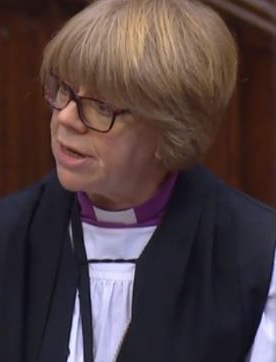
The Archbishop of Canterbury gave a speech during the King’s Speech debate on 18th May 2026, emphasising the importance of integration and understanding in society:
The Lord Archbishop of Canterbury: My Lords, it is a pleasure to respond to His Majesty’s gracious Speech today. I too look forward to the maiden speeches of the noble Lord, Lord Case, and my right reverend friend the Bishop of St Edmundsbury and Ipswich.
We face serious challenges at home and abroad, and I continue to pray for those who carry responsibilities of office as we seek to meet these challenges together. At my installation at Canterbury Cathedral, I spoke about the presence and importance of hope. As a Christian, I believe that we have hope because we have a God who walks with us, even when circumstances feel overwhelming.
The work of integration has never been more urgent. We have witnessed a deeply concerning deterioration in intercommunity relations. I therefore welcome the commitment in the gracious Speech to do more to protect the Jewish community following the recent appalling attacks. In doing so, I wish to assure both Jewish and Muslim communities of my support as they face the unacceptable rise in hate crime, intimidation and hostility. The Church of England has long held that the right of all people to practise their faith without fear must be protected. We have also seen religious identity misused to intimidate and divide. Let us be clear: to follow Jesus Christ is to love your neighbour as yourself, to love without exception and to seek the flourishing of all.
We must address the pressures facing people and communities today, while ensuring that systems for new arrivals are fair. We must undertake the harder task of bringing communities together, of making strangers neighbours, and of ensuring that all who reside here have both the opportunity and the responsibility to contribute to our shared life. This becomes far more difficult if those refugees for whom we hold responsibility lack clarity about whether or when they may be required to return to their country of origin. We embed insecurity rather than stability when those seeking British citizenship are put through a decade-long game of immigration snakes and ladders.
As human beings, we are naturally drawn to those who resemble us or reinforce our views, particularly in times of adversity and scarcity, yet such instincts do not lead to a flourishing society. Our debate on immigration can, however, be a source of hope: that attitudes can change, that fairer societies are less divided, and that daily life alongside people of different backgrounds reduces fear and suspicion. Through its presence in every parish across England, the Church of England helps build communities where people know and care for one another. In doing so, it builds bridges and fosters relationships across lines of race, faith, class and more. In these acts of mutual care, the seeds of belonging are sown. It is this patient work of integration and community building that policy-making must support. My prayer is that we will see a renewal of hope in our country, a rejection of hatred and division, and a turning towards one another. This is where true pride in our nation is found.
There is much more in the gracious Speech that I cannot address today. However, I note the announcement of a draft conversion practices Bill and remind the House that, in 2017, the General Synod of the Church of England voted in favour of such a ban. I urge the Government to consult widely and wisely on this draft legislation, so that meaningful progress can be made.
Finally, I wish to thank the noble Lord, Lord Hennessy, for his service to this House and nation. He has been a source of wisdom, particularly on Church-state relations and our constitutional settlement. I thank him for placing his expertise at the service of this Chamber and I wish him a happy, peaceful and well-earned retirement.
 The Church of England in Parliament
You must be logged in to post a comment.