
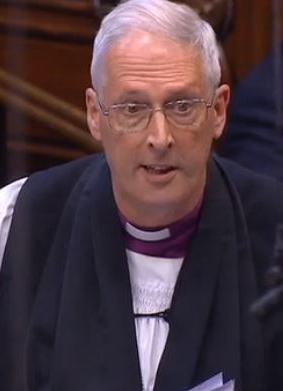
On 21st May 2026, the Bishop of Southwark spoke during the Kings Speech Debate on foreign affairs, defence and diplomacy, lamenting the recent cuts to overseas development aid:
The Lord Bishop of Southwark: My Lords, I endorse what the noble Lord, Lord Callanan, said about the vile harm of increasing antisemitism in our nation. I am glad that widespread condemnation is being matched by solidarity and community action. I also welcome what the Minister said about working for and recognising a two-state solution for Israel and Palestine, but ask that urgent attention be given to the threat posed by the E1 developments in the West Bank, which would imperil such a solution.
We on these Benches have lamented the retreat from the commitment to 0.7% equivalent of GDP on development aid to 0.5% and then further to 0.3% under successive Governments, and the very real impact this has had around the world in the serious deterioration in health, education and nutrition, not to mention the significant diminution of our global reach. I welcome the Minister’s clarification of the Government’s intentions in what was said in the gracious Speech about taking action to reduce humanitarian need and conflict around the world.
Many in this House will have read the report in the Times on Monday of 51 military veterans, including Field-Marshal Lord Richards—the noble and gallant Lord, Lord Richards—a former Chief of the Defence Staff, Major-General James Cowan, who commanded the British Army’s primary fighting division, and General Sir Nick Parker, former commander-in-chief of land forces, protesting this latest cut. They argue, with the considerable expertise and wisdom at their disposal, that to force a choice between development aid and defence spending, the increased need for which I do not doubt, is a false economy.
To live in a world where state and non-state actors are more aggressive, where one of our principal allies is ever more unpredictable, where water resources are contested, where climate change drives food insecurity and where other states begin to fail is to live in a world that is increasingly more threatened with incipient and real conflict. To cut aid contributes to instability and insecurity. It means a vast erosion of this country’s soft power in a new era when, having exited a foundational political partnership, we increasingly find ourselves acting alone. The inescapable logic of Brexit is that we need to compensate by spending more on defence, more on aid, more on diplomatic representation and more on the BBC to maintain our influence in the world. What we are doing is planning to increase the first while cutting all the rest. Surely the lesson of history is that there is a complex interplay between power and influence. Neither should be neglected. I hope that His Majesty’s Government will think again.
Extracts from the speeches that followed:
Baroness Blackstone (Lab): Last year, the UK recognised the State of Palestine as a first step towards its implementation. The Israeli Government have announced their opposition and take steps to prevent it, despite widespread international support for a two-state solution in which the rights of Palestinians to self-determination are recognised. It is surely hypocritical to back two states yet to stand by while this progress is blocked. Can the Minister say what actions the UK is taking? Condemnation alone is not enough while the Israeli security Cabinet registers Palestinian land as Israeli state property. Annexation is a flagrant breach of international law.
As the right reverend Prelate the Bishop of Southwark touched on, the Israeli aim to bury the two-state solution by building the E1 settlement is unacceptable. Taking land designated for a future Palestinian state and making it unviable must be challenged. So will the Government warn that companies which bid for construction contracts there will put at risk their commercial interests in the UK? Will the Government also introduce a comprehensive ban on trade with illegal settlements, including services and investment as well as goods? Such trade prolongs unlawful occupation.
Finally, will the Government work with our EU partners in reconsidering the trade agreements with Israel? The EU and UK agreements have both been breached by the Israeli Government’s failure to respect human rights and democratic principles. It would also be helpful to hear the Government’s response to a letter in the Financial Times that was signed by 60 former UK ambassadors, which covered many of the issues that I have raised. Please will the Government demonstrate leadership on these issues in the run-up to the G20—in the interests of justice and peace in the Middle East?
Baroness Northover (LD): I welcome the Government’s recognition of Palestine, to which the Minister referred; I had a Private Member’s Bill on this in the last Session. I hope we have not reached a point of no return in terms of a contiguous Palestinian state alongside Israel. Stability, security and prosperity in the region are desperately needed.
The economic challenges that the Government face pose problems for us all. I come here to the cuts in development assistance, theoretically to help fund defence. That is of course a false choice, as the noble Baroness, Lady Ashton, and the right reverend Prelate the Bishop of Southwark have said. As we read in Monday’s Times, our military leaders have written to the Prime Minister emphasising that cutting foreign aid will compromise national security. They rightly argue that foreign aid helps to prevent the instability, extremism and displacement that military force otherwise later has to confront at greater cost. I ask the Minister: what is the Government’s response to that letter to the Prime Minister?


You must be logged in to post a comment.