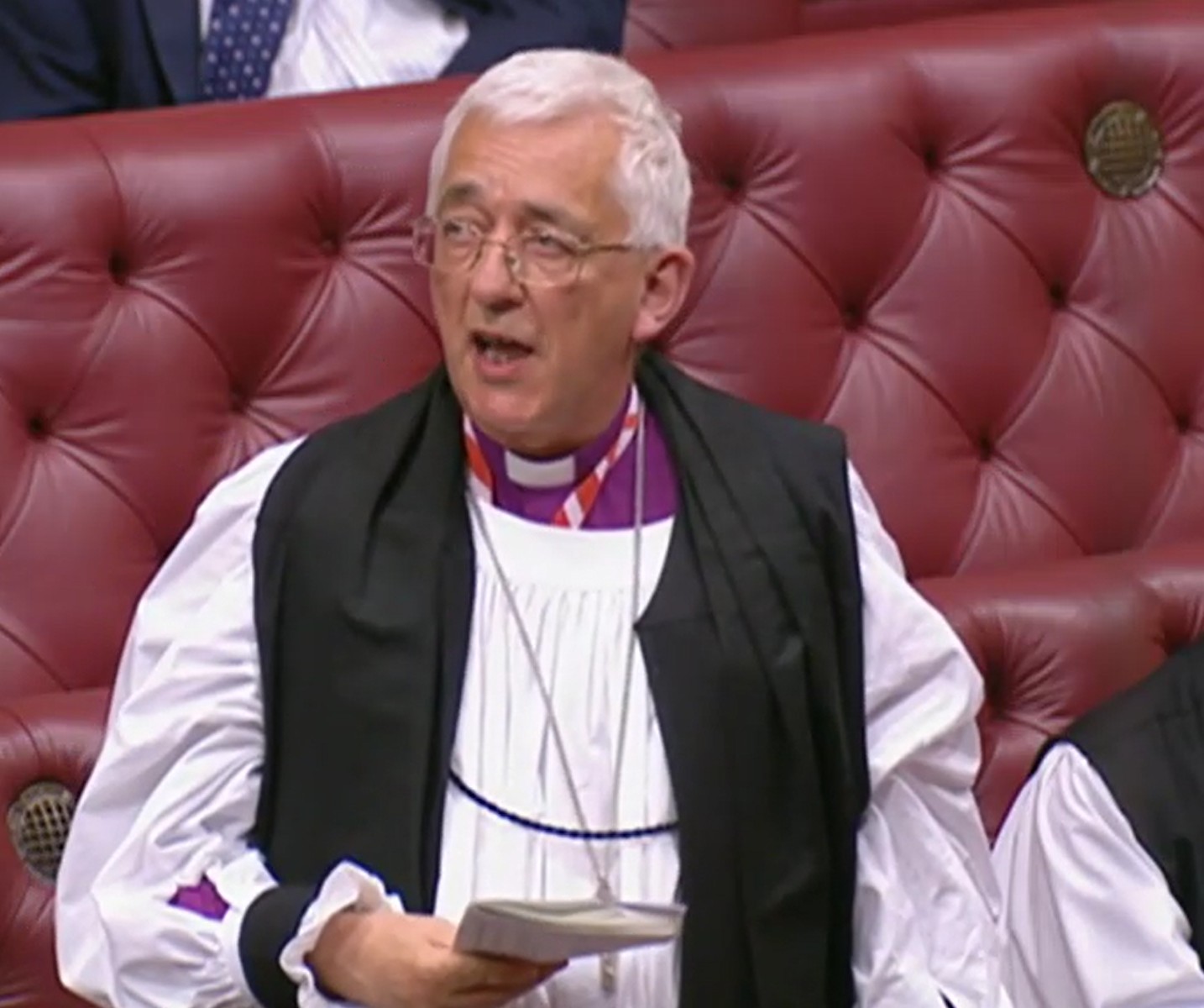
The Bishop of Lichfield gave his valedictory speech at the second reading of the Representation of the People Bill on 14th September 2026, on the role of the Church in civic engagement and the contributions of faith communities to democracy:
The Lord Bishop of Lichfield: My Lords, this is an important and timely debate, as any opportunity to re-establish trust in politics is one that we must embrace eagerly. We are sadly familiar with the phrase, “A plague on both your houses”, used in a political context. The word “both” may be rather out of date, but the sentiment expressed encapsulates the frustration that many voters feel with the entire political system, thus overlooking many principled, honest and hard-working MPs, Peers and their staff.
I will mention two points in particular. First, in my visits to prisons, I meet many men with time to think and to think deeply. Most people come to serve their sentence in prison only after a string of failures: personal failures and the failures of services, systems and institutions, including the Church. To have that direct and painful experience of system failure and yet, through disenfranchisement, to have no means to participate in efforts for their correction or renewal, can further erode any sense of civic engagement and belonging. I hope that this House will consider whether votes might be extended to at least some convicted prisoners as one dimension of the penal journey to rehabilitation.
Secondly, I stand here embodying my belief that the Church has much to bring to civic engagement and the search for the common good in which all people can flourish, but I am deeply saddened to see our faith, or any faith or belief, being used to divide, to exclude or to intimidate. Recently, we have seen cases of pictures of church buildings being used in election campaign material without permission, and I fear we may see more images of churches, mosques, synagogues, mandirs, gurdwaras and other places of worship being used improperly. I and my colleagues on these Benches would like to see greater deterrence against this kind of malign misuse. I hope that the Government will see fit to work with the Electoral Commission and with faith leaders to strengthen the guidance given to candidates and to campaign managers in this area.
This is the last time that I shall address your Lordships’ House before I retire at the end of this month. My maiden speech here was in a debate on parliamentary democracy in the UK, introduced by the noble Baroness, Lady Jones of Moulsecoomb. I spoke then of the contributions that faith communities can make to the flourishing of democracy in our diverse society, an important issue to which we need constantly to return. It has been my privilege since then to make occasional contributions—alas, more infrequent than I might have hoped—to the workings of this House, and it has been an honour to be able to lead your Lordships in prayer. I thank all your Lordships for the quality, the expertise and the civility of your debates, and I thank the staff and the former and present Lord Speakers and their deputies for their unfailing helpfulness and courtesy. I wish your Lordships well in all your deliberations.
Baroness Royall of Blaisdon (Lab): My Lords, it is a pleasure and an honour to follow the right reverend Prelate, and of course we all wish him well in his retirement. We will miss him, and his views on democracy are very well established. I agree with him in relation to prisoners, but that is a personal view.
Baroness May of Maidenhead (Con): My Lords, I first add my best wishes to the right reverend Prelate the Bishop of Lichfield on his retirement and thank him for the contributions that he has made to this House. It has been said by other speakers, including the right reverend Prelate, that this is an important piece of legislation if we are to restore trust in our democracy, and there are aspects of it with which I agree with the Government. I must confess that I do not agree with the Government on their proposals to extend the franchise to 16 and 17 year-olds. I will say merely this. I think this was introduced with political motivations, but I will just say gently to the Government that I suspect that it may very well backfire on them.
The Lord Bishop of Hereford: As I close, I wish to add my thanks to my right reverend friend the Bishop of Lichfield for his contributions both today and in his time in this House. He has a gift for offering understated but remarkably shrewd insights to our deliberations here, and has ministered faithfully in this place through his pastoral relationship with staff across the House. He will be greatly missed, and not least for his example of taking significantly less than the speech limit in this debate. It is fitting that my right reverend friend has ended his time in the Chamber as he began, advocating for the importance of strong British democracy.
Lord Shamash (Lab): My Lords, first of all I congratulate my noble friend Lord Macintosh on his maiden speech. I also wish the right reverend Prelate the Bishop of Lichfield very well in his retirement; I hope he has planned it properly so he will have a lot of fun.
Lord Pack (LD): My Lords, I too thank the Minister for opening such a long and detailed debate, one that has shown the broad range of expertise in this House, including that of the right reverend Prelate the Bishop of Lichfield, whose presence we will certainly miss. Even if it is not quite a one-for-one swap, it was very welcome to hear the maiden speech of the noble Lord, Lord Macintosh, and I am sure he will contribute much to the Bill and other topics in the future.
Baroness Taylor of Stevenage (Lab, DHCLG): I start by thanking the right reverend Prelate the Bishop of Lichfield for his contributions to your Lordships’ House and I wish him well in his retirement. It was a great honour that he chose this debate for his valedictory, and I am grateful for everything he has done during his time here.


You must be logged in to post a comment.