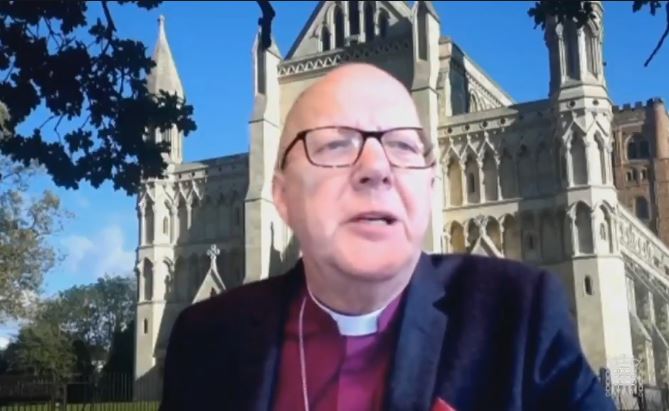
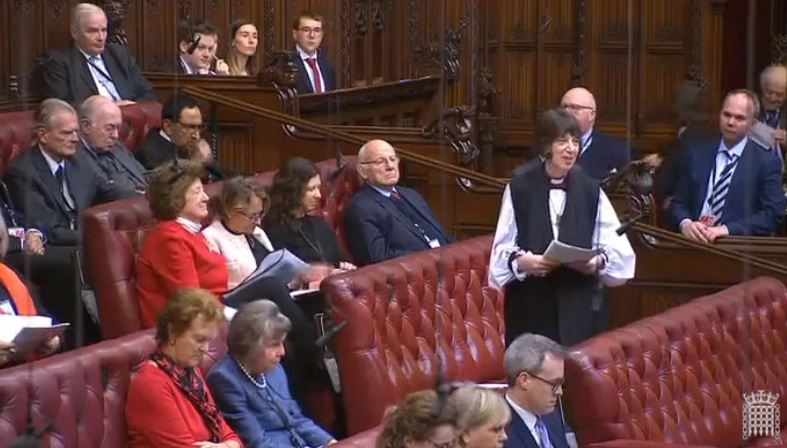
Financial Services Bill: Bishop of St Albans tables amendment on regulation of financial advice

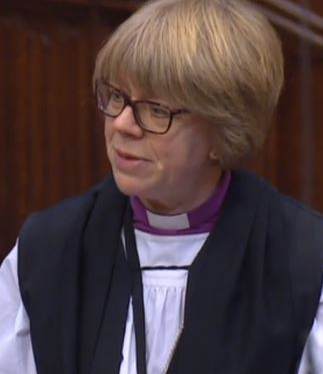
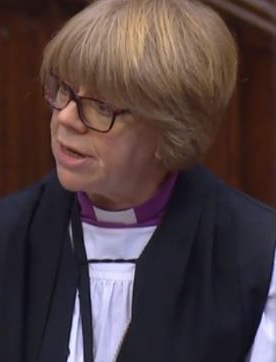
The Bishop of St Albans tabled his amendment 136 to the Financial Services Bill in Grand Committee on 3rd March 2021, and spoke in support of a further amendment on debt financing:

The Lord Bishop of St Albans [V]: My Lords, I shall speak to Amendment 136, which is in my name. I tabled the amendment because of concerns about the lower levels of responsibility placed on appointed representatives and the increased risk of poor financial advice that this poses.

The objective of the senior managers and certification regime to influence an individual’s behaviour by making them personally accountable to the regulator is one that I agree with and it was the correct response to the culture that had arisen in the City of London prior to the financial crash in 2008. I know that some Members of this House have criticised the application of the senior managers and certification regime, or lack of it, by the FCA, and I agree that it is worrying. However, I do not want to comment on the effectiveness of the SMCR but to remedy an anomaly that exists within the current framework.

The SMCR currently applies to directly regulated financial advisers, yet it does not extend to those who are appointed representatives. This anomaly means that, while a directly regulated adviser carries a personal responsibility for the quality of the advice they provide to their customer, no such responsibility is incumbent upon the adviser who is an appointed representative. This is despite the reality that a customer seeking financial advice is unlikely to know the difference between the two types of adviser and the possible effects that this might have on the quality of the advice they receive.

Continue reading “Financial Services Bill: Bishop of St Albans tables amendment on regulation of financial advice”

Bishop of Leeds asks about arms sales to Saudi Arabia

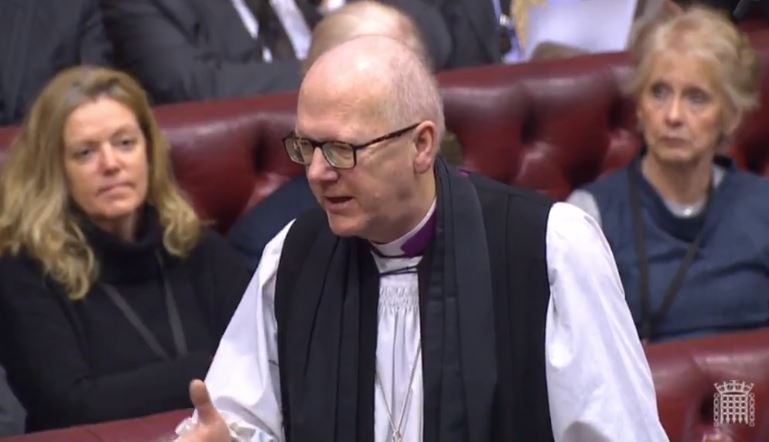
The Bishop of Leeds asked a question on continuing UK arms sales to Saudi Arabia on 3rd March 2021, during a discussion on aid funding to Yemen:

The Lord Bishop of Leeds: My Lords, the Minister rightly used the word “peace” a number of times when referring to the Government’s commitment to bringing peace in Yemen, and yet we continue to sell arms to Saudi Arabia, which is part of the violent problem there. Does this not reflect badly on the moral case for global Britain, at a time when we have cut our aid to what are acknowledged to be the poorest and most suffering people in the world—look at the television programme the other night on the nine year-old blind boy teaching in a derelict school—when they need it most?

Continue reading “Bishop of Leeds asks about arms sales to Saudi Arabia”

Bishop of Durham asks about funding for refugee resettlement scheme

On 3rd March 2021, the Bishop of Durham asked a question on funding for the UK’s refugee resettlement scheme:

The Lord Bishop of Durham [V]: I am a trustee of Reset and a member of the RAMP project. As the Minister knows, stakeholders continue to warn that, without parity of the timing of the resettlement scheme and a long-term funding commitment, they are unable to plan their services to resettle refugees. Indeed, some are having to place staff on notice and scale back their existing operations. Can the Government confirm now when the scheme will be launched for the long term with secure funding from the Treasury?

Continue reading “Bishop of Durham asks about funding for refugee resettlement scheme”

Response to the Budget from the Bishop of Birmingham


03/03/2021

Following the Budget speech, the Bishop of Birmingham, David Urquhart, Convenor of the Bishops in the House of Lords, said:

“This is a time of great uncertainty, and while the Chancellor has rightly focussed on steps to get the economy moving, I’m concerned he has missed the chance to give certainty to those people and families who rely on Universal Credit, by not making the £20 uplift permanent.

“I’ll look at the details of the Budget closely for measures that will help the poorest and most vulnerable, especially access to sustainable jobs. The £19m for Domestic Abuse programmes is welcome as is support for schools to help get children back on the road of educational discovery. The lack of detail on social care is, however, a worry.

“The £300m additional funding for the Culture Recovery Fund is very welcome and will support the many small businesses and independent contractors our churches employ and support. I also note that the Levelling Up Fund prospectus specifically mentions cultural and heritage assets, including churches, and we look forward to churches and cathedrals particularly in areas of high deprivation taking part in this programme.”

Source: CofE website

Bishop of St Albans asks about vaccination uptake in minority communities

The Bishop of St Albans asked a question on engagement with Gypsy, Traveller, and Roma communities to raise awareness of vaccination for COVID-19 on 2nd March 2021:

The Lord Bishop of St Albans [V]: What are Her Majesty’s Government doing to engage with the Gypsy, Traveller and Roma communities, who are often left out of these discussions, to raise awareness of the positive vaccination process that is available?

Continue reading “Bishop of St Albans asks about vaccination uptake in minority communities”

Bishop of Leeds asks about social cost of benefit cuts

The Bishop of Leeds asked a question on the long term social costs of cutting benefits on 2nd March 2021, during a discussion on support for those receiving universal credit during the COVID-19 Pandemic:

The Lord Bishop of Leeds: My Lords, I congratulate the Government on what they have done in this respect in supporting so many vulnerable people during the pandemic. However, does the Minister agree that the danger of the cut that taking away the £20 a week would be is that the Government would get a short-term saving, but would pay far more in the longer term because of some of the social costs? Given the number of people we see using food banks in my diocese and around the country—including working people—and the number of children in poverty and likely to go deeper into it, the remedial costs of supporting them into the longer-term future will far outweigh anything paid now.

Continue reading “Bishop of Leeds asks about social cost of benefit cuts”

Bishop of Leeds asks about issues of sovereignty in relation to the EU and the USA

The Bishop of Leeds asked a question on contested ideas of sovereignty on 1st March 2021 during a discussion on diplomatic relationships with the US, contrasting portrayals of the UK’s relationship with the EU and with the United States:

The Lord Bishop of Leeds: My Lords, notions of sovereignty are clearly contested, even in the way we use the language. Is it time for a public education programme through which the Government can explain why pooled sovereignty with the EU is a deficit for the UK but when it is pooled with the United States, it is seen as a positive?

Continue reading “Bishop of Leeds asks about issues of sovereignty in relation to the EU and the USA”

Bishop of Oxford asks about new media legislation

The Bishop of Oxford tabled a question on new media legislation in Australia and the potential for similar legislation in the UK on 25th February 2021:

The Lord Bishop of Oxford [V]: To ask Her Majesty’s Government what assessment they have made of (1) the proposed legislation in Australia for a news media and digital platforms mandatory bargaining code, and (2) the case for similar such legislation in the United Kingdom.

Continue reading “Bishop of Oxford asks about new media legislation”

Bishop of St Albans asks about deterring tax avoidance

The Bishop of St Albans received the following written answer on 25th February 2021:

The Lord Bishop of St Albans asked Her Majesty’s Government what assessment they have made of the effectiveness in deterring tax avoidance of the policies of (1) France, (2) Denmark, (3) Belgium and (4) Poland, which exclude companies (a) registered in, or (b) linked to, offshore tax havens from accessing taxpayer funded relief programmes.

Continue reading “Bishop of St Albans asks about deterring tax avoidance”

Bishop of St Albans asks about re-banding council tax

The Bishop of St Albans received the following written answer on 24th February 2021:

The Lord Bishop of St Albans asked Her Majesty’s Government what assessment they have made of whether current council tax bands in England adequately reflect changes to property prices since 1991.

Continue reading “Bishop of St Albans asks about re-banding council tax”