On 12th May the Rt Revd Christopher Cocksworth, Bishop of Coventry, received a written answer from Lord Ahmad of Wimbledon to a question on Hamed bin Haydara and five other Yemeni Baha’i, currently imprisoned.
Bishop of Coventry:HL3684 To ask Her Majesty’s Government what representations, if any, they have made to President Mahdi al Mashat that the pardon for Hamed bin Haydara and five other Yemeni Baha’i, and their release from jail, be expedited.
On 12th May the Rt Revd Christopher Cocksworth, Bishop of Coventry, received a written answer to a question from Baroness Sugg on what steps the Government is taking to ensure those around the world dependent on humanitarian assistance for food are supported.
The Lord Bishop of Coventry:HL3766 To ask Her Majesty’s Government what steps they are taking to help people around the world who are dependent on humanitarian assistance for food, particularly in relation to the impact of the COVID-19 pandemic.
On 12th May the Rt Revd Christopher Cocksworth, Bishop of Coventry, received a written answer from Lord Ahmad of Wimbledon to a question on the Government’s response to the deportation of 30,000 Ethiopian migrant workers by the Saudi Arabian authorities.
Lord Bishop of Coventry: HL3686 To ask Her Majesty’s Government what assessment they have made of Saudi Arabia’s decision to deport 30,000 Ethiopian migrant workers, including some who are suspected of suffering from COVID-19.
On 12th May the Rt Revd Christopher Cocksworth, Bishop of Coventry received a written answer to a question on what Government was doing to ensure humanitarian assistance reached religious minorities.
The Lord Bishop of Coventry:HL3767 To ask Her Majesty’s Government what steps they are taking to ensure that religious minorities in countries affected by the COVID-19 pandemic have equal access to humanitarian assistance.
On 11th May 2020 the Bishop of Worcester, Rt Revd John Inge, received a written answer to a question on the transmission of COVID-19 to civilians among UK military personnel and staff deployed in Africa.
The Lord Bishop of Worcester:HL3572 To ask Her Majesty’s Government what steps they have put in place to deal with the potential transmission of COVID-19 to civilians among UK military personnel and staff deployed to UN peacekeeping missions in Africa.
On 6th May 2020 the House of Lords heard the repeat of a Government statement on Covid-19. The Bishop of St Albans, Rt Revd Alan Smith, asked a follow-up question:
The Lord Bishop of St Albans: My Lords, yesterday the deputy chief scientist said that we needed to “get to grips” with what is occurring in our care homes. As data shows that deaths in care homes are rising while hospital deaths are plateauing, what specific actions are Her Majesty’s Government taking to put a stop to this dreadful crisis, which is unfolding before our very eyes? Continue reading “Bishop of St Albans asks Government about action to address “dreadful crisis” in care homes”
On 6th May 2020 the House of Lords debated a Government motion to take note of the Windrush Compensation Scheme. The Bishop of London, Rt Revd Sarah Mullally, spoke in the debate:
The Lord Bishop of London: My Lords, I thank the Minister for allowing this virtual debate. Almost two years ago, the Windrush scandal astounded this country. The hostile environment policy operated by the Home Office was shown to be discriminatory and damaging. It had neglected a critical principle that is foundational to my Christian faith: human dignity.
Process must support people. This needs to apply not only to our migration policy and departments, as clearly set out in the lessons learned review, but to the way we do what we have committed to do, such as the Windrush compensation scheme. From that standpoint, we need to evaluate how accessible the scheme is to those who are trying to rightfully claim underneath it, and that it is a process that honours their human dignity. Continue reading “Bishop of London highlights failings with Windrush Compensation Scheme”
On 6th May 2020 the Archbishop of York, Most Revd John Sentamu, led a debate in the House of Lords on the motion that the Lords “do consider the case for increasing income equality and sustainability in the light of the recent health emergency.” The Bishop of Durham, Rt Revd Paul Butler, also spoke in the debate:
The Lord Bishop of Durham: My Lords, I congratulate the right reverend Prelate the Bishop of Derby on her moving maiden speech. I am grateful for all she does to champion the voices of children.
I want to thank Archbishop Sentamu for his leadership in consistently speaking up for racial and social justice. He champions work among young people, notably through the Archbishop of York Youth Trust. He inspires others to do the same.
The Covid-19 pandemic is a dividing experience through its unequal financial impact. The lowest-earning 10% are seven times more likely than high earners to work in a sector which has shut down. Archbishop Sentamu champions the real living wage. In-work poverty is compounded by irregular working hours. Such unpredictability means that families cannot easily save to safeguard themselves from unexpected life events. Eighteen per cent of the north-east’s working population experience insecure work. Turn2us found that people on zero-hours contracts expect a £193 drop in monthly income. These workers often provide essential services such as cleaning and delivery, yet face great financial instability. Will Her Majesty’s Government promote Living Hours accreditation? Continue reading “Bishop of Durham asks Government about low earners, in work poverty and universal basic income”
On 6th May 2020 the Archbishop of York, Most Revd John Sentamu, led a debate in the House of Lords on the motion that the Lords “do consider the case for increasing income equality and sustainability in the light of the recent health emergency.” The Archbishop of Canterbury, Most Revd Justin Welby, also spoke in the debate, highlighting the position of those with no recourse to public funds:
The Archbishop of Canterbury: My Lords, first, I thank the most reverend Primate for tabling this debate today, as well as for a lifetime’s work of battling inequality. May we continue to benefit from his wisdom and prophetic voice. I also look forward to hearing the maiden speech of the right reverend Prelate the Bishop of Derby.
I wish to highlight the issue of those particularly at risk because they do not have the right to access public funds. Migrants are more likely to be self-employed, in temporary work, or working in industries which have been especially badly hit. They are less likely to own their own homes, risking homelessness if they lose their income. Concerns have been raised that migrants may be compelled to continue working even if they become ill as to stop would be to risk destitution, which puts their and others’ health at risk. Continue reading “Archbishop of Canterbury raises economic insecurity of migrants without access to public funds”
On 6th May 2020 the Archbishop of York, Most Revd John Sentamu, led a debate in the House of Lords on the motion that the Lords “do consider the case for increasing income equality and sustainability in the light of the recent health emergency.” The Bishop of Derby, Rt Revd Libby Lane, made her maiden speech in the debate:
The Lord Bishop of Derby (Maiden Speech): My Lords, Jesus said,
“seek first the Kingdom of God”,
and in your Lordships’ House, I have caught glimpses of that kingdom: in the warm welcome, in the kind advice of officers and staff, in the patient support of the Church of England Parliamentary Unit, and in the substance of the work noble Lords do, as today.
In January 2015, I became the first woman consecrated bishop in the Church of England. I take this opportunity to thank my friend, the most reverend Primate the Archbishop of York for his support and encouragement, and to pay tribute to his integrity and influence. It is true to his priorities that he uses this debate to champion the poor and continue the fight for justice. It was a particular gift to be “called home” a year ago, to serve as Bishop of Derby and I am proud of the ways in which diocesan staff, clergy, schools and congregations have stepped up in these difficult times. Derby and Derbyshire have responded generously to meet the needs of the most vulnerable: they have made known the kingdom of God. Continue reading “Bishop of Derby maiden speech focuses on welfare of children”

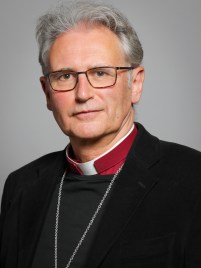 On 12th May the Rt Revd Christopher Cocksworth, Bishop of Coventry, received a written answer from Lord Ahmad of Wimbledon to a question on Hamed bin Haydara and five other Yemeni Baha’i, currently imprisoned.


You must be logged in to post a comment.