
On 6th May 2020 the Archbishop of York, Most Revd John Sentamu, led a debate in the House of Lords on the motion that the Lords “do consider the case for increasing income equality and sustainability in the light of the recent health emergency.” The Archbishop started the debate, and summed up afterwards, referring to many of the speeches made by other Members over the course of nearly three hours. Amongst the other speakers were the Archbishop of Canterbury and the Bishops of Durham and Derby. The entire debate can be read in Hansard here, and the Archbishop’s opening and closing speeches are reproduced below:
Income Equality and Sustainability: Motion to Consider
Moved by The Archbishop of York, That the Virtual Proceedings do consider the case for increasing income equality and sustainability in the light of the recent health emergency.

The Archbishop of York: My Lords, I am grateful to the Government Chief Whip and the usual channels for granting me this opportunity to move a Motion that is very dear to my heart—thank you. I commend Her Majesty’s Government for their rapid action in the current crisis and, through unprecedented public spending, working to protect jobs and avert millions of redundancies. It is in the light of this recent health emergency that I beseech your Lordships’ House to take note of the case for increasing income equality and sustainability.
Last Thursday, the noble Baroness, Lady Bennett of Manor Castle, opened a Question for Short Debate on Covid-19 and people living in poverty. I believe that what we are doing today has the potential to make a lasting difference. As Amelia Earhart, the first woman to fly across the Atlantic, said:
“The most difficult thing is the decision to act, the rest is merely tenacity.”
As long ago as 28 April 1909, Winston Churchill, then president of the Board of Trade, gave a speech in the other place in which he said:
“It is a serious national evil that any class of His Majesty’s subjects should receive less than a living wage in return for their utmost exertions.”—[Official Report, Commons, 28/4/1909; col. 388]
Not much has changed since. That principle remains as strong as ever in our national life. Continue reading “Archbishop of York leads Lords debate on the case for income equality and sustainability”
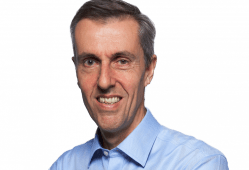 Andrew Selous: The House of Bishops revised their guidance on access to churches on the 5th May 2020.
 The Lord Bishop of Coventry:
  The Lord Bishop of Winchester:
 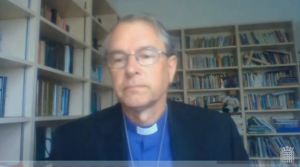 I want to return to the two-child limit. I am sorry but it simply will not do to keep parroting back the same answer every time we raise this issue. Today, the Church of England and the Child Poverty Action Group published our latest information and a report on the impact of the limit. It includes evidence from the early days of the Covid crisis. Sixty thousand more families will be impacted. The policy is utterly flawed. I have been assured by Minister after Minister that if we give them the evidence, they will re-examine the limit. It is time that it be re-examined. Please agree at least to look at our report and re-explore the arguments around this issue.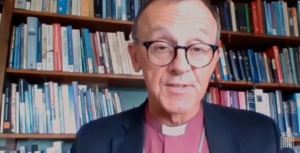
 Andrew Selous: It is essential that when church buildings reopen for public worship or private prayer by members of the public, that it is done safely. In the meantime, churches across the country are holding virtual services and offering support to the vulnerable and elderly. Where they are unable to do this locally national resources are available such as the national church service on a Sunday and the Daily Hope phone line.
  The Lord Bishop of Winchester:
 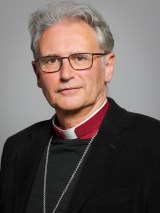 On 30th April and 4th May 2020 the Bishop of Coventry, Rt Revd Christopher Cocksworth, received written answers to questions on refugees in Syria and around the world and vulnerability to coronavirus:

You must be logged in to post a comment.