
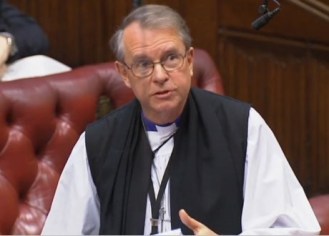
 On 26th March 2018 the Bishop of Durham, the Rt Revd Paul Butler, asked a question he had tabled to Government on the two-child limit policy for tax credit and universal credit. His follow-up question and those of other members is reproduced below:
The Bishop of Durham: To ask Her Majesty’s Government what specific measures they are taking to monitor the impact of the two-child limit policy in the child element of Child Tax Credit and Universal Credit on the well-being of children.
The Minister for State, Department for International Development, Lord Bates: My Lords, the Government are committed to supporting child well-being, and keep all our child welfare policies under review. We provide a range of support for children, including child benefit, that continues to be paid for each child in a household. Since 2010 there are 1 million fewer people in absolute poverty, including 300,000 fewer children.
The Bishop of Durham: I thank the Minister for that reply. Given that the Government’s impact assessment argues that the two-child limit would have a positive impact on overall family stability, and that the policy would increase financial resilience and support improved life chances for children, what current evidence does the Minister have to support the claims that the policy will have a positive impact on overall family stability and improve life chances for children?
Continue reading “Bishop of Durham asks about impact of two-child limit on family stability”
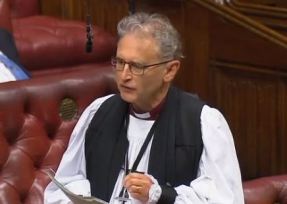 On 26th March, the Bishop of Coventry, Rt Revd Christopher Cocksworth, received answers to two questions on freedom of religion and belief in Sri Lanka:
 This week in the House of Lords bishops tabled a question on the social harm of fixed-odds betting terminals and spoke and voted on changes to free school meal entitlement for those on low incomes. Bishops spoke in debates on domestic abuse, the Commonwealth, the EU Withdrawal Bill, and paid tribute to a former Leader of the House of Lords. They asked questions about modern slavery, and religious persecution, and took part in votes on a Private Member’s Bill on hereditary peer by-elections. Five Church of England Measures were debated and approved by the House of Lords.
 The Lord Bishop of Derby: My Lords, I, too, thank the noble Baroness, Lady Lister, for introducing this important debate. It is crucial that we hold together support for victims and prevention. To get value for our investment we need to push back against the space that allows this crime to happen. I want to offer one or two thoughts about the framework within which resources need to be spent, and about the challenge to the Minister and to local authorities in the complexities that we are trying to deal with. The smaller the budget, the greater the odds against anything working.
  On 22nd March 2018 the House of Lords debated a motion from the Foreign Office Minister Lord Ahmad of Wimbledon, “That this House takes note of the Commonwealth Heads of Government Meeting 2018.” The Bishop of Rochester, Rt Revd James Langstaff, spoke in the debate:
 On 21st March 2018, Peers debated the European Union (Withdrawal) Bill on its ninth day at Committee Stage. The Archbishop of York, the Most Revd John Sentamu, spoke during debate on an amendment relating to the powers of devolved assemblies. It can be read in the wider context of the debate

You must be logged in to post a comment.