
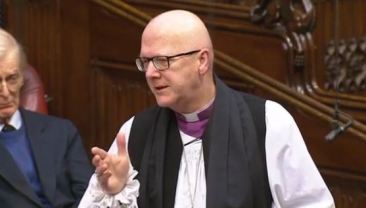
 On the 6th February 2017, Baroness McIntosh of Pickering asked the Government “what estimate they have made of the number of residential care home beds that were available in (1) 2005, and (2) 2015.” The Bishop of St Albans, the Rt Revd Alan Smith, asked a follow-up question. Continue reading “Bishop of St Albans asks Government about nursing and caring staffing”
Author: parliamentaryunit
Week in Westminster, 30th January – 3rd February 2017
Welcome to the Church of England’s weekly round-up of activity in Parliament.
 This week in the House of Lords bishops spoke on the Technical and Further Education Bill and Baroness Jones’ House of Lords Reform Bill. They also spoke in a debate on disability rights post-Brexit and asked questions about educational leadership, eviction of tenants on universal credit and food standards post-Brexit. Continue reading “Week in Westminster, 30th January – 3rd February 2017”
Bishop of Norwich says Lords reform should enhance civil society voice, not that of established political parties
On 3rd February 2017 Peers debated the House of Lords Reform Bill, a private member’s bill from Green Party Peer Baroness Jones of Moulsecoomb. The Bishop of Norwich, Rt Revd Graham James, spoke in the debate. He set out why the central objectives of the Bill – to elect members of the Lords and create a new category of non-voting Peer – were flawed.
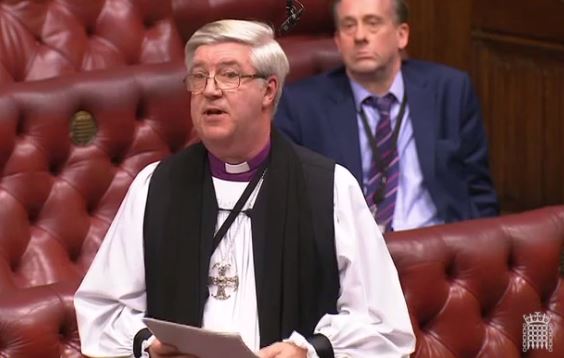 The Lord Bishop of Norwich: My Lords, I wondered whether to speak in this debate, but since the Bill makes specific reference to the Lords Spiritual, it seemed important to give a view from these Benches. I am grateful to the noble Baroness, Lady Jones, for recognising the continuing place for Bishops, even if an altered capacity—I will comment on Clause 12 in a little more detail later on.
We on these Benches are on record as being in favour of reform of your Lordships’ House provided it enhances our existing role and function. There are two aspects of the Bill on which I wish to focus and which have already been commented on. The first is the principle of elections as against appointment; the second is the concept of non-voting Members of your Lordships’ House. Continue reading “Bishop of Norwich says Lords reform should enhance civil society voice, not that of established political parties”
Bishop of St Albans says UK must be a world leader in disability rights, post-Brexit
On 2nd February 2017 Baroness Scott of Needham Market led a debate in the House of Lords “to ask Her Majesty’s Government what assessment they have made of the impact on disabled people of the United Kingdom’s withdrawal from the European Union.” The Bishop of St Albans, Rt Revd Alan Smith, spoke in the debate:
 The Lord Bishop of St Albans: I too am grateful to the noble Baroness, Lady Scott, for giving us the opportunity to reflect on this important subject. For many years, the European Union has been an important driver of disability rights in the UK, helping to improve disability access and strengthen non-discrimination laws right across Europe. It was the European Union that ensured non-discrimination laws were extended to smaller businesses, and the European Court of Justice which extended rights to carers and those in relationships with a disabled person, to name just two examples. With the proposed European Accessibility Act still some time away from implementation, I hope the Minister can understand the fear expressed by many in this House and outside it that a post-Brexit UK may start to fall behind its European counterparts when it comes to disability rights. Continue reading “Bishop of St Albans says UK must be a world leader in disability rights, post-Brexit”
Bishop of St Albans asks for reassurances on food standards post-Brexit
On Thursday 2nd February Baroness Miller of Chilthorne Domer asked Her Majesty’s Government “what measures they will put in place following Brexit to safeguard environmental standards and biodiversity.” The Bishop of St Albans, Rt Revd Alan Smith, asked a follow-up question:
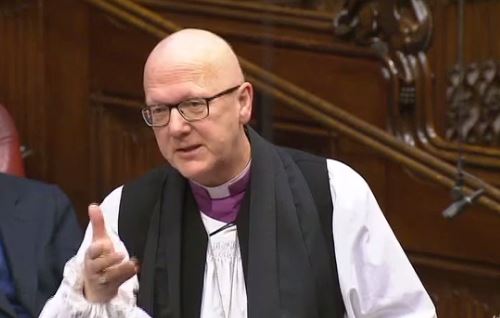 The Lord Bishop of St Albans: My Lords, we are all reassured that EU environmental legislation is going to be enshrined within UK law, but we will probably be coming out of the single market and entering into a series of trade negotiations with, for example, the United States. Trade negotiations are just that: we will have to make compromises. Will the Minister assure the House that we will not be producing our food to lower standards or consuming food that has been produced more cheaply by undercutting our industry—for example, chicken washed in chlorine and beef reared on growth hormones? Continue reading “Bishop of St Albans asks for reassurances on food standards post-Brexit”
Bishop of Norwich welcomes Technical and Further Education Bill
 On 1st February 2017, the House of Lords debated the Government’s Technical and Further Education Bill at its Second Reading. The Bishop of Norwich, Rt Revd, Graham James welcomed its proposals.
The Lord Bishop of Norwich: My Lords, I am glad to add my voice to the chorus of welcome for the Bill—on these Benches we are professionally interested in choruses.
Those who read the City & Guilds report Sense & Instability, which was published just over a couple of years ago, will remember the bleak picture painted there of three decades of skills and employment policy. The authors pointed out—with a degree of sardonic humour, I think—that, in 30 years, there have been 13 major Acts of Parliament dealing with these issues, enough reports to fill a medium-sized bookcase, no fewer than 61 Ministers and 10 occasions when skills and employment have shifted between government departments. “Tinkering”, “amnesia” and “disruption” were among the milder terms employed in that very powerful report. Continue reading “Bishop of Norwich welcomes Technical and Further Education Bill”
Bishop of Norwich questions Government on links between universal credit and homelessness
 On 31st January 2017, Lord Beecham asked Her Majesty’s Government “what steps they plan to take, in addition to their support for the Private Member’s Homelessness Reduction Bill, to tackle the growing problems of homelessness and rough sleeping.” The Lord Bishop of Norwich, the Rt Revd Graham James, asked a follow up question about the eviction of tenants on universal credit. Continue reading “Bishop of Norwich questions Government on links between universal credit and homelessness”
Bishop of Ely highlights work of Church in promoting educational leadership
 On the 30th January 2017, Baroness Donaghy asked the government “in the light of figures showing that nearly one-third of newly qualified teachers leave the profession within five years of qualifying, what steps they are taking, including continuing professional development entitlement, to retain them.” The Bishop of Ely, the Rt Revd Stephen Conway, asked a follow-up question.
The Lord Bishop of Ely: My Lords, does the Minister agree that the working environment for teachers is so often determined by the quality and effectiveness of school leaders, and therefore it is essential to equip school leaders to ensure the flourishing of their staff as well as their pupils? Will he be pleased to note with me the launch this weekend of the Church’s Foundation for Educational Leadership to work in this field? Continue reading “Bishop of Ely highlights work of Church in promoting educational leadership”
Week in Westminster, 23rd-27th January 2017
Welcome to the Church of England’s weekly round-up of activity in Parliament.
This week in the House of Lords bishops spoke to amendments to the Government’s Higher Education and Research Bill, Lord Shinkwin’s Abortion (Disability Equality) Bill and responded to a Government statement on EU withdrawal. They also spoke in debates on developing countries, planning, and the pressures on EU nationals living in the UK. Bishops asked questions about imprisoned Sudanese pastors, forced marriage, Burundi, Islam, child poverty and electricity supply.
 The Bishop of Durham was on duty throughout the week, leading prayers in the Lords Chamber at the start of each sitting day.
Monday 23rd January
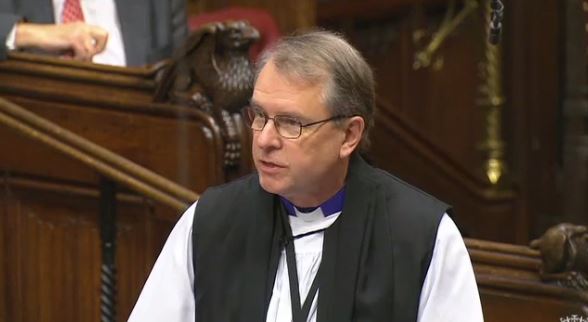 The Bishop of Durham moved an amendment to the Government’s Higher Education and Research Bill, on the historic powers of the Archbishop of Canterbury to award degrees. He also asked a question on imprisoned Sudanese pastors.
The Archbishop of York spoke in support of another amendment, on diversity in Higher Education institutions.
The Bishop of St Albans received written answers to questions on forced marriage.
Tuesday 24th January
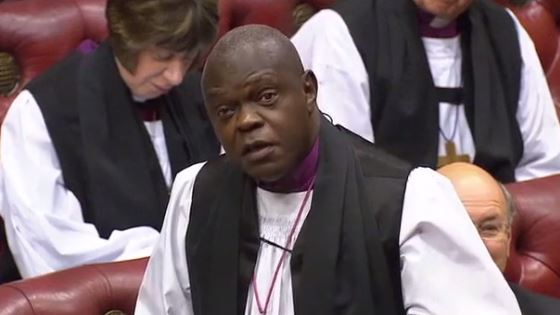
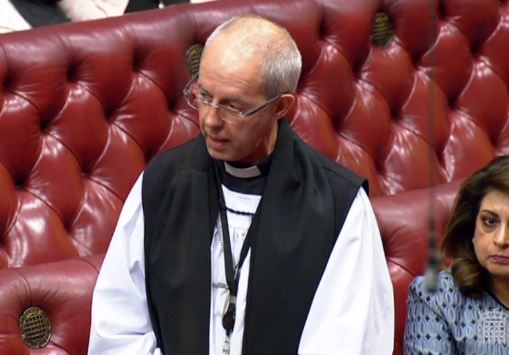 The Archbishop of Canterbury responded to a Government statement on the process of withdrawal from the EU.
The Archbishop of York responded to a question on Islam and also spoke in a debate on the National Policy for the Built Environment.
The Bishop of Durham asked a question about child poverty. He also received a written answer about Burundi.
The Archbishop of York and the Bishop of Chester took part in a vote on the Government’s High Speed Rail Bill.
Wednesday 25th January
 The Bishop of Durham co-sponsored an amendment to the Government’s Higher Education and Research Bill about student support for refugees.
Thursday 26th January
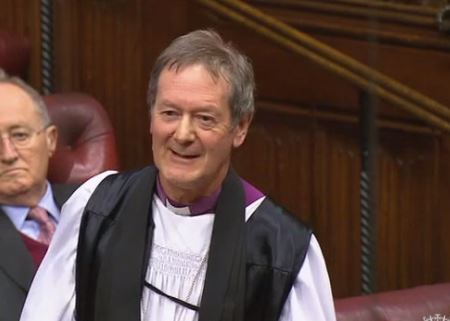
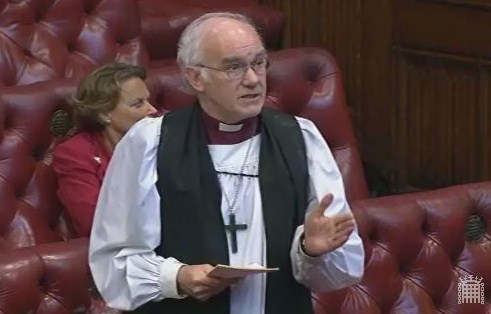 The Bishop of Chester asked a question about future electricity supply.
The Bishop of Derby spoke in a debate about employment opportunities for women and girls in the developing world.
The Bishop of Durham spoke in a debate about the situation of EU nationals living in the UK, highlighting the effects of uncertainty on families and communities.
Friday 27th January
The Bishop of Durham spoke during the committee stage of Lord Shinkwin’s Abortion (Disability Equality) Bill.
Abortion (Disability Equality) Bill: Bishop of Durham backs review of impact on disabled children, families and carers
On 27th January 2017 Lord Shinkwin’s Abortion (Disability Equality) Bill was considered in Committee in the House of Lords. An amendment from Baroness Massey of Darwen, requiring the Secretary of State to review “the impact of this Act on disabled children, their families and carers, and the provision of support services” was debated and accepted. The Bishop of Durham, Rt Revd Paul Butler, supported the amendment and the overall purpose of the Bill:
The Lord Bishop of Durham: My Lords, I was unable to be present at Second Reading but my noble friend the right reverend Prelate the Bishop of Bristol spoke on this matter, welcoming the Bill, and I add my support. I also welcome the amendment because I believe that, as others have already said, such a review would be very helpful. Continue reading “Abortion (Disability Equality) Bill: Bishop of Durham backs review of impact on disabled children, families and carers”


You must be logged in to post a comment.