Bishop of St Albans asks Government about situation of homeless migrants

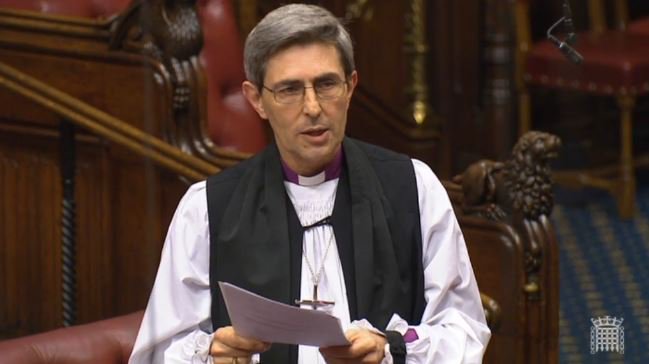
St Albans 2On the 21st December 20165, Lord Shipley asked the Government “what is their latest estimate of the number of people who will be homeless or living in temporary accommodation over the Christmas period”. The Bishop of St Albans, the Rt Revd Alan Smith, asked a follow up question:

The Lord Bishop of St Albans: My Lords, is the Minister aware of the Housing Justice Night Shelter IMPACT report, which was published this week? It found that of those in night shelters, 14% or roughly 268 were migrants with no recourse to public funds, support or indeed, of course, housing. Will the Minister tell the House what the Government are doing to speed up the process of resolving these difficult cases, which are causing such anxiety and suffering?

Continue reading “Bishop of St Albans asks Government about situation of homeless migrants”
Bishop of Coventry asks Government about refusal of visas to Archbishops from Syria and Iraq

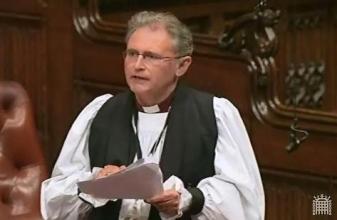
13.10 Bishop of CoventryOn the 21st December 2016, the Bishop of Coventry, the Rt Revd Christopher Cocksworth, received answers to written questions concerning visa applications from Syria and Iraq and the refusal of visas to Archbishops.


The Lord Bishop of Coventry: To ask Her Majesty’s Government whether they have any plans to review why the Archbishop of Mosul, the Archbishop of St Matthews and the Archbishop of Homs and Hama were refused visas to travel to the UK from Iraq and Syria to attend the consecration of the Syriac Orthodox Cathedral in London. Continue reading “Bishop of Coventry asks Government about refusal of visas to Archbishops from Syria and Iraq”

Bishop of Durham stresses need for continued focus on child poverty

Bp Durham June 2015 bOn 20th December 2016,  Baroness Corston moved “that the House take note of the Report from the Social Mobility Committee (Session 2015-16, HL Paper 120)”. The Bishop of Durham, the Rt Revd Paul Butler, spoke in the debate, to welcome the report and highlight the continued importance of a focus on child poverty. 

The Lord Bishop of Durham My Lords, I thank the noble Baroness, Lady Corston, for tabling this important debate and for her and her committee’s work, which has produced such a helpful and clear report. I also look forward to the maiden speech of the noble Lord, Lord Fraser of Corriegarth.

The findings of the report are of particular importance to those of us in the north-east. According to the Growing Up North project, 4% of young people leaving school in London go on to an apprenticeship whereas the figure is 11% in the north-east. The inequality in provision between academic and vocational routes compounds the inequalities between the north and south of England. Therefore, the current problems with the system are not only failing individual young people but, in some instances, they are failing particular communities. It is with the young people of my diocese and region in mind that I welcome the solutions offered in the report. Continue reading “Bishop of Durham stresses need for continued focus on child poverty”

Bishop of St Albans expresses concern about rollout of Prevent Strategy

St Albans 2On 20th December 2016, Baroness Hussein-Ece asked the Government “how they are assessing and evaluating the success of the Prevent Strategy deradicalisation programme following the referral of approximately 4,000 people last year”. The Bishop of St Albans, the Rt Revd Alan Smith, asked a follow up question:

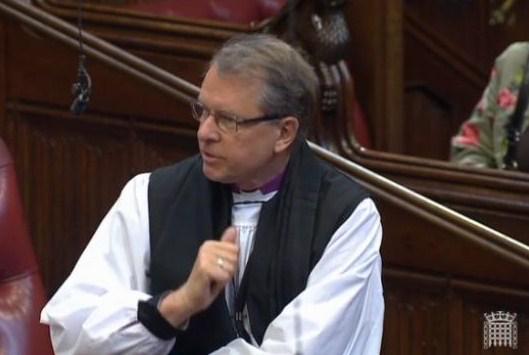
The Lord Bishop of St Albans My Lords, a group of Christian leaders in Luton in my diocese are working closely with people of other faiths on the Prevent strategy. I have to say that I hear a very different narrative from the grass roots which is profoundly worrying. There is growing discontent at the rollout of the Prevent strategy due to a number of things such as religious illiteracy and some very heavy-handed actions. Would the Minister be willing to come and meet a group of leaders to hear about these concerns? These are people who want to try to make this work so that we can think about how to get it back on course and improve the situation. Continue reading “Bishop of St Albans expresses concern about rollout of Prevent Strategy”

Week in Westminster, 12th-16th December 2016

Westminster-abbeyWelcome to the Church of England’s weekly round-up of activity in Parliament.

This week bishops in the House of Lords spoke in a debate on the Government’s Digital Economy Bill and voted on amendments to the Government’s Policing and Crime Bill. Bishops asked questions about inter-faith relations, rural affordable housing, overseas students, Rwanda, Burundi and the Democratic Republic of Congo. Continue reading “Week in Westminster, 12th-16th December 2016”

Bishop of St Albans asks Government about support for rural affordable housing

St AlbansOn 15th December 2016 Lord Kennedy of Southwark asked Her Majesty’s Government “what assessment they have made of the impact of the availability of affordable housing on the ability of both private and public sector organisations to recruit and retain staff.” The Bishop of St Albans, Rt Revd Alan Smith, asked a follow-up question:

The Lord Bishop of St Albans: My Lords, the lack of affordable housing in recruiting local workers is also felt acutely in many rural areas. Rural exemption sites have proved a good way of providing affordable housing, but with the uncertainty over the recent extension of right to buy, some landowners are reluctant to bring forward land. In light of this, will Her Majesty’s Government publish clear guidelines on the potential for restrictive covenants on rural exemption sites to provide affordable housing in perpetuity for local workers? Continue reading “Bishop of St Albans asks Government about support for rural affordable housing”

Bishop of Durham asks about tensions between Rwanda and Burundi

Bp Durham June 2015 bOn 15th December 2016 the Bishop of Durham, Rt Revd Paul Butler, received a written answer to a question on relations between Rwanda and Burundi:
The Lord Bishop of Durham: To ask Her Majesty’s Government, further to the Written Answer by Baroness Anelay of St Johns on 22 September (HL1691), what additional assistance is being given to alleviate heightened tensions between the governments of Rwanda and Burundi. Continue reading “Bishop of Durham asks about tensions between Rwanda and Burundi”

Bishop of Durham asks about safety of those removed from UK to Democratic Republic of Congo

Bp Durham June 2015 bOn 15th December 2016 the Bishop of Durham, Rt Revd Paul Butler, received a written answer to a question about those removed from the UK to the Democratic Republic of Congo:
The Lord Bishop of Durham: To ask Her Majesty’s Government what steps are being taken to assess the safety of those who have been removed from the UK to the Democratic Republic of Congo.

Bishop of Winchester asks about overseas student numbers and effect on the economy

winchester171116On 13th and 14th December 2016 the Bishop of Winchester, Rt Rev’d Tim Dakin, received responses from the Department for Education and Treasury to three written questions about overseas student numbers and their effect on the economy:

The Lord Bishop of Winchester To ask Her Majesty’s Government what estimate they have made of the number of overseas students, excluding EU students, coming to study in the UK over the next five years. Continue reading “Bishop of Winchester asks about overseas student numbers and effect on the economy”

Bishop of Chelmsford: in a ‘post-truth’ era, proper regulation can offer newspapers salvation

On 20th December 2016, Lord Best moved that the House “take note of the Report from the Communications Committee Press Regulation: where are we now? (3rd Report, Session 2014–15, HL Paper 135)”. The Bishop of Chelmsford, the Rt Revd Stephen Cottrell, who is a member of the Communications Committee, spoke in the debate.

Chelmsford 251115The Lord Bishop of Chelmsford My Lords, I too thank the noble Lord, Lord Best, for bringing this debate to the House and for his wise and winsome chairing of the Select Committee on Communications. I speak as a member of that committee. I was not part of the committee that produced this report—that illustrates just how long it has taken for it get here—so I also thank my predecessors on the committee for all their work.

However, as the report makes clear and as has been well illustrated by the contributions so far, the situation is far from satisfactory and questions to government remain unanswered. As the noble Lord, Lord Best, has already explained, in the past few weeks the committee has again been burrowing into the detail of the issues and considering the present impasse. I shall not go over those details again; the noble Lord outlined them superbly, but I think that we could conclude that the carrot is not very tasty and the stick seems so severe that it is unlikely ever to be wielded. Continue reading “Bishop of Chelmsford: in a ‘post-truth’ era, proper regulation can offer newspapers salvation”