Welfare Reform Bill: Bishop of St Albans supports move to halt cuts to Employment and Support Allowance

On the 27th January 2016 the Bishop of St Albans, Rt Revd Alan Smith, spoke to support an amendment to the Government’s Welfare Reform and Work Bill. The amendment, in the name of Lord Low of Dalston, would negative a reduction in the Work Related Activity Group of the Employment and Support Allowance. The Bishop highlighted the likely impact on disabled people. 

StAlbans171115The Lord Bishop of St Albans: My Lords, as I said in Committee, if this reduction in benefits for the disabled is about incentivising work rather than simply cutting costs from the benefit budget, I support the Government’s intention. However, the way in which they are going about the task to cut ESA WRAG and its universal credit counterparts is misguided. Clearly, other noble Lords agree with that. For that reason, I am inclined to support the removal of Clauses 13 and 14. Continue reading “Welfare Reform Bill: Bishop of St Albans supports move to halt cuts to Employment and Support Allowance”
Welfare Reform Bill: Bishop of Portsmouth proposes exceptions to the two child limit

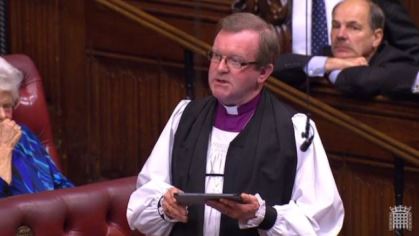
BishPortsspeechtaxcreditsOn 27th January 2016 the Bishop of Portsmouth, the Rt Revd Christopher Foster opened the second day of Report Stage on the Government’s Welfare Reform and Work Bill with an amendment in his name. The amendment, supported by Labour, Liberal Democrat and Crossbench Peers, proposed exemptions from the two-child limit for new claimants of tax credit and universal credit for kinship carers, bereaved parents, those fleeing domestic violence and disabled children. During his response to the amendment the Minister Lord Freud offered a number of concessions, most notably on kinship carers, and as a result the Bishop did not press the amendment to a vote. A full transcript of the Bishop’s opening and closing remarks, the Minister’s response and an intervention from the Bishop of Durham, are below.
Continue reading “Welfare Reform Bill: Bishop of Portsmouth proposes exceptions to the two child limit”

Bishop of Chester asks Government about junior doctors’ remuneration

ChesterOn the 27th January 2016 Lord Harries of Pentregarth asked the Government “what assessment they have made of the remuneration of junior doctors”. The Rt Revd Peter Forster, Bishop of Chester, asked a follow up question.
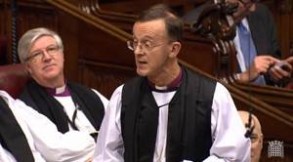
The Lord Bishop of Chester: My Lords, I, too, declare that I have a daughter who is a junior doctor. She is in her fourth year since qualification. To get to the level of remuneration that the noble Lord mentioned—some £23,000—junior doctors have to work jolly long and unsocial hours. But my specific question is: what is the comparator with other developed western countries for the remuneration of our younger doctors?

Continue reading “Bishop of Chester asks Government about junior doctors’ remuneration”

Bishop of Worcester “stigmatising Muslim communities not conducive to community cohesion”

worcesterOn the 27th January 2016 Lord Pearson of Rannoch asked the Government “what assessment they have made of the risk that Christians could be recorded as having committed an anti-Muslim hate crime from April 2016 by preaching the divinity of Christ or by reading aloud sections of the Bible in public, such as 1 John, Chapter 4, verses 1 to 3.” The Rt Revd John Inge, Bishop of Worcester, asked a follow-up question criticising the phrasing of Lord Pearson’s question and highlighting the  contribution of religion to the enrichment of public life. The transcript in full is available below.
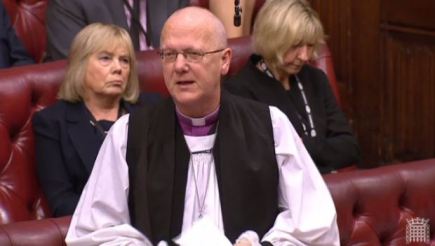
The Lord Bishop of Worcester: My Lords, does the Minister agree with me that Questions phrased in this manner are not conducive to building positive relations between faith communities, in particular with Muslim communities, as we are endeavouring to do in the church at a time when Muslims are feeling unfairly stigmatised? Does he further accept that Muslims, and people of all faiths, greatly enrich our society and make a significant contribution to the common good? Continue reading “Bishop of Worcester “stigmatising Muslim communities not conducive to community cohesion””

Housing Bill: Bishop of St Albans raises concerns on rural housing and right to buy

On 26th January 2016, the Bishop of St Albans, the Rt Revd Alan Smith, took part in the Second Reading debate of the Government’s Housing and Planning Bill. The Bishop raised concerns about the impact of the bill on rural affordable housing, right to buy, implications for local councils, and the effect of the Bill on Gypsy, Roma and Traveller communities.


StAlbans171115The Lord Bishop of St Albans: My Lords, I, too, add my congratulations to the noble Baroness, Lady Thornhill, and the noble Lord, Lord Thurlow, on their excellent maiden speeches.
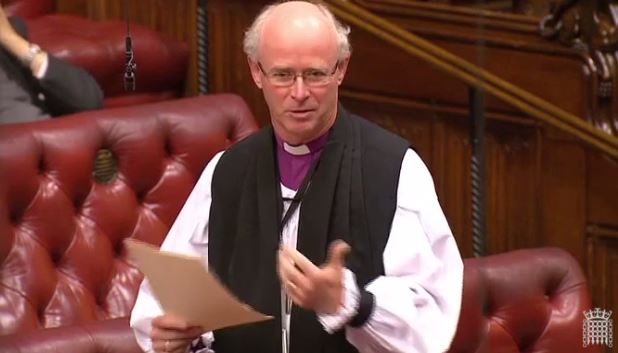
I shall limit my comments to three areas. My first concern stems from the right-to-buy deal that has been agreed between the Government and the NHF, and the provisions within the Bill which will accommodate starter homes within affordable housing requirements. My concern is that housing which would once have been provided as affordable rented housing—affordable in perpetuity—will now be replaced by starter homes and homes to buy, with the only condition on their resale being that they be held off the market for a period of five years. Continue reading “Housing Bill: Bishop of St Albans raises concerns on rural housing and right to buy”

Housing Bill: Bishop of Rochester asks about affordable housing and lifetime secure tenancies

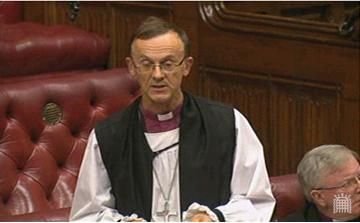
On 26th January 2016, the Bishop of Rochester, the Rt Revd James Langstaff, took part in the Second Reading debate of the Government’s Housing and Planning Bill. The Bishop raised concerns about the impact of the bill on affordable housing and lifetime secure tenancies. The Bishop of St Albans also spoke in the debate.

RochesterThe Lord Bishop of Rochester: My Lords, I, too, welcome the opportunity to hear the maiden speeches of the noble Baroness, Lady Thornhill, and the noble Lord, Lord Thurlow. I look forward to the contributions that they will make to your Lordships’ House.

There is a clear view on all sides of this House, the other place and across large parts of the nation that more housing is needed. The questions concern whether this Bill will help to deliver that housing in the right way and in the right places for the people who need it most. Within my diocese at Ebbsfleet we have one of the largest single housing developments in the United Kingdom—a completely new development which will house up to 45,000 new people. While I have questions about some of the details of that development, and some of the details are as yet unknown, I am generally supportive of what is intended. So I am not against new development and I welcome those things in the Bill which may make that possible in appropriate ways. Continue reading “Housing Bill: Bishop of Rochester asks about affordable housing and lifetime secure tenancies”

Archbishop of York urges Government not to slant policy against larger families

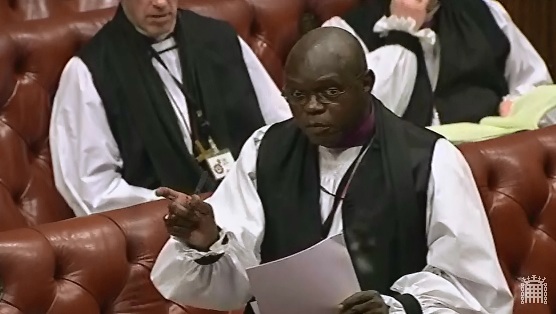
On 26th January 2016 Baroness Lister of Burtersett asked Her Majesty’s Government “what impact the Family Test has had on policy-making.” The Archbishop of York, Most Revd & Rt Hon John Sentamu, asked a follow up question:

Archbishop of YorkThe Archbishop of York: My Lords, I hope that the family test recognises that poor families come in different shapes and sizes and that there is no intention of pushing a particular policy, of which we saw a little in China. Margaret and I had two children of our own and then fostered two children who came to us at the ages of eight and one and a half. They are now working adults. Had this family test been around, I would have been worried, as Ruth is, because that child would have found it very difficult. Will the Minister assure us that when the family test comes, common sense will prevail, not numbers? Continue reading “Archbishop of York urges Government not to slant policy against larger families”

Bishop of Worcester asks how Government’s family test will shape its life chances strategy

On 26th January 2016 Baroness Lister of Burtersett asked Her Majesty’s Government “what impact the Family Test has had on policy-making”. The Bishop of Worcester, Rt Revd John Inge, asked a follow up question:

WorcesterThe Lord Bishop of Worcester: My Lords, I have not consulted their Graces the most reverend Primates the Archbishops, but I feel confident in saying that we on these Benches welcome the thrust of the life-chances strategy, which the Prime Minister outlined in a recent speech. We believe, as does the Prime Minister, that the family is the best anti-poverty measure ever invented—invented by God, in fact, although the Prime Minister did not add that. The increase in funding for relationship support is welcome, but could the Minister indicate how the priorities articulated in the family test might shape the development of the life-chances strategy as it is published and implemented in due course? Continue reading “Bishop of Worcester asks how Government’s family test will shape its life chances strategy”

Introduction of the Bishop of Newcastle

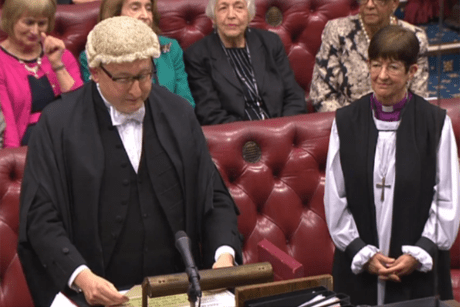
On 26th January 2016 the Rt Revd Christine Hardman, Bishop of Newcastle, was Introduced to the House of Lords and took her seat.

From Hansard:

2.37 pm

Christine Elizabeth, Lord Bishop of Newcastle, was introduced and took the oath, supported by the Archbishop of York and the Bishop of Southwark, and signed an undertaking to abide by the Code of Conduct.