
On 25th January the House of Lords considered the Government’s Welfare Reform and Work Bill at its Report Stage. The Bishop of Durham, the Rt Revd Paul Butler,spoke to amendments he had co-sponsored with Baroness Lister of Burtersett, to replace Social Mobility definitions with those of ‘Life Chances’. The amendments were not put to a division, but withdrawn after the debate. The Bishop’s speech and those of others are below.
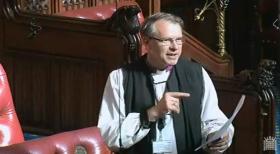
The Lord Bishop of Durham: My Lords, I support this amendment. Yesterday, I spent a delightful evening with a small number of academics after preaching at Evensong in an Oxford college—Worcester College. It was a very pleasant evening. However, as I sat there, I kept coming back in my mind to today’s debate because I was reminded of the extraordinary privilege of being in an Oxford college and the elite nature of it. This is not to criticise it or put it down; I had the privilege of studying in a private hall in Oxford when I trained for my ordination. However, I found myself thinking about the vast number of children and young people I meet in schools and colleges around the north-east, and have met in other parts of the country over the years, for whom such privilege is not their aim. Continue reading “Welfare Reform Bill: Bishop of Durham supports amendments to rename Social Mobility Commission with ‘Life Chances’”
 On 25th January 2016, the Bishop of Durham, the Rt Revd Paul Butler, responded to a statement in the House of Lords regarding the plight of unaccompanied refugee minors.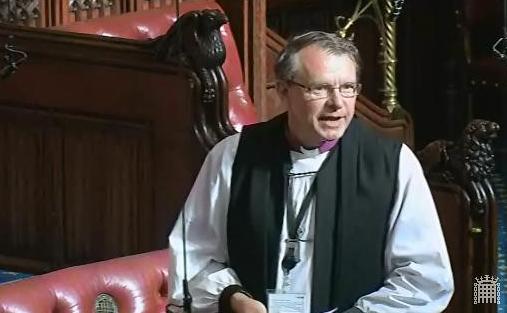
 On 25th January 2016, Baroness Campbell of Surbiton led a debate on an amendment she had tabled to the Government’s
  On the 25th January, Baroness Royall of Blasidon asked the government “what assessment they have made of the social and environmental impacts of the potential extraction of coal-bed methane on forests such as the Forest of Dean.” The Bishop of St Albans, the Rt Revd Alan Smith, asked a follow up question.
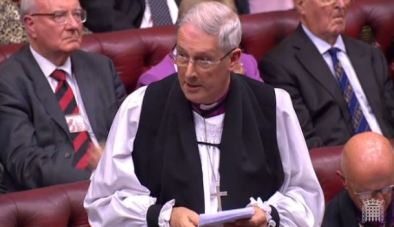 The Lord Bishop of Southwark: My Lords, Amendment 134, which I wish to support, is simple, just and proportionate in its aims. I accept that Home Office officials must, in the discharge of their duties in this area, deal with barriers of language, emotional distress, the fear of authority, the complexity of people’s lives and, on occasion, deceit. All this takes time. However, it is far from unknown for applicants for asylum to wait months or even years for a substantive decision in their case. This subjects them to a fearful limbo, with limited means of support and the background anxiety of not knowing for a very prolonged period what the outcome will be. Furthermore, we know from the experience of our own citizens the deleterious effects of prolonged inactivity on their emotional and physical well-being, and how this can erode an individual’s skill base
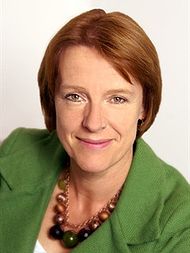 Mrs Caroline Spelman (Meriden) (Con): Like, I am sure, many others present, I have had to go through the process of a Criminal Records Bureau check, which is now a Disclosure and Barring Service check. Does my hon. Friend agree that it is an important butonerous process? Sometimes, one has to be checked more than once, because it does not transfer to another activity that one might undertake with children if one is foolish enough to do a full weekend with the Sunday school. It is a very rigorous process, and if it was applied to the people who teach children Islam in all teaching environments, it would be a very good tool to deal with any excess problem that there might be.
 The Lord Bishop of Peterborough: My Lords, I, too, am grateful for this debate. I also note with great pleasure a number of changes made to policy and practice in this area by Mr Gove since he became Secretary of State. I gladly thank him and the Government, particularly for allowing prisoners greater and easier access to books. But if educational standards in prisons are to be improved, as they desperately need to be, we still need much more joined-up thinking. I will give two examples.
  The Lord Bishop of Derby: My Lords, I, too, thank the noble Lord, Lord Hanningfield, for his introduction to the debate, especially for linking education with vocation for people in prison. As the noble Lord, Lord Addington, said, it is a very complex territory with very deep needs. A lot of research shows that the prison population represents people with multiple needs. Therefore, the task of education and vocation will be challenging. I see the importance of formal education for literacy and numeracy to help people to get jobs. I am all in favour of that, but I want to look behind that at the informal fashioning of vocation and the development of character and confidence, which allows people to enter formal learning. I will draw on my own experience of going into prisons.
  The Church of England in Parliament
You must be logged in to post a comment.