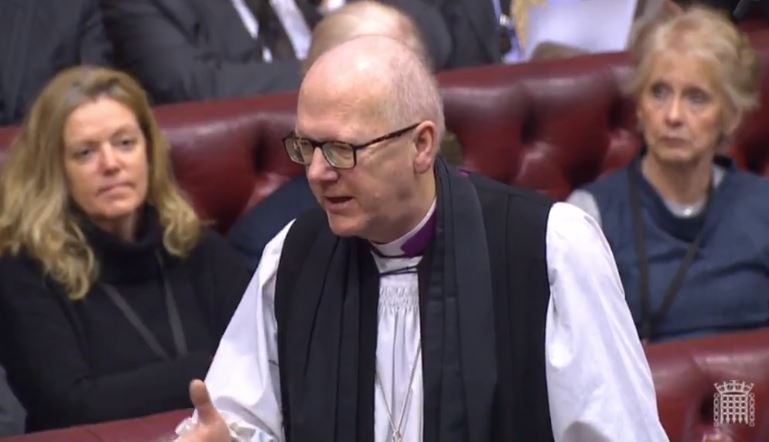
On 23rd March 2023, the House of Lords debated the Strikes (Minimum Service Levels) Bill in its second day of committee. The Bishop of Manchester spoke in the debate, in support of numerous amendments:
Amendments 20 & 40, that would require reviews of how the legislation would affect recruitment and of the meaning of minimum service levels
Amendment 21, which would seek to ensure that work notices are only issued where all options to avert a strike are exhausted
Amendment 41, which would preserve existing protections from unfair dismissal, including for an employee who participates in a strike contrary to a work notice under the bill
Amendments 37 & 43, which would allow for parliamentary scrutiny of sections of the bill, and remove the ability for the Secretary of State to make regulations that repeal primary legislation and would make all regulations made under this section subject to the affirmative procedure
Amendments 20 & 40:
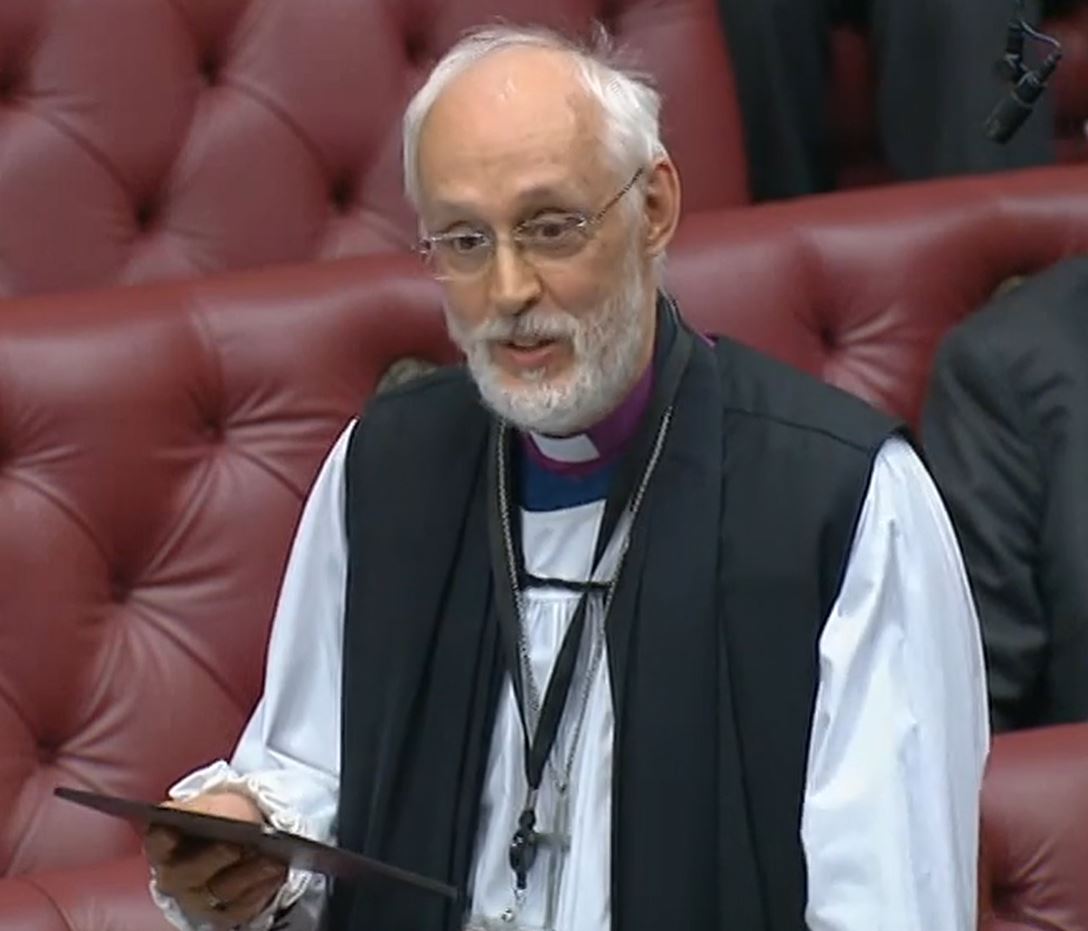
The Lord Bishop of Manchester: My Lords, I am sorry to come into the debate quite late; I had not realised we were getting so close to the end. I support Amendment 20 from the noble Lord, Lord Collins, and Amendment 40 from the noble Lord, Lord Fox. I regret that I have been unable to be in my seat at earlier stages, but I am grateful that my right reverend friends the Bishops of London and St Edmundsbury and Ipswich have passed on my concerns. Amendments 20 and 40 are absolutely invaluable. If this Bill is—regrettably, in my view—to become law, it must have all necessary consultation and evidence gathering before it.
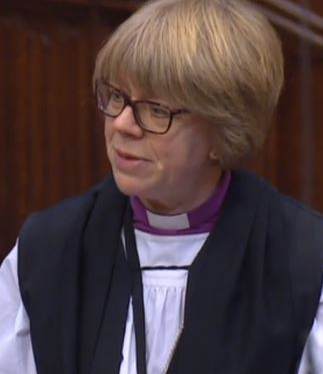
On 22nd March 2023, the House of Lords debated amendments to the Levelling Up and Regeneration Bill. The Bishop of Manchester, on behalf of the Bishop of Chelmsford, spoke in support of an amendment to the bill that would require local authorities to being forward an assessment of the local need for housing for older people as part of their housing plans:
The Lord Bishop of Manchester: My Lords, I support Amendment 221 in the name of the noble Lord, Lord Best, to which, as he indicated, my right reverend friend the Bishop of Chelmsford added her name. She apologises for being unable to be in her place today; in my own brief remarks, I will make a number of points that she would have contributed had she been here. I am grateful to the noble Lord, Lord Young of Cookham, who, like the noble Lord, Lord Best, has a long and honourable history of leading the thinking on housing matters in this land.
I declare my interest in housing for older people: as set out in the register, I am a board member of the Wythenshawe Community Housing Group. In fact, it is more than an interest; it is a passion. In my time as chair of the association, we have opened a flagship development of 135 apartments for older people with mixed rental, shared ownership and outright purchase. Developments such as this enable local people to live in dignity in old age. They provide social space as well as private dwellings. In many cases, they allow residents to remain close to their family networks and former neighbours—the support networks that they need in later life. We can do well for older people but that should not have to rely on episcopal passion or potluck. It needs to be part of how we plan housing provision at a strategic level.
On 21st March 2023, the House of Lords debated the Financial Services and Markets Bill in committee. The Archbishop of Canterbury spoke in support of amendments tabled by Baroness Kramer which stressed the importance of the lessons learned from the 2008 financial crash:
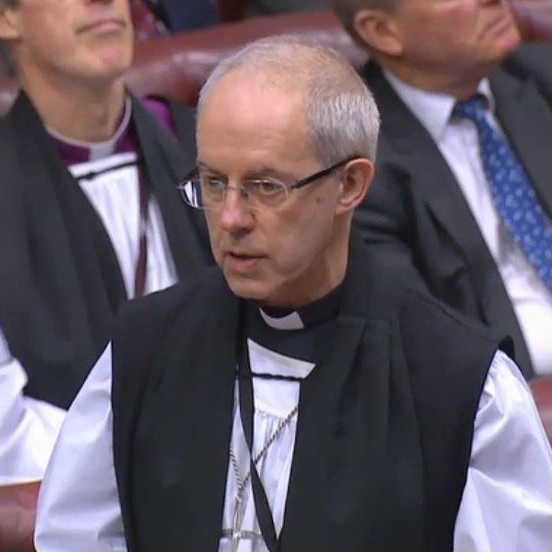
The Lord Archbishop of Canterbury: My Lords, I have added my name to Amendments 241C and 241D tabled by the noble Baroness, Lady Kramer, and wish to speak briefly in support of them here. I am particularly grateful to the noble Baroness, Lady Noakes, who made some very helpful and powerful points.
As the noble Baroness, Lady Kramer, said, this marks 10 years since the publication of the Changing Banking for Good report from the parliamentary commission, on which I sat with her. The two amendments to which I have added my name are probing amendments to stress the importance of not forgetting the lessons of 2008-09, because people and sectors entirely can have very short memories.
As the noble Baroness has explained, the amendments seek to prevent alteration to two elements of the banking reform Act 2013 by statutory instrument without proper debate in Parliament, and to prevent changes which go against the recommendations of the parliamentary commission. Our memories have certainly been refreshed this week. If the debate on this group had been held when it was first scheduled two or three weeks ago, I think we would have had a very different reception. If one is grateful for anything in the present crisis, it is that we have been so warmly reminded of why we need a clear memory.
On 21st March 2023 Rt Hon Ben Bradshaw MP spoke to a Motion he had tabled in the House of Commons, for leave to bring in a Bill on same sex marriages in the Church of England. The Second Church Estates Commissioner, Andrew Selous MP, responded.
SAME SEX MARRIAGE (CHURCH OF ENGLAND): TEN MINUTE RULE MOTION
Mr Ben Bradshaw: That leave be given to bring in a Bill to enable clergy of the Church of England to conduct same sex marriages on Church of England premises in certain circumstances; and for connected purposes.
Ben Bradshaw introduces his Ten Minute Rule Bill and Andrew Selous responds
A transcript of the response from Andrew Selous is below:
Mr Andrew Selous MP (Second Church Estates Commissioner): Thank you very much Mr Deputy Mr Speaker. I do not intend to divide the House, but it is necessary to respond to the Bill in my capacity as Second Church Estates Commissioner, because it seeks to usurp the role of the democratically elected General Synod of the Church of England, as well as to remove the freedom of the Church of England to decide its own doctrine, a freedom which Members on all sides of this House champion for religions and beliefs all over the world, and one that we should therefore apply equally to the Church of England.
There are passionately held and differing views about same sex marriage on all sides of this House and I am also acutely aware of the personal pain and hurt that this issue causes for so many people. But it is for the democratically elected assembly of the Church of England, the General Synod, to decide matters of doctrine rather than Parliament. And this has been the settled convention for nearly fifty years, since the 1974 Worship and Doctrine Measure was approved by Parliament.
At the General Synod last month, it was agreed that the Prayers of Love and Faith proposed by the bishops would be finalised, that the pastoral guidance for clergy would be produced, and that a welcoming culture towards LGBTQI+ people would be embedded throughout the Church. It was also agreed not to change the doctrine of marriage. And that Motion was passed by a clear majority in all three Houses of the Synod. Amendments to require the bishops to bring forward proposals for same-sex marriage to the next meeting of Synod and to revisit the issue within the next two years, were rejected by the House of Bishops, the House of Clergy and the House of Laity.
The Right Honourable Gentleman’s Bill proposes that the decision of the Synod, arrived at prayerfully and democratically, should simply be set aside.
In this House, we do not all agree with each other, but we do respect everyone’s right to be here because we have all been given our mandate through the same black boxes on election night. I would ask that the Members of this democratically elected House show the same respect to the democratically elected members of the General Synod.
Directing the Church of England on doctrine is not the job of Parliament. It would infringe on settled principles of religious freedom, which we argue for our sisters and brothers overseas, and it would call into question the rights and protections of conscience for other denominations and faiths as well. Several Catholic members of this House came up to me after the Urgent Question on the 24th of January and told me how grateful they were that Parliament was not telling their church what to do!
The Bill is also unnecessary as should Synod decide to change the doctrine of marriage in the future, it could do so. It would produce a Measure, which would come before Parliament and amend the 2013 Marriage Act. There is no need therefore for Parliament to act independently to change the Act.
Although the Bill is intended to be permissive and not to compel any member of the clergy to solemnise same-sex marriage, it is just not possible to leave it to individual clergy to choose to do things that are clearly contrary to the doctrine of the church. Doctrine is not determined by local decision, varying by parish or diocese, but is decided centrally, not by a small group of bishops, but through the prayerful deliberation and decision of the democratically elected Synod. If the Church lost its ability to require compliance with its doctrine, this would be a breach of the Human Rights Convention as it would be contrary to article 9, read with article 11, for the State to interfere with a religious organisation’s ability to require compliance with its own doctrine.
The Bill’s attempt to give individual freedom and choice would be unworkable and would breach the longstanding convention that Parliament does not legislate for the internal affairs of the Church of England without its consent.
I honoured my commitment to tell the General Synod the views of Parliament as expressed in the Urgent Question on the 24th of January, and I know that the General Synod will continue to listen carefully and respectfully to the views of this House, just as I would ask Parliament to be respectful to the views of the Synod.
Note: The Motion was not opposed in a vote and the Bill was presented, though it will be unlikely to progress any further due to lack of time in the parliamentary session.
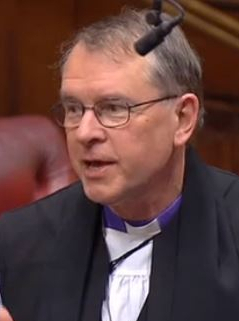
The Bishop of Worcester spoke in a debate on amendments to the Levelling Up and Regeneration Bill on 20th March 2023, supporting an amendment by Baroness Pinnock that would address inflation in land prices in different regions:
The Lord Bishop of Worcester: My Lords, I support the amendment from the noble Baroness, Lady Pinnock, to which the right reverend Prelate the Bishop of Chelmsford has added her name. She regrets that she is unable to be in her place today; I wish to make some points that undoubtedly she would have contributed had she been here.
As already indicated by the noble Baroness, Lady Pinnock, the Government’s tabled Amendment 165 is very welcome. The review of Section 123 of the Local Government Act 1972, and the correction of the omission of the Mayor’s Office for Policing and Crime—and of police and crime commissioners generally—are necessary and positive steps. However, there remain ways in which the general disposal consent 2003 could be improved to better allow public bodies to dispose of assets for less than market value for social, economic or environmental benefit. We believe that such measures would be very much in line with the Bill’s desired outcome: levelling up communities across the country.
On 14th March 2023, the House of Lords debated Commons amendments to the Public Order Bill. Votes were held on amendments to the bill, in which bishops took part.
The Bishop of London spoke to a group of amendments related to health services during a debate on the Strikes (Minimum Service Levels) Bill on 9th March 2023, raising concerns of the effect of the bill on individual health service staff, pressure on staff levels, and low morale in the healthcare service:
The Lord Bishop of London: My Lords, I rise to speak to this group of amendments on the inclusion of health services in the Bill. I am sorry that I have not been able to speak before. I declare my interests as set out in the register.
I have been a union member. I joined as a nurse—and as an NHS manager and a civil servant in the Department of Health—because I wanted protection. The relationship with unions was critical; it was the way in which we improved patient care. One of my overall concerns about the Bill is that it has the potential to break down the relationship which is so vital for patient care, as the noble Baroness, Lady Noakes, said.
I am grateful to the Royal College of Nursing, which has helped me in considering the Bill. I am sure that it will not surprise noble Lords to know that it does not support the Bill, for what I see as some good reasons: not least because it curtails the freedom to participate in what otherwise is lawful action.
My right reverend friend the Bishop of Manchester regrets that he cannot be here, but he shares my concern that far too much power is given to the Secretary of State in what we have already heard is only a skeleton Bill, and that there is a complete lack of clarity about how it could be used. It is open to abuse. I am surprised that, as many others have said, the detailed policy that becomes legislation is not there. I am concerned that those who work in the health service probably cannot see whether they are in there or not.
The Bishop of Durham asked a question about protection for children and unaccompanied minors arriving in the UK on 8th March 2023, following the government’s announcement of the planned Illegal Migration Bill:
The Lord Bishop of Durham: My Lords, I return to the Statement, rather than the Bill, which we will spend hours debating in due course. There was a lot in this Statement that worried me, but what worried me even more was that there was no reference whatever to children, unaccompanied children and their protection in this whole process. Can the Minister comment on why nothing was said about that in the Statement?
On 7th March 2023, the House of Lords debated the National Security Bill in the second day of the report stage. Votes were held on amendments to the Bill, in which bishops took part:
The Bishop of St Albans spoke during the debate on the Financial Services and Markets Bill on Tuesday 7th March 2023, raising concerns on access to cash and the lack of digital connectivity in rural communities, and the impact on businesses and individuals:
The Lord Bishop of St Albans: My Lords, I will not detain the Committee for very long but perhaps I could say one or two things. Briefly, I come at this by thinking about rural sustainability and rural business. I declare my interest as president of the Rural Coalition.
Before I say anything on that, a month ago I had my wallet stolen on my way into Parliament and I learned a lesson: do not keep all your cards in your wallet but have some different ones. I was, to use a theological term, absolutely stuffed that morning. Fortunately, I had a member of staff at home. I went back and cancelled the cards then phoned up my bank, which said, “Yes, come up—we can give you some cash”. When I got up there, I was told, “No, the system’s got it wrong and we aren’t able to give you cash here”. I then had to get someone to take me six miles to get some cash. When I eventually got into London for some meetings, I went to four places before I could find somewhere to buy lunch because I had only cash. This is actually quite a complex thing.


 The Church of England in Parliament
You must be logged in to post a comment.