
On 25th April 2018 the House of Lords considered amendments to the EU (Withdrawal) Bill at its Report Stage. A vote took place on an amendment to the Bill, on ‘Henry VIII’ powers of Government, in which three bishops took part: Continue reading “Votes: EU (Withdrawal) Bill”
Category: Bills
Legislation before Parliament
Votes: EU (Withdrawal) Bill
On 23rd April 2018 the House of Lords considered amendments to the EU (Withdrawal) Bill at its Report Stage. Two votes took place on amendments to the Bill, in which bishops took part: Continue reading “Votes: EU (Withdrawal) Bill”
Votes: EU (Withdrawal) Bill
On 18th April 2018 the House of Lords considered amendments to the EU (Withdrawal) Bill at its Report Stage. Two votes took place on amendments to the Bill, both of which saw bishops take part: Continue reading “Votes: EU (Withdrawal) Bill”
Votes: Haulage Permits and Trailer Registration Bill
On 17th April 2018 the House of Lords considered the Haulage Permits and Trailer Registration Bill [HL] at report stage. A vote was taken on an amendment to the Bill and the Bishop of Chester took part: Continue reading “Votes: Haulage Permits and Trailer Registration Bill”
EU (Withdrawal) Bill – Bishop of Leeds speaks on amendment on Gibraltar
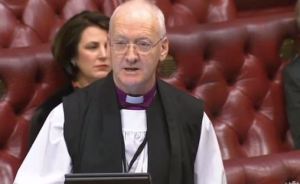 On 26th March 2018 the House of Lords continued with its consideration of the Government’s EU (Withdrawal) Bill in committee. Baroness Butler-Sloss introduced an amendment after clause 11, regarding the maintenance of status quo rights and arrangements in Gibraltar. The Bishop of Leeds, Rt Revd Nick Baines, spoke during the debate on the amendment:
The Lord Bishop of Leeds: My Lords, I do not want to repeat what has been said but the noble Lord, Lord Hannay, seems to have asked the key question. Amid all the detail perhaps we might precis the fundamental question. Continue reading “EU (Withdrawal) Bill – Bishop of Leeds speaks on amendment on Gibraltar”
Votes: Hereditary Peers (Abolition of By-Elections) Bill
On 23rd March 2018 the House of Lords considered the House of Lords (Hereditary Peers) (Abolition of By-Elections) Bill [HL] in committee. This was a Private Member’s Bill. Two votes were taken on amendments to the Bill and the Bishop of Peterborough took part: Continue reading “Votes: Hereditary Peers (Abolition of By-Elections) Bill”
Bishop of Rochester takes five Church of England Measures through House of Lords
On 22nd March 2018 the Bishop of Rochester introduced five Church of England Measures for debate and approval in the House of Lords. The full text of the debate on each Measure is reproduced below and the House gave approval to each. The Measures were: the Legislative Reform Measure, the Mission and Pastoral etc. (Amendment) Measure, the Pensions (Pre-consolidation) Measure, the Statute Law (Repeals) Measure and the Ecclesiastical Jurisdiction and Care of Churches Measure. Continue reading “Bishop of Rochester takes five Church of England Measures through House of Lords”
EU Withdrawal Bill: Archbishop of York discusses impact on devolved assemblies
 On 21st March 2018, Peers debated the European Union (Withdrawal) Bill on its ninth day at Committee Stage. The Archbishop of York, the Most Revd John Sentamu, spoke during debate on an amendment relating to the powers of devolved assemblies. It can be read in the wider context of the debate here
The Archbishop of York: The point I was going to make is exactly the same. As I have listened to the debate, it seems to me that the issue is probably what the noble Lord, Lord Hennessy, tried to address. When we leave the EU, the state of the United Kingdom and Northern Ireland will still be the United Kingdom and Northern Ireland.
Continue reading “EU Withdrawal Bill: Archbishop of York discusses impact on devolved assemblies”
Bishop of Leeds discusses EU Withdrawal Bill amendment
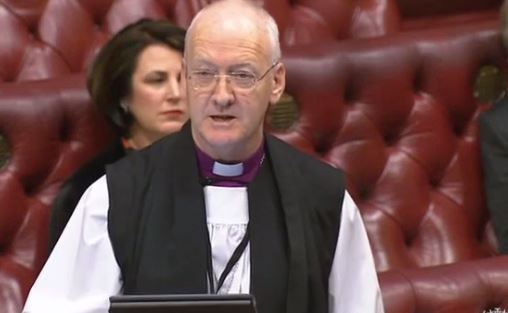
On 7th March 2018, peers discussed Clause 7 of the EU Withdrawal Bill: ‘Dealing with deficiencies arising from withdrawal’, as part of Committee Stage. The Bishop of Leeds, the Rt Revd Nick Baines spoke. Continue reading “Bishop of Leeds discusses EU Withdrawal Bill amendment”
Ecumenical Marriage Bill – Bishop of Winchester points to difficulties
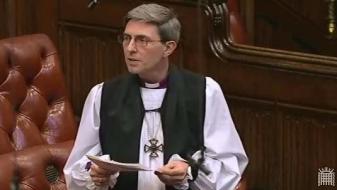 On the 23rd February 2018, Lord Deben’s ‘Ecumenical Marriage Bill’ was debated in the House of Lords at Second Reading. The Bishop of Winchester, the Rt Revd Tim Dakin, spoke during the debate to say that he could not support the Bill for reasons related to detail and due process. The Government also declined to give the Bill its support, but as is convention, it passed Second Reading to be considered further in Committee. The Bishop’s speech and the closing speeches of the Minister and Lord Deben are reproduced below:
The Lord Bishop of Winchester: My Lords, I am grateful to the noble Lord, Lord Deben, for giving us the opportunity to speak about issues of such importance to this Bench as the celebration of marriage and our ecumenical relationships. I first acknowledge the personal and pastoral issues raised by the noble Lord and the way that he has so succinctly put those in his four concluding points, about sacraments, the ecumenical world, the fudges and the ecumenical movement.
I am, therefore, rather embarrassed to start with something slightly more dry and technical. However, I begin by addressing what I believe to be the key issue here, which is constitutional in nature. There is a long-standing constitutional convention, with which noble Lords will be very familiar, that the Church of England makes its own legislation by synodical process. That legislation comes before Parliament for approval, having first been considered by the Ecclesiastical Committee. This Bill represents a departure from that convention. Continue reading “Ecumenical Marriage Bill – Bishop of Winchester points to difficulties”
 The Church of England in Parliament
You must be logged in to post a comment.