Bishop of St Albans letter to The Times on Government review of fixed odds betting terminals

On 14th September 2017 The Times newspaper published a letter from the Bishop of St Albans, Rt Revd Alan Smith, about the forthcoming Government gambling review and the need to address the issue of fixed odds betting terminals:

Problem gambling

Sir, It is encouraging to read that the prime minister is putting her weight behind the reduction in stakes for fixed-odds betting terminals (FOBTs) (“Treasury backs down on fixed-odds betting curbs”, Sep 12). The present maximum stake of £100 for an FOBT looks like an anomaly compared with the stakes permitted in other licensed gaming machine categories, which range from £1 to £5. The £100 stakes allow FOBTs to wreak disproportionate harm. Continue reading “Bishop of St Albans letter to The Times on Government review of fixed odds betting terminals”
Speaker’s Chaplain says Christians in politics should not ‘leave their faith at the door’

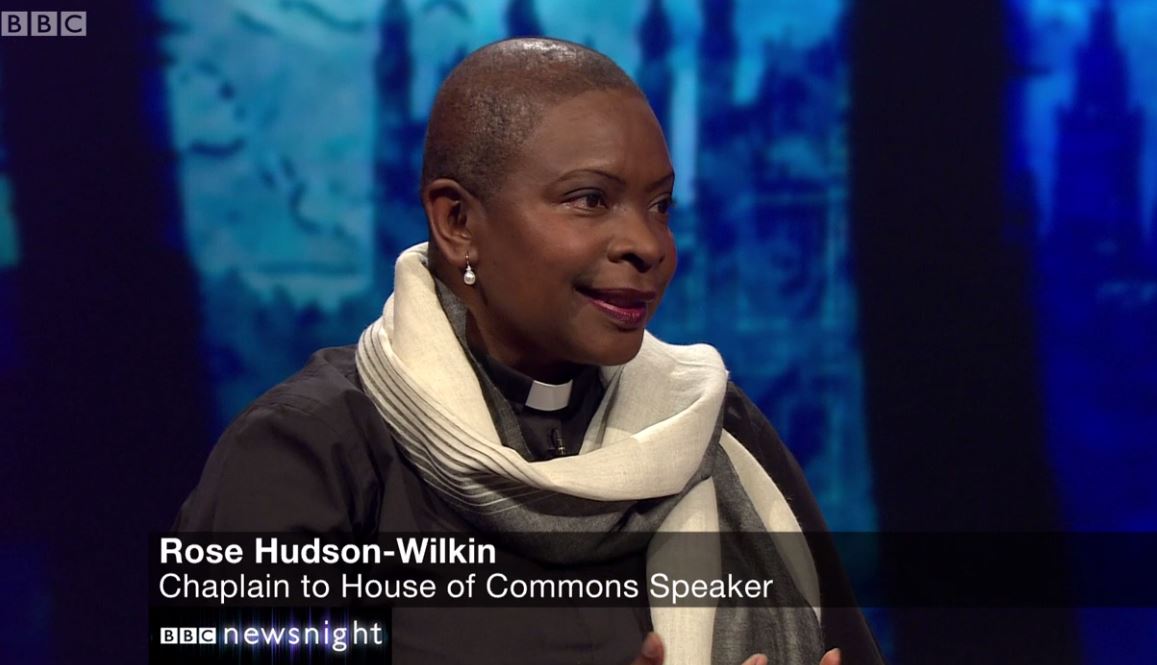
Reverend Rose Hudson-Wilkin, Chaplain to the Speaker of the House of Commons, appeared on BBC2’s Newsnight programme on 7th September 2017, discussing faith and politics alongside Guardian columnist Polly Toynbee. The interview was preceded by a clip of an appearance by Jacob-Rees Mogg MP on ITV’s Good Morning Britain, where he had been asked about the influence of his Roman Catholicism on his position on abortion and other matters. A transcript of the interview is below: 

Continue reading “Speaker’s Chaplain says Christians in politics should not ‘leave their faith at the door’”

Archbishop: British society deserves an economy rooted in the common good

On 5th September 2017 the Archbishop of Canterbury, Most Revd Justin Welby, published an article in the Financial Times, about the need to address economic inequality. The Archbishop is a member of the IPPR thinktank’s Commission on Economic Justice, whose interim report can be seen here. The text of the article is below.

Britain stands at a moment of significant economic uncertainty; a watershed moment where we need to make fundamental choices about the sort of economy we need for the way we want to live. Continue reading “Archbishop: British society deserves an economy rooted in the common good”

Artificial Intelligence: A Guide to the Key Issues

The Bishop of Oxford, Rt Revd Steven Croft, is a member of the House of Lords Select Committee on Artificial Intelligence. This blog by Bishop Steven about the key issues involved in AI, was published on the Diocese of Oxford website.

The one on the right is Artie.

Artie is a Robothespian.  We met last week at Oxford Brookes University.  Artie showed me some of his moves.  He plays out scenes from Star Wars and Jaws with a range of voices, movements, gestures and special effects (including shark fins swimming across the screens which form his eyes).

Artie can’t yet hold an intelligent conversation but it won’t be long before his cousins and descendants can.  Artificial Intelligence (AI) is now beginning to affect all of our lives. Continue reading “Artificial Intelligence: A Guide to the Key Issues”

Oaths and Affirmations

Any MP wishing to take their seat in the Commons has by law to either swear an oath or make a solemn affirmation of allegiance to the Crown. After this June’s General Election, 483 of Parliament’s 650 MPs, three quarters of the whole, chose to swear their oath of allegiance on a religious text (Christian or other faith). The option to affirm, for those MPs not wanting to involve God in their declarations of allegiance, was taken up by 160 MPs.

Prime Minister Theresa May swearing the parliamentary oath whilst holding the King James Bible, June 14th 2017

While swearing in habits might give some general insight into trends of religious and cultural affiliation, they don’t help us to pinpoint with exact precision numbers of the faithful on the green benches. Over half of all MPs, 378 in total, chose to swear an oath of allegiance on the King James Bible, but that may say more about tradition and precedent than about personal Christian commitment. Historically the option to affirm instead of swear on a religious text was as much about providing conscientious alternatives for the religious as well as for atheists, and choosing to affirm instead of swear is still practised by a small number of MPs of Christian and other faiths (both Sikh MPs affirmed, whilst one MP affirmed whilst holding the King James Bible). Even with those caveats, it’s possible to notice some broad trends. Continue reading “Oaths and Affirmations”

Week in Westminster, 17th-20th July 2017

Welcome to our weekly round up of activity in Parliament. This week bishops in the House of Lords led a debate on welcoming refugees, supported an amendment to a Government Bill aimed at alleviating problem debt, and also spoke on the electricity market and transport to and from the island of Lindisfarne. Bishops also asked questions about mental health provision in schools, unaccompanied child refugees, Iraq, South Sudan, Nigeria, Indonesia, religious freedom in Russia, Tajikistan and Yemen, the UNHCR, the 2018 Commonwealth Summit, executions in Saudi Arabia, stalking offences and transport in the north-east. The Second Church Estates Commissioner answered questions from MPs in the House of Commons on food banks and rural church growth. Parliament rose on Thursday for its summer recess and will return in September. Continue reading “Week in Westminster, 17th-20th July 2017”

Week in Westminster 10th-14th July 2017

Welcome to our weekly round up of activity in Parliament. This week bishops in the House of Lords spoke on UK national security, and the challenges facing the NHS after Brexit. Bishops also asked questions about modern slavery, religious freedom in Turkey, the case of Asia Bibi in Pakistan, the Central African Republic, the humanitarian situation in Gaza, Iraqi refugees, rural broadband and foodbank use.The Second Church Estates Commissioner also spoke about the humanitarian situation in Mosul and answered questions on camping in church buildings and bats in churches.  Continue reading “Week in Westminster 10th-14th July 2017”

Week in Westminster 3rd-7th July 2017

Welcome to our weekly round up of activity in Parliament. This week bishops in the House of Lords spoke on international development, the Middle East, Israel and Palestine. The Second Church Estates Commissioner also spoke about Christian persecution worldwide and blasphemy laws in Pakistan. Bishops also asked questions about religious and ethnic persecution in Iran, the detention of the Eritrean Orthodox Patriarch, Palestine, violence towards people on the basis of faith, gender or sexuality, blasphemy laws in Pakistan, spiritual care for those with medically unexplained symptoms and children’s mental health care. Continue reading “Week in Westminster 3rd-7th July 2017”

Week in Westminster 26th-30th June 2017

Welcome to our weekly round up of activity in Parliament. This week eight bishops spoke during the four days of debate on the Queen’s Speech, raising issues about Brexit, mental health, character education, vulnerable young people, poverty, domestic violence, farming, the Northern Powerhouse and industrial strategy. The Bishop of St Albans’ Marriage Registration Bill was introduced and had its first reading. Bishops also asked questions about North Korea, Syrian refugees, Gaza and religious freedom in Indonesia. A bishop responded to a Government statement on the Grenfell Tower fire.


Continue reading “Week in Westminster 26th-30th June 2017”

Week In Westminster, 21st-22nd June 2017

Parliament returned this week after the General Election. Nine bishops attended the State Opening of Parliament to hear the Queen’s Speech. The Archbishop of Canterbury spoke during the first day of debate on the Speech and also responded to a Government statement on the Grenfell Tower fire. 

The Bishop of Bristol, Rt Revd Mike Hill, was on duty throughout the week, reading prayers at the start of each sitting day.


Wednesday 21st June

The Archbishops of Canterbury and York and the Bishops of Birmingham, Durham, Newcastle, Oxford, St Albans, Southwark and Winchester all attended the State Opening of Parliament.

The Bishop of Bristol led the House in a minute’s silence before Prayers, to remember the victims of recent tragedies.


Thursday 22nd June

The Archbishop of Canterbury spoke during the first day of debate on the Queen’s Speech, on foreign policy, Brexit and shared values. He also responded to a Government statement on the Grenfell Tower fire.