Church Commissioners: Impact of Landfill Communities Fund

Church CommissionersOn the 10th March the Second Church Estates Commissioner, Rt Hon Caroline Spelman MP, answered a written question from Nic Dakin MP about the impact of changes to the Landfill Communities Fund on church buildings.
 Nic Dakin (Scunthorpe): To ask the right hon. Member for Meriden, representing the Church Commissioners, what assessment she has made of the potential effect of the proposed changes to the Landfill Communities Fund on the restoration and repair of listed church properties and church buildings.

Bishop of Durham raises targeting of faith-based schools by campaign groups

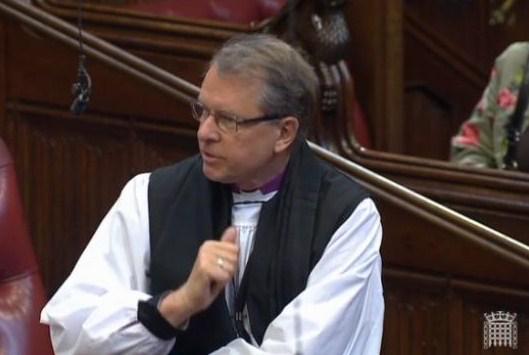
On 9th March 2016 Lord Watson of Invergowrie asked Her Majesty’s Government “why they are proposing to prevent some parents and organisations from objecting to violations of the School Admissions Code”. The Bishop of Durham, Rt Revd Paul Butler, asked a follow up question.

Bp Durham June 2015 b

The Lord Bishop of Durham: My Lords, we know that some campaign groups are actually targeting faith-based schools as part of a broader agenda. How many of the upheld objections were unrelated to religious selection criteria, and how many were upheld on minor administrative infringements? Are the significant time and resources used to respond to such objections justified in the light of those numbers? Continue reading “Bishop of Durham raises targeting of faith-based schools by campaign groups”

Bishop of St Albans asks about localism and Starter Homes

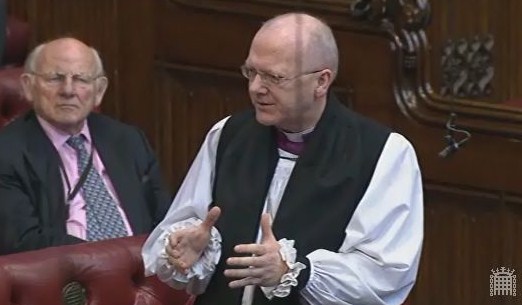
Bishop St Albans June 2015On 7th March 2016, Lord Shipley asked the Government “what is their definition of affordable housing.” The Bishop of St Albans, the Rt Revd Alan Smith, asked a supplementary question and Baroness Williams of Trafford responded. Continue reading “Bishop of St Albans asks about localism and Starter Homes”

Bishop of St Albans asks Government to ensure new prison designs take account of mental health needs

On 3rd March 2016 Lord Marks of Henley-on-Thames asked Her Majesty’s Government “what steps they are taking to tackle the incidence of deaths, serious assaults and incidents of self-harm in prison.” The Bishop of St Albans, Rt Revd Alan Smith, asked a follow up question:


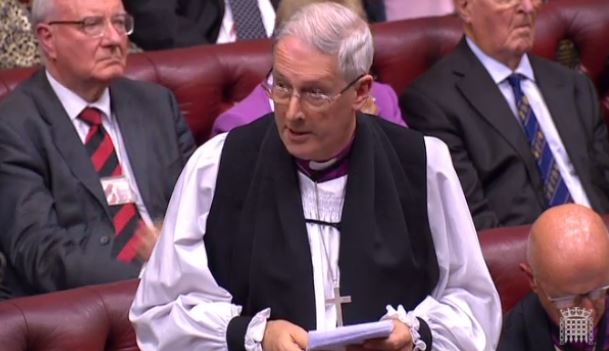
Bishop of St AlbansThe Lord Bishop of St Albans: My Lords, in the light of the welcome announcement last autumn that a number of the old, unsuitable prisons were going to be replaced with purpose-built ones, will the Minister assure the House that the specifications for those new-builds will take very careful account of mental health issues, consulting with the charities that are dealing with this particular area and producing excellent educational, medical and spiritual facilities, so that we can minimise the level of mental health problems and maximise rehabilitation? Continue reading “Bishop of St Albans asks Government to ensure new prison designs take account of mental health needs”

Bishop of Southwark asks Government about building of separation barrier by Israel in the Cremisan Valley

BishSouthwarktaxcreditsOn 2nd March the Bishop of Southwark, Rt Revd Christopher Chessun, received two written answers to questions of Government on the building of a separation barrier by Israel in the Cremisan Valley:


The Lord Bishop of Southwark: To ask Her Majesty’s Government what representations they have made to the government of Israel following its decision to start building the annexation wall in the Cremisan Valley, and in particular regarding building works on the privately owned land of Beir Onah in Beit Jala. [HL6278]

Continue reading “Bishop of Southwark asks Government about building of separation barrier by Israel in the Cremisan Valley”

Bishop of Southwark asks Government about help for Iraqi refugees in Jordan

On 2nd March 2016 the Bishop of Southwark, Rt Revd Christopher Chessun, received answers to three written questions on the plight of Iraqi refugees in Jordan.
BishSouthwarktaxcredits


The Lord Bishop of Southwark: To ask Her Majesty’s Government what assessment they have made of the conditions facing Iraqi refugees in Jordan. [HL6275]


Baroness Verma: The situation for many refugees in Jordan is challenging, irrespective of nationality. Services are provided by the international community and the Government of Jordan based on a system of prioritisation of the most vulnerable and Iraqi refugees are included in this system. Like all refugees, Iraqis are registered by the Office of the United Nations High Commissioner for Refugees (UNHCR) and access assistance from UN agencies, international NGOs and national NGOs. Partners assess vulnerability in Jordan at individual, community and household levels. These vulnerability assessments take into account positive coping strategies and support networks, which are understood to be better established among the Iraqi community, including through religious institutions such as mosques and churches. Continue reading “Bishop of Southwark asks Government about help for Iraqi refugees in Jordan”

Bishop of Southwark asks Government about Daesh presence in Gaza and West Bank

On 2nd March 2016 the Bishop of Southwark, Rt Revd Christopher Chessun, received an answer to a written question on Daesh in Gaza and the West Bank:

BishSouthwarktaxcreditsThe Lord Bishop of Southwark: To ask Her Majesty’s Government what assessment they have made of the presence of Daesh in Gaza and the West Bank. [HL6280]
Baroness Anelay of St Johns: The Government’s assessment is that there are groups and individuals in the West Bank and (primarily) in Gaza who sympathise with or self-identify as Daesh but are not formally affiliated with them. We remain concerned about a possible Daesh presence and continue to monitor the situation closely.


(via Parliament.uk)

Archbishop calls on Government to do more for unaccompanied children at Calais ‘Jungle’ camp

On 1st March 2016  Baroness Sheehan asked Her Majesty’s Government “what views they have expressed to the government of France about the bulldozing of the south section of the Calais “Jungle” camp.” The Archbishop of Canterbury, Most Revd & Rt Hon Justin Welby, asked a follow up question:


Archbishop of CanterburyThe Archbishop of Canterbury: My Lords, while we would all agree that the situation is difficult for the French authorities, I am sure we also feel that it is significantly more difficult for the 300 unaccompanied children. I recently visited the Marsh Academy near Romney Marsh and saw a school and community fostering and caring with the utmost compassion for significant numbers of unaccompanied children. Given that example, does the Minister agree that issues of compassion should easily trump those of administrative efficiency and tidiness, and narrow definitions of family links, and that we should, therefore, take more children very quickly?
Continue reading “Archbishop calls on Government to do more for unaccompanied children at Calais ‘Jungle’ camp”

Bishop of St Albans asks Government about affordable housing for those on low incomes

On 1st March 2016 Lord Kennedy of Southwark asked Her Majesty’s Government “what action they are taking to help people on the living wage in London to own their own homes.” The Bishop of St Albans, Rt Revd Alan Smith, asked a follow up question:


StAlbans171115The Lord Bishop of St Albans: My Lords, there is much concern that the focus on starter homes could threaten the provision of alternative housing schemes that are more suitable for those on low incomes, such as shared ownership. Will the Minister assure the House that Her Majesty’s Government’s emphasis on these starter homes will be in addition to other affordable schemes such as shared ownership rather than replacing them?


Continue reading “Bishop of St Albans asks Government about affordable housing for those on low incomes”

Caroline Spelman praises work of Churches Conservation Trust

On the 29 February 2016 the Second Church Estates Commissioner, Mrs Caroline Spelman, briefly contributed to a debate on the Funding Order for the Churches Conservation Trust.
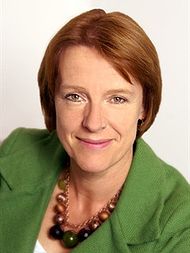
Caroline SpelmanMrs Caroline Spelman (Meriden) (Con): Early in his remarks my right hon. Friend the Minister mentioned the fact that a few of the churches are isolated, with no natural community around them. Does he agree that the Churches Conservation Trust provides a wider benefit to the local rural community by creating jobs that bring people in to repair and maintain these precious buildings?

Mr Evennett: I thank my right hon. Friend for her question. Before I answer it, I congratulate her on her superb work as a Church Commissioner. She is always hard at work on such matters. I totally agree with her: we want to bring new life into our rural communities, and if we can use churches to do that, we should. I mentioned earlier the innovative champing initiative. In a rural area that might be just what is needed. I welcome my right hon. Friend’s comments. We would warmly welcome and encourage any developments that bring tourism, jobs and opportunities to rural areas.