
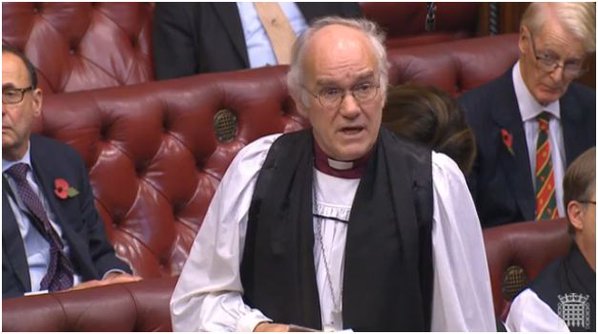
On 14th June 2016 Lord Alton of Liverpool asked Her Majesty’s Government “what assessment they have made of reports of the public burning to death, in Mosul, by ISIS, of 19 women from Iraqi religious minorities.” The Bishop of Worcester, Rt Revd John Inge, asked a follow up question:
 The Lord Bishop of Worcester: My Lords, at the wonderful parliamentary prayer breakfast in Westminster Hall that I attended this morning along with 750 others, including 150 parliamentarians, many of them from this House, we were addressed by Bishop Angaelos of the Coptic Orthodox Church in the UK. He spoke movingly of the plight of Christians in the Middle East. While I acknowledge that the vast majority of those killed by ISIS are Muslims, will the Minister assure the House that the Government will work ever more closely with the leaders of the appallingly persecuted Christian community in the Middle East, such as Bishop Angaelos, and other religious leaders there in order to learn their perspective on what is happening? Continue reading “Bishop of Worcester urges Government to work closely with leaders of persecuted Christian communities in Middle East”

 On the 26th May 2016 the Second Church Estates Commissioner. Mrs Caroline Spelman MP answered a written question to the Church Commissioners about the Church of England’s engagement with credit unions.
 On 25th May, Baroness Jones of Moulsecoomb asked Her Majesty’s Government “whether they will make it their policy routinely to publish statistical information on the detention of pregnant women under the Immigration Act 2014.” The Bishop of Southwark, Rt Rev Christopher Chessun, asked a follow-up question: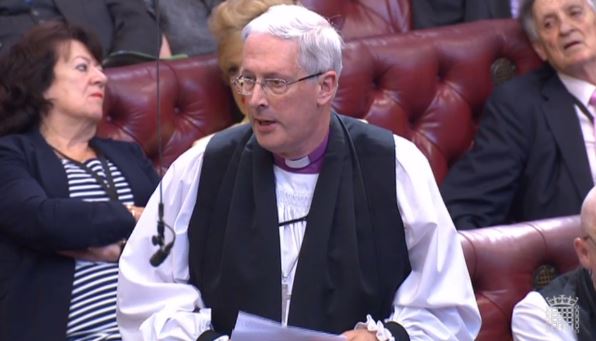


You must be logged in to post a comment.