Bishop of St Albans asks Government to engage with energy companies on prepaid meters

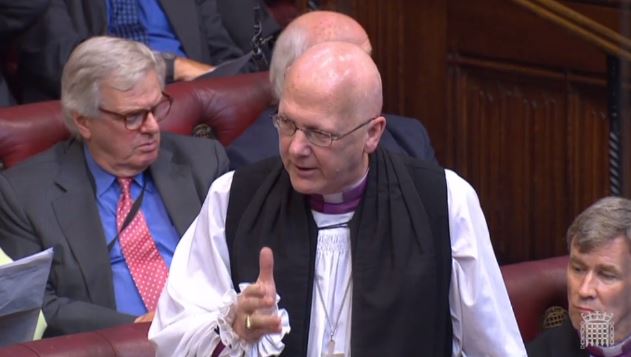
On 28th January 2016 Baroness Donaghy asked Her Majesty’s Government “what is their estimate of the number of households currently in fuel poverty; and what action they intend to take to reduce that number over the next five years.” The Bishop of St Albans, Rt Revd Alan Smith, asked a follow up question.

Bishop of St AlbansThe Lord Bishop of St Albans: My Lords, one concern is prepaid meters, which are an expensive way of paying for fuel. Will the Minister update the House on what progress is being made to promote the five principles agreed between Consumer Focus and the largest energy groups some years ago—I think it was back in 2011? Furthermore, will Her Majesty’s Government ask the large energy companies to reconsider income-differentiated tariffs again? Continue reading “Bishop of St Albans asks Government to engage with energy companies on prepaid meters”

Bishop of Chester asks Government about junior doctors’ remuneration

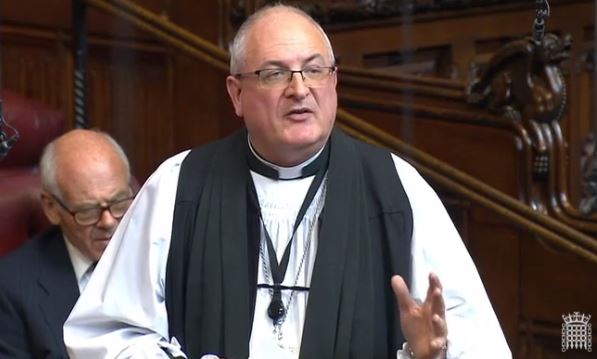
ChesterOn the 27th January 2016 Lord Harries of Pentregarth asked the Government “what assessment they have made of the remuneration of junior doctors”. The Rt Revd Peter Forster, Bishop of Chester, asked a follow up question.

The Lord Bishop of Chester: My Lords, I, too, declare that I have a daughter who is a junior doctor. She is in her fourth year since qualification. To get to the level of remuneration that the noble Lord mentioned—some £23,000—junior doctors have to work jolly long and unsocial hours. But my specific question is: what is the comparator with other developed western countries for the remuneration of our younger doctors?

Continue reading “Bishop of Chester asks Government about junior doctors’ remuneration”

Bishop of Worcester “stigmatising Muslim communities not conducive to community cohesion”

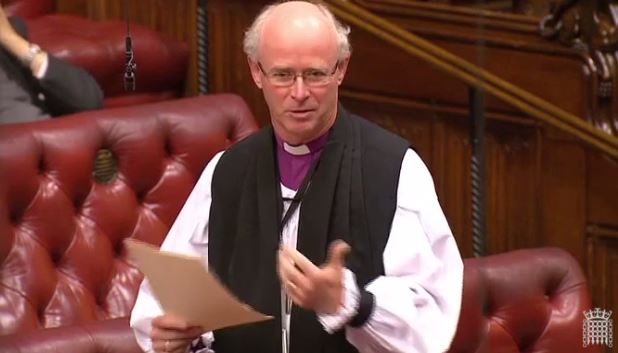
worcesterOn the 27th January 2016 Lord Pearson of Rannoch asked the Government “what assessment they have made of the risk that Christians could be recorded as having committed an anti-Muslim hate crime from April 2016 by preaching the divinity of Christ or by reading aloud sections of the Bible in public, such as 1 John, Chapter 4, verses 1 to 3.” The Rt Revd John Inge, Bishop of Worcester, asked a follow-up question criticising the phrasing of Lord Pearson’s question and highlighting the  contribution of religion to the enrichment of public life. The transcript in full is available below.

The Lord Bishop of Worcester: My Lords, does the Minister agree with me that Questions phrased in this manner are not conducive to building positive relations between faith communities, in particular with Muslim communities, as we are endeavouring to do in the church at a time when Muslims are feeling unfairly stigmatised? Does he further accept that Muslims, and people of all faiths, greatly enrich our society and make a significant contribution to the common good? Continue reading “Bishop of Worcester “stigmatising Muslim communities not conducive to community cohesion””

Archbishop of York urges Government not to slant policy against larger families

On 26th January 2016 Baroness Lister of Burtersett asked Her Majesty’s Government “what impact the Family Test has had on policy-making.” The Archbishop of York, Most Revd & Rt Hon John Sentamu, asked a follow up question:

Archbishop of YorkThe Archbishop of York: My Lords, I hope that the family test recognises that poor families come in different shapes and sizes and that there is no intention of pushing a particular policy, of which we saw a little in China. Margaret and I had two children of our own and then fostered two children who came to us at the ages of eight and one and a half. They are now working adults. Had this family test been around, I would have been worried, as Ruth is, because that child would have found it very difficult. Will the Minister assure us that when the family test comes, common sense will prevail, not numbers? Continue reading “Archbishop of York urges Government not to slant policy against larger families”

Bishop of Worcester asks how Government’s family test will shape its life chances strategy

On 26th January 2016 Baroness Lister of Burtersett asked Her Majesty’s Government “what impact the Family Test has had on policy-making”. The Bishop of Worcester, Rt Revd John Inge, asked a follow up question:

WorcesterThe Lord Bishop of Worcester: My Lords, I have not consulted their Graces the most reverend Primates the Archbishops, but I feel confident in saying that we on these Benches welcome the thrust of the life-chances strategy, which the Prime Minister outlined in a recent speech. We believe, as does the Prime Minister, that the family is the best anti-poverty measure ever invented—invented by God, in fact, although the Prime Minister did not add that. The increase in funding for relationship support is welcome, but could the Minister indicate how the priorities articulated in the family test might shape the development of the life-chances strategy as it is published and implemented in due course? Continue reading “Bishop of Worcester asks how Government’s family test will shape its life chances strategy”

Bishop of Durham tells Peers of support on offer for unaccompanied child refugees

Bp Durham June 2015 bOn 25th January 2016, the Bishop of Durham, the Rt Revd Paul Butler, responded to a statement in the House of Lords regarding the plight of unaccompanied refugee minors.

The Lord Bishop of Durham: My Lords, I declare an interest as one of the co-chairs of the National Refugee Welcome Board. Is the Minister aware that the organisations Home for Good and Coram have somewhere between 9,000 and 10,000 families already offering to take unaccompanied minors? Of course, they have to have all the safeguarding checks and they will not all be suitable, but there is a vast body of people already willing to offer to help to resettle unaccompanied children in this country. The National Refugee Welcome Board is committed to working with the Government to try to help in that, with those organisations.

Lord Bates: That is a very generous welcome and one that we appreciate very much indeed. We are conscious that a lot of the people who are coming in the first wave are those who are most in need; those who have been victims of torture, with acute medical needs, and those most at risk. They may not be appropriate for the type of generous hospitality being suggested. But certainly as the scheme progresses we will very much want to call on that active and typical generosity on behalf of the British people.

(via Parliament.uk)

Bishop of St Albans asks about protection for forests

StAlbans171115On the 25th January, Baroness Royall of Blasidon asked the government “what assessment they have made of the social and environmental impacts of the potential extraction of coal-bed methane on forests such as the Forest of Dean.” The Bishop of St Albans, the Rt Revd Alan Smith, asked a follow up question.


The Lord Bishop of St Albans: My Lords, this Question raises a much broader issue, which concerns many people, about the protection both of the ancient forest lands and of the forestry estates. Could the Minister update your Lordships’ House on what progress has been made towards the appointment of the new public forest body, which was the recommendation of the independent forestry report? If no progress has been made, what role is, for example, the Forestry Commission taking in protecting this land, which the public hold so dear and for which they have such great concern?

Continue reading “Bishop of St Albans asks about protection for forests”

Bishop of St Albans asks questions about forced and underage marriage

StAlbans171115On the 18th January, the Rt Revd Alan Smith, Bishop of St Albans, received written answers to questions about the incidence of forced and underage marriage in the UK and abroad.


The Lord Bishop of St Albans: To ask Her Majesty’s Government on how many cases the Forced Marriage Unit provided advice or support in (1) 2014, and (2) 2015. Continue reading “Bishop of St Albans asks questions about forced and underage marriage”

Bishop of Peterborough questions Government about Basic Farm Payments

On the 19th January 2016 Baroness McIntosh of Pickering asked Her Majesty’s Government “what percentage of the Basic Payment Scheme was paid to farmers by the end of December 2015, and what assessment they have made of the delivery mechanisms of that funding”. The Bishop of Peterborough, the Rt Revd Donald Allister, asked for assurances that payments would be made promptly and in full.

14.02 PeterboroughThe Lord Bishop of Peterborough: My Lords, I speak as one who, until very recently, has been privileged to serve as a trustee of the Farming Community Network, which supports many farmers with difficulties of this sort. Is the Minister aware, as FCN certainly is, that many of those who have been told they will not receive their payments until after the end of this month—more than two months late—are farming in upland areas, not just common grazing, and are often the poorest farmers in the most need? Is it possible for at least some payment to be made on account? Can the Government assure noble Lords that payments will be made on time, and in full, in the next cycle?

Continue reading “Bishop of Peterborough questions Government about Basic Farm Payments”

Church Commissioners Written Answer – Peterborough property development

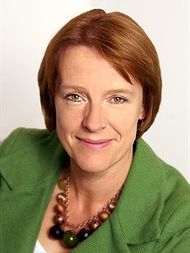
Caroline SpelmanOn the 19th January 2016 the Second Church Estates Commissioner, the Rt Hon Caroline Spelman MP answered a written question relating to the Church Commissioners’ property developments in Peterborough.

Mr Stewart Jackson: To ask the right hon. Member for Meriden, representing the Church Commissioners, what recent progress has been made on (a) residential development and (b) infrastructure planning on Church Commissioner land allocated as an urban extension by Peterborough City Council at (i) Paston Reserve and (ii) Norwood; and if she will make a statement. [21889]

Mrs Caroline Spelman: There are no further developments to report since the answer given by the Church Commissioners to question 16388 on the 20 November 2015.

(via Parliament.UK)