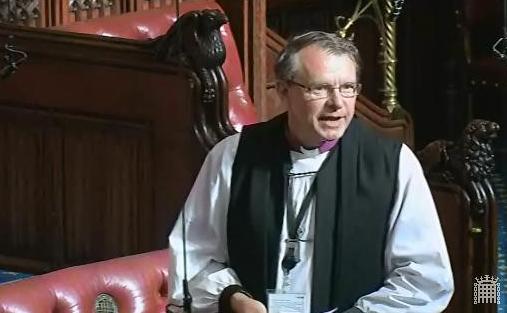
Bishop of St Albans Receives Answers to Questions on Social Housing

On 30th July 2014, the Bishop of St Albans, the Rt Revd Dr Alan Smith, received answers to two written questions on the social impacts of the under-occupancy charge from the Minister for Welfare Reform, Lord Freud.
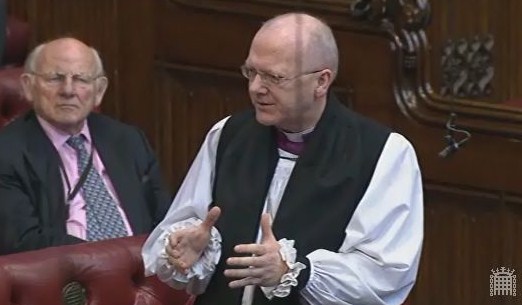
Bishop of St AlbansThe Lord Bishop of St Albans: To ask Her Majesty’s Government what plans they have to mitigate the impact of the under-occupancy charge on household debt.[HL1588] 

Lord Freud: The removal of the spare room subsidy was a necessary change in order to get the housing benefit bill under control, return fairness to the system and make better use of social housing stock.

For those that are vulnerable and who may require more time to make the transition to change, the Discretionary Housing Payment scheme administered by local authorities is available. Money management and budgeting and debt advice is also provided by many local authorities and social sector landlords. Continue reading “Bishop of St Albans Receives Answers to Questions on Social Housing”
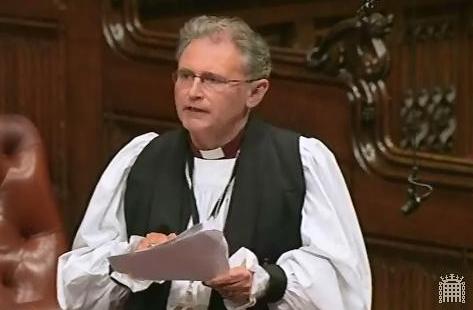
Bishop of St Albans asks Government about its humanitarian assistance to South Sudan (Written Answer)

On 29th July 2014, the Bishop of St Albans, the Rt Revd Alan Smith, received an answer to a written question on humanitarian assistance in South Sudan.

Bishop of St AlbansThe Lord Bishop of St Albans: To ask Her Majesty’s Government how they are supporting the role of churches and other civil society groups in the peace and reconciliation process in South Sudan, and in the delivery of humanitarian assistance.

Baroness Northover: The UK is one of six donors funding the United Nations Development Programme (UNDP) Community Security and Arms Control (CSAC) Project, which includes provision of technical support for national and community-level community reconciliation process, including working with faith-based partners. Furthermore, under the Africa Conflict Pool Programmes, the UK is funding civil society organisations to build the capacity of local populations to identify and resolve conflicts that affect them.

Through the Common Humanitarian Fund (CHF), the UK has supported work by national civil society to provide health, education, food security and livelihood, water and sanitation and mine awareness services for the most vulnerable. In addition, some United Nations agencies supported by the UK (such as the Food and Agriculture Organisation (FAO) and the World Food Programme (WFP)) work in close collaboration with local partners. To improve basic services the UK funded Girls Education South Sudan (GESS) project is working through Episcopal Church of Sudan (ECS) in two of South Sudan’s 10 States, and the UK-led Health Pooled Fund (HPF) will support faith-based county hospitals as well as government ones.

(via Parliament.uk)

Bishop of St Albans asks Government about UK involvement in South Sudan peace settlement

On 28th July 2014, Conservative Peer Baroness Hodgson of Abinger asked Her Majesty’s Government what steps they are taking to ensure that any future peace settlement in South Sudan is inclusive. The Bishop of St Albans, the Rt Revd Alan Smith, asked a supplementary question:

Bishop of St AlbansThe Lord Bishop of St Albans: My Lords, it is evident that the long-term process of finding an inclusive Sudanese-led reconciliation can begin only once hostilities cease and a political settlement and resolution is reached. This is why international diplomacy is so vital. Will the noble Lord tell the House what plans the Government have to address the current understaffing of the UK Sudan unit, which has a role in this?

Lord Wallace of Saltaire: My Lords, the number of staff in the UK Sudan unit has fluctuated over the past few months; my understanding is that it is now rather larger than it was two or three months ago. I do not think that we can wait until the fighting stops to begin negotiations; local fighting is likely to continue for some considerable time and we have to start to move to construct at least the basis of some form of government now.

(via Parliament.uk)

Bishop of Coventry asks Government about asylum for Ugandan LGBT people

On 23rd July 2014, Lord Lexden asked Her Majesty’s Government what action they propose to take over the abuse of the human rights of LGBT people in Uganda as a result of the passing of the Anti-Homosexuality Act there. The Bishop of Coventry, the Rt Revd Christopher Cocksworth, asked a supplementary question:

13.10 Bishop of CoventryThe Lord Bishop of Coventry: My Lords, I apologise to the Minister for my enthusiasm. I have not asked a question in this House before so I wanted to get on with it. The Minister will be aware that the most reverend Primates the Archbishop of Canterbury and the Archbishop of York wrote to the President of Uganda in January to reiterate a statement made by all the Primates of the Anglican Communion, in which they said:

“The victimisation or diminishment of human beings whose affections happen to be ordered towards people of the same sex is anathema to us”.

In that spirit, do the Government intend to provide asylum to those who are fleeing the worrying consequences of this law which enshrines such diminishment?

Continue reading “Bishop of Coventry asks Government about asylum for Ugandan LGBT people”

Bishop of Birmingham responds to Government statement on ‘Trojan Horse’

On 22nd July 2014, a Government statement on Birmingham Schools was repeated in the House of Lords by the Parliamentary Under-Secretary of State for Schools, Lord Nash. The Bishop of Birmingham, the Rt Revd David Urquhart, responded to the statement. He called for Government support of the Kershaw Report, asked for clarity on responsibility and accountability in the education system, and argued that the incident highlighted the need for greater understanding of faith and religion throughout civil society.

T01.04.14 Bishop of Birminghamhe Lord Bishop of Birmingham: My Lords, I am grateful to the Minister for bringing the Secretary of State’s Statement to the House and for the publication of Peter Clarke’s report. As he mentioned, this goes alongside Ian Kershaw’s report, which was published on Friday, about Birmingham City Council and it has the support of the Birmingham Trojan horse review group, of which I am a member. That group has published its own, wider recommendations in this complex and troubling period. Does the Minister agree that both reports are thorough and hard-hitting, and that there is much in common in their findings? Continue reading “Bishop of Birmingham responds to Government statement on ‘Trojan Horse’”

Bishop of Coventry responds to statement on MH17 and Gaza

On 21st July 2014, a Government statement on the Ukraine (Shooting Down of MH17) and Gaza was repeated in the House of Lords by the Leader of the House, Baroness Stowell of Beeston. The Bishop of Coventry, the Rt Revd Christopher Cocksworth, asked a supplementary question.

13.10 Bishop of CoventryThe Lord Bishop of Coventry: My Lords, perhaps I may return us to the tragic event of the downing of flight MH17 to join others in expressing deep and profound condolences to the families, friends and colleagues of those who died. In particular, I express the deep sympathies of those of us who spend quite a lot of our time caring for those who are bereaved and, in so doing, I pay tribute to the Protestant, Anglican, Old Catholic and Roman Catholic ministers who have been trying to care for the stricken families at Schiphol Airport. They have a very demanding task. Continue reading “Bishop of Coventry responds to statement on MH17 and Gaza”

Bishop of Carlisle urges engagement with Indian Government on violence against women

On 17th July 2014, Lord Harries of Pentregarth asked Her Majesty’s Government what is their assessment of the new Government of India and the challenge presented by poverty in that country. The Bishop of Carlisle, the Rt Revd James Newcome, asked a supplementary question.

14.06.09 Bishop of CarlisleThe Lord Bishop of Carlisle: My Lords, does the Minister agree that while the gender gap in employment and political participation is narrowing in India, there is still much that needs to be done by the Government for the health and safety of girls and women? If that is the case, can the Minister assure us that this matter will be given the attention it deserves at the Girl Summit being hosted by the UK Government next week?

Baroness Northover: The Girl Summit is extremely important. The right reverend Prelate is right about the gender gap in India, but I also notice that in the budget of last week money was put into trying to ensure that girls attend and are safe in school. I have myself seen a major programme which puts money into the hands of families of girls to try to ensure that they stay in school and have the incentives to be there.

(via Parliament.uk)

Bishop of St Albans asks Government for update on ‘smart meter’ policy and efforts to tackle fuel poverty

On 17th July 2014, Lord Ezra asked Her Majesty’s Government whether, in the light of the recently published statistical report on fuel poverty indicating a rising trend in 2014, they intend to expedite the announcement of their policy for dealing with the matter. The Bishop of St Albans, the Rt Revd Alan Smith, asked a supplementary question.

Bishop of St AlbansThe Lord Bishop of St Albans: My Lords, those who keep a close eye on this area point out that issues of fuel poverty depend on which groups you look at. Clearly, in some groups this is a growing area. Indeed, they assert that there is a connection between the increase in fuel poverty of certain groups and the increase in the number of pre-paid meters that have been installed, partly because it is believed that they are the most expensive way to pay for fuel. In the light of that, can my noble friend tell us what consideration Her Majesty’s Government have given to promoting the five principles on the use of pre-paid meters which were agreed between Consumer Focus and the big six energy companies back in March 2011, to ensure consistency in their installation and use?

Baroness Verma: I am extremely grateful to the right reverend Prelate for his question, which enables me to reassure him and the House that we have looked very seriously at the pre-paid meter issue. We think that people on very low incomes must be among the greater beneficiaries of this policy, which is why we will make sure that through smart meters they are able to top up their meter as if they are topping up a mobile phone, so they have no chance of being cut off when they need their electricity the most.

(via Parliament.uk)

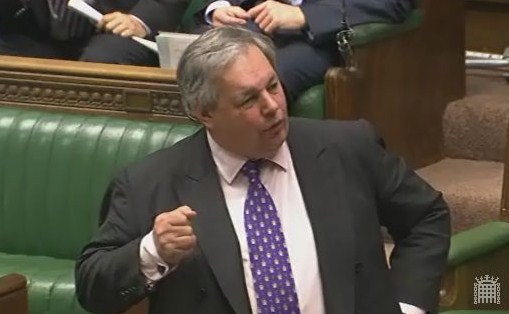
Church Commissioners – Oral and Written Questions

On 17th July 2014, the Second Church Estates Commissioner, the Rt Hon Sir Tony Baldry MP, answered a number of questions on the floor of the House of Commons, during the monthly Church Commissioner Questions slot. He answered questions on food banks, church and cathedral repairs, human trafficking and women bishops. He also answered a written question on Church Commissioners ICT. A full transcript of the session is reproduced below:

14.01 CCQ Baldry

Food Banks

Hugh Bayley (York Central) (Lab): What support the Church of England is giving to food banks.

The Second Church Estates Commissioner (Sir Tony Baldry): Four in five of the Church of England’s 13,000 parish churches are supporting local food banks. Continue reading “Church Commissioners – Oral and Written Questions”

Bishop of Durham calls for victim-centred inquiry into child abuse

On 15th July 2014, Lord Storey asked Her Majesty’s Government what steps they are taking to prevent and tackle child abuse in the United Kingdom. The Bishop of Durham, the Rt Revd Paul Butler, asked a supplementary question:

14.06.10 Bishop of Durham 5The Lord Bishop of Durham: My Lords, in pursuing a review into questions of institutional child abuse, are her Majesty’s Government committed to recognising that listening to the voices of survivors and victims of child abuse is vital at every stage of this inquiry; that their voices, through for example the Stop Church Child Abuse campaign, are clear that ultimately only a full public inquiry will do; and that Sir Keir Starmer would be a trusted member of the inquiry panel?

Lord Ahmad of Wimbledon: The right reverend Prelate again makes a very important point. Let me assure him that the whole intention of this inquiry is to make it open and transparent. While it has been set up on a non-statutory basis at the current time, if the chairman and the panel decide that this requires a statutory underpinning then the Government have already committed to that—indeed, my right honourable friend the Home Secretary has done so. The right reverend Prelate also raises the important point about ensuring that any bodies involved in protection of children from child abuse—be that in the church or voluntary sectors or across the board—are also included in providing evidence. In terms of the specific suggestion, I shall certainly take that back.

(via Parliament.uk)