Second Church Estates Commissioner highlights role of Leicester Cathedral in commemorating King Richard III

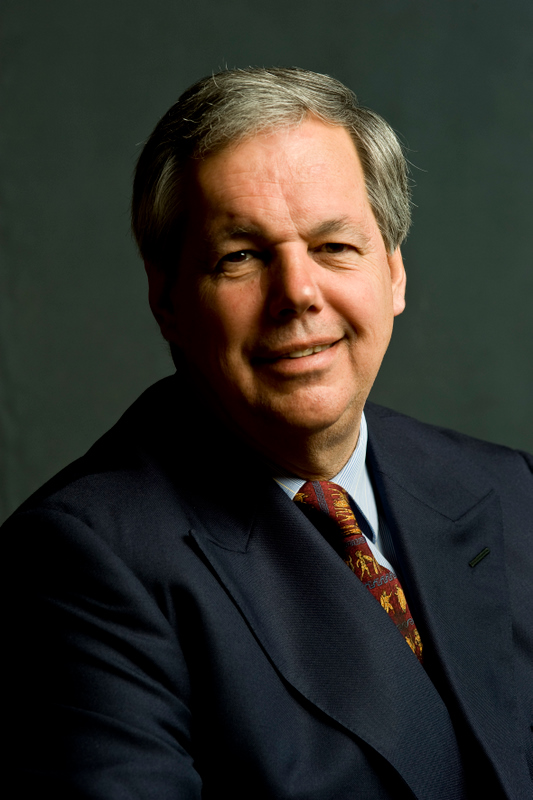
In the House of Commons on 1 July 2014, the Second Church Estates Commissioner, the Rt Hon St Tony Baldry MP, took part in oral questions to the Secretary of State for Justice. He asked a supplementary question on the commemoration of King Richard III, which was answered by the Minister of State, the Rt Hon Simon Hughes MP.


King Richard III

14.01 CCQ BaldrySir Tony Baldry (Banbury) (Con): As the Minister said, Richard III was the King of all England, not just of York or Yorkshire. Is he aware that the Dean and Chapter of Leicester Cathedral see it as their responsibility to rebury the remains of King Richard and to commemorate his memory on behalf of the whole nation, and not just for Leicester or York?

Simon Hughes: I have every confidence that the Dean and Chapter of Leicester cathedral will do that job for the nation. I understand that they intend to apply for an extension so that it may be done in the spring of next year. I believe that it will be a great credit to Leicester and will bring great joy to the people of Leicestershire that a King of England is buried in their county.

(via Parliament.uk)

Bishop of Derby urges caution over response to recent violence in Middle East

On 1st July 2014, the Baroness Warsi made a statement on the Middle East Peace Process. The Bishop of Derby, the Rt Revd Alastair Redfern, asked a question about what the government is doing to promote a measured response to the recent events in the Holy Land.

DerbyThe Lord Bishop of Derby: On behalf of these Benches, we associate ourselves with the condolences to the families and the widespread grief on all sides. We welcome the statement by the unity Government but an inevitable reaction to grief, especially with the death of the young, is anger. Yet grief is something that is never handled by anger; it requires time for reflection, engagement and a deeper kind of approach to the issue at stake. Can the Minister assure us that, in our work to seek peace, we will do everything we can to mitigate the knee-jerk reaction of anger and invite people to think more deeply about the human content of grief and how to deal with it?

Baroness Warsi: We will of course do that. The right reverend Prelate makes important points, but I think he would also say—and on a very personal basis, I acknowledge this as a mother—that it must be incredibly difficult to reach that second phase when you have just lost your children.

(via Parliament.uk)

Bishop of St Albans supports efforts to encourage young people to vote

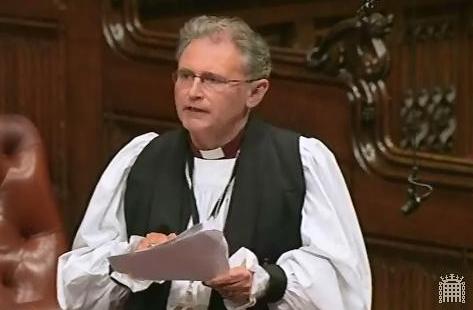
On 1st July 2014, Liberal Democrat peer Lord Storey asked Her Majesty’s Government what plans they have to encourage educational establishments to take part in National Voter Registration Day 2015. The Bishop of St Albans, the Rt Revd Alan Smith, asked a supplementary question.

Bishop of St AlbansThe Lord Bishop of St Albans: My Lords, the Question is about encouraging educational establishments to encourage a whole new generation of people to engage in the electoral process. Of course, next year is a hugely significant year, with the 800th anniversary of Magna Carta. Can we not only encourage our schools to use this as an opportunity to really inspire people to think about civil participation, citizenship and so on but find some imaginative ways to give people the information in the educational packs that will be used next year?

Lord Wallace of Saltaire: My Lords, certainly. We trust that the churches will play their own role, and perhaps we will have mentions in sermons of civic duty and what one should render unto Caesar as well as unto God.

(via Parliament.uk)

Bishop of Chester asks question on assessment of needs of dyslexics in higher education

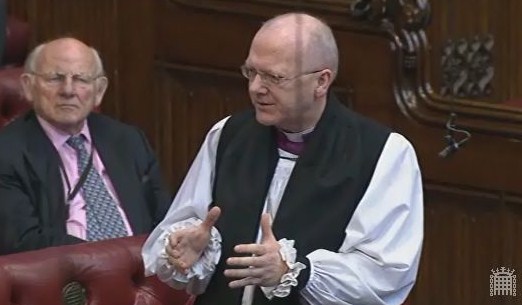
On 30th June 2014, Liberal Democrat peer Lord Addington asked Her Majesty’s Government how the assessment of complex needs for dyslexics will be achieved under the new Disabled Students’ Allowance arrangements. The Bishop of Chester, the Rt Revd Peter Forster, asked a supplementary question.
14.03 Bishop of ChesterThe Lord Bishop of Chester: My Lords, I declare an interest in that my younger son has just graduated successfully and has benefited from the computer and software for someone with dyslexia. People with dyslexia often flourish later in the educational process as they gain their coping mechanisms. Does this not mean that it is even more important to make sure that this support is fully in place, not least at university?
Lord Ahmad of Wimbledon: The right reverend Prelate makes an important point, and I congratulate him on his son’s successful graduation. The point he makes is perfectly valid. I have already mentioned that we will be looking at a full equality impact assessment before laying the regulations. I am sure that part and parcel of that process, and the discussion around those regulations, will be to cover the points that the right reverend Prelate has made.

Bishop of Chester seeks clarification on place of carol singers under busking guidelines

14.03 Bishop of ChesterIn the House of Lords on 30th June 2014, Liberal Democrat peer Lord Clement-Jones asked Her Majesty’s Government what assessment they have made of the link between busking and crime and disorder; and what plans they have to issue revised guidance on the use of the Metropolitan Police Act 1839 and the Police and Criminal Evidence Act 1984 in respect of busking. The Bishop of Chester, the Rt Revd Peter Forster, asked a supplementary question.
The Lord Bishop of Chester: My Lords, will the Government confirm that carol singing will not be reclassified as busking?
Baroness Williams of Trafford: My Lords, it depends on the carol singers. If they were being disruptive they might well be.

Church Commissioners Written Answer: Apprentices

On 30th June 2014, the Second Church Estates Commissioner, the Rt Hon Sir Tony Baldry MP, answered a written question on behalf of the Church Commissioners, on the subject of apprentices.

Robert Halfon: To ask the right hon. Member for Banbury, representing the Church Commissioners, how many apprentices the Church Commissioners have employed in the last 12 months.

Tony Baldry MPSir Tony Baldry: The Church Commissioners currently directly employ one member of staff on an apprenticeship scheme; this role is designed to give experience of supporting the administrative work of the national institutional structures of the Church of England. There is an intention to roll out apprenticeships more widely should this trial proves successful.

Within the Church of England, there are jobs and opportunities for skilled professionals and their students to undertake apprenticeships, training, or conservation work on and within its buildings, stone/carpentry yards and stained glass workshops choir and organ schools.

There are also some more informal apprenticeship and paid internship opportunities within the local and national structures that are organised locally by those concerned.

(via Parliament.uk)

Archbishop of York: ‘working poor’ “a stain on the conscience of this country”

On 25th June 2014, Labour Peer Baroness Thornton asked Her Majesty’s Government what measures they are taking to address any fall in wages of women in the United Kingdom. The Archbishop of York, the Most Revd and Rt Hon John Sentamu,asked a supplementary question:

Archbishop of YorkThe Archbishop of York: My Lords, the Living Wage Commission published its final report yesterday. It makes it clear that people in the care industry are paid very poorly—and the majority happen to be women. Will the Government take a reality check and recognise that people in the care professions are paid poorly? Will they make sure that, in terms of procurement, local authorities encourage those in the care profession to pay at least the living wage, which we wanted to be voluntary and not compulsory? If that does not happen, concern about women being paid poorly will continue. It is a stain on the conscience of this country that people work hard and are still in poverty.

Baroness Northover: I read the report of the most reverend Primate’s commission with enormous interest. I note that he has just said that he is looking for a voluntary approach rather than regulation, but he challenges responsible employers to pay a fair wage. He is right to identify the difference in pay between men and women.

(via Parliament.uk)

Bishop of St Albans asks questions on Apprentices and Iran

On the 25th June 2014 the Lord Bishop of St Albans received three written answers, on apprenticeship data and on the events in Evin Prison, Iran.

 Apprentices

Bishop of St AlbansThe Lord Bishop of St Albans: To ask Her Majesty’s Government whether their commitment to making better apprenticeship data available will involve publishing the retention rate of apprentices as employees by company and by occupational sector. Continue reading “Bishop of St Albans asks questions on Apprentices and Iran”

Bishop of St Albans asks Government to consider link between under-occupancy charge and rent arrears in housing associations

On 24th June 2014, Baroness Quin asked Her Majesty’s Government when they expect to publish their interim review on the under-occupancy charge.The Bishop of St Albans, the Rt Revd Alan Smith, asked a supplementary question:

Bishop of St AlbansThe Lord Bishop of St Albans: My Lords, the Ipsos MORI report, undertaken by the National Housing Federation in February this year looked at 183 housing associations. It found that two-thirds of tenants affected by the underoccupancy charge were in rent arrears and 38% indicated that they were in debt. That is the equivalent of 72,000 tenants in housing associations in debt in England alone, which seems to be allied in some way to the underoccupancy charge. What assessment have Her Majesty’s Government made of the impact on housing associations of rent arrears because of the underoccupancy charge?

Lord Freud: We have a general look at the level of arrears through the Homes and Communities Agency, whose statistics show that arrears have fallen—not risen—for the past two quarters in a row. The average rent collection rate for associations remains at 99%, a very high figure, which is very much at variance with some of the stories that we hear and the data that the right reverend Prelate referred to.

(via Parliament.uk)

Bishop of St Albans asks Government for progress report on security and affordability of the off-grid energy supply (Written Question)

On 24th June 2014, the Bishop of St Albans, the Rt Revd Alan Smith, recieved an answer to a written question on off-grid energy supply.

Energy Supply

Bishop of St AlbansThe Lord Bishop of St Albans: To ask Her Majesty’s Government what progress was made towards improving the security and affordability of off-grid fuel supply at the third ministerial roundtable meeting on heating oil and liquid petroleum gas supply on 21 May.

The Parliamentary Under-Secretary of State, Department of Energy and Climate Change (Baroness Verma): My Rt. Hon. Friend the Minister of State for Energy chaired the third Ministerial Roundtable meeting on heating oil and LPG supply on 21 May. My rt. hon Friend the Minister of State for Climate Change joined the roundtable discussion on off gas grid fuel poor households and support for off gas grid consumers. This continued the useful discussions government has had at the previous two Roundtables with representatives from industry, consumer groups, oil buying groups and others on how to improve heating oil and LPG supply to UK consumers.

Issues covered at the third roundtable included the promotion of the Federation of Petroleum Suppliers’ Customer Charter, the messaging to consumers on buying oil early ahead of the winter and an update on the action government is taking more broadly to help fuel poor off-grid households. Full details of the meeting can be found in the minutes of the meeting which has been placed in the Library of the House.

(via Parliament.uk)