Church Commissioner Sir Tony Baldry MP Highlights Archbishop’s Ash Wednesday Eucharist in Parliament

During Business Questions in the House of Commons, the Second Church Estates Commissioner, Rt Hon Sir Tony Baldry MP, drew attention to the Ash Wednesday Eucharist taking place the following week in the Parliamentary Chapel, at which the Archbishop of Canterbury would preside. The Leader of the House responded.14.01 CCQ Baldry

Sir Tony Baldry (Banbury) (Con): Will my right hon. Friend ensure that on Tuesday evening, the House finishes its business promptly at 7 o’clock, so that we can all get home, finish our pancakes, and have an early night, as on Wednesday, the first day of Lent, at 7.45 am, the Archbishop of Canterbury is celebrating Holy Communion in the Undercroft chapel? Everyone working in the Palace of Westminster is very welcome to attend.

Mr Lansley: I am grateful to my right hon. Friend, and I am sure that the House appreciates the opportunity to go to the Ash Wednesday service that he advertises. I think that there is nothing on the Order Paper at the moment that would require us to extend our proceedings beyond the moment of interruption at 7 o’clock on Tuesday.

(via Parliament.uk)

Bishop of Wakefield welcomes continued Government support for Near Neighbours

Lord Phillips of Sudbury asked Her Majesty’s Government what is being done to mitigate the social and cultural consequences of the weakening of community life in the United Kingdom.

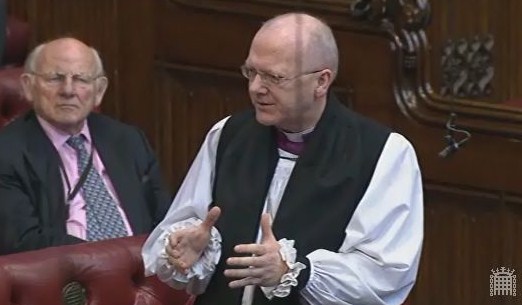
The Bishop of Wakefield asked a supplementary question:

The Lord Bishop of Wakefield: My Lords, will the Minister join me in welcoming this morning’s announcement by the Secretary of State for Communities and Local Government that the Near Neighbours scheme—a very successful collaboration between faith groups and government—is being extended for a further two years? Does he also agree that the scheme is an excellent example of strengthening social cohesion in ways that are sensitive to local dynamics, and that it could serve as a model for communities up and down the United Kingdom?

Lord Ahmad of Wimbledon: The right reverend Prelate is of course right to raise the issue of the Near Neighbours scheme. It is a successful scheme in which the Church of England works with local communities, and it shows how communities and wider faith groups can come together. My noble friend who is sitting to my right famously said, “This Government does do God”. We work with people of all faiths across the country to ensure that communities are vibrant and working well together.

The Bishop of St Albans calls for greater support for businesses taking on apprentices

Baroness Stedman-Scott asked Her Majesty’s Government what steps they are taking to equip young people with the skills necessary to enter the job market.

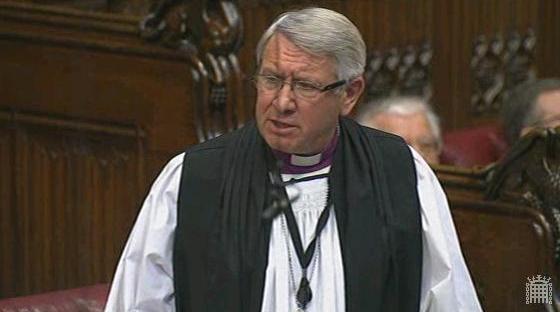
The Bishop of St Albans asked a supplementary question:

The Lord Bishop of St Albans: My Lords, there are four times as many 18 to 24 year-olds looking for work at the moment as there are in the 16 to 17 age group. Yet the Government’s policy on apprenticeships for 19 to 24 year-olds is to ask employers to pay half the costs of the learning framework. Many businesses, especially SMEs, will pause before taking on an apprentice because of this. Does the Minister agree that if this requirement were to be removed, it would hugely encourage many more young people to get into apprenticeships as well as giving them much more of a chance to succeed?

Lord Ahmad of Wimbledon: The right reverend Prelate makes an important point, but I am sure many noble Lords are aware that the Government do support local businesses. Indeed, they have made additional funding available to small businesses that are looking to take on both trainees and apprentices.

On the age group that the right reverend Prelate mentioned, particularly 19 to 24 year-olds, in October 2013 the Government announced funding of an additional £20 million to support the expansion of traineeships, which are helping even more young people to get the skills and experience they need to get into full-time work.

(via parliament.uk)

Bishop of St Albans raises concerns about the impact of closing rural schools

Lord Storey asked Her Majesty’s Government what support is given to young people living in rural areas to enable them to travel to school or college.

The Bishop of St Albans asked a supplementary question:

The Lord Bishop of St Albans: My Lords, the Church of England is deeply involved with hundreds of tiny rural schools in sparsely populated areas and is acutely aware of some of the financial difficulties that they face. When such a school has to close, what advice do Her Majesty’s Government give on the educational, financial and environmental issues—to do with sustainability—of transporting these pupils, sometimes very long distances, to the next nearest school?

Baroness Northover: I will write to the right reverend Prelate with details about what happens when these schools are closed. There is a special premium for rural schools of the type that he describes, which have fewer pupils than you might find elsewhere, but I will write with further details.

(via parliament.uk)

Bishop of Wakefield raises concerns about impact of lack of free parking on local businesses

Baroness Williams of Trafford asked Her Majesty’s Government what assessment they have made of town-centre parking policies and their impact on local businesses.

The Bishop of Wakefield asked a supplementary question:

The Lord Bishop of Wakefield: My Lords, I want to focus particularly on the impact on small towns, which may not necessarily have trains and buses bringing people into them. Where there are not just large-scale out-of-town developments but also small-scale shopping centres, where it is easy to park for nothing, the impact on the high street is significant. In Mirfield, in the diocese from which I come, free parking has had a very good impact. In Berwick-upon-Tweed, another town I know very well, there is no free parking and that is seriously affecting local businesses. Can we be assured that Her Majesty’s Government will encourage local authorities to look at ways of finding more parking spaces in small towns?

Baroness Stowell of Beeston: The right reverend Prelate is right to raise the issue of more free parking. In a recent report published by Deloitte, more free parking was the single biggest issue raised by people who responded. In examining some options, we are trying to ensure that local people have a greater say in the parking arrangements of their local areas—and, clearly, access to free parking should be one of those things.

(via parliament.uk)

Floods – Church Commissioners’ Written Answer

On 25th February 2014, Second Church Estates Commissioner, Rt Hon Sir Tony Baldry MP, answered a written question from Anne McIntosh on floods.

Tony Baldry MPMiss McIntosh: To ask the right hon. Member for Banbury, representing the Church Commissioners, what work the Church Commissioners are undertaking to support flooded communities and farmers.

Sir Tony Baldry: Following my comments to the House on 13 February 2014, Official Report, column 1010, the Church Urban Fund have launched a ‘Flood Appeal Fund’. This follows highly successful funds set up in 2000 and the year 2007 where the Church Urban Fund and the Church of England co-ordinated the collection of money to help support flood victims and businesses. Continue reading “Floods – Church Commissioners’ Written Answer”

Bishop of Wakefield responds to Government statement on the situation in Ukraine

The Lord Bishop of Wakefield: My Lords, perhaps I may focus my question on Ukraine. It seems to me that there are some senses—not exactly repetitions—in which we are seeing replayed some of the things that were not resolved in the early 1990s with the collapse of the Soviet Union. I remember that at that time I was working at Lambeth as the archbishop’s foreign secretary, as it were, and on one occasion the telephone was brought to me in the bath. There was a call from the gatekeeper telling me that Mr Gorbachev was in captivity in the Crimea and he thought that I ought to know so that I could do something about it. Some very good and quite low-key, and low-cost, initiatives were taken by Her Majesty’s Government at that time to support the development of democracy in the various republics that resulted from the collapse of the Soviet Union, including Ukraine. Can we be reassured that, once things become a little more stable, those sorts of initiatives might be looked at again? I am suggesting not carbon copies but that sort of thing.

My other point is that only the churches never recognised the division of Europe. The Conference of European Churches always worked across Europe. There are very serious divisions in the churches in the Ukraine, often reflecting some of the fragmentations that exist in the country as a whole. Again, that is another area where Her Majesty’s Government might work with others to see how one moves towards a more democratic situation.

Lord Wallace of Saltaire: My Lords, I continue to learn how close church links can be across national boundaries. I was in Armenia some months ago and was met by a very chatty archbishop, who seemed to know almost every bishop I had ever met in this country. However, we all know that the Orthodox Church in and across the former Soviet Union is a very complex and divided entity, and not all its branches are committed to anything that we would recognise as a liberal approach to organised religion. Sadly, the different branches of the church in Ukraine represent that rather well.

(via parliament.uk)

Bishop of St Albans presses Government on taking action against payday loan advertising (Written Questions)

The Lord Bishop of St Albans: To ask Her Majesty’s Government, in the light of the Ofcom’s publication Trends in Advertising Activity—Payday Loans, published in December 2013, what assessment they have made of the impact on children between four and 15 years old of the number of payday loan advertisements to which they are exposed.

The Lord Bishop of St Albans: To ask Her Majesty’s Government, in the light of Ofcom’s publication Trends in Advertising Activity—Payday Loans published in December 2013, what assessment they have made of the increase in the number of payday loan advertisements watched by children aged four to 15 years old over the past four years; and whether they have any plans to address the situation.

The Lord Bishop of St Albans: To ask Her Majesty’s Government, in the light of Ofcom’s publication Trends in Advertising Activity—Payday Loans published in December 2013, what assessment they have made of the frequency and impact of payday loan advertising viewed by children on non-children’s television channels.

The Lord Bishop of St Albans: To ask Her Majesty’s Government, in the light of Ofcom’s publication Trends in Advertising Activity—Payday Loans published in December 2013, whether they plan to commission research into the impact of payday loan advertisements on young peoples’ attitudes to the responsible use of money.

The Commercial Secretary to the Treasury (Lord Deighton): Payday loan adverts are subject to the Advertising Standards Authority’s strict content rules. The ASA will not hesitate to ban irresponsible adverts, and has a strong track record of doing so.

The Broadcast Committee of Advertising Practice (BCAP), the body that writes the Broadcast Advertising Code, is considering Ofcom’s research and the extent to which payday loan advertising features on children’s TV, and whether there are any implications for the ASA’s regulation of this sector.

Separately, the Financial Conduct Authority is consulting on new rules for consumer credit adverts, including proposals to introduce mandatory risk warnings and signposting to debt advice. It has powers to ban misleading adverts which breach its rules.

MPs QUESTIONS TO CHURCH COMMISSIONERS: Overseas visits, Bath and Wells, church buildings, credit unions and flooding

In Church Commissioners’ question time in the House of Commons on 13th February 2014, Sir Tony Baldry MP was asked by MPs to answer questions on overseas visits by Archbishops, the residence of the Bishop of Bath and Wells, the use of church buildings, credit unions and flooding. 

14.01 CCQ Baldry

Transcript (via Parliament.uk):

Continue reading “MPs QUESTIONS TO CHURCH COMMISSIONERS: Overseas visits, Bath and Wells, church buildings, credit unions and flooding”

Bishop of Worcester speaks of close link between overseas development and climate change

Baroness Rawlings asked Her Majesty’s Government by how much United Kingdom overseas aid will be increased in 2014-15 as a result of the growth in gross domestic product and the 0.7% target for overseas aid.

The Bishop of Worcester asked a supplementary question:

The Lord Bishop of Worcester: My Lords, the Minister has already referred to Pakistan. I was going to draw her attention to the Bangladeshi floods of 1998, which resulted in the loss of 30 million homes and cost the economy of that country 4.8% of its GDP. Does the Minister agree that the spending of money generally on countries which are affected terribly by climate change is both in our national interest and a moral responsibility?

Baroness Northover: The right reverend Prelate sums it up extremely effectively.

(via parliament.uk)