
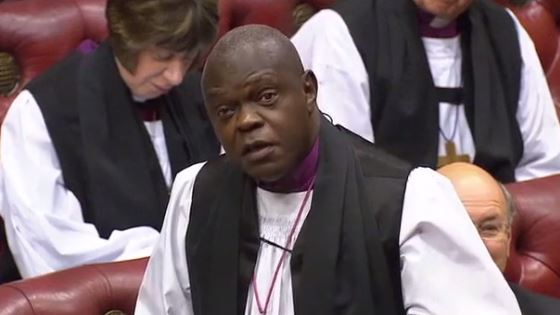
 On 17th January 2017, Lord Bridges of Headley repeated a Government statement on Britain’s withdrawal from thew EU. The Archbishop of York, Most Revd and Rt Hon John Sentamu, asked a follow up question.
The Archbishop of York My Lords, there are good things in the Prime Minister’s Statement. I have no intention of turning it into a Christmas tree on which to hang many baubles so that it collapses under the weight of them. Nevertheless, although the Prime Minister referred in her Statement to immigration and to welcoming the brightest and the best, I am surprised that, as a former Home Secretary who worked hard on immigration and the issue of asylum seekers in particular, she made no reference to asylum seekers. Continue reading “Archbishop of York asks Government about situation of those seeking asylum in the UK after Brexit”
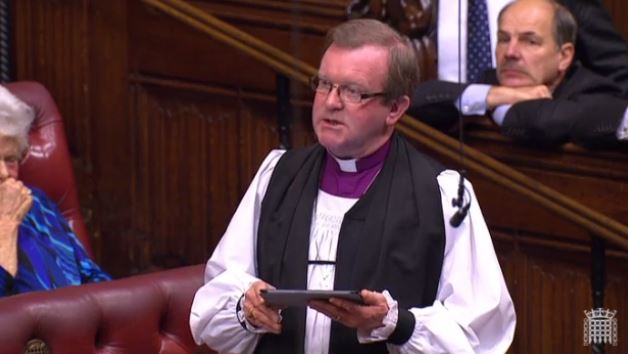
 On the 12th January 2017 Baroness Kinnock of Holyhead held a debate about the treatment of the Rohingya Muslim people in Burma. The Bishop of St Albans, Rt Revd Alan Smith, pressed the Government to encourage the Burmese authorities to move towards full citizenship and rights for the Rohingya community, and to allow access for independent monitors to northern Rakhine.
 On the 12th January 2017 Baroness Massey of Darwen held a debate in the Lords, “that this House takes note of the Institute for Public Policy Research’s annual State of the North report, and the case for equality of opportunity and sustainable productivity.” The Bishop of Leeds, Rt Revd Nick Baines, spoke in the debate about the importance of integration and connectivity in growing a balanced northern economy. The Archbishop of York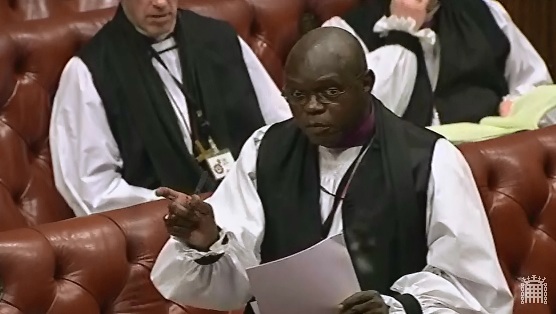
 On the 9th January 2017, the Bishop of Portsmouth, Rt Revd Christopher Foster, led a short debate in the Lords, to ask the Government “what is their assessment of the role of the Armed Forces Covenant in ensuring that those who serve or who have served in the Armed Forces, and their families, are treated with fairness and respect.” Earl Howe, the Minister of State for the Ministry of Defence, responded on behalf of the Government. Both their speeches are reproduced below in full. The speeches of other Members in the debate can be read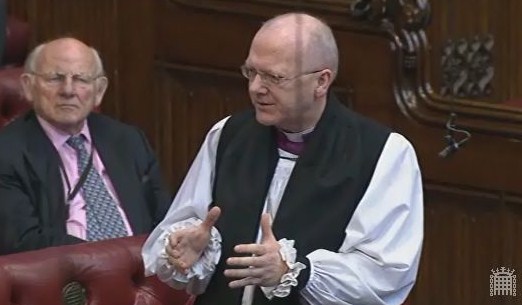
 On 20th December 2016, Baroness Corston moved “that the House take note of the Report from the Social Mobility Committee (Session 2015-16, HL Paper 120)”. The Bishop of Durham, the Rt Revd Paul Butler, spoke in the debate, to welcome the report and highlight the continued importance of a focus on child poverty.
  The Lord Bishop of Chelmsford My Lords, I too thank the noble Lord, Lord Best, for bringing this debate to the House and for his wise and winsome chairing of the Select Committee on Communications. I speak as a member of that committee. I was not part of the committee that produced this report—that illustrates just how long it has taken for it get here—so I also thank my predecessors on the committee for all their work.
 The Church of England in Parliament
You must be logged in to post a comment.