Bishop of Ely highlights role of church schools in fostering shared values

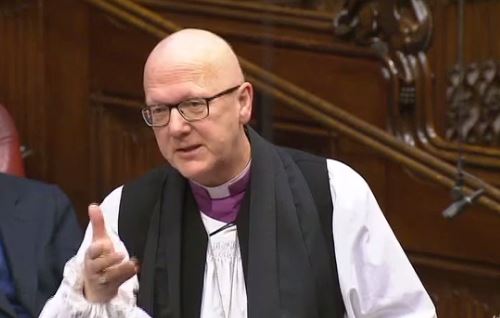
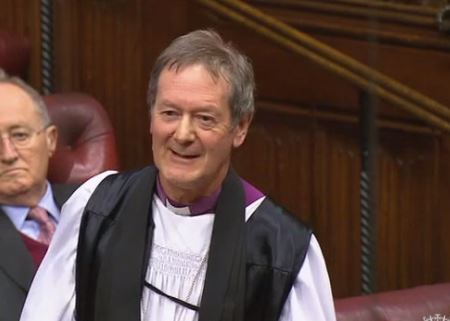
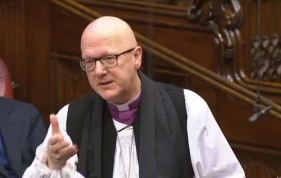
On the 2nd December 2016 the Bishop of Ely, the Rt Revd Stephen Conway spoke in a debate led by the Archbishop of Canterbury on shared values and their implications for public policy making. The Bishop of Ely spoke about the importance of character education in developing values and the role played by church schools in fostering good links between children of all faiths and none.

ElyThe Lord Bishop of Ely: My Lords, I thank my friend the most reverend Primate for securing this timely and essential debate. I applaud the noble Lord, Lord McInnes, on his excellent speech, not least on drawing together our concern for values with opportunity for our children and young people. When we talk about British values, we should be aiming not at the lowest common denominator but, as the noble Baroness, Lady Warsi, said, at the highest ideals that we want to promote for and with our children.

Character education is all set to be the foundation for the kind of person we want each child to become: a member of society who not only understands the world, but cares about it, is equipped to continue in the good and recognise and challenge the bad and is courageous enough to bridge divides and extend the hand of friendship. The Church of England vision for education actively seeks to provide an education that fosters this. Character education is about educating children not only to become efficient economic units, but to flourish in all areas of their lives, and enjoy life in all its fullness, as Jesus says in the Gospel of John. Fundamental to this is the nurturing of virtues as the intrinsic building blocks of a rounded human life with concrete outcomes in behaviour and service. St Paul takes the life of virtue beyond what had previously been categorised when he wrote in the Letter to the Galatians about the “fruits of the spirit”: love, joy, peace, forbearance, kindness, goodness, faithfulness, gentleness and self-control.

Archbishop of Canterbury leads Lords debate on shared values

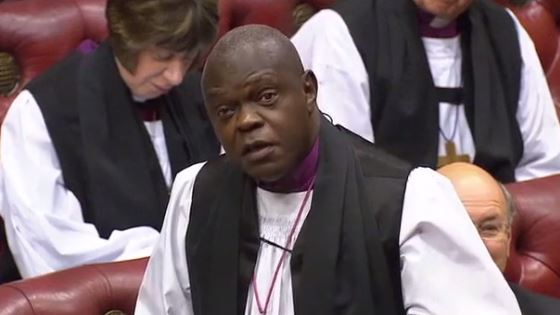
On 2 December 2016 the Archbishop of Canterbury, the Most Revd and Rt Hon Justin Welby, led a debate in the House of Lords “That this House takes note of the shared values underpinning our national life and their role in shaping public policy priorities.” His opening and closing speeches are below. The Bishops of Ely and Gloucester also spoke in the debate.

abcvalues5

The Archbishop of Canterbury: My Lords, I am most grateful to the usual channels for making this debate possible. I should also like to thank noble Lords who have made the time and taken the trouble to attend today in considerable numbers, the Minister, the noble Lord, Lord Bourne, and those who look after us so well in this House.

In case noble Lords are wondering what the Motion is [laughter]…I decided to change it at the last minute…It reads:

“The Lord Archbishop of Canterbury to move that this House takes note of the shared values underpinning our national life and their role in shaping public policy priorities”.

It will be an especial pleasure to hear maiden speeches from the noble Baroness, Lady Bertin, and the noble Lord, Lord McInnes of Kilwinning. The noble Baroness brings her knowledge of communications, issues of disability among children and education. The noble Lord will enable us to have a wider view of issues in Scotland.

The UK, especially perhaps England, is a pragmatic country with a bias towards the empirical over the theoretical. Not for us the cries of “liberty, equality and fraternity”, to be followed by years of bloodshed to ensure true fraternity was established. Rather, ours is an untidiness of cumulative reforms and changes, worked out in practice through the highways and byways of our constitution. We relish the irony of a constitution that works in practice but never could in theory.

Great times of change in mood and culture demand from us a reimagining of what we are about as a nation. As we move into a post-Brexit world, alongside the other events that buffet and deflect us, unless we ground ourselves in a clear course and widely accepted practices, loyalties and values—what I will call values in this speech—we will just go with the wind. Continue reading “Archbishop of Canterbury leads Lords debate on shared values”

Bishop of Chester speaks in debate on online safety

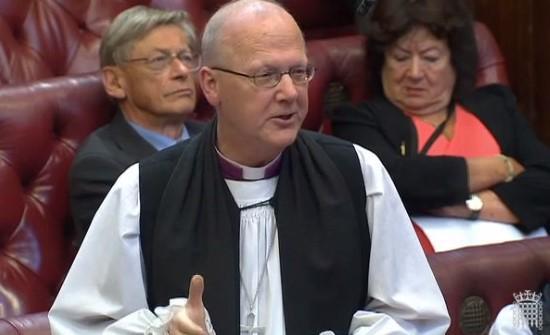
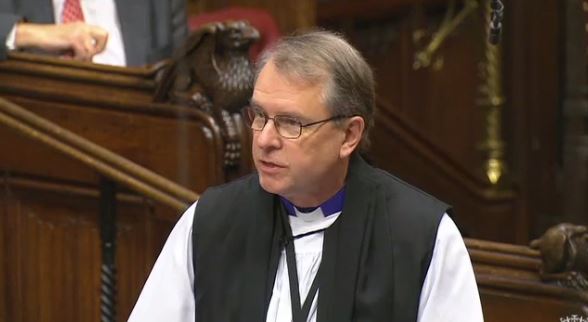
14.03 Bishop of ChesterOn 1st December 2016, Baroness Howe of Idicote led a short debate in the Lords to ask the Government “what steps they are taking in order to achieve compliance with the new European Union net-neutrality Connected Continent requirements in such a way that United Kingdom adult content filtering regimes can be maintained in order to help keep children safe online.” The Rt Revd Dr Peter Forster, Bishop of Chester, took part in the debate.

The Lord Bishop of Chester: My Lords, the House should be deeply grateful indeed to the noble Baroness, Lady Howe, for her persistence in bringing before us the difficult issue of online safety, particularly as it affects our children. I must say, the thickness of the plot as she set it out in her opening speech would be a credit to Agatha Christie herself in this particular aspect of it. We will be returning to the broader aspects when the Digital Economy Bill comes before us shortly. I believe that there is also a forthcoming report by the Communications Select Committee on children and the internet.

Continue reading “Bishop of Chester speaks in debate on online safety”

Bishop of Chester asks Government not to lose sight of cultural and scientific links to Europe in Brexit negiotations

14.03 Bishop of ChesterOn the 1st December 2016 Lord Liddle held a debate on ‘the best options for the United Kingdom’s future relationship with the European Union following the referendum vote to leave’. The Bishop of Chester, the Rt Revd Peter Forster, spoke about the foundations of the idea of ‘Europe’ not just as an economic construct but as a civilisation. 


The Lord Bishop of Chester: My Lords, the Motion before us is not limited to economic issues, although the debate so far has understandably concentrated on them. I would like to take a slightly broader look at our future relationship with the EU. Of course, the social and economic issues associated with the four freedoms will inevitably take centre stage over the next few years, and it will be an anxious time for many. I hope it will also be a time of opportunity for at least some, perhaps many; we will see. Continue reading “Bishop of Chester asks Government not to lose sight of cultural and scientific links to Europe in Brexit negiotations”

Bishop of Birmingham speaks in Lords debate on Chancellor’s Autumn Statement

On 29th November 2016, Lord Young of Cookham moved that the House take note of the economy in the light of the Autumn Statement. The Bishop of Birmingham, the Rt Revd David Urquhart, spoke in the debate:

Bishop of Portsmouth responds to Chancellor’s Autumn Statement

portsmouth241016On 29th November 2016, Lord Young of Cookham moved that the House take note of the economy in the light of the Autumn Statement. The Bishop of Portsmouth, the Rt Revd Christopher Foster, spoke in the debate:

The Lord Bishop of Portsmouth My Lords, after nearly three years in this House, and having had the opportunity to speak in most of the debates responding to the Budget and Autumn Statements, it is not difficult to note the tendency for some contributors to applaud proposals they consider welcome; for others to criticise proposals they consider to have sectional interest or bias; and to have the expectation—or at least the hope—conveyed that the Chancellor and the Government will, and can, do even more when they are praised for welcome initiatives. I want to do a little of that this afternoon, though recognising the restrictions the Chancellor faces. I invite the Minister, and through him the Government, to reflect on what they ought to do—I introduce a moral note in using that phrase—to repair the fractures of trust, address growing injustices that are perceived as more hurtful than inequalities, and create not just a flourishing economy but a nation where people believe there is more that unites us than divides us. Indeed, my question to the Minister is whether the Government can better articulate their rationale and approach in the important area of inequality and injustice. Continue reading “Bishop of Portsmouth responds to Chancellor’s Autumn Statement”

Bishop of St Albans – need for fresh thinking on corporate governance

StAlbans171115On 29th November 2016, Lord Henley put the Government’s new Green Paper on Corporate Governance before the House. The Lord Bishop of St Albans, the Rt Revd Alan Smith, contributed to the debate that followed.

The Lord Bishop of St Albans My Lords, I, too, welcome the Statement and the Green Paper because we urgently need some fresh thinking in this area. Those of us who have been following the issues concerning banking standards can see that it is really quite complex. There is a delicate and difficult relationship between legal regulation on the one hand and values and social responsibility on the other. We face a number of problems. We have a disconnect between shareholders and corporations that has become ever more complex and further apart. How can we encourage shareholder engagement in long-term, sustainable business rather than short-term gains? Continue reading “Bishop of St Albans – need for fresh thinking on corporate governance”

Bishop of Ely calls on Government to “make care work a recognised and valued profession.”

On 24th November 2016 the House of Lords debated a motion from Baroness Finlay of Llandaff “To move that this House takes note of the implications for the health and social care workforce of the result of the referendum on the United Kingdom’s membership of the European Union.” The Bishop of Ely, Rt Revd Stephen Conway, spoke in the debate:

ElyThe Lord Bishop of Ely: My Lords, I am grateful to the noble Baroness, Lady Finlay, for bringing this important matter before the House today. The right reverend Prelate the Bishop of Carlisle, our lead bishop on health and social care, cannot be in his place today, but I am glad to contribute from these Benches on his behalf.

The debate brings to mind two principles central to Christian faith and practice: justice for the stranger in our midst and care for the vulnerable. Mosaic law enjoins us not to withhold justice from the outsider. Only yesterday, in conversation, the Secretary of State for Communities and Local Government sought to check that I had heard the words of Jesus, “Love thy neighbour as thyself”. I am grateful to him. This reminds us that the words of Jesus tell us that every care and service given to others is a service given to God. Continue reading “Bishop of Ely calls on Government to “make care work a recognised and valued profession.””

Bishop of St Albans leads debate on impact for rural communities of reduced bus services

On 24th November 2016 the Bishop of St Albans, Rt Revd Alan Smith, led a short debate in the House of Lords on rural bus services. His opening speech is below, along with the Minister’s response. The speeches of the other eight Peers who took part can be read here.

The Lord Bishop of St Albans: To ask Her Majesty’s Government, in the light of research published by the Local Government Association showing that subsidised bus services in England have reduced by more than 12% in the past year, what assessment they have made of the sustainability of rural communities.

St AlbansThe Lord Bishop of St Albans: My Lords, I thank all noble Lords contributing their considerable expertise to this debate, particularly the noble Lord, Lord Kirkhope, whose wealth of experience is a welcome addition to this House. I declare an interest as president of the Rural Coalition and bishop of a diocese with large rural areas, some of which have seen considerable cuts in bus service provision in recent years.

As many noble Lords in this House will know first-hand, rural bus services provide a lifeline for rural communities, creating vital routes of connection to other parts of the country. For anyone who struggles to drive themselves because of age or a disability, or because they do not have a car, buses are often the only means of transport that connects rural residents with work, friends and family. With an increasing number of local services cut from rural towns and larger villages, the need to be able to connect with urban areas only increases. Continue reading “Bishop of St Albans leads debate on impact for rural communities of reduced bus services”

Bishop of Winchester on lifting people out of poverty through fairer trade agreements

The welfare of the east African nations is of particular importance to me. I was born in Tanzania and spent some of my teenage years in Kenya. In the 1990s, I was the principal of a small college in Nairobi—indeed, we still keep a home situated on an old coffee farm near Thika. Through this previous experience and from regular visits, I have observed the finely balanced life which Kenyan agricultural workers live. Smallholdings are a significant element in the agricultural sector of Kenya. Many city dwellers also have a smallholding upcountry. A severe drought might mean the end of their children’s education. It may also result in families being unable to afford even the most basic medicines or in workers having to resort to desperate means of generating income to support their families.

Continue reading “Bishop of Winchester on lifting people out of poverty through fairer trade agreements”