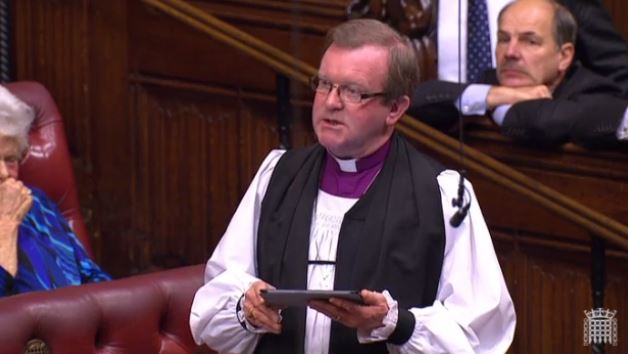
Bishop of Southwark raises concerns about conditions in Gaza and wellbeing of children

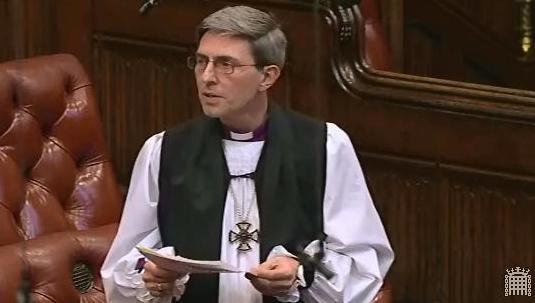
SouthwarkOn 21st July 2016 Lord Warner led a debate to highlight “the conditions in which Palestinian children are living and the impact on their health and wellbeing.” The Rt Revd Christopher Chessun, Bishop of Southwark, spoke in the debate, drawing on his experiences of visiting Gaza and the West bank. Baroness Mobarik responded for the Government to a number of points made by the Bishop. her remarks can be found below.

The Lord Bishop of Southwark: I, too, express my gratitude to the noble Lord, Lord Warner, for securing this important debate. I speak as patron of the charities Embrace the Middle East and Friends of the Holy Land. I regularly lead pilgrimages to Israel and Palestine and for these past two years I have participated annually as a Church of England bishop in the Vatican Holy Land Coordination visiting Gaza, the West Bank, East Jerusalem and refugee camps in neighbouring countries.

Continue reading “Bishop of Southwark raises concerns about conditions in Gaza and wellbeing of children”

Bishop of St Albans says uncertainty and insecurity faces British farming as a result of Brexit

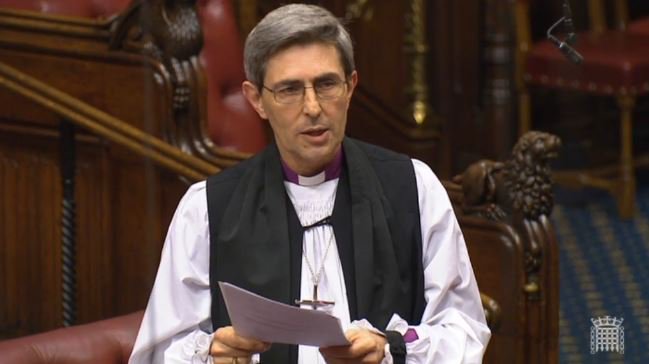
St Albans 2On the 21st July 2016 Baroness McIntosh of Pickering held a debate about “the impact on British farmers of the decision to leave the European Union.” Rt Revd Dr Alan Smith, Bishop of St Albans asked the Government to help to cultivate a culture of appreciation among the British public towards British farming. Lord Gardiner of Kimble responded for the Government and his comments can be found below.

The Lord Bishop of St Albans: My Lords, I too thank the noble Baroness, Lady McIntosh, for this debate. I share the delight of other Members of this House that in the recent reshuffle it was neither an exit nor a Brexit but a clear remain vote for the Minister, and not only that but a promotion, so we are delighted and thank him.

Whatever our opinions on Brexit, it is undeniable that British farming faces a period of uncertainty and insecurity. While it is true that the decision to leave the EU will bring some new opportunities for British agriculture in the long term, it is clear that there are substantial challenges ahead. Agriculture is more intimately connected to the European Union than any other UK sector, and the process of unpicking that relationship must be done with utmost care. Continue reading “Bishop of St Albans says uncertainty and insecurity faces British farming as a result of Brexit”

Bishop of St Albans says tackling housing insecurity key to tackling poverty

On 14th July 2016 the House of Lords debated a motion from Lord Bird, “That this House takes note of the case for tackling the causes of poverty in the United Kingdom”. The Bishop of St Albans, Rt Revd Alan Smith, spoke about the need to tackle housing insecurity. He began by paying tribute to Baroness Sharp, who had made her valedictory speech.

The Bishop of Derby’s speech in the same debate can be seen here.

St Albans 2The Lord Bishop of St Albans: My Lords, it is a great privilege on behalf of all noble Lords to thank the noble Baroness, Lady Sharp of Guildford, for her nearly 18 years of service to this House, and not least for that pertinent and passionate valedictory speech, which went to the heart of many of the issues we are debating today. I am constantly amazed at the sheer talent and expertise that is on display in this Chamber, of which she has just demonstrated an outstanding example. Her scholarly contributions to this place, particularly her steadfast championing of adult and further education, have been greatly valued, especially during her time as a Front-Bench spokesperson. Continue reading “Bishop of St Albans says tackling housing insecurity key to tackling poverty”

Bishop of Derby speaks on tackling poverty and powerlessness

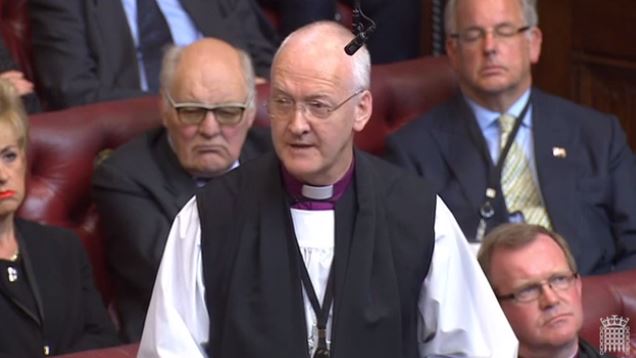
On 14th July 2016 the House of Lords debated a motion from Lord Bird, “That this House takes note of the case for tackling the causes of poverty in the United Kingdom”. The Bishop of Derby, Rt Revd Alastair Redfern, spoke in the debate and his remarks are below. The Bishop of St Albans’ speech in the same debate can be seen here.

Derby 191115cThe Lord Bishop of Derby: My Lords, I, too, thank the noble Lord, Lord Bird, for introducing this important issue of tackling the causes of poverty. We learn from the briefing notes that the noble Baroness, Lady Lister, makes it clear in her textbook that it is almost impossible to define poverty. That is part of the complexity with which we have to wrestle because, as poverty is relative, it is very hard to design appropriate responses.

In my trade, we have two phrases: we talk about the poor and about the poor in spirit. The word for spirit means power, and I want to look at to what extent to be poor and in poverty means to be lacking in power—the kind of power that allows you to feel good about yourself and to have security of work, security of a living place and security of contributing to society. How do we bless people with a sense of power over their lives, for themselves and those around them, and to make a contribution to society? Continue reading “Bishop of Derby speaks on tackling poverty and powerlessness”

Bishop of Chester questions case for renewal of Trident nuclear deterrent

On 13th July 2016 the House of Lords debated a Government motion “That this House takes note of the Government’s assessment in the 2015 National Security Strategy and Strategic Defence and Security Review that the United Kingdom’s continuous at sea nuclear deterrent should be maintained.” The Bishop of Chester, Rt Revd Peter Forster, spoke in the debate:

ChesterThe Lord Bishop of Chester: My Lords, the issue before the other place is the procurement of four new submarines, but it is not unreasonable at this time to contribute to our ongoing reflection upon why we have a nuclear deterrent at all. It is often said that countries and armies tend to prepare to fight the war that was fought 50 or more years ago without noticing how the world has changed, not least technology. Indeed, our recollection of the Battle of the Somme—when infantry charged machine guns—brings that rather vividly to mind. Continue reading “Bishop of Chester questions case for renewal of Trident nuclear deterrent”

Bishop of London responds to the Chilcot Report on the invasion of Iraq

“There is no doubt that someone who dwells on history can be somewhat tedious, but at the same time someone with a sense of destiny and no sense of history can be very dangerous.”- Bishop of London, 12/7/16

On 12th July 2016 the House of Lords debated a Government motion “That this House takes note of the Report of the Iraq Inquiry”. The Bishop of London, Rt Rev and Rt Hon Richard Chartres, spoke in the debate:

Bp London 131015The Lord Bishop of London: My Lords, it is humbling to follow such a powerful and authoritative voice. I am also grateful to the Minister for the constructive way he introduced this debate and invited us to think about the lessons we can apply now. Sir John Chilcot recommends more thorough analysis before military action and a more collaborative approach to policy-making. I imagine that every one of your Lordships would probably agree that the case is well made, but politicians caught up in oppressive events, a rapidly changing situation and a 24/7 news environment, and with an ally who is losing patience, do not have much time for pondering decisions. Therefore—this echoes many of the remarks of the previous noble Lord—the culture and assumptions that leaders bring to the crisis are hugely significant. Continue reading “Bishop of London responds to the Chilcot Report on the invasion of Iraq”

Bishop of St Albans highlights challenges to the rural economy outside the EU

“We can create all the life chances we like, but that is futile if families cannot afford to put food on the table” – Bishop of St Albans, 7/7/16

On 7th July 2016 the House of Lords debated a motion from Lord De Mauley, “That this House takes note of the current and future roles agriculture and horticulture play in Britain’s rural economy and the role that advances in agricultural science can play in the further development of that sector.” The Bishop of St Albans, Rt Revd Alan Smith, spoke in the debate:

StAlbans171115The Lord Bishop of St Albans: My Lords, I add my thanks to those from other noble Lords to the noble Lord, Lord De Mauley, for securing this important debate at this time of significant uncertainty for the agricultural and horticultural sectors. I also declare my interest in the register as president of the Rural Coalition.

As noble Lords have already stated, the agricultural and horticultural industry is an essential feature not only of the rural economy but of the wider national economy. It is often said in this Chamber that the defence of the people is the first duty of government, but I wonder whether feeding the people should be an equally primary duty. Establishing food security is an essential role of all Governments, never more so than in the current climate of global uncertainty. Continue reading “Bishop of St Albans highlights challenges to the rural economy outside the EU”

Bishop of Ely on the challenges for the UK following the EU referendum

On 5th July 2016 the House of Lords debated a motion to take note of the result of the referendum on the UK’s membership of the European Union. The Bishop of Ely, Rt Revd Stephen Conway, spoke in the debate, focusing on leadership, common values, education and the rural workforce.  

Ely 2The Lord Bishop of Ely: My Lords, I cannot match that passion, but I join other noble Lords in saying how much I appreciated the speech earlier of our boss—I mean of my friend, the most reverend Primate the Archbishop of Canterbury. He and I have both worked in the north-east and been welcomed by the people of that area, many of whom voted to leave, just as people in fenland in my current diocese and people in east Kent, beloved of the most reverend Primate, did. These people were not, it seems to me, voting against the European Union but were making a great cry—a lament—about not having been heard for several generations by us, the political class. This was their opportunity to make us listen, after feeling excluded for so long. Continue reading “Bishop of Ely on the challenges for the UK following the EU referendum”

Archbishop of Canterbury on the future for the United Kingdom after the EU Referendum

On 5th July 2016 the House of Lords debated a motion “That this House takes note of the outcome of the European Union referendum.” The Archbishop of Canterbury, Most Revd & Rt Hon Justin Welby, spoke in the debate. His speech is below in full, followed by extracts from the speeches of other Peers. 

2ABCEUdebateThe Archbishop of Canterbury:  My Lords, the events of the past two weeks have led to some of the most traumatic and dynamic changes that we have known. The course of the campaign was robust—as it properly should be on such great issues—but at times veered over the line on both sides: it was not merely robust but unacceptable. Through such comments were created cracks in the thin crust of the politeness and tolerance of our society, through which, since the referendum, we have seen an outwelling of poison and hatred that I cannot remember in this country for very many years. It is essential, not only for this House but for the leaders of both sides and throughout our society, to challenge the attacks, xenophobia and racism that seem to have been felt acceptable, at least for a while.

Just over a week ago, at Lambeth Palace, at the breaking of the fast of Ramadan, I shared an iftar with the new Mayor of London, Sadiq Khan, and the Chief Rabbi. There were more than 100 young people of every faith and of no faith there. That sense of hope and energy for the future carried us through the rest of the week. It is there and we can reach for it. If, however, we are to thicken the crust through which the cracks have come, if we are to move to a place where we are not yet speaking of reconciliation but beginning to get on a path where in future healing and reconciliation will begin to happen, we need to beware. St Paul, in his letter to the Galatians, says to them at one point:

“Love one another, cease to tear at one another, lest at the end you consume one another”.

We are in danger of doing that in the way that our politics is developing at the moment. If we are to tackle that, we have to put in place some fundamental issues to be capable of creating the agile, flexible, creative, entrepreneurial and exciting society—full of the common good and of solidarity and love for one another—which is the only way that this country will flourish and prosper for all its citizens in the world outside the European Union of the future. Continue reading “Archbishop of Canterbury on the future for the United Kingdom after the EU Referendum”

Bishop of Chelmsford on trust in public life and institutions

On 30th June 2016  Lord Fairfax of Cameron led a debate “That this House takes note of the role of openness and transparency in reinforcing confidence in public institutions.” The Bishop of Chelmsford, Rt Revd Stephen Cottrell, spoke in the debate:

Chelmsford 251115The Lord Bishop of Chelmsford: My Lords, I thank the noble Lord, Lord Fairfax of Cameron, for introducing this debate. I am still relatively new to this House, so you may not know that if there is a stick lying on the ground with a label on it saying, “wrong end”, I am prone to pick it up. I was drawn by the title of this debate and therefore went to the Library to read the briefing pack, which was fascinating. Its conclusion opens by saying that overall, the survey suggests that the public continue to have a very poor valuation of current standards in public life; respondents generally gave negative answers. That is something we should be concerned about.

My contribution will be over in 10 minutes and then you can get on with the debate that obviously some of you want to have, but I want to speak about what I see as the moral and spiritual dimensions to this issue. Continue reading “Bishop of Chelmsford on trust in public life and institutions”