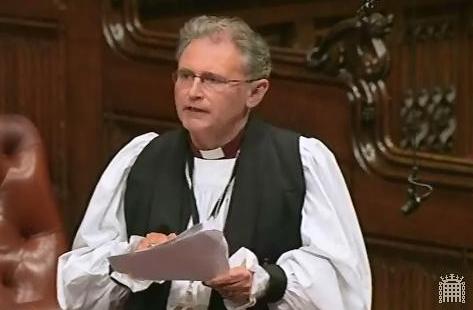
Service and trust: Bishop of Norwich speaks in Lords debate on religion and belief in public life

“Service, in the Christian tradition, is a vocation. When Jesus washed the feet of his disciples he reversed the power relationship between the teacher and his followers. Two thousand years ago, service never made you great; it was a sign of your enslavement. These days, by contrast, everyone wants to do us a service” – Bishop of Norwich, 27/11/14

On 27th November 2014 the House of Lords debated a motion from the Crossbench Peer and former Bishop of Oxford, Lord Harries of Pentregarth, on ‘the role of religion and belief in British public life’. The Bishop of Norwich, Rt Rev Graham James, spoke in the debate, focusing on themes of trust and a vocation to service in public life.
14.06.12 Bishop of NorwichThe Lord Bishop of Norwich: My Lords, like other noble Lords I am very grateful to the noble and right reverend Lord, Lord Harries, for securing this debate. I notice that the commission of which he is part is considering how religion may contribute to,

“greater levels of mutual trust and collective action, and to a more harmonious society”.

I will address the reference to mutual trust, especially with regard to our public life, which is far from well. The level of cynicism about our political structures and politicians finds reflection in an all too common assumption that many people in public life are not to be trusted. That is true for religious leaders, too, and for almost anyone in the public eye, and it generates cynicism about the state itself. Continue reading “Service and trust: Bishop of Norwich speaks in Lords debate on religion and belief in public life”

Bishop of Birmingham in Lords Debate on Religion and Belief in Public Life

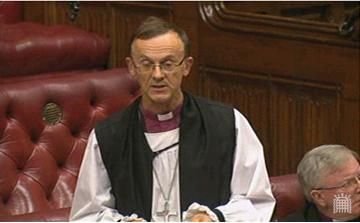
On 27th November 2014 the House of Lords debated a motion from the Crossbench Peer and former Bishop of Oxford, Lord Harries of Pentregarth, on ‘the role of religion and belief in British public life’. The Bishop of Birmingham, Rt Rev David Urquhart spoke in the debate:

The Lord Bishop of Birmingham: My Lords, I am grateful to my colleague, the noble and right reverend 01.04.14 Bishop of BirminghamLord, Lord Harries, for shaping this debate and for the remarks just offered by the noble Baroness. It may be a great surprise to many of our fellow citizens that public religious figures should be asked to play a part at all in 21st century society. However, the least surprised in the city of Birmingham are my interfaith colleagues. They expect the leaders and members at a local parish level and at a national level in what they regard as the indigenous national religion to play a full part in society and to articulate the needs, values and beliefs of those who have faith on things that are a matter of importance to the whole of society, whether they are faithful or not. Continue reading “Bishop of Birmingham in Lords Debate on Religion and Belief in Public Life”

Bishop of Coventry takes part in debate on the UK’s membership of the European Union

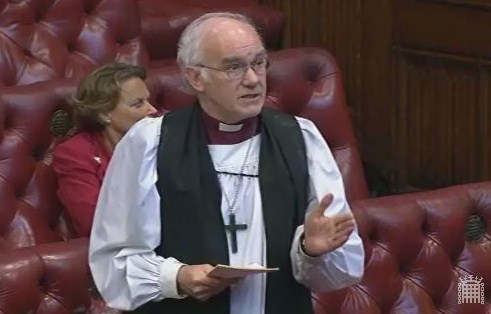
In the House of Lords on 25th November 2014, Labour Peer Lord Liddle led a take-note debate on the case for the United Kingdom’s membership of the European Union. The Bishop of Coventry, the Rt Revd Christopher Cocksworth, took part in the debate. In his remarks, he noted that a shift in focus from economic costs and benefits to the European Union’s role as an institution of peace and reconciliation is necessary for meaningful debate to take place on the UK’s place in the EU. He noted that reform was necessary, not least to rebalance the democratic deficit between national and supra-national governance. He noted that churches may be well placed to create safe and neutral spaces in which informed and serious debate on the UK’s place in Europe can take place.

13.10 Bishop of CoventryThe Lord Bishop of Coventry: My Lords, I, too, am grateful to the noble Lord, Lord Liddle, for securing this debate, although I enter it with some trepidation in such company. I am constrained to do so by the story of Coventry, from where I come, and by the originating Christian contribution to the possibilities that some form of common life might have for Europe and, thereby, for the world. When in your daily life you see the scars of warfare upon a city, when you hear the testimony of those who lost homes and families on one night in November 1940, when each year you are joined by Germans in the commemoration of your city’s 500 dead, and when you join them as they remember their city’s thousands of dead, you know that peace counts and that reconciliation is indeed a precious gift, and you give thanks for the project which has had peace as its fundamental purpose. Continue reading “Bishop of Coventry takes part in debate on the UK’s membership of the European Union”

Bishop of Worcester takes part in debate on relationship between children’s rights and internet use

“The Church of England schools’ commitment to this aim is seen in the breadth of our holistic educational vision. We seek to conceive of education as developing children’s creativity and awareness of the world around them—of course, we are not alone in that. To fit students for a life of active civic engagement, and not just to learn facts, is what education should be about.”

On 20th November 2014, Baroness Kidron led a debate in the House of Lords to take note of the impact of the United Nations Convention on the Rights of the Child on children’s and young people’s online and digital interactions. The Bishop of Worcester, the Rt Revd John Inge, took part in the debate, which was timed to mark the 25th anniversary of the Convention. The Bishop spoke about the ability of online education resources to release the talents of all children, noting the Church of England’s commitment to a holistic educational vision in its schools. He also highlighted some of the risks associtated with young people using the internet and supported calls for the government to review how the UNCRC can be applied to the context of these online and digital interactions.

WorcesterThe Lord Bishop of Worcester: My Lords, I begin by echoing the congratulations offered to the noble Baroness, Lady Shields, on an excellent maiden speech. I join her in applauding the wonderful work in this area of the noble Baroness, Lady Kidron, to whom I am also grateful for providing the House with an opportunity to take stock of the changes wrought over the past couple of decades by the growth of the internet and evolution of digital technologies—on this auspicious day, 25 years since the establishment of the UN Convention on the Rights of the Child, which coincides, as she pointed out, with the beginning of the development of the internet. What a different world we live in now that the convention has come of age. It behoves us to consider the new cultural landscape in which we find ourselves, in which 81% of 12 to 15 year-olds use the internet every day. Continue reading “Bishop of Worcester takes part in debate on relationship between children’s rights and internet use”

Bishop of Worcester supports calls for review of Azure card system for asylum seekers

“If we wish to dissuade people from coming to this country without the legal right to be here, it is wrong to try to send a message by treating asylum applicants, even when appeal rights are exhausted, in a way unworthy of our values.”

On 20th November 2014, Lord Roberts of Llandudno led a take-note debate in the House of Lords on the subject of the Azure card, the means of support through which the Government supports people making applications for asylum who are not allowed to work in the UK. The Bishop of Worcester, the Rt Revd John Inge, spoke in the debate, highlighting a number of concerns about the current system, including the level of support provided and the limited number of places in which the card can be used. He called on the Government to review the current system.

WorcesterThe Lord Bishop of Worcester: My Lords, I am very grateful to the noble Lord, Lord Roberts, for securing this debate on a very important matter. The churches have long held, and maintained in this House, that those who have applied for asylum and who are not allowed to do paid work should be given enough financial help to maintain a decent basic standard of living for themselves and their families. Indeed, the most reverend Primate the Archbishop of York has more than once led delegations on this theme. Surely every person who is in this country should be treated in accordance with our values. If we wish to dissuade people from coming to this country without the legal right to be here, it is wrong to try to send a message by treating asylum applicants, even when appeal rights are exhausted, in a way unworthy of our values. Continue reading “Bishop of Worcester supports calls for review of Azure card system for asylum seekers”

Bishop of Norwich calls for stronger response to tackle growth of food bank use

“When we stigmatise the poor, the unemployed and the vulnerable, we have succumbed to blaming them for their position. However, although some people stigmatise welfare claimants, many others show enormous human and social solidarity by volunteering to help them.”

On 6th November 2014, Labour Peer the Rt Hon. the Lord Whitty led a take-note debate in the House of Lords on the cumulative effects of Government economic, public spending and regulatory policies on low income and vulnerable consumers. The Bishop of Norwich, the Rt Revd Graham James, spoke in the debate. He focused his remarks on the rise in the use of food banks across his diocese, and the need for a sustained response to help reduce the use of food banks, including investment in nutrition programmes and reducing the number of delays to welfare payments. He praised those who volunteer and support food banks and other charitable responses, and cautioned some of the language used to describe those who use food banks and other forms of support.

14.06.12 Bishop of NorwichThe Lord Bishop of Norwich: My Lords, I am grateful to the noble Lord, Lord Whitty, for securing this debate, which I enter in no partisan spirit but hope to contribute some reflections from local experience in Norwich of those on low incomes in our city.

It was more than five years ago that I was first approached to become patron of the Norwich food bank, a relatively early one to be established. Its work informs a good deal of what I want to say. The necessity for it was identified before the previous general election as a result of the recession. Suddenly, people who thought themselves reasonably secure were worried. Those who were already insecure became highly vulnerable. That was all very noticeable within our church communities on the housing estates in Norwich, especially in the areas of greatest social deprivation. Continue reading “Bishop of Norwich calls for stronger response to tackle growth of food bank use”

Bishop of Leicester calls for closer co-ordination between faith groups and Government to tackle domestic abuse

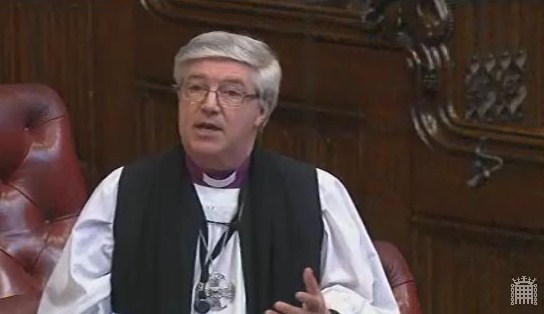
On 6th November 2014, the Bishop of Leicester, the Rt Revd Tim Stevens, took part in a debate in the House of Lords on women facing homelessness, domestic violence and social exclusion, led by Labour Peer Baroness King of Bow. The Bishop focused his remarks on tackling domestic violence, highlighting the need for closer co-ordination between faith groups and local and national government, increasing the availability and quality of training for key institutions such as the police, and asked the Minister to update the House on progress made on the Government’s violence against women strategy and its obligations under international treaties.

14.04.01 Bishop of LeicesterThe Lord Bishop of Leicester: My Lords, as this debate progresses the seriousness and critical nature of this subject is dawning on all of us. I share with other noble Lords a gratitude to the noble Baroness, Lady King, for bringing it to our attention with such eloquence and passion. We all look forward to the maiden speeches of the noble Baroness, Lady Rebuck, and the noble Lord, Lord Farmer, this morning.

Although there are profound links between the three subjects before us, I intend to concentrate on the issue of women facing domestic violence. I do so with considerable caution, even trepidation, because of the horrific stories that have already been brought to our attention, but also as a man who represents a hierarchical position in a patriarchal ecclesiastical institution. Nevertheless, I dare to speak, for three reasons. First, because of the extremely disturbing statistics which others have referred to: an estimated 7% of all women experience domestic violence, according to the 2011-12 figures, equivalent to some 1.2 million victims. There were 88,000 domestic violence cases referred to the Crown Prosecution Service that year, of which more than 64% reached a decision to charge, leading to more than 52,000 convictions. Even more disturbing are the 2013 figures, which indicate that on average 155 women and 103 children were turned away from refuges every day, at the most dangerous and vulnerable moment for them. They were then, of course, faced with returning to an abusive partner. Continue reading “Bishop of Leicester calls for closer co-ordination between faith groups and Government to tackle domestic abuse”

Bishop of Derby takes part in debate on slavery and its use in supply chains

“We live in a culture that is rightly concerned about safeguarding. We are concerned rightly about the safeguarding of children at the moment. We have to get up to speed with the safeguarding of vulnerable adults, many of whom are in exploited forced labour.”

On 30th October 2014, Baroness Kennedy of Cradley led a short debate in the House of Lords to ask Her Majesty’s Government what steps they are taking to combat slavery in supply chains nationally and internationally. The Bishop of Derby, the Rt Revd Alastair Redfern, a former member of the Joint Select Committee on the Draft Modern Slavery Bill, spoke in the debate. He argued that there is a deep underlying tension between economic activity and treatment of the individual, which the modern slave trade has exploited. He also asked the Minister a number of questions regarding the strengthing of reporting and best practice in supply chains.

Bishop of DerbyThe Lord Bishop of Derby: My Lords, I, too, thank the noble Baroness, Lady Kennedy, for securing this debate and for her excellent introduction that laid out the ground clearly. I want to make some remarks from my experience of working with victims, the police and other agencies within our national context. We have just heard from the noble Baroness, Lady Cox, about the sheer horror of the way in which human beings are being treated in our own country.

I begin by welcoming Karen Bradley’s recent announcement that there will be amendments to secure proper reporting and disclosure. The key will be the level of reporting and the size of the company. I also welcome the strong support from many leaders in our industries. On the Select Committee, the people who represented Primark and Tesco, for instance, were supportive of a framework to require proper reporting and accountability, which would help their business case and standing in the community. Continue reading “Bishop of Derby takes part in debate on slavery and its use in supply chains”

Bishop of Chester takes part in debate on devolution and the Scottish referendum

“To regard the English-Scottish relationship as simply the primary and maximal example of broader devolved relationships in the UK would be to invite a repetition of recent errors of judgment.”

On 29th October 2014, the Bishop of Chester, the Rt Revd Peter Forster, took part in a House of Lords debate on devolution following the Scottish referendum, led by Baroness Stowell of Beeston. The Bishop reflected on his own experiences of studying and living in Scotland, and the relationship between England and Scotland. He urged caution in how politicians and the public approach matters of devolution and nationhood, noting that the post-referendum landscape was a good opportunity to renew the Union, whilst respecting cultural differences and political realities.

14.03 Bishop of ChesterThe Lord Bishop of Chester: My Lords, bishops need to tread warily when discussing matters Scottish. Although I am thoroughly English by birth and background, I can, I think, claim rather closer connections with Scotland than some whom I observe wearing the kilt at the Chester Caledonian Association dinners which I regularly attend.

Let me explain. I have a Scottish wife—my one and only wife, I hasten to add—and two Scottish degrees, all three from Edinburgh. I trained for ordination in Scotland as somebody sponsored by the Scottish Episcopal Church, and I have owned a house in Scotland for 25 years and will happily retire there in a few years’ time. I am Anglican co-chair of the current Church of England-Church of Scotland ecumenical conversations. So tread I shall, if nevertheless warily. If I have learnt one thing in my discussions with the Church of Scotland, it is that were the Kirk ever to contemplate having bishops, which remains, I think, doubtful, they would need to be very different from English bishops to be acceptable. Continue reading “Bishop of Chester takes part in debate on devolution and the Scottish referendum”

BISHOP OF LICHFIELD SPEAKS IN SHORT DEBATE ON THE SUSTAINABILITY OF MUSIC EDUCATION

14.03.27 Bishop of LichfieldThe Bishop of Lichfield, the Rt. Revd. Jonothan Gledhill, made a speech during the short evening debate on the long term financial sustainability of the National Music Plan in England. In it, he called for an increase in the number of music hubs, as well as greater financial support for them; highlighting the tremendous benefits a high-quality music education can have for children in all aspects of their lives.

Read the full transcript of his speech here:

The Lord Bishop of Lichfield: My Lords, I congratulate the noble Lord, Lord Aberdare, on introducing this important and timely short debate. I welcome the national plan for music education, which emphasises the importance of music and the creation of music education hubs in this country, I also welcome the fact that the report has taken note of the recommendations made in the Henley review, perhaps the most comprehensive and thorough review of the state of music education in England for many years. I thank the noble Lord, Lord Berkeley of Knighton, for his support of church music as well. Continue reading “BISHOP OF LICHFIELD SPEAKS IN SHORT DEBATE ON THE SUSTAINABILITY OF MUSIC EDUCATION”