Bishop of Carlisle leads tributes to departing Leader of the House of Lords

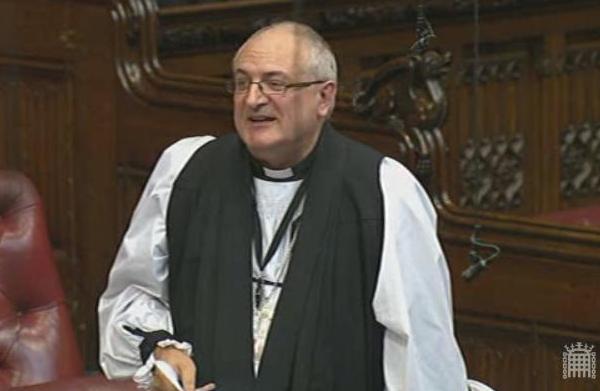
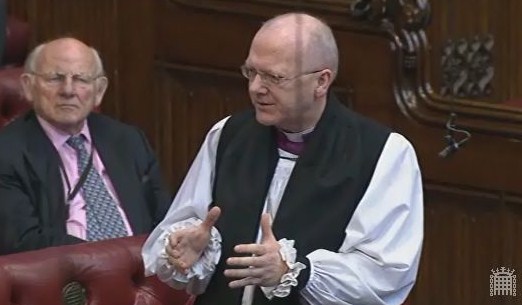
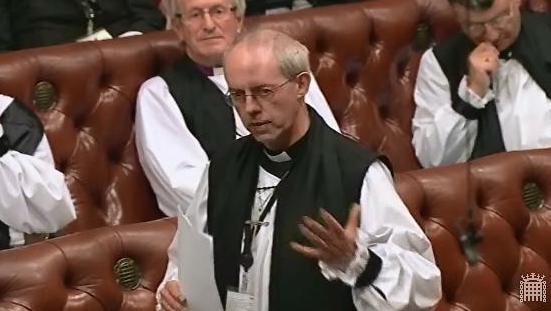
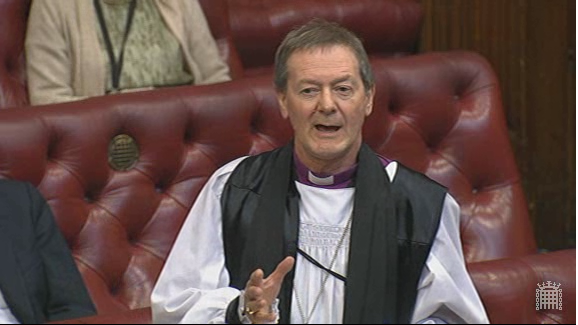
On 15th July, tributes were offered to the out-going Leader of the House of Lords, the Lord Hill of Oareford, following his nomination as the United Kingdom’s candidate to the European Commission. The Bishop of Carlisle, the Rt Revd James Newcome, led the tributes on behalf of the Lords Spiritual.

14.06.09 Bishop of CarlisleThe Lord Bishop of Carlisle: My Lords, I associate those of us on these Benches with the generous comments from around the House about the noble Lord, Lord Hill. My colleagues have been grateful for the support, the wisdom and the guidance of the noble Lord and his office for the Lords spiritual to enable our contribution to the work of the House to match the high levels of all other parts of the House. He also did a wonderful job as Education Minister and he has been a good friend to the Church and to the Lords Spiritual. Continue reading “Bishop of Carlisle leads tributes to departing Leader of the House of Lords”

Bishop of Carlisle calls for Government action to tackle religious persecution in Republic of Sudan

“…the local Christian diocese has to shoulder most of the burden of caring for people who are in desperate need, and of attempting to feed them when its own resources are pitifully small. Have Her Majesty’s Government given any consideration to providing aid, and so helping to meet people’s basic human rights to food and drink, through the church in that part of Sudan? Heroic efforts are being made to alleviate desperate need, but funding is urgently required” – Bishop of Carlisle, 14.7.14

CarlisleOn 14th July 2014, Baroness Cox led a short debate in the House of Lords to ask Her Majesty’s Government what is their assessment of human rights in the Republic of Sudan. The Bishop of Carlisle, the Rt Revd James Newcome, took part in the debate. He spoke about the dire humanitarian situation in the country and the increasing role being played by the church; and also highlighted a number of instances of persecution on the grounds of religious beliefs, urging the Government to put pressure on the Republic of Sudan to respect and promote Article 18 of the UN Declaration of Human Rights.

The Lord Bishop of Carlisle: My Lords, I, too, am most grateful to the noble Baroness, Lady Cox. Unlike her, I cannot claim to be an expert on Sudan, but some of my colleagues who would normally speak on this issue have been unavoidably detained today in another debate of some importance to the church at the General Synod in York. I am very grateful for this opportunity to contribute to this debate because the human rights issues it raises are of such enormous significance, not only for the individuals directly concerned but for the way in which we direct our foreign aid and conduct our foreign policy. Continue reading “Bishop of Carlisle calls for Government action to tackle religious persecution in Republic of Sudan”

Bishop of Truro takes part in debate on Deregulation Bill

“In general, the question of whether or to what extent a particular type of economic activity is a legitimate driver of economic growth is a moral one that should not just be subsumed under a catch-all principle that regulators should promote economic growth. The prevention of damaging or unjust economic activity, surely, is equally germane to their mission.” – The Bishop of Truro, 07/07/14

On 7th July 2014, the Bishop of Truro, the Rt Revd Tim Thornton, took part in the Second Reading debate on the Government’s Deregulation Bill, led by Lord Wallace of Saltaire. In his speech he welcomed many of the measures, but raised concerns about two areas covered by the Bill – the work of employment tribunals and provisions that would require regulators to have regard for promoting economic growth.

Bishop of Truro 20.6.13The Lord Bishop of Truro: My Lords, I think that I need to begin with an apology. I am grateful to the noble Lord, Lord Stevenson, for drawing our attention to matters relating to dog collars. I was not going to refer to them but I will make sure that one of my colleagues does when we get to Committee.

I have no more interest than any other Member of this House in regulation for its own sake. In fact the New Testament, on the principle that,

“where the Spirit of the Lord is, there is freedom”,

specifically warns people against submitting to unnecessary regulations in matters of religion. This is something on which I will comment when we get to York later this week for the meeting of the General Synod. Continue reading “Bishop of Truro takes part in debate on Deregulation Bill”

Bishop of Oxford calls for more intentional support for the rural economy and rural schools

“I very much hope that the Department for Education will not resort to a philosophy of “the weakest to the wall” with these small schools because small rural schools are so often worth their weight in gold, as the heart and hub of our rural communities. The Church of England will publish a report very soon on how to support our rural schools effectively” – Bishop of Oxford, 3/7/14.

On 3rd July, the Bishop of Oxford, the Rt Revd John Pritchard, took part in a debate on the rural economy, lead by the Earl of Shrewsbury. The Bishop spoke about the need for intentional support for the many micro-businesses that make up the rural economy, and also for greater personal investment in rural schools, particularly through an increase in the number of foundation govenors supporting rural schools.

Bishop of OxfordThe Lord Bishop of Oxford: My Lords, I, too, am grateful to the noble Earl, Lord Shrewsbury, for giving us this opportunity to debate this matter. We all approach this important subject from different angles. I want to emphasise one that is economic and the other that is personal in the sense of our own personal investment and commitment. I serve a diocese which is largely rural although it has large centres of population such as Oxford, Reading, Milton Keynes and Slough. However, the rural expanses of Oxfordshire, Buckinghamshire and Berkshire are considerable, with 815 churches and 650 clergy, all of whom are strongly connected to the all-round flourishing of our diverse communities. Continue reading “Bishop of Oxford calls for more intentional support for the rural economy and rural schools”

Bishop of Durham calls for independent public inquiry into institutionally-based abuse

“Powerful people have engaged in serious abuse and have worked with each other to create opportunities and share their vices and victims. As a nation we have to face up to the seriousness of institutionally based abuse against the most vulnerable in our society, both children and adults, which has gone on in the past and, sadly, continues today” – Bishop of Durham, 26.6.14

14.06.10 Bishop of Durham 5On 26th June 2014, Liberal Democrat Peer Baroness Walmsley led a debate in the House of Lords to take note of the measures being taken by Her Majesty’s Government to prevent and address the abuse of children and vulnerable adults. The Bishop of Durham, the Rt Revd Paul Butler, the Church of England’s lead bishop for safeguarding, took part in the debate. He focused his remarks on needing to listen to the voice of survivors, and put forward a number of measures to reflect this need – including mandatory reporting by professionals, creating safe spaces for victims of abuse, and broadening the law to strengthen preventative measures. He concluded by calling for an independent public inquiry into institutionally-based abuse. Continue reading “Bishop of Durham calls for independent public inquiry into institutionally-based abuse”

Bishop of Coventry leads House of Lords debate on the human rights situation in Egypt

“Instances of violence and physical intimidation against Coptic Christians remain disturbingly high. Police investigations are haphazard and prosecutions rare. In addition to the targeted attacks against Christians, we are, sadly, witnessing a predictable return to the subtler, pernicious problems of the Sadat-Mubarak era” – Bishop of Coventry, 26.6.14

On 26th June 2014, the Bishop of Coventry, the Rt Revd Christopher Cocksworth, led a short debate to ask Her Majesty’s Government what is their assessment of the human rights situation in Egypt. In his opening speech, the spoke of the need for the Government to assist Egypt to significantly improve its human rights record, and how the current situation in Egypt has left the liberties of its people severely restricted. He cautioned against a focus of diplomatic efforts on political stability to the detriment of issues of human rights and dignity and the freedom of religious expression.

13.10 Bishop of CoventryThe Lord Bishop of Coventry: My Lords, the recent presidential election in Egypt and the subsequent inauguration of former Field Marshal Sisi as president make this a very timely debate. This week’s visit of the United States Secretary of State to Cairo, as well as the conviction of the three Al-Jazeera journalists, casts a spotlight on the human rights situation in Egypt. The return of the strongman to Egypt once again brings to centre stage the classic dilemma of how we navigate between interests and values in our foreign policy. Continue reading “Bishop of Coventry leads House of Lords debate on the human rights situation in Egypt”

Bishop of St Albans calls for multi-agency co-ordination for effective response to challenges faced by vulnerable women


“It is vital that councils and the NHS maintain a basic level of support, not least because a lot of money going into this area is matched by funding from companies, charities and churches. We cannot solve the problem with just the voluntary sector being expected to pick up these extraordinarily complex problems” – Bishop of St Albans, 26.6.14

Bishop of St AlbansOn 26th June 2014, Liberal Democrat peer Baroness Tyler of Enfield led a short debate to ask Her Majesty’s Government whether they have plans to improve how local services respond to women with multiple and complex needs including homelessness, domestic violence, drug and alcohol abuse and physical and mental health problems. The Bishop of St Albans, the Rt Rev Alan Smith, spoke in the debate. He focused his speech on three areas – the need for mutli-agency coordination in light of financial constraints, the need for a greater availability of affordable housing and the vital role of key workers to support those with multiple and complex needs. He also highlighted the issue of domestic violence and called for greater efforts to be made in improving rates of prosecution.

The Lord Bishop of St Albans: My Lords, I, too, am grateful to the noble Baroness, Lady Tyler, for keeping this vitally important area high on the agenda. I confess that I was slightly reticent in putting my name down to speak today because it is not an area in which I am an expert. However, I find myself regularly bumping into people who are involved in it and come across it as a matter of real concern for us. Certainly we are discussing a complex subject which affects women in many different ways and impacts on a wide range of agencies—police, health professionals, probation services and statutory and voluntary groups which are working in homelessness, substance use and abuse, human trafficking and so on. Continue reading “Bishop of St Albans calls for multi-agency co-ordination for effective response to challenges faced by vulnerable women”

Bishop of Derby speaks of unique contribution of the voluntary sector to society

“We do not look just to our neighbours but to strangers. We are not just interested in economic viability but in what is morally right. That is where the energy of the charity sector comes from, and why there is that great British tradition we have heard of—not because it is economically efficient but because it is morally right” – Bishop of Derby, 26.6.14

On 26th June 2014, the Bishop of Derby, the Rt Revd Alastair Redfern, took part in Baroness Scott of Needham Market’s take note debate on the role played by the voluntary and charitable sectors. He spoke of the distinctive nature of the voluntary and charitable sectors, how they can learn from the world of business but must not simply become businesses, and how they must be afforded the freedom and flexibility to deliver their own unique contribution to communities.

Bishop of Derby

The Lord Bishop of Derby: My Lords, I, too, thank the noble Baroness and her party for securing this debate. We talk in a context in which certainly many of the charities and voluntary and faith groups that I am involved with are in crisis, with rising demand and costs and reduced funding. That context is the ending of the welfare state. I remind the House that when the welfare state was conceived, Sidney and Beatrice Webb saw it as having three charity and voluntary work purposes: to meet basic needs, to bring people into association with each other, and to create partnership and participation. Of course, the welfare state became totally focused on meeting basic needs rather than on the richer political ecology of dignifying people, associating with them and bringing them into partnership. Many of us in the charitable and voluntary sector have got drawn into that game of meeting basic needs through projects. Continue reading “Bishop of Derby speaks of unique contribution of the voluntary sector to society”

Bishop of Rochester speaks in debate on reducing levels of custodial sentences for women

“It is undoubtedly the case that the female prison population disproportionately includes those who face huge challenges in their lives. It is also clear that prison is not the best place to address many of the issues that these people face” – Bishop of Rochester, 26.6.14

On 26th June 2014, the Bishop of Rochester and Bishop to HM Prisons, the Rt Revd James Langstaff, took part in Baroness Healy of Primrose Hill’s short debate on the measures being taken to reduce the number of women given custodial sentences. He focused his remarks on the role of community-based schemes to reduce rates of re-offending and called on the Government to look at how such projects can have a positive impact on the public purse, society and families affected by such sentences.

Bishop of RochesterThe Lord Bishop of Rochester: My Lords, I, too, am grateful to the noble Baroness, Lady Healy, for initiating this debate. Your Lordships will be pleased to know that a number of the points that I was going to make have already been made, so I will resist the temptation to make them all over again. Indeed, many of your Lordships will have had the briefings from various organisations that give the statistics, and so forth. Continue reading “Bishop of Rochester speaks in debate on reducing levels of custodial sentences for women”

First World War: Bishop of London highlights role of cathedrals and parish churches in ‘active commemoration’

“It is obvious that we cannot change the past, but we are responsible for how we remember it. Memory—and its more active form, commemoration—is certainly more than just lifting down a file and recalling a past event: it is a creative and responsible art which involves highlighting certain features and identifying significant resonances” – Bishop of London, 25/6/14

On 25th June 2014, Lord Gardiner of Kimble led a debate in the House of Lords to take note of the programme to commemorate the centenary of the First World War. The Bishop of London the Rt Rev. & Rt Hon Richard Chartres, took part in the debate, speaking of the importance of collective memory and ‘active commemoration’ of the First World War. He made reference to the significant role of citizens of the Commonwealth who served in the War, the ‘proper protest’ of those compelled to take a pacifist position, and set out some of the plans being made by churches and cathedrals across the country to commemorate the First World War.

London

The Lord Bishop of London: My Lords, I, too, am grateful to the Minister for the comprehensive and measured way in which he introduced this important debate and laid out the Government’s plans for this commemoration. I also very much echo the words of the noble Baroness, Lady Williams, about the emphasis being placed on the Commonwealth dimension. I have had the privilege of participating in the annual observances at the memorial gates since their inception. Remembering the sacrifices that were made by so many of those from Commonwealth countries who served provides us with an extremely important opportunity to weave that strand into the national tapestry and our national identity. Continue reading “First World War: Bishop of London highlights role of cathedrals and parish churches in ‘active commemoration’”