Bishop of Oxford speaks on freedom of religion and belief and need for universal human rights to be respected

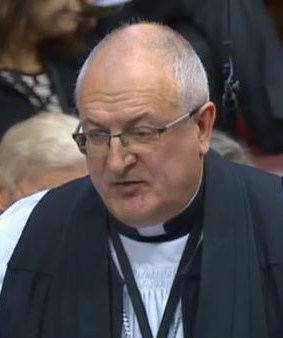
The Bishop of Oxford spoke in a debate on what steps the government are taking to support persecuted Christians around the world on 25th March 2024, highlighting the importance of freedom of religion and belief in the context of broader human rights, and calling for the government to inform the House of future strategies to promote freedom of religion and support those facing persecution:

The Lord Bishop of Oxford: My Lords, I too add my congratulations and appreciation to the noble Baroness, Lady Foster, on securing this important debate and her comprehensive and moving survey and speech. It is a pleasure to follow the noble and right reverend Lord, Lord Carey, and I pay tribute to his considerable expertise in this area over many years. I am grateful to my colleague, the right reverend Prelate the Bishop of Winchester, formerly the Bishop of Truro, for a briefing in advance of this debate. He is not able to be present, but I know he will follow deliberations closely.

As the noble Baroness, Lady Foster, set out so eloquently, the beginning of Holy Week is a fitting time to remember the persecution of Christians across the world and the costs of faith. This persecution has been evident since the very beginning of the Church. Even so, it is extremely sobering and moving to reflect that, according to Open Doors, 365 million Christians face some sort of persecution worldwide—about one in seven of the global Christian population. I also note with other noble Lords the disproportionate consequences and costs for women and girls.

Continue reading “Bishop of Oxford speaks on freedom of religion and belief and need for universal human rights to be respected”

Bishop of Hereford welcomes new fair dealing regulations for the dairy farming sector

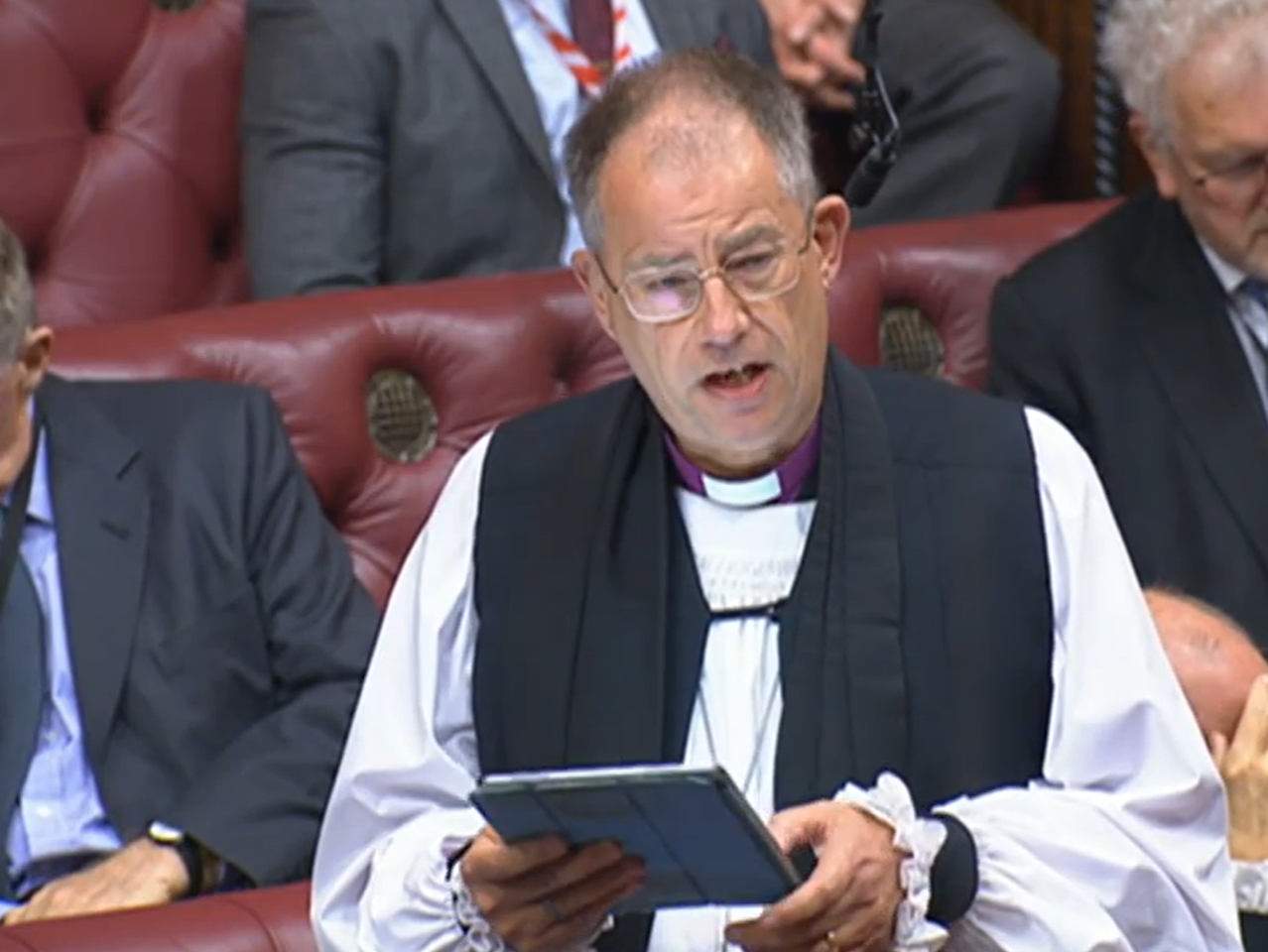
The Bishop of Hereford spoke in a debate on the draft Fair Dealing Obligations (Milk) Regulations on 25th March 2024, welcoming the new regulations and the benefits they would bring to the dairy farming sector:

The Lord Bishop of Hereford: My Lords, I applaud His Majesty’s Government for these new contract regulations. They are both comprehensive and long overdue in addressing matters of serious injustice in the dairy farming sector. Unfair milk contracts have been an area of concern for the dairy sector for many years, going back to the voluntary code of practice for dairy contracts, introduced in 2012. In their current form, most milk contracts do not create mutually balanced business relationships between buyers and sellers. Rights and obligations are often heavily biased in favour of buyers.

Continue reading “Bishop of Hereford welcomes new fair dealing regulations for the dairy farming sector”

Victims and Prisoners Bill: Bishop of Gloucester moves amendment to facilitate data collection on families and prisons

On 25th March 2024,the Bishop of Gloucester gave a speech and moved the following amendment during a debate on the Victims and Prisoners Bill:

172: After Clause 56, insert the following new Clause—

“Data collection in relation to children of prisoners: The Secretary of State must collect and publish annual data identifying—(a) how many prisoners are the primary carers of a child,(b) how many children have a primary carer who is a prisoner, and(c) the ages of those children.”

The Lord Bishop of Gloucester: My Lords, the noble Lord, Lord Farmer, tabled this amendment, to which I am very pleased to add my name in support and to move it today in this final stage of Committee on the Bill. In his absence, I take this opportunity to pay tribute to the noble Lord for his commitment to the families of prisoners. This is also an issue which I know my right reverend friend the Archbishop of Canterbury cares deeply about, as well.

This amendment was selected for Report stage in the other place but not discussed. Introduced by Harriet Harman, it is an important progress chaser to the Government’s response to the 2019 report from the Joint Committee on Human Rights, which she then chaired. This proposed new clause would require the Secretary of State to collect and publish annual data, identifying how many prisoners are primary carers of a child or children, how many children have a primary carer in prison, and the ages of those children. Its inclusion would be highly appropriate for this Bill, which focuses on both victims and prisoners.

When a parent is committed to custody, their child should not also receive a sentence; they should not be punished or overlooked as a result of their parent’s crime. 

Continue reading “Victims and Prisoners Bill: Bishop of Gloucester moves amendment to facilitate data collection on families and prisons”

Artificial Intelligence (Regulation) Bill: Bishop of Worcester welcomes legislation

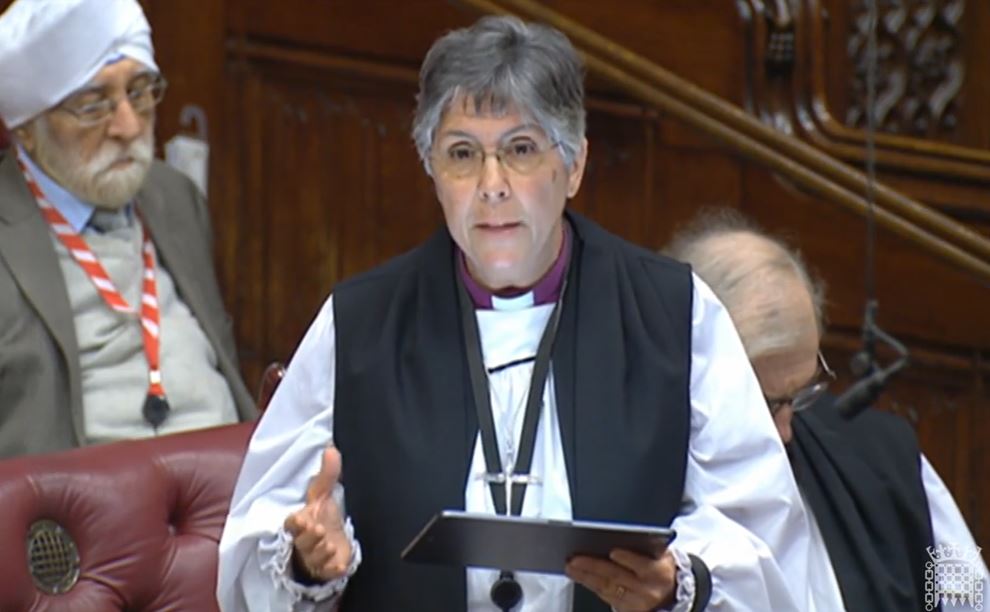
On 22nd March 2024, the Bishop of Worcester spoke in a debate on the Artificial Intelligence (Regulation) Bill (a private members bill tabled by Lord Holmes of Richmond), supporting the aims of the bill and calling for robust approach to AI regulation:

The Lord Bishop of Worcester: My Lords, I guarantee that this is not an AI-generated speech. Indeed, Members of the House might decide after five minutes that there is not much intelligence of any kind involved in its creation. Be that as it may, we on these Benches have engaged extensively with the impacts and implications of new technologies for years—from contributions to the Warnock committee in the 1980s through to the passage of the Online Safety Bill through this House last year. I am grateful to the noble Lord, Lord Holmes, for this timely and thoughtful Bill and for his brilliant introduction to it. Innovation must be enthusiastically encouraged, as the noble Baroness, Lady Moyo, has just reminded us. It is a pleasure to follow her.

That said, I will take us back to first principles for a moment: to Christian principles, which I hope all of good will would want to support. From these principles arise two imperatives for regulation and governance, whatever breakthroughs new technologies enable. The first is that a flourishing society depends on respecting human dignity and agency. The more any new tool threatens such innate dignity, the more carefully it should be evaluated and regulated. The second imperative is a duty of government, and all of us, to defend and promote the needs of the nation’s weak and marginalised —those who cannot always help themselves. I am not convinced that the current pro-innovation and “observe first, intervene later” approach to AI get this perennial balance quite right. For that reason, I support the ambitions outlined in the Bill.

Continue reading “Artificial Intelligence (Regulation) Bill: Bishop of Worcester welcomes legislation”

Bishop of Manchester details benefits of partnership working during debate on local government finances

The Bishop of Manchester spoke in debate on the state of local government finances and the impact on communities on 21st March 2024, highlighting the efforts of faith groups and partnership working to combat poverty and homelessness:

The Lord Bishop of Manchester: My Lords, I too am grateful to the noble Lord, Lord Shipley, for securing this important debate, but I am doubly grateful for its full title. This is not simply a debate about local government finances; it is a debate about the impact on local communities, and that is a vital distinction. Money is only ever a means to an end. It is an input—a crucial one—but what really matters are the outcomes and, in terms of local government, what really matters is how well local communities are served.

I still recall that back in the 1990s, when I started attending and speaking at national housing conferences, there were some where every positive mention of housing associations brought an audible hiss from some local authority members who were present. They saw us as rivals, and in some cases even the enemy, as we were taking money that had formerly gone to them to provide services that they had previously enjoyed delivering. I guess their attitude could be summed up as: if a job is worth doing, it is for the public sector to do it. I hope that we have long moved on from those attitudes. Local authorities have a vital and leading part to play in the service of their communities, but they are not the sole provider. Other agencies are not competitors; they are partners in the common task of supporting the local community.

Continue reading “Bishop of Manchester details benefits of partnership working during debate on local government finances”

Budget Debate: Bishop of Worcester highlights need for increased spending on overseas aid

On 18th March 2024, the Bishop of Worcester spoke in a debate on the spring budget, paying tribute to aspects of the budget such as the continuation of the household support fund and the reduction in National Insurance, and expressing regret that the international aid budget had not been increased:

The Lord Bishop of Worcester: My Lords, I congratulate the noble Lord, Lord Kempsell, on an excellent maiden speech, which was thoughtful and brief—and, as we all know, concision is next to godliness.

I have learned a lot in this debate, including the operation of the VAT regime on nuts—probably more than I would have wanted to have known. However, I will not concentrate my remarks on that.

It is clear that the Chancellor had a difficult task in producing the Budget, as has been observed by one of his predecessors, the noble Lord, Lord Lamont, who knows better than anyone. I want to pay tribute to the many good things in the Budget: the continuation of the household support fund, the reform of non-dom status, the increase in public services spending by 1% above inflation, and the welcome reduction in national insurance, to name but a few. However, I was very disappointed by one lacuna, to which I want to address my remarks now. That is, that the aid budget was not increased.

Continue reading “Budget Debate: Bishop of Worcester highlights need for increased spending on overseas aid”

Victims and Prisoners Bill: Bishop of St Edmundsbury and Ipswich expresses concern over human rights protections

During a debate on the Victims and Prisoners Bill on 12th March 2024, the Bishop of St Edmundsbury and Ipswich, on behalf of the Bishop of Manchester, spoke in support of removing clauses 49-52 from the bill on the basis that they would potentially weaken human rights protections in the UK through disapplication of certain rights to prisoners:

The Lord Bishop of St Edmundsbury and Ipswich: My Lords, my right reverend friend the Bishop of Manchester regrets that he cannot be here today to speak to the amendments to which he has put his name.

The basis of our opposition to Clauses 49 to 51, to echo points made by the noble Lord, Lord German, and the noble Baroness, Lady Lister, is that human rights need to be applied universally, even when disapplication might seem expedient. We know that, when people are marginalised, it is then that human rights protections are most necessary and, as such, the disapplication of rights to prisoners, who rely on independent courts and the justice system to guarantee basic minimum standards of fairness and respect, is particularly egregious. The Law Society has warned that these clauses

“significantly weaken the system of human rights protections in the UK”.

My right reverend friend and I add our voices to these concerns.

Continue reading “Victims and Prisoners Bill: Bishop of St Edmundsbury and Ipswich expresses concern over human rights protections”

Victims and Prisoners Bill: Bishop of Leicester supports aftercare provision for IPP prisoners

On 12th March 2024, the House of Lords debated the Victims and Prisoners Bill. The Bishop of Leicester spoke in support of amendments 165 & 166 to the bill, which would ensure provision of aftercare for those subject to IPP (Imprisonment for Public Protection) sentences:

The Lord Bishop of Leicester: My Lords, I support this group of amendments and it is a pleasure to follow noble Lords and benefit from their considerable wisdom—I am in awe of the learning and wisdom on display this evening. I do not want to repeat a lot of what has been said, so I will keep my speech very short.

I have one or two reflections on Amendments 165 and 166, to which my right reverend friend the Bishop of Gloucester has added her name. She is a regular visitor to prisons across the country and supports the network of chaplains in our prisons who have direct evidence in relation to the mental health of prisoners.

Continue reading “Victims and Prisoners Bill: Bishop of Leicester supports aftercare provision for IPP prisoners”

Bishop of Southwark takes part in debate marking International Women’s’ day

The Bishop of Southwark gave a speech during a debate to mark international women’s day on 8th March 2024, paying tribute to the women of the Bishops Benches and raising the impact of poverty on women in the UK and overseas:

The Lord Bishop of Southwark: My Lords, I thank the noble Baroness, Lady Barran, for securing this important debate on International Women’s Day. I look forward to the maiden speech of the noble Baroness, Lady Casey of Blackstock.

It is my belief that the kingdom of God is a place of radical inclusion in which all are welcome and all shall flourish. I speak as the duty bishop today, but I am mindful of the determined advocates on this Bench, which include the right reverend Prelate the Bishop of Gloucester, who is attending the 68th session of the Commission on the Status of Women at the United Nations headquarters in New York.

Continue reading “Bishop of Southwark takes part in debate marking International Women’s’ day”

Safety of Rwanda (Asylum and Immigration) Bill: Bishop of Chelmsford supports amendment providing additional protection to unaccompanied children

On 6ht March 2024, the House of Lords debated the Safety of Rwanda (Asylum and Immigration) Bill in the final day of the report stage. The Bishop of Chelmsford spoke in support of amendment 34 to the bill, tabled by Baroness Lister of Burtersett, which would seek to restore the jurisdiction of the courts to review removal decisions taken on the basis of age assessments of unaccompanied children:

The Lord Bishop of Chelmsford: My Lords, I rise also to support Amendment 34. I will keep my comments brief because I fully support the statements from the noble Baroness, Lady Lister, and the noble Lord, Lord Dubs. But please do not mistake my brevity with the level of importance that should be attached to this issue. Safeguarding is not some burdensome requirement but a moral and legal imperative. It is for this reason that I repeat the request that I made in Committee for a child’s rights impact assessment to be published.

It is welcome that the Government have excluded unaccompanied children from the Rwandan partnership, but to safeguard potential children effectively, this commitment must be more than a mere intention; it must be operationally put into practice. This amendment would help mitigate the risk of a person being sent erroneously—when they are, in fact, a child—by sensibly awaiting the result of any age assessment challenge before their removal. When it comes to a child, we cannot allow harm to be addressed retrospectively, as surely it is the role of any Government to prevent harm, regardless of the immigration objective. Trauma, as we have heard, simply cannot be remedied.

Continue reading “Safety of Rwanda (Asylum and Immigration) Bill: Bishop of Chelmsford supports amendment providing additional protection to unaccompanied children”