Conversion Therapy Prohibition (Sexual Orientation and Gender Identity) Bill: Bishop of Bristol welcomes legislation whilst calling for greater clarity

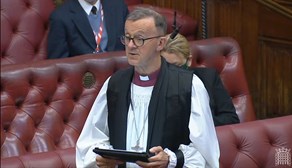
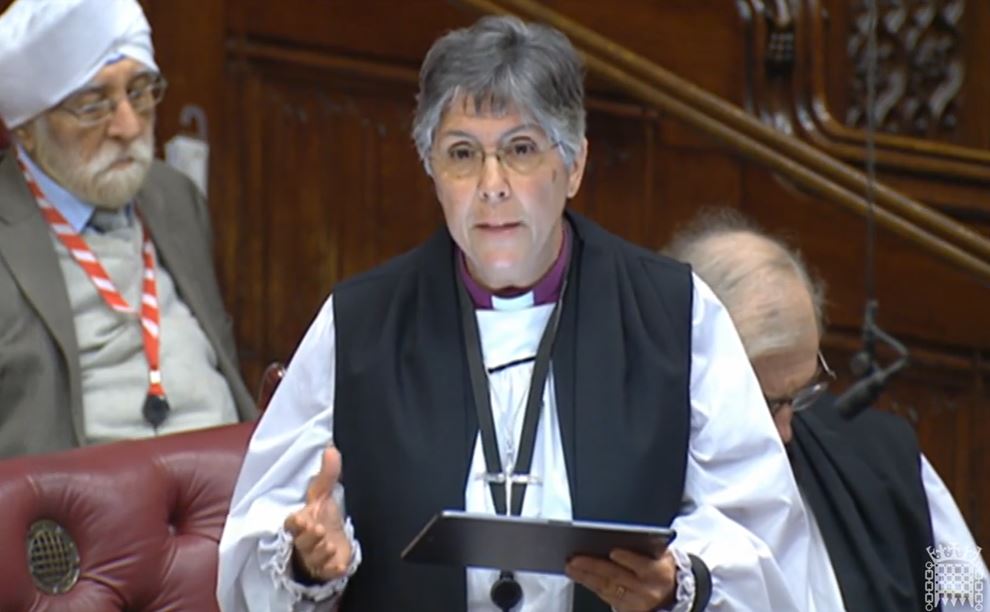
The Bishop of Bristol spoke in a debate on the Conversion Therapy Prohibition (Sexual Orientation and Gender Identity) Bill, (a private members bill brought by Baroness Burt of Solihull to ban the practice of conversion therapy for LBGT+ people) on 9th February 2024, supporting the bill and stressing the need to continue to work to protect LGBT+ people from harm, and expressing a desire for greater clarity in some parts of the legislation:

The Lord Bishop of Bristol: My Lords, I begin by thanking the noble Baroness, Lady Burt, for her Bill. I am grateful to the noble Baroness for engaging with the complexity of drafting legislation to prevent conversation therapy or practices, given the variety of views there clearly are in this Chamber and in wider society. I declare my interests: until December, I was one of the bishops leading on safeguarding in the Church of England and I am still co-chair of the APPG on Safeguarding in Faith Communities.

I have been aware for many years in pastoral ministry of some horrific practices, from physical punishment, counselling and prayer techniques akin to interrogation to, at worst, supposedly curative rape. Such practices are used against those in faith communities who are regarded as deviating from the communities’ norms for sexuality and gender identity. These more or less hidden practices must be prevented by statutory provision if they are not already. We should note too that those who are victims should be much better supported. I am also aware of the much more subtle impact on LGBTIQ people of faith—the pressure on them to conform to the norms set by the hierarchy of their faith community. The cultures which pervade many faith communities render those exploring their identity very vulnerable indeed to abuse, as the IICSA report reminded us.

Continue reading “Conversion Therapy Prohibition (Sexual Orientation and Gender Identity) Bill: Bishop of Bristol welcomes legislation whilst calling for greater clarity”

Bishop of Bristol highlights negative impact of lack of digital access for children

On 8th February 2024, the Bishop of Bristol spoke in a debate on a report from the Communications and Digital Committee on digital exclusion, emphasising the impact of lack of digital access on children:

The Lord Bishop of Bristol: My Lords, it is a pleasure to follow the noble Lord, Lord Lipsey, whose speech imaginatively took us into the life and world of Joe Soap. I congratulate the noble Baroness, Lady Stowell, on securing this timely debate—timely in one sense—and I offer my thanks to all members of the Communications and Digital Committee for a thorough and wide-ranging report. I also lament the lack of a government cross-departmental strategy.

Today, I focus my comments on digital inclusion and exclusion in and around schools, about which I have a little knowledge. In 2021, UNICEF produced an excellent report on the effect of digital exclusion on schoolchildren. That report said that

“digital inclusion must be seen as the cornerstone to ensuring social justice and equitable life chances for every child”.

Those words were written while the pandemic was at its peak and the long-term impact on education was still difficult to predict.

Continue reading “Bishop of Bristol highlights negative impact of lack of digital access for children”

Bishop of Bristol expresses strong concern over conflict in Gaza and calls for political leaders to work for peace

The Bishop of Bristol spoke in a debate on the current humanitarian situation in Gaza on 8th February 2024, expressing concern about the rejection of a proposed ceasefire and the impact of total war on civilians:

The Lord Bishop of Bristol: My Lords, I am grateful to the noble Baroness for securing this debate. Today the future seems bleak after Prime Minister Netanyahu, perhaps understandably, rejected a ceasefire because, as reported, total victory may be achieved in months. In my city of Bristol, women from Jewish and Muslim communities stand silently together in public vigil, and those of all faiths and none march each week campaigning for a cessation of violence on all sides.

Total victory within months—what does that mean for the hostages held in tunnels, for the women who are pregnant without medical support, for babies whose mothers have no breast milk? What we see is a horrible inversion of the word of the prophet Joel: the dreams of old men are shattered and the visions of young men are betrayed. The hopes of so many Jews, Muslims and Christians are destroyed. May God and our political leaders have mercy, source aid and work unrelentingly for peace.

Hansard

Bishop of Norwich calls for resourcing of medics and hospitals to address humanitarian situation in Gaza

The Bishop of Norwich spoke in a debate on the situation in Gaza on 8th February 2024, asking that the government give greater support to medics in Gaza and Israel to facilitate resupplying of hospitals in order to address the humanitarian crisis in the Gaza strip:

The Lord Bishop of Norwich: My Lords, I visited Gaza on 4 October, just three days before Hamas’s evil attacks, to see the Anglican-run 80-bed al-Ahli hospital. The World Health Organization reported on Tuesday that there are 150 patients there—all are critically ill. Everyone is fearful, stressed and exhausted. Medical staff have been detained, shackled and blindfolded by the IDF, and, on release, they are deposited in Rafah and not allowed to return to the hospital. There is an urgent need for medical staff, fuel, food and critical medical supplies, such as bone stabilisers, antibiotics and anaesthetics, across Gaza’s hospitals. Will His Majesty’s Government hear the cries of medics in Gaza and press the State of Israel for the WHO to have sustained access to resupply hospitals across the Gaza Strip so that they can continue to function?

Hansard

Bishop of Bristol speaks in debate on workers and employment

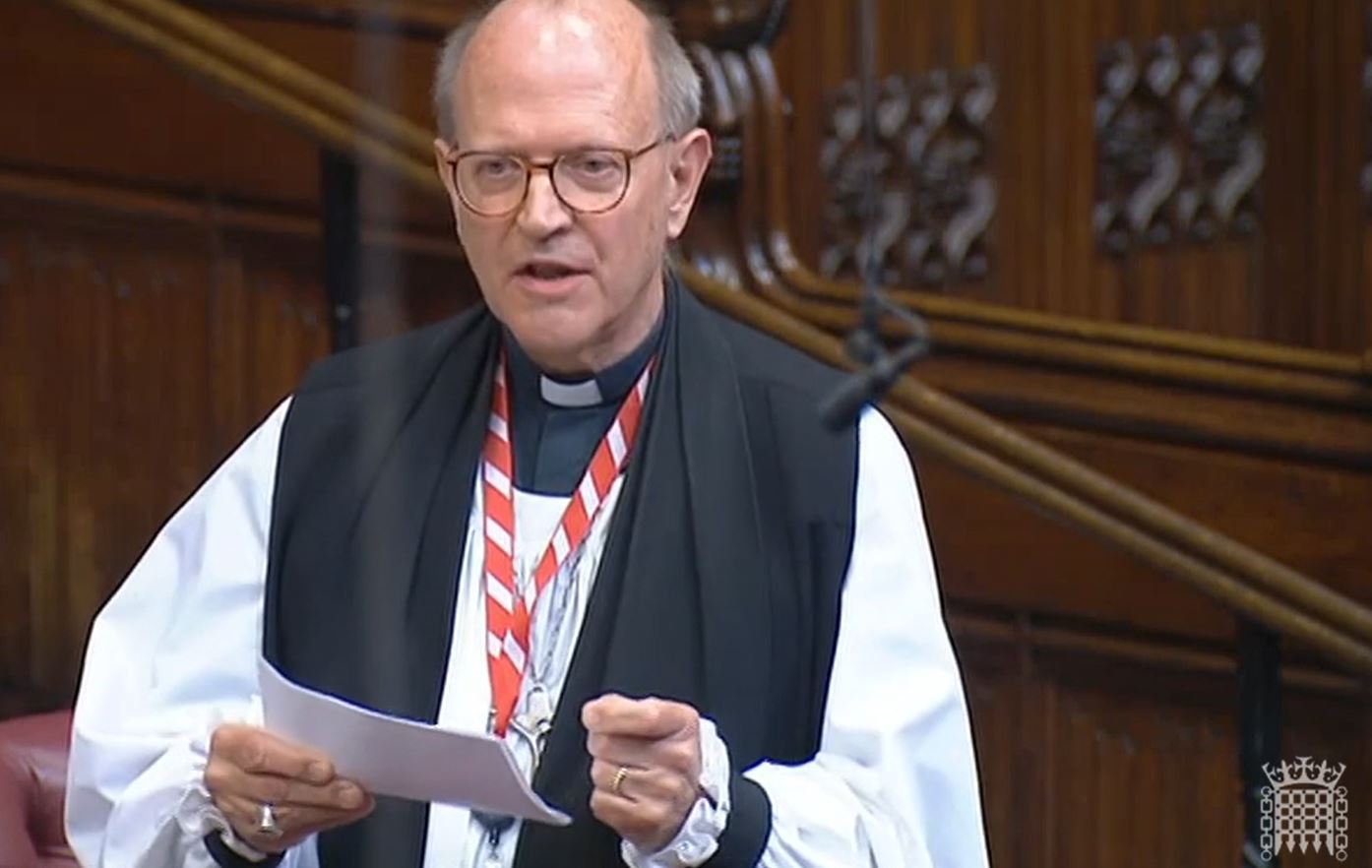
The Bishop of Bristol spoke in a debate on a report from the Economic Affairs Committee on workers on 8th February 2024, emphasising the value of meaningful work and drawing attention to the findings of the Archbishops Commission on Families & Households:

The Lord Bishop of Bristol: My Lords, it is a pleasure to speak in this important debate about the nature of the UK workforce in a challenging economic climate. I pay tribute to the noble Lord, Lord Bridges, as have others, and all the members of the Economic Affairs Committee who worked to produce this report and have stimulated our thinking today.

On a personal note, having recently found it hard to recruit lay staff to my office in Bristol, I am very grateful for being informed by the report we are debating today. At the heart of my diocese, you can find the New Room, the chapel where John Wesley led the first Methodist congregation from 1739. As part of his pioneering ministry, he offered “Rules of a Helper” to ordained Ministers, the first of which is:

“Never be unemployed a moment, never be triflingly employed, never while away time”.

While the word “unemployed” might have pricked the ears of your Lordships in the context of this debate, the final clause may be the significant one here. In effect, we are reminded about the importance of using our time on earth well. There is work to be done, good news to share and disciples to be made. Wesley was on to something. There is great purpose and fulfilment to be found in using our time well, maximising our skills and ensuring we fulfil our potential. It enriches our lives and the lives of our community, and that is central to my remarks today.

Continue reading “Bishop of Bristol speaks in debate on workers and employment”

Victims and Prisoners Bill: Bishop of Bristol supports amendments focused on protecting migrant victims of crime

The Bishop of Bristol, on behalf of the Bishop of Gloucester and the Bishop of London, spoke in support of two amendments to the Victims and Prisoners Bill on 5th February 2024, one aimed at improving conditions for migrant victims of domestic violence, and another on ensuring that data on victims of crime not be shared with immigration enforcement authorities:

The Lord Bishop of Gloucester: My Lords, I rise to speak on behalf of two of my colleagues who have supported amendments in this group. My right reverend friend the Bishop of Gloucester regrets that she cannot be in her place to add her voice in support of Amendment 80, which concerns a cause on which she has long been an advocate. She tabled an amendment to the Domestic Abuse Bill, with cross-party support in 2021. Advocates have campaigned for 30 years to improve conditions for migrant women who have no recourse to public funds and who are victims of domestic abuse. While there has been some progress, including the introduction of the domestic violence indefinite leave to remain rule and the destitution domestic violence concession, there is still much more to be done to make sure that victims of domestic abuse with no recourse to public funds, or who are undocumented, are eligible for those schemes. Victims face an impossible choice: domestic abuse or deportation and destitution. Many are unable even to enter a women’s refuge; they cannot pay their rent or living costs as they are not eligible for housing or other social security benefits.

Continue reading “Victims and Prisoners Bill: Bishop of Bristol supports amendments focused on protecting migrant victims of crime”

Victims and Prisoners Bill: Bishop of Manchester tables amendments to bolster victim support organisations

On 5th February 2024, the House of Lords debated the Victims and Prisoners Bill in Committee. The Bishop of Manchester spoke on two amendments he had tabled, aimed at enabling increased collaboration between statutory and community bodies in the victim support sector:

The Lord Bishop of Manchester: My Lords, I rise to speak to Amendments 56 and 59 in my name; I also support the other amendments in this group. These amendments would all help to firm up the very good intentions set out in Clauses 12 and 13.

In an earlier group, I tabled an amendment to ensure that victim support services were properly signposted; it is no use a service existing if the people it is meant to serve are not able to access it. But now we come to, if anything, a more fundamental point: how do we ensure that the right services exist for victims, and in each and every part of the country?

The Bill as drafted gets much right: it requires policing bodies, integrated care boards and local authorities to collaborate in assessing the needs of victims, producing a published strategy and, indeed, revising that strategy as occasion requires—so far, so good. But, as things stand, and as the noble Lord, Lord Russell of Liverpool, has indicated, that assessment and strategy could be little more than a combination of the unaffordable and the non-existent—a bit like an overambitious child’s Christmas wish list.

Continue reading “Victims and Prisoners Bill: Bishop of Manchester tables amendments to bolster victim support organisations”

Bishop of London takes part in debate to mark Holocaust Memorial Day

The Bishop of London spoke in a debate to mark Holocaust Memorial Day on 2nd February 2024, on the themes of the fragility of freedom and the need to challenge prejudice in all forms:

The Lord Bishop of London: My Lords, I start by thanking noble Lords for their contributions to this debate, and in particular those to whom the Holocaust and anti-Semitism continue to give deep, personal pain. I know that not only speaking in but listening to this debate will cause them greater concern and pain, so I thank them so much. It is a particular honour to follow the noble Lord, Lord Dubs, and the noble Baroness, Lady Anderson, whom I thank so much for what they said.

Last week, it was my privilege to be at the ceremony for Holocaust Memorial Day at the Guildhall in the City, along with a number of noble Lords. Those who were there could not help but be moved by the stories that people recalled. We recalled the murder of so many people in not only the Holocaust but the other genocides since: Darfur, Rwanda, Bosnia and Cambodia, to name but a few: each person loved; each person known; each person missed and each person grieved for. Their loss makes the world a poorer place, even decades later.

Continue reading “Bishop of London takes part in debate to mark Holocaust Memorial Day”

Bishop of St Albans highlights risks posed by overdue maintenance and repair in UK schools

The Bishop of St Albans spoke in a debate on the safety risks of reinforced autoclaved aerated concrete in schools on 1st February 2024, raising the potential effects on exam results and the wider issue of a maintenance and repair backlog in UK schools:

The Lord Bishop of St Albans: My Lords, I thank the noble Lord, Lord Addington, for securing this debate on a subject that has already been raised in this House and is adversely affecting a significant minority of our schools. I pay tribute to those hard-pressed and sometimes overstressed heads, teachers, ancillary staff and pupils who are still having to cope with this on a daily basis; it really is having an effect on the ordinary running of some of our schools across our nation. I think, for example, of the staff and students of St Leonard’s Catholic School in County Durham, who have been extremely adversely affected by this crisis; the pupils are still being taught in temporary classrooms five months on. The DfE announced this week that it cannot make any exam dispensations for the GCSE and A-level students at this school, despite experts advising a 10% boost to grades to compensate for disruption to education.

Continue reading “Bishop of St Albans highlights risks posed by overdue maintenance and repair in UK schools”

Bishop of St Albans calls for wider access to arts and culture

The Bishop of St Albans spoke in a debate on the contribution of the arts to the economy and society on 1st February 2024, calling upon the government to both fund the arts and ensure access to arts and culture for wider groups of people:

The Lord Bishop of St Albans: My Lords, I too am grateful to the noble Lord, Lord Bragg, for securing this debate, and I am particularly glad we are debating the contribution of the arts not just to finance and the economy but to society. The arts are fundamental to human flourishing, to expanding our imaginations, to deepening our sympathies and to touching all aspects of our lives that, so often, the merely financial fails to engage with.

Of course, the arts do make a significant contribution to the wealth of this nation, and we are fortunate to be home to some of the world’s leading orchestras, musicians, playwrights, theatres, artists and galleries. In my own diocese in Hertfordshire there is a rapid expansion of studios that are attracting filmmakers from around the world, which is important. But the danger is that we do not give enough time and attention to thinking, “Where are these musicians and artists going to come from, and where are they first going to get the experience of the arts? Where are the ordinary people, in their homes and families, engaging with the sheer delight of creativity?” That is why I find it deeply sad that many young people do not have the access to artistic expression or musical education in their communities, homes, or, sadly sometimes, even in their schools.

Continue reading “Bishop of St Albans calls for wider access to arts and culture”