Bishop of St Albans supports improved public transport for rural communities

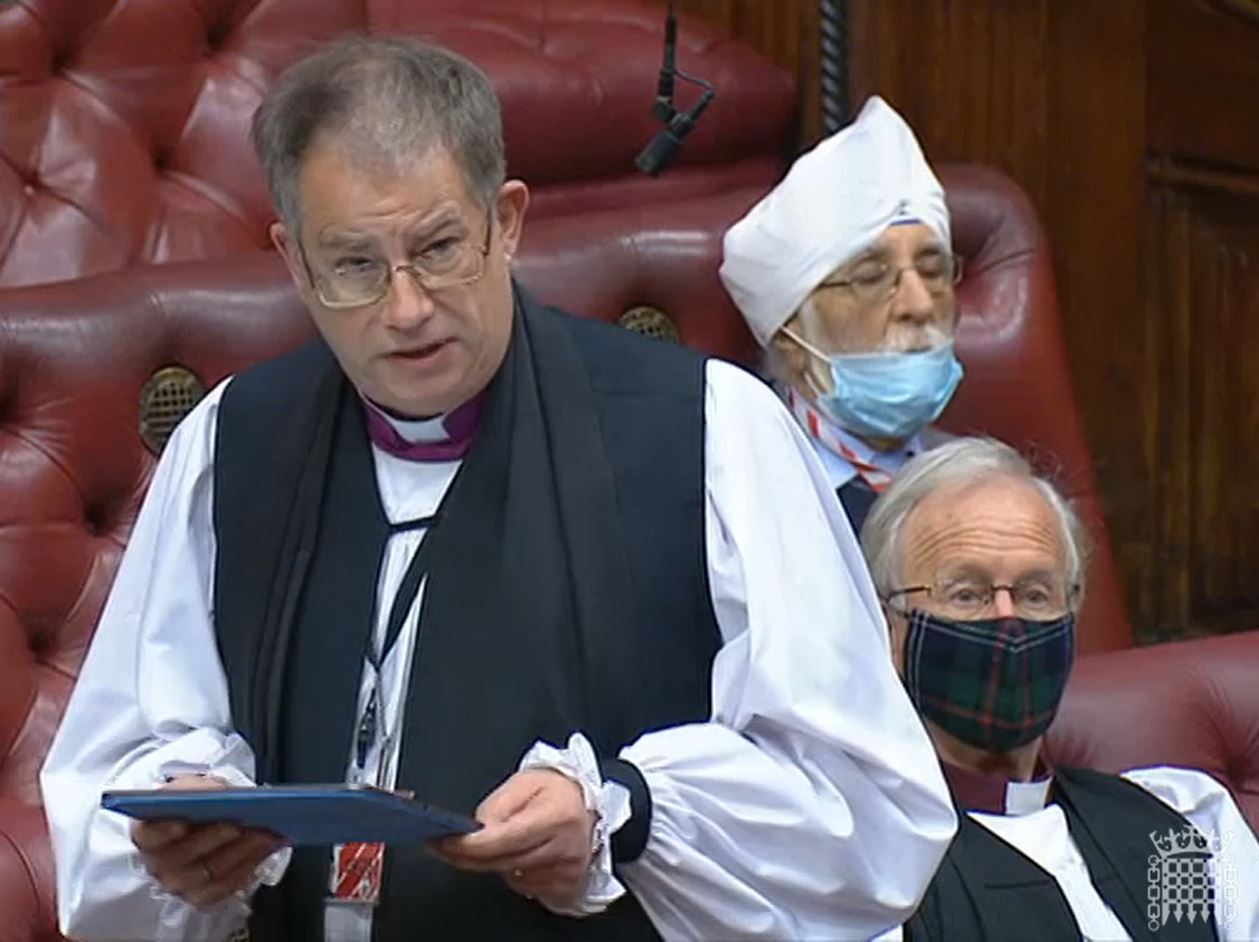
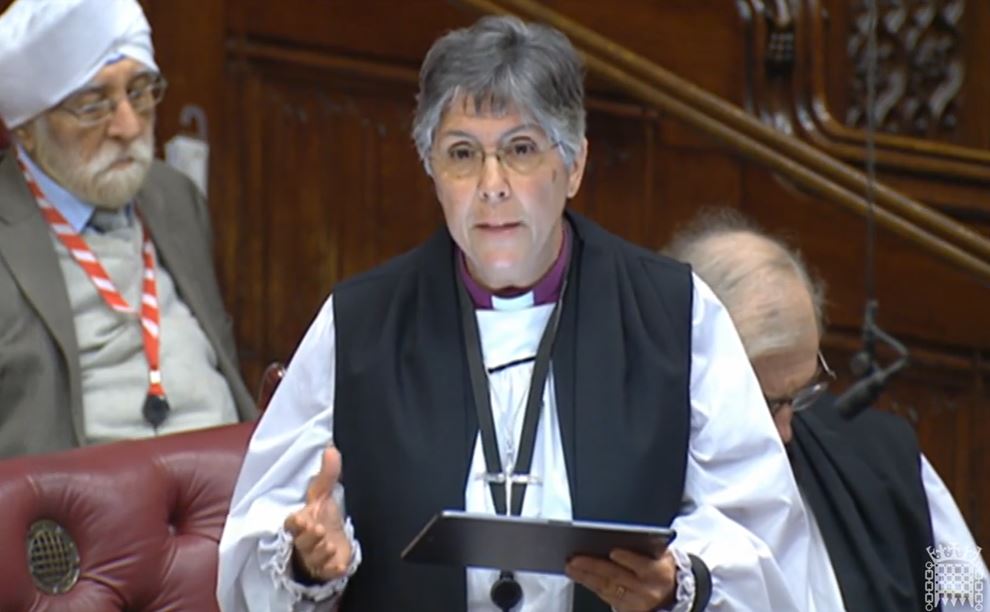
The Bishop of St Albans spoke in a debate on transport network investment on 30th March 2023, emphasising the need for better public transport routes in rural communities, particularly relating to funding for bus routes:

The Lord Bishop of St Albans: My Lords, I thank the noble Lord, Lord Berkeley, for securing this debate. It is a vital area for us. Those of us who live in the south-east of England are aware of the huge strains that are being put on ordinary people’s lives day by day, and on our businesses, through the problems with our transport system, not least with public transport.

I am also aware that this matter touches so many other areas of concern at the moment, such as our desire to work for a net-zero carbon future and the question of how we can get people off the roads as much as possible and on to good, fast, efficient public transport. I am aware that this means having a long-term policy on active transport; we need to work out how to get a sea change in what we expect and what we can offer. I was therefore pleased to hear the announcement by His Majesty’s Government of the provision of additional funding for transport in the recently published Statement. However, as has already been pointed out, it raises an awful lot of questions, not just about what was in it but what was not in it.

I declare my interest as president of the Rural Coalition. I want to focus my comments mainly on the rural dimension of public transport policy. Nearly 10 million of this country’s 67 million people live in rural areas—one in six of us. Sadly, there was little in the Government’s announcement to bring cheer to rural inhabitants. I and others who care about rurality and the long-term sustainability of the countryside entirely accept that we cannot expect anything like the levels of public transport and roads that our urban colleagues take for granted.

Continue reading “Bishop of St Albans supports improved public transport for rural communities”

Bishop of St Albans speaks in support of the UK performing arts sector

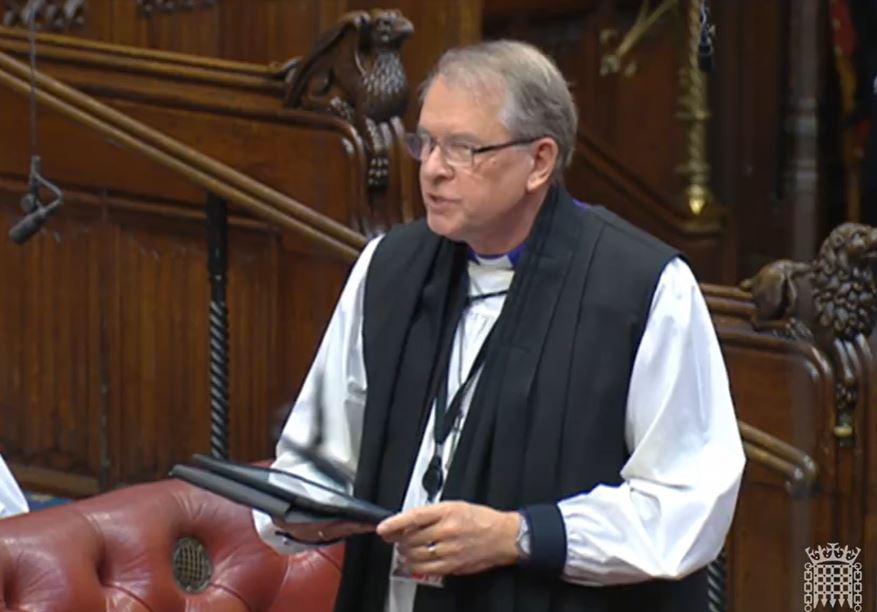
The Bishop of St Albans spoke in a debate on support for the performing arts sector in the UK on 30th March 2023, advocating for a long term settlement of grants to support the arts and emphasising the cultural and social value of the arts sector:

The Lord Bishop of St Albans: My Lords, I too am grateful to the noble Baroness, Lady Featherstone, for securing this debate and share the concerns of many other noble Lords about the challenges facing BBC musicians and the need to support small venues and touring programmes. The case has been made eloquently.

I am also grateful for the Library briefing, but I note that it begins—as has already been quoted—

“In 2022 music, performance and visual arts contributed an estimated £11.5bn to the UK economy.”

Have we really reached the point where we primarily describe the arts by the financial contribution that they make? Can we not imagine a world where the House of Lords Library produces briefings which say that, in the past year, 39,000 people had their minds opened and changed because of the plays they saw at the National Theatre; scores of people entered into the grim reality of migrants because they went to something at the National Theatre and then came back and signed up to some campaigning organisation to support them; and 40,000 people felt that they touched eternity in that breathtaking silence at the end of the Rachmaninoff “Vespers”? Can we not somehow talk about enriching the human soul? That is surely what it is about. We cannot and must not measure the performing arts primarily in financial terms but in the way that they expand our imaginations, unlock our sympathies and confront us with alternative realities that take us out of our comfort zones and demand that we engage with them.

Continue reading “Bishop of St Albans speaks in support of the UK performing arts sector”

Archbishop highlights increased risk of climate change-driven conflict and migration

On 30th March 2023 the House of Lords held a short debate on a Motion from Lord Naseby: To ask His Majesty’s Government what plans they have to introduce new economic policies to address the challenges of climate change in developing countries, particularly those that are members of the Commonwealth.

The Archbishop of Canterbury: My Lords, I am grateful to the noble Lord, Lord Naseby, for tabling this Question. In his travelogue, he mentioned, to my alarm, the areas for which I am directly responsible—I suppose because they could not go anywhere else—notably, the Falkland Islands, Antarctica, Sri Lanka and Bermuda; I do not know what is going to happen to Kent.

The OECD’s most recent States of Fragility report found that, in 2022, 23% of the world’s population were living in fragile contexts, often linked to climate change, but 73% of the world’s extreme poor were. This figure is projected to rise to 86% of the world’s poor on the lowest incomes by 2030. For the Anglican Communion, within 165 countries over 150 of them are affected by such changes.

Continue reading “Archbishop highlights increased risk of climate change-driven conflict and migration”

Bishop of Leicester speaks in debate on the need to provide more supported housing

On 30th March 2023, the House of Lords debated the need for more supported housing resources. The Bishop of Leicester spoke in the debate, highlighting the benefits of supported housing in reducing homelessness and referencing the work of local services in Leicester diocese:

The Lord Bishop of Leicester: My Lords, I am grateful to the noble Baroness for securing this debate and bringing to the Committee’s attention the excellent report by Imogen Blood and the University of York for the National Housing Federation.

I would like to use this opportunity to highlight in particular the work of one organisation in Leicester, with which I have had the privilege of working. I will highlight some of the points made in the aforementioned report and also in Homeful, a report by Professor Jo Richardson of De Montfort University in Leicester.

For several years, One Roof Leicester operated a night shelter, providing emergency accommodation for those who would otherwise be sleeping rough. Indeed, it was credited as running the first interfaith night shelter in the UK; for three months, it rotated between multiple places of worship. It then began to offer supported housing for people experiencing homelessness, and the outcomes have been so positive that it has now moved over fully to that model.

Continue reading “Bishop of Leicester speaks in debate on the need to provide more supported housing”

Future of Social Care: Bishop of Carlisle speaks on need to rethink approaches to care

The Bishop of Carlisle also spoke in the debate on the future of social care on 30th March 2023, highlighting the central themes of the Archbishops’ Commission on Reimagining Care, and the need for change in the approach to social care:

The Lord Bishop of Carlisle: My Lords, I have had the great privilege of sitting on both the Adult Social Care Committee and the Archbishops’ Commission on Reimagining Care. I also pay tribute to the outstanding work of their respective chairs, the noble Baroness, Lady Andrews, and Dr Anna Dixon.

When the two reports were published, it came as no great surprise that there were huge areas of overlap. In fact, a careful analysis has revealed at least 17 different points of congruence, ranging from providing everyone with the opportunity to lead a full life, through to appointing a commissioner for care and support and properly implementing the Care Act 2014—all of which have already been mentioned.

As we have heard, the role of unpaid carers, including children, was highlighted in particular by both reports. Because that became such a central feature of the Select Committee’s investigation and report, it is being fully addressed by many noble Lords speaking in this important debate. Rather than repeating their valuable contributions, I, like the noble Lord, Lord Polak, and the noble Baroness, Lady Shephard, want to focus on another area of concern raised by both reports, namely the current difficulty experienced by those who try to navigate the statutory care and support system. Phrases such as a “baffling range of organisations” and a “fog of confusion” abound. As we heard from the noble Baroness, Lady Pitkeathley, whose long-term contribution to this debate we so value, dealing with the complex and circular bureaucracy is time-consuming and frustrating.

Continue reading “Future of Social Care: Bishop of Carlisle speaks on need to rethink approaches to care”

Archbishop calls for a reimagining of the adult social care system

On 30th March 2023 the House of Lords debated adult social care. The Archbishop of Canterbury drew attention to the recent report from the Archbishops’ Commission on Reimagining Social Care.

The Archbishop of Canterbury: My Lords, I am very grateful to the noble Baroness, Lady Andrews, for securing this important debate, for her Select Committee’s outstanding report on adult social care and for including the recent report of the Archbishops’ Commission on Reimagining Care in the debate title. I am also very grateful to my noble friend the right reverend Prelate the Bishop of Carlisle, who co-chaired the commission. He will be addressing some of its specific recommendations later. I would like to speak about the motivation for its commissioning by the most reverend Prelate the Archbishop of York and myself.

Continue reading “Archbishop calls for a reimagining of the adult social care system”

Bishop of St Edmundsbury and Ipswich highlights need to encourage farmers engagement with Environmental Land Management Scheme

The Bishop of St Edmundsbury and Ipswich spoke during a debate on a motion to approve new regulations on direct payments to farmers, highlighting the need for support for farmers to engage with Environmental Land Management Schemes:

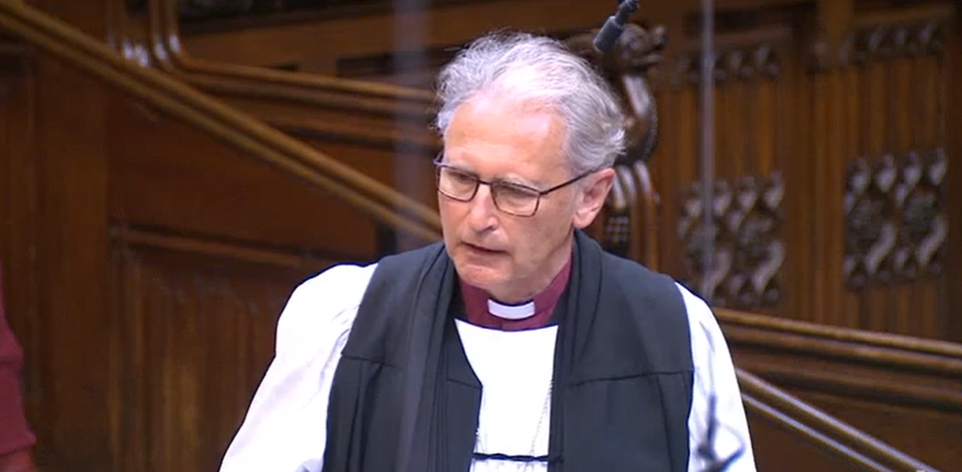
The Lord Bishop of St Edmundsbury and Ipswich: My Lords, I shall follow the comments that we have just heard. I declare a new interest as the president-elect of the Suffolk Agricultural Association, where we see the issues that have just been described in the uplands similarly in small family farms in Suffolk.

By and large, the farmers that I speak to want to embrace the ELM scheme and many of them are doing so. What those who are embracing it are saying to me about those who are not yet doing so is that somehow the scheme needs to be made more attractive, the incentives need to be increased—particularly for the smaller family farmers—and the process simplified in some way so that they can gain access to the scheme. I understand that His Majesty’s Government are seeking to achieve 80% take-up of ELMS by 2030. I ask the Minister where we are with that at the moment and what he sees as the possibilities of accelerating and incentivising the take-up by those who, as we heard earlier, might need hand-holding in that process.

Hansard

Public Order Bill: Bishop of Manchester supports conditions on stop and search powers

On 28th March 2023, the Bishop of Manchester spoke in support of an amendment to the Public Order Bill tabled by Lord Coaker, which would seek to place conditions on how suspicion-less stop and search powers are used by police:

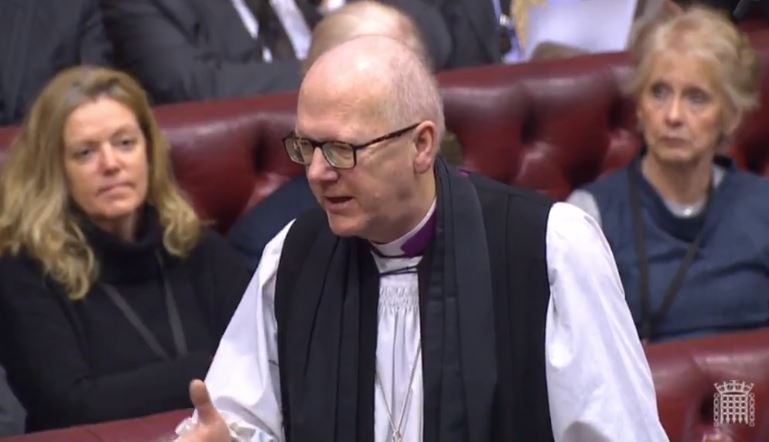
The Lord Bishop of Manchester: My Lords, I declare my interest as co-chair of the national police ethics committee, but obviously I am not speaking on behalf of it today. I had hoped not to have to speak at all this afternoon but after the contributions of other noble Lords I feel I must say a few words.

Continue reading “Public Order Bill: Bishop of Manchester supports conditions on stop and search powers”

Levelling up and Regeneration Bill: Bishop of Derby supports amendments on housing planning

On 27th March 2023 the House of Lords debated the Levelling Up and Regeneration Bill in the 8th day of the committee stage. The Bishop of Derby spoke in favour of amendments to the bill that would ensure health and wellbeing of residents is taken into account in housing planning:

The Lord Bishop of Derby: My Lords, I am glad that today we have the opportunity to consider the health and well-being dimensions of planning. It is my view that development planning cannot be truly successful if it does not also enhance health and well-being. I speak first in favour of Amendment 188 and Amendments 394 to 399 from the noble Lord, Lord Crisp. The right reverend Prelates the Lord Bishop of London, the Lord Bishop of Chelmsford, the Lord Bishop of Manchester and the Lord Bishop of Carlisle, who have previously spoken on these issues, regret they cannot be in their place today. However, I have no doubt they would want to give their support to these amendments were they in the Chamber.

I am sure noble Lords will recall stories of what can happen when living conditions deteriorate. Awaab Ishak’s death in December 2020 from a respiratory condition caused by “extensive mould” was an incredibly tragic story, as was that of Ella Adoo-Kissi-Debrah’s death, partly caused by toxic air near where she lived. It is welcome that the Government are working to deliver Awaab’s Law through the Social Housing (Regulation) Bill and that Ella’s Law, the Clean Air (Human Rights) Bill, continues its journey through Parliament in the other place.

Continue reading “Levelling up and Regeneration Bill: Bishop of Derby supports amendments on housing planning”

Universal Credit (Removal of Two Child Limit) Bill: Bishop of Durham moves to pass bill

On 24th March 2023, the Bishop of Durham moved that his Universal Credit (Removal of Two Child Limit) Bill should pass through the House of Lords in its third reading. The Bill was approved and passed to the House of Commons.

Motion

Moved by

The Lord Bishop of Durham: That the Bill do now pass.

My Lords, I request your Lordships’ patience for a few minutes as I make a few remarks. I express my deep gratitude to all those who have supported this Private Member’s Bill and the effort to remove the two-child limit. I thank those across all Benches who have contributed during the passage of the Bill. I particularly thank the noble Baroness, Lady Stedman-Scott, who, for much of the time I sought to highlight the wrong of the two-child limit, was the Minister who had to respond. She was always willing to engage and debate with me. We did not reach agreement, but I publicly thank her for the way that she worked with me.

I recognise particularly the work of the Child Poverty Action Group, the Joseph Rowntree Foundation, the North East Child Poverty Commission, and their staff, who have provided valuable support and encouragement throughout this process. I publicly thank my two parliamentary assistants who have worked with me on the Bill, Emily King and Becky Plummer. They have been superb. I also thank Kim Johnson MP, who has agreed to take the Bill forward in the other place, and many other MPs who have already promised their support.

Continue reading “Universal Credit (Removal of Two Child Limit) Bill: Bishop of Durham moves to pass bill”