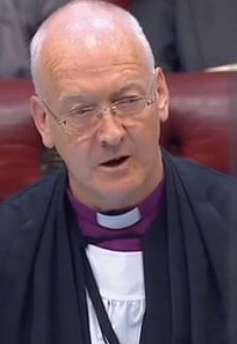
Bishop of Leeds speaks in debate on union and constitutional issues

The Bishop of Leeds spoke in a debate on a report from the Constitution Committee – Respect and Co-operation: Building a Stronger Union for the 21st century, on 20th January 2023 :

The Lord Bishop of Leeds: My Lords, I thank the noble Baroness, Lady Taylor, and the committee, for an excellent report. I hope that your Lordships will forgive me if I do not go into the detail of the report but offer what might sound a bit of a left-field observation. The report is subtitled Building a Stronger Union for the 21st Century. However, an assumption that we often bring to these debates is that what we had in the 20th century and before will automatically persist and that everyone buys into it.

Continue reading “Bishop of Leeds speaks in debate on union and constitutional issues”

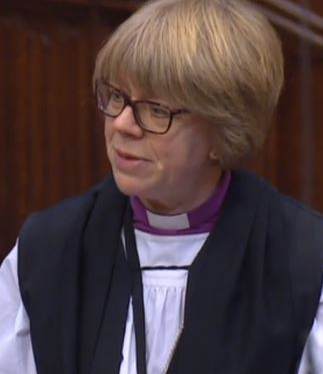
Bishop of St Albans speaks in debate to mark anniversary of the arrival of the Empire Windrush in the UK

The Bishop of St Albans spoke in a debate marking the 75th Anniversary of the Empire Windrush ship to Britain, highlighting the contributions made by Caribbean immigrants and the ongoing need to challenge racism:

The Lord Bishop of St Albans: My Lords, I too thank the noble Baroness, Lady Benjamin, for this important and timely debate. I thank other Members who have spoken so eloquently about the contribution of Caribbean people to this country.

In 1948, we invited Caribbean people to come to this country to help rebuild after the terrible devastation of the war. Some were welcomed; indeed, I have an auntie and uncle who, for 40 years, offered accommodation to people coming from the Caribbean. They did it joyfully and gladly and introduced them, wherever possible, into their Methodist church. However, at the same time there were many instances where they were not welcomed and, sadly, not even welcomed into some of our churches. They experienced appalling racism, which was simply shameful.

Continue reading “Bishop of St Albans speaks in debate to mark anniversary of the arrival of the Empire Windrush in the UK”

International Holocaust Memorial Day: Bishop of Carlisle speaks in tribute

On 19th January 2023, the Bishop of Carlisle spoke in a debate to mark the lead up to International Holocaust Memorial Day:

The Lord Bishop of Carlisle: My Lords, it is a privilege to follow the noble Baroness, Lady Brinton. Like so many others, I am most grateful to the noble Lord, Lord Pickles, for this Motion. It provides an opportunity not only to hear such moving contributions but to express from these Benches our deep appreciation of the history and values that Christians and Jews have in common, as well as the importance we attach to our ongoing dialogue, understanding and attempts to work together for the common good. Our central Christian act of worship, the Eucharist, originated in Christ’s participation in the Jewish ceremony of Passover. We note the huge contribution that Jewish people have made to British society through the centuries, which is a great expression of the significance of faith in public life.

Continue reading “International Holocaust Memorial Day: Bishop of Carlisle speaks in tribute”

Levelling Up Bill: Bishop of Bristol raises concerns about support for parish churches and housing development

On 17th January 2023, the House of Lords debated the Levelling Up Bill in its second reading. The Bishop of Bristol spoke in the debate, raising concerns about financial support for parish churches and the services they provide, and the importance of housing and development planning:

The Lord Bishop of Bristol: My Lords, it is good to be here considering this much-awaited piece of legislation. I declare my interest as a member of the Church Commissioners board, as set out in the register. I congratulate the noble Baroness, Lady Anderson, on her powerful maiden speech and on the stories of her female antecedents. I look forward to the maiden speech of the noble Lord, Lord Jackson.

I am also grateful to the noble and right reverend Lord, Lord Chartres, for his speech on the role of heritage in levelling up. As the current Church of England lead bishop for church buildings, I want to look at one detail in this Bill, which provides an opportunity for the clarification of the law on local council funding for parish church buildings. Across the country, parish churches are vital to the flourishing of their local communities. Initiatives have brought about much transformation in recent years. Exemplifying this is the current Warm Welcome campaign. Since its launch, thousands of churches and other places of worship across the country have welcomed 2.6 million people, providing space for relationship and community building and practical support as the days, like today, get colder. Add to this the ongoing work done in every region by church-run food banks, debt advice centres, domestic abuse support services and so much more. As your Lordships can imagine, I want to live in a world where such services are not needed, but it is important that action can be taken now to address systemic inequalities.

Continue reading “Levelling Up Bill: Bishop of Bristol raises concerns about support for parish churches and housing development”

Levelling Up Bill: Bishop of Carlisle speaks on health inqualities

The House of Lords debated the Levelling Up Bill in its second reading on 17th January 2023. The Bishop of Carlisle spoke in the debate, focusing on health inequalities between the North and South of England:

The Lord Bishop of Carlisle: My Lords, in the brief time available, I will address health inequalities between the north of England, where I live, and the south, and their implications for levelling up and regeneration. Health inequalities are defined as avoidable, unfair and systematic differences in health between different groups of people. In 2010, Sir Michael Marmot conducted his celebrated review into such inequalities, in the hope that this might lead to some improvement. Instead, we have seen an increase, rather than a reduction, of such inequalities over the last 12 years. For instance, life expectancy in deprived areas of the north-east is at least five years lower than it is in similar areas here in London. A baby boy born in Blackpool today can expect an additional 17 years of poor health compared with a baby born in Richmond upon Thames. People in all social groups in the north of England, male and female, are consistently less healthy than those in the south, and premature death rates are about 20% higher across all age groups in the north, due not least to lower lifetime chances.

These statistics—there are many more—are a stark reminder that inequalities in health are often closely linked to people’s socioeconomic circumstances. This has been forcefully illustrated by the Covid pandemic, which, in the words of one commentator, exposed “deep fractures of inequality” running across our society. During the first year of the pandemic, the mortality rate was 17% higher in the north than in the south, unemployment was 19% higher and there were significant differences in mental well-being between the north and the south. It is now reckoned that health issues account for about 30% of the gap in productivity between the north and the south.

Continue reading “Levelling Up Bill: Bishop of Carlisle speaks on health inqualities”

Levelling Up Bill: Bishop of Leeds highlights the importance of transport and education

On Tuesday 17th January 2023, the House of Lords debated the Levelling Up Bill in its second reading. The Bishop of Leeds made a speech on the importance of good transport links and amending discrepancies in education:

The Lord Bishop of Leeds: My Lords, I am delighted to follow the noble and right reverend Lord, who has already stolen some of what I was going to say—great minds and all of that, maybe. When I first heard the phrase “levelling up”, I thought, “Here we go again—another slogan in search of substance”. Yet what we have heard today so far is that there is a great deal of potential substance to this Bill. I applaud the motivation and ambition behind it, and the attempt in the 12 missions to have a holistic approach rather than simply to pick off bits of our society. But I do think we need to take seriously, after the honest analysis that we had from the Minister, the argument that it gives the lie to the opening assertion of the White Paper that the UK is an unparalleled success story. If it was, we would not need the detail that we have before us. This sort of language of hubris can very easily militate against us taking seriously the scale of the task.

Continue reading “Levelling Up Bill: Bishop of Leeds highlights the importance of transport and education”

Bishop of Carlisle asks about funded childcare schemes

The Bishop of Carlisle asked a question on the benefits of funded childcare schemes on 17th January 2023, during a debate on access to childcare for working families:

The Lord Bishop of Carlisle: My Lords, following the recommendation in a recent report published by the Work and Pensions Committee on universal credit and childcare costs, can the Minister tell us what assessment His Majesty’s Government have made of childcare funding schemes in Scotland and in some Scandinavian countries? Have they investigated whether their costs are offset by other benefits to society, such as increased economic activity, additional tax receipts and personal well-being?

Continue reading “Bishop of Carlisle asks about funded childcare schemes”

Extreme Risk Management: Bishop of Leicester highlights benefits of including faith groups in planning for response to crises

On 12th January 2022, the House of Lords debated a motion to take note of a report from the Risk Assessment and Risk Planning Committee: Preparing for Extreme Risks: Building a Resilient Society (Session 2021–22, HL Paper 110). The Bishop of Leicester spoke in the debate, advocating for greater inclusion of faith groups in emergency planning:

The Lord Bishop of Leicester: My Lords, I, too, am grateful for the Select Committee’s work in tackling such an important subject and, in particular, I concur with the authors’ recognition that,

“the UK must move away from a risk management strategy which … often ignores or fails to appreciate the interconnected nature of our society”,

and that we must instead,

“produce a risk management system that ties all sectors of society together.”

Interdependence is a fundamental part of human nature and policies that follow the grain of that nature are far more likely to succeed.

I was disappointed, therefore, that although the report advocated for a whole-society approach, no reference was made to the role of faith groups in emergency planning and response. Faith groups and leaders across the country were an integral part of the response to Covid-19. A 2020 report by the All-Party Parliamentary Group on Faith and Society, based on research with local authorities, found that faith communities were instrumental in local responses by offering buildings, running food banks, information-sharing, befriending, collecting, cooking and delivering food, and providing volunteers for local authority programmes. Accordingly, the APPG found that local authorities developed a new-found appreciation for the agility, flexibility and professionalism of faith-based organisations, and that local authorities were keen to continue and build on those relationships in the future.

Continue reading “Extreme Risk Management: Bishop of Leicester highlights benefits of including faith groups in planning for response to crises”

Bishop of London urges government to work with faith groups to tackle health inequalities

On 12th January 2022, the House of Lords debated changing mortality rates in the UK in Grand Committee. The Bishop of London spoke in the debate, advocating for greater inclusion of faith groups to aid in tackling health inequalities:

The Lord Bishop of London: My Lords, I thank the noble Lord, Lord Sikka, for securing this important debate. I also look forward to hearing from the noble Lord, Lord Evans, in his maiden speech.

The paper at the heart of this debate provides a useful focus, because it highlights one of the worst health outcomes that we have seen in the past 10 years: that of widening inequalities. It is also helpful because, by focusing on the impact of austerity, we begin to see that public health is impacted by many factors besides healthcare access—factors called the social determinants of health. Those include housing, our jobs, our environment, our education and much more. They can be summed up as the opportunities that we have to lead healthy lives. The Heath Foundation noted that 50% of people in the most deprived areas report poor health by the age of 55 to 59, which is more than two decades earlier than in the least deprived areas. It is not just about life expectancy; it is also about healthy life expectancy.

The debate is poignant also because it comes at a time of great strain on the NHS and on social care, and at a time when those other determinants of health are challenging for many of us. We are also at a moment when I hope we are beginning to realise the importance of prevention of ill health, which is essential for the sustainability of our healthcare system.

Continue reading “Bishop of London urges government to work with faith groups to tackle health inequalities”

“Democracy Denied” Report: Bishop of St Albans speaks in support of recommendations

On 12th January 2022, the House of Lords debated a report from the Delegated Powers and Regulatory Reform Committee: Democracy Denied? The urgent need to rebalance power between Parliament and the Executive. The Bishop of St Albans spoke in support of the report’s recommendations on legislation and regulatory powers:

The Lord Bishop of St Albans: My Lords, as has already been noted by other speakers in this debate, delegated legislation is indeed a necessary part of the process, but I echo the concerns about the increasing use of skeleton legislation, Henry VIII powers, disguised legislation and tertiary legislation. I support these two excellent reports that look at how we might limit the use of delegated legislation and address the culture that is now taking it for granted. Both committees highlighted very valid concern about the transfer of power from Parliament, with clear democratic oversight and public scrutiny, to instead ruling by Executive edict.

The past few years have been turbulent times, although probably if anybody looked back over any decade in the life of this nation they would see that there have always been turbulent things happening. Therefore, I guess it is easy to understand why the Executive may need to respond in unusual and challenging circumstances with delegated authority. However, it is absolutely crucial that this is done sparingly and in a transparent manner. The Government’s response to the pandemic is the classic example of this. Of course, there are times when a national emergency will demand that we fast-track legislation, or grant broad delegated powers, but those should be exceptional and rare cases. The Government must always recognise the importance and value of parliamentary scrutiny. What is concerning, as is brilliantly highlighted in these reports, is that the Government’s widening use of delegated legislation is not limited to emergencies but is now being used routinely.

Continue reading ““Democracy Denied” Report: Bishop of St Albans speaks in support of recommendations”